

UTI and Urine Culture Tests
Home UTI and Urine Culture Tests
Urinary tract infection testing can involve much more than a single urine result. This UTI and Urine Culture Tests section explains the laboratory tests used to detect urinary infections, identify bacteria or other organisms, evaluate inflammation, and help determine which treatment may be appropriate. Learn how urinalysis for UTI evaluates leukocyte esterase, nitrites, white blood cells, and bacteria, and how a urine culture test helps distinguish significant bacterial growth from contamination.
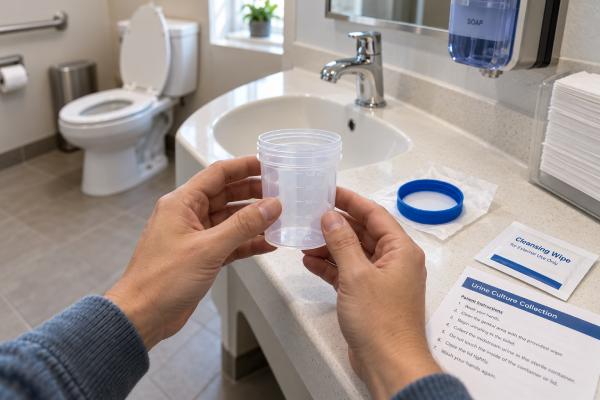
Explore what colony-forming units (CFU) mean, why mixed flora may suggest an improperly collected sample, and how clean-catch or catheter urine collection can affect result accuracy. Detailed guides also cover urine culture and sensitivity testing, antibiotic susceptibility, resistant organisms such as ESBL- and CRE-producing bacteria, and testing strategies for recurrent, complicated, persistent, or kidney infections.
You can also learn how individual infection markers—including leukocyte esterase, urine nitrites, pyuria, and bacteria—fit into the broader diagnostic picture. Additional topics include urine PCR testing, Gram staining, fungal urine cultures for Candida and other yeasts, post-treatment cultures, asymptomatic bacteriuria, and STI-related urine testing.
Whether you are trying to understand a positive culture, negative result despite symptoms, bacterial count, contamination report, resistance finding, or follow-up test, these guides explain what common UTI and urine culture results can mean and why results should be interpreted together with symptoms, sample quality, medical history, and clinical evaluation.