




Urine Electrolytes and Osmolality
Home Urine Electrolytes and Osmolality
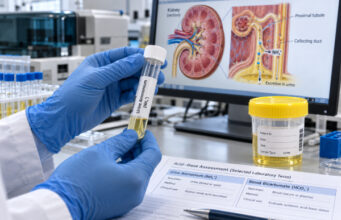
Urine Electrolytes and Osmolality testing offers a detailed look at how the kidneys manage water, salts, minerals, acids, and metabolic waste. This category explains tests that help assess hydration, urine concentration and dilution, fluid and volume status, electrolyte handling, acid-base balance, and kidney stone risk.
Explore urine sodium, potassium, chloride, calcium, magnesium, phosphorus, uric acid, citrate, oxalate, sulfate, urea nitrogen, pH, specific gravity, and osmolality, along with broader urine electrolyte panels and fluid-balance testing.
You’ll also find practical guides to fractional excretion tests such as FENa, FEUrea, FEK, and FEUA, plus the urine anion gap, osmolal gap, ammonium testing, and the transtubular potassium gradient.
Each guide explains what the test measures, why it may be ordered, what high or low results can mean, and how findings may relate to dehydration, acute kidney injury, electrolyte loss, metabolic acidosis, gout, mineral disorders, or kidney stones. Collection methods, diet, medications, and interpretation limits are also covered to help you better understand urine chemistry and discuss results more confidently with your healthcare professional.