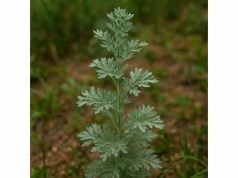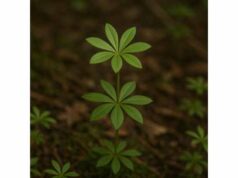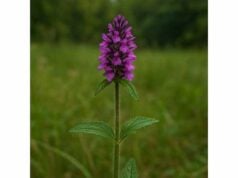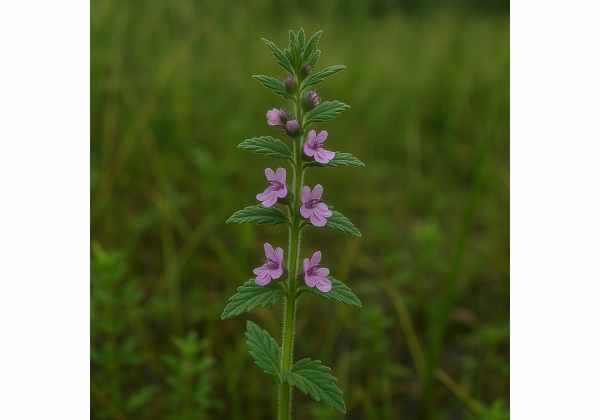
Water germander, or Teucrium scordium, is a marsh-loving member of the mint family that has been used in older European and Middle Eastern herbal traditions as a bitter tonic, wound herb, and digestive remedy. It is also called garlic germander in some sources because of its strong scent. What makes this plant interesting is not a large body of modern clinical trials, but a combination of long folk use, chemically active essential oils and diterpenes, and a safety story that deserves real attention. Traditional texts and modern reviews describe water germander for gastrointestinal complaints, skin issues, hemorrhoids, and inflammatory conditions, while more recent laboratory work points to antifungal, antioxidant, and anti-inflammatory potential. Yet this same genus is also associated with liver safety concerns, especially when concentrated extracts are used for too long or without supervision. That means water germander is best approached as a historically important but cautious herb: promising in some lab settings, modestly supported in practice, and not suitable for casual self-dosing.
Core Points
- Traditional use centers on digestive complaints, wound support, and other inflammatory conditions.
- Laboratory studies suggest antifungal and anti-inflammatory activity, but human clinical evidence remains limited.
- No evidence-based self-care oral dose is established; the safest unsupervised medicinal dose is 0 g dried herb and 0 mL extract.
- People with liver disease, pregnancy or breastfeeding, and those using potentially liver-stressing medicines should avoid medicinal use.
Table of Contents
- What water germander is and why it has drawn interest
- Key ingredients and how water germander works
- Water germander health benefits and what the evidence really shows
- Traditional uses, modern forms, and practical applications
- Water germander dosage and why standardization is a problem
- Safety, side effects, and liver concerns
- Who should avoid it and the bottom line
What water germander is and why it has drawn interest
Water germander is a perennial wetland herb in the genus Teucrium, part of the Lamiaceae or mint family. Unlike culinary mints that most people know from kitchens and tea tins, this plant prefers marshes, damp meadows, stream edges, and other moisture-rich habitats. It produces creeping or low stems, small flowers, and a notably strong odor that has helped shape its common names. The botanical identity is fairly stable as Teucrium scordium, but literature on related forms and subspecies can make old herb texts harder to interpret, especially when a modern reader is trying to match folk uses with contemporary research.
Its appeal comes from three different directions. First, it has a genuine traditional reputation. Older herb traditions describe it as bitter, antiseptic, tonic, and useful for inflammatory complaints, digestive discomfort, chronic skin problems, wounds, hemorrhoids, and certain infections. Second, it belongs to a chemically rich genus that has attracted pharmacological interest for antioxidants, volatile oils, phenolic compounds, and neo-clerodane diterpenes. Third, it sits inside a plant family where many species are medicinally important, which naturally encourages comparisons with more familiar mint-family herbs.
At the same time, water germander is not a mainstream modern botanical remedy. It does not have the consumer familiarity of peppermint, the culinary visibility of rosemary, or the research depth of sage. That matters, because herbs with thinner human evidence require a different standard of judgment. A plant can be historically respected without being ready for casual, self-directed use in teas, tinctures, or capsules.
This is especially true with the genus Teucrium. Modern reviews of germanders repeatedly note that traditional use is extensive, but evidence-based clinical confirmation is limited. In other words, the plant’s reputation has survived much longer than its trial data. That gap does not make the herb useless, but it does mean readers should avoid mistaking tradition for proof.
Water germander is therefore best understood as a bitter wetland herb with a long folk history, interesting chemistry, and a more complicated safety profile than its modest appearance suggests. That combination makes it worth studying, but it also means the usual “natural equals gentle” assumption can lead readers in the wrong direction.
Key ingredients and how water germander works
The chemistry of water germander helps explain both its appeal and its limitations. Published studies and genus-level reviews describe Teucrium scordium and closely related material as containing volatile oils, flavonoids, tannins, saponins, and neo-clerodane diterpenes. That is a meaningful mix. It suggests a plant that may offer bitterness, light astringency, aromatic activity, and a degree of biological action against microbes or inflammatory signaling, while also raising legitimate safety questions when used too aggressively.
Volatile compounds are one important piece of the story. Essential-oil studies on water-germander material have identified compounds such as germacrene D, caryophyllene oxide, alpha-pinene, beta-pinene, delta-cadinene, alloaromadendrene, and beta-caryophyllene. What stands out is not just which compounds appear, but how much they vary across geography. Serbian, Sicilian, Sardinian, Maltese, Iranian, and other populations do not show the exact same profile. That matters because a plant with shifting chemistry is harder to standardize for medicinal use.
Flavonoids and related phenolic compounds likely contribute much of the herb’s antioxidant reputation. These are the kinds of compounds often associated with free-radical scavenging, mild tissue protection, and broader anti-inflammatory support. Tannins may also help explain why traditional medicine linked the plant with wounds, irritated skin, and astringent uses. A tannin-containing herb often feels drying or toning at the surface, which can make folk topical use seem plausible.
Then there are the neo-clerodane diterpenes. These compounds are central to the safety discussion around germanders. In the broader Teucrium literature, they are not just chemically interesting; they are the reason many clinicians and pharmacologists treat the genus with caution. Some water-germander-related material has yielded diterpenes in the same structural family that includes teucrin A, a compound strongly associated with liver injury in other germander species. That does not prove that every preparation of water germander will behave the same way, but it is enough to rule out a carefree attitude.
This combination produces a mixed medicinal profile. Water germander likely acts as a bitter aromatic herb with antioxidant and possibly antimicrobial potential, but it is not chemically simple. Compared with gentler mint-family herbs such as garden sage, water germander carries more uncertainty and a narrower safety margin. That is why the same plant can look promising on paper and still be a poor candidate for unsupervised long-term use.
Water germander health benefits and what the evidence really shows
The most responsible way to discuss water germander’s health benefits is to divide them into three levels: traditional claims, laboratory findings, and proven clinical outcomes. Traditional claims are broad. Laboratory findings are interesting. Proven human outcomes are limited.
Traditional use is the easiest part to document. Reviews of the genus and ethnopharmacological records describe water germander for gastrointestinal ailments, diarrhea, dyspepsia, hemorrhoids, chronic skin disease, wound healing, and other inflammatory problems. Some regional traditions also mention its use as an antiseptic, anthelmintic, tonic, or even as a remedy for tuberculosis and menstrual suppression. These older applications tell us the herb was taken seriously, especially where wetland medicinal flora were part of daily life.
Laboratory evidence adds some support, though it is still early-stage. The most useful recent species-specific findings come from work on T. scordium subsp. scordioides, where essential oil preparations showed antifungal activity, modest anti-inflammatory effects in cell models, and reduced cell migration in a scratch assay. In one macrophage model, nitric oxide production fell by about 30 percent at 1.25 μL/mL without harming cell viability. Those are not trivial findings. They suggest that some traditional claims around inflammation and infected skin conditions are chemically plausible.
Even so, there are major limits. Cell assays do not equal human treatment. An antifungal effect in vitro does not tell a reader how to use the plant safely on skin, let alone by mouth. Likewise, antioxidant or anti-inflammatory activity in a lab says little about real-world benefit unless dose, absorption, duration, and toxicity are also understood.
That is where water germander falls short. I could not verify meaningful modern clinical trials in humans showing that Teucrium scordium reliably improves digestive symptoms, wound healing, hemorrhoids, or inflammatory disorders. Genus-wide reviews reach the same basic conclusion: Teucrium species are pharmacologically interesting, but evidence-based clinical confirmation is still lacking.
So what benefits can be described honestly?
- Possible mild digestive support, mainly because of traditional bitter use.
- Potential external antimicrobial and inflammatory support, based on lab work and folk history.
- Possible antioxidant activity, likely driven by flavonoids and related compounds.
- Historical tonic value, though not in a modern evidence-based sense.
The practical takeaway is that water germander may deserve further research, but it is not an herb with clearly established therapeutic reliability. If the goal is dependable digestive or topical relief, better-studied herbs such as peppermint are usually easier to justify for home use.
Traditional uses, modern forms, and practical applications
Water germander has a more convincing history as a folk herb than as a standardized modern supplement. Traditional records describe the flowering branches or aerial parts being used in tea, tonic-type preparations, or simple decoctions. In Bosnia and Herzegovina, infusions were used for gastrointestinal ailments and diarrhea. In Israel, the plant was linked with dyspepsia, hemorrhoids, and chronic skin disease. In Spain, older accounts described antiseptic and anthelmintic uses. British records even mention its use in decoction form for menstrual suppression or as a vermifuge. That is a wide range of applications, but it also hints at one important truth: older herbal traditions often reused the same bitter plant for many complaints.
From a modern perspective, these uses can be grouped into a few practical categories.
- Digestive and bitter-tonic use
This is probably the most coherent traditional pattern. Bitter herbs were often used to stimulate appetite, support sluggish digestion, or settle post-meal discomfort. - Topical and wound use
The plant’s astringent, antiseptic, and anti-inflammatory reputation likely fed into washes, compresses, or local applications. - Hemorrhoids and skin support
These uses fit the combined picture of bitterness, astringency, and possible antimicrobial action. - General tonic or inflammatory use
This category is common in historical herbalism, though it is also the least precise.
Modern practical applications, however, should be much narrower than the traditional list. A reader today does not need to turn every old use into a home remedy. The best-supported modern applications are probably exploratory and external, not aggressive or internal. Someone studying the herb might reasonably be interested in its chemistry, volatile profile, or historical role in wound and digestive traditions. Someone looking for a self-care herb should be more restrained.
In real-life use, water germander may appear as dried herb, tea material, or less commonly as extract. That does not mean every form is wise. Concentrated products are exactly where genus-level safety questions become more relevant. A tea made occasionally is not the same as a prolonged extract protocol, and neither should be equated with a targeted antifungal preparation from a laboratory paper.
This is also where comparison helps. If a person mainly wants a mild topical herb for irritated skin, calendula is usually a more straightforward choice. Water germander’s traditional uses are fascinating, but fascination and practicality are not the same thing. In modern herbal decision-making, the plant’s main value often lies more in its history and chemistry than in its suitability for unsupervised daily use.
Water germander dosage and why standardization is a problem
Dosage is where water germander becomes difficult to discuss in a truly responsible way. There is no well-established modern evidence-based dose for oral self-care. No dependable tea strength, capsule amount, tincture schedule, or multi-week protocol can be recommended with the same confidence used for better-studied herbs. That matters because readers searching for “dosage” often assume the main job is to name a number. With water germander, the main job is to explain why that number is not solid.
Traditional sources do describe infusions, teas, decoctions, and tonic preparations of the flowering branches or aerial parts. But these are historical practices, not standardized modern dosing instructions. They were shaped by local plant chemistry, season, drying methods, and inherited knowledge. Modern essential-oil and phytochemical work also shows that T. scordium chemistry varies by region. A plant rich in caryophyllene oxide and pinenes is not identical to one dominated by germacrene D, menthofuran, or different sesquiterpenes. That makes “one dose fits all” especially unrealistic.
Because of that uncertainty, the safest general advice is conservative:
- No evidence-based self-care medicinal oral dose is established.
- The safest unsupervised medicinal oral dose is 0 g dried herb and 0 mL extract.
- Concentrated internal extracts should not be improvised at home.
- Long-term internal use is especially hard to justify.
Could a practitioner working in a traditional herbal framework choose to use it? Possibly, but that is different from public self-care advice. Practitioner use depends on context, form, duration, medical history, and quality control. Public advice has to assume variable products and incomplete supervision.
Timing and duration are just as uncertain. There is no good evidence telling us whether the herb should be used before meals, after meals, once daily, or for a specific number of days. And with the genus-level liver signal, “try it for a few weeks and see” is not a responsible fallback.
This is why standardization matters so much. With a classic bitter herb such as gentian, it is easier to separate food use, traditional use, and modern supplement use. Water germander sits in a murkier zone. The plant has history, but the modern dosing framework is weak. In a situation like that, restraint is not a lack of help. It is the safest and most useful form of help.
Safety, side effects, and liver concerns
Safety is the most important part of any water germander article. This is not because the plant is proven to be acutely poisonous in every form, but because its genus carries a well-established liver-risk reputation and some of the relevant chemistry appears close enough to justify caution.
The key point is nuance. Clinical hepatotoxicity is best documented for other germander species, especially Teucrium chamaedrys. That species was linked to hepatitis, jaundice, chronic liver injury, and even severe outcomes after capsules, extracts, and teas. Mechanistic work showed that the neo-clerodane diterpene teucrin A could be bioactivated into damaging metabolites in the liver. This does not prove that water germander causes the same pattern at the same rate. But it does remove any basis for assuming that water germander is harmless simply because it is less famous.
Why does the concern extend to water germander? Because water-germander-related taxa have also yielded neo-clerodane diterpenes, and the broader Teucrium literature treats this compound class as a real toxicological red flag. That means concentrated extracts, prolonged internal use, and “detox tea” style experimentation are particularly poor ideas.
Possible side effects or warning signs include:
- stomach upset or nausea
- bitter intolerance or abdominal discomfort
- headache or irritation from strong preparations
- rash or contact sensitivity with topical use
- unexplained fatigue, dark urine, jaundice, itching, or right upper abdominal discomfort if used internally for repeated periods
Several common mistakes make these risks worse:
- treating genus-wide safety warnings as irrelevant because the exact species is different
- assuming an old folk tea is automatically safer than an extract
- using multiple herbs and alcohol together
- taking the herb while already on liver-stressing medicines
- extending use because an early response seemed mild
Topical use may feel safer, and it often is, but even there caution is wise. Essential oils and concentrated infusions can irritate sensitive skin, especially on broken tissue. Patch testing matters, and damaged skin is not the best place to experiment with a poorly standardized wetland herb. For readers whose real goal is gentle tissue soothing, a better-known demulcent such as marshmallow root is usually easier to defend.
The simplest safety rule is this: the therapeutic upside is too uncertain to justify casual risk, especially if liver health is already a concern.
Who should avoid it and the bottom line
Even herbs with long traditional histories are not for everyone, and water germander belongs on the more selective side of that rule. Because modern human dosing data are weak and the genus has a real hepatotoxicity signal, the safest approach is to keep the avoidance list fairly broad.
People who should avoid medicinal use of water germander include:
- people with current or past liver disease
- anyone with unexplained elevated liver enzymes
- pregnant people
- breastfeeding people
- children and teenagers
- people taking several medicines at once, especially medicines with known liver burden
- heavy alcohol users
- anyone planning long-term internal use without professional supervision
There are also people who may not need to “avoid” it completely, but should still be highly cautious. That includes those with chronic digestive disorders, people prone to contact dermatitis, and anyone considering a homemade tincture or concentrated extract. With a lightly studied herb, uncertainty itself becomes part of the risk.
Another important group to mention is foragers and gardeners. Water germander grows in wet habitats, and that raises a separate quality issue. A marsh or ditch plant may accumulate environmental contaminants or be exposed to runoff. Even if the herb itself were simple, the harvest site could make it a poor medicinal choice. Good herbal practice starts with good identification and clean sourcing, and water plants make that harder.
For most readers, the better question is not “Can I make water germander work?” but “What am I actually trying to treat?” If the goal is gentle wound or skin support, plantain leaf or calendula may be better first choices. If the goal is digestive bitterness, other herbs offer clearer dosing traditions and cleaner safety data. If the goal is historical or botanical knowledge, water germander is a fascinating species worth reading about.
That leads to the bottom line. Water germander is a legitimate traditional herb with interesting phytochemistry, possible antifungal and anti-inflammatory activity, and a long record in digestive and topical folk medicine. But it is not a well-standardized modern remedy, and it should not be promoted as a casual wellness herb. Its strongest modern lesson may be this: some plants deserve respect not because they are easy to use, but because they remind us that history, chemistry, and safety always need to be read together.
References
- A review of the phytochemistry, ethnopharmacology and biological activities of Teucrium genus (Germander) 2022 (Review)
- Bio-Active Compounds from Teucrium Plants Used in the Traditional Medicine of Kurdistan Region, Iraq 2022 (Review)
- Chemical composition and biological activity of essential oil of Teucrium scordium L. subsp. scordioides (Schreb.) Arcang. (Lamiaceae) from Sardinia Island (Italy) 2022 (Research Article)
- Essential oil compositions of Teucrium fruticans, T. scordium subsp. scordioides and T. siculum growing in Sicily and Malta 2021 (Research Article)
- Hepatotoxicity of germander (Teucrium chamaedrys L.) and one of its constituent neoclerodane diterpenes teucrin A in the mouse 1994 (Seminal Mechanistic Study)
Disclaimer
This article is for educational purposes only and is not medical advice, diagnosis, or treatment. Water germander is a traditional herb with limited modern clinical evidence, and the broader germander genus includes species linked with serious liver injury. Do not use this plant to self-treat chronic digestive, liver, skin, or inflammatory conditions without qualified professional guidance. Stop use and seek medical care promptly if any herbal product causes nausea, jaundice, dark urine, unusual fatigue, abdominal pain, rash, or other concerning symptoms.
If this article was useful, please share it on Facebook, X, or your preferred platform.