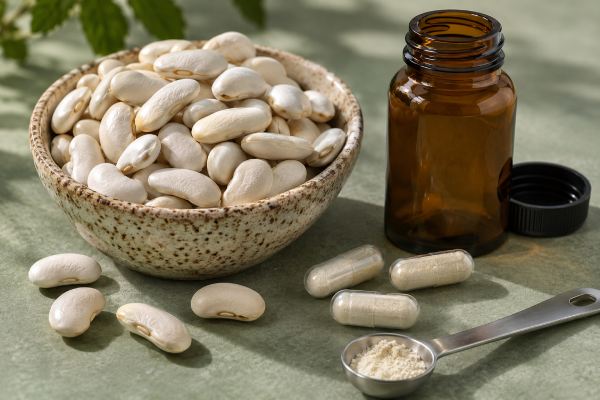
White kidney bean extract is marketed as a “carb blocker” because it contains proteins that inhibit alpha-amylase, the enzyme responsible for breaking starch into smaller sugars. While this mechanism is real, the marketing often outpaces the evidence. These supplements do not block all carbohydrates, nor do they cancel the calories in a high-carb meal or affect sugars that bypass alpha-amylase entirely.
Human trials suggest that standardized extracts may modestly reduce starch digestion, post-meal glucose levels, body weight, or body fat. However, these studies are generally small and product-specific. A 2026 meta-analysis identified modest weight-related benefits but found no significant improvements in fasting glucose or random insulin. Safety data are reassuring in the short term, with digestive symptoms being the primary concern, yet long-term evidence remains limited. If you choose to use one, the specific product, dose, meal composition, and your current medications all matter. White kidney bean extract is best viewed as an optional adjunct, not a treatment for diabetes or a substitute for a higher-fiber eating pattern.
Table of Contents
- How White Kidney Bean “Carb Blockers” Work
- What the Human Evidence Shows
- What They Can and Cannot Block
- Dose, Timing, and Product Quality
- Side Effects and Safety
- Who Should Avoid or Use Caution
- Are They Worth Using?
How White Kidney Bean “Carb Blockers” Work
White kidney beans, a variety of Phaseolus vulgaris, naturally contain alpha-amylase inhibitors. Alpha-amylase is produced mainly by the pancreas and saliva; it splits long starch molecules into smaller carbohydrates that can be further digested and absorbed.
A standardized bean extract can reduce alpha-amylase activity in laboratory systems. In theory, this means some starch is digested more slowly or escapes digestion in the small intestine entirely. Less rapidly available starch can translate into a smaller post-meal glucose rise and slightly less metabolizable energy from that meal.
This is where the phrase “carb blocker” originates, though it is an imprecise label. The supplement does not create a barrier around all carbohydrate. It targets one specific step in starch digestion. Table sugar, glucose, fructose, sweetened drinks, and many other simple carbohydrates do not depend on pancreatic alpha-amylase in the same way.
Another critical detail is that starch digestion begins in the mouth and continues in the small intestine. A supplement taken at the wrong time may have less opportunity to interact with the relevant enzymes. Food structure also matters: finely milled bread or crackers can behave differently from intact beans or whole grains, even when total carbohydrate is similar. This variability explains why the same supplement dose may produce different glucose effects with different meals.
The mechanism is somewhat similar to prescription drugs that slow carbohydrate digestion, but it is not equivalent to them. Acarbose, for example, inhibits intestinal alpha-glucosidase enzymes and has established dosing, manufacturing standards, and clinical evidence as a medication. White kidney bean extract is a dietary supplement with much greater variability between products.
If the real goal is lower post-meal glucose, the broader guide to eating carbohydrates without large glucose spikes covers strategies with stronger day-to-day value, including portions, fiber, protein, and activity.
What the Human Evidence Shows
The evidence is mixed but not empty. Some randomized trials of standardized white kidney bean extracts have reported modest reductions in weight, waist circumference, or body fat, especially when the supplement is paired with a calorie-reduced diet. The main limitation is that many trials test proprietary products, so the results cannot automatically be applied to every bottle labeled “white kidney bean.”
A 2026 systematic review and meta-analysis pooled eight randomized controlled trials with 543 adults with overweight or obesity. Compared with placebo, white kidney bean extract was associated with about 1.6 kg more weight loss on average, along with small reductions in BMI, fat mass, waist, and hip circumference. However, fasting blood glucose, triglycerides, and random insulin did not improve significantly. No serious adverse events related to the extract were reported.
Two randomized trials published in 2024 also reported weight and body-composition benefits from standardized extracts taken before meals. In one 12-week study, participants used 700 mg or 1,000 mg three times daily before meals while following a calorie-restricted diet. The higher-dose group had larger reductions in several body measurements than placebo. Another 45-day trial tested 1,500 or 3,000 mg per day and reported favorable weight outcomes.
Those findings do not prove that the supplements produce meaningful diabetes prevention or long-term glucose control. Weight trials can be affected by diet adherence, baseline carbohydrate intake, and the exact inhibitor activity of the product. Many have modest sample sizes and short follow-up periods.
Research on post-meal glucose is older and less consistent. Some small studies found lower glucose and insulin excursions after starch-containing meals, while others found little or no effect. A 2023 randomized crossover study in healthy adults also raised a mechanistic question: the tested product changed parts of the gut microbiome but did not show alpha-amylase inhibition in the investigators’ in vitro and gut-model experiments.
The practical conclusion is that a standardized extract may have a small effect, but “blocks carbs” is much too strong. It is not comparable to removing the carbohydrate from the plate.
It is also worth separating weight-loss evidence from glucose-control evidence. A product can produce a small average weight difference over several weeks without meaningfully improving fasting glucose. Conversely, a supplement could blunt the glucose rise from one starch-heavy meal yet have little effect on body weight. Marketing often combines these outcomes as if they were the same. They are not.
When reading a study, ask what was actually measured: body weight, fasting glucose, post-meal glucose, insulin, waist size, or appetite. Then ask whether the study lasted long enough to matter. A four-week change in a post-meal curve does not prove lower diabetes risk, and a short weight-loss trial does not establish long-term safety.
What They Can and Cannot Block
White kidney bean extract is most relevant to starch, not all carbohydrate. Starch is abundant in foods such as rice, bread, pasta, potatoes, tortillas, crackers, and many breakfast cereals.
It is much less likely to meaningfully affect:
- Sugar in soda, juice, candy, or sweetened coffee
- Fructose in sweeteners or fruit
- Lactose in milk
- Glucose or dextrose used in foods and sports products
- Fiber, which is already poorly or incompletely digested
Even with starch, inhibition is incomplete. Enzyme activity, product potency, dose, timing, meal size, cooking method, and the person’s digestive physiology all influence the outcome.
Consider a large plate of white rice. A “carb blocker” may slow digestion of some rice starch, but it does not make the plate metabolically equivalent to a small serving. In contrast, reducing the rice portion, choosing a higher-fiber grain, adding beans or vegetables, or taking a short walk after the meal can lower glucose exposure without depending on supplement potency. For rice specifically, white rice and brown rice affect blood sugar differently, but portion and preparation still matter.
There is also a predictable tradeoff: starch that is not fully digested in the small intestine can reach the colon, where bacteria ferment it. That may partly explain gas, bloating, and changes in bowel habits. In other words, the same mechanism that could lower carbohydrate absorption can create digestive symptoms.
Dose, Timing, and Product Quality
There is no universally established clinical dose for white kidney bean extract. Trials have used very different formulations and schedules, commonly taking the extract shortly before or with carbohydrate-containing meals.
Recent proprietary trials have used total daily doses around 1,500–3,000 mg, often divided across three meals. Older studies have used other amounts. This does not mean 3,000 mg is the correct dose for every product, because milligrams alone do not tell you how much alpha-amylase-inhibiting activity is present.
Product standardization matters more than the front-label number. Two capsules can both contain “500 mg white kidney bean extract” and still differ in extraction method, inhibitor activity, contaminants, and stability.
Before buying, look for:
- A clearly identified Phaseolus vulgaris extract rather than a vague proprietary blend
- Standardization information or enzyme-inhibitory activity when provided
- Full serving size and dosing instructions
- Third-party quality testing from a credible independent program
- Minimal unnecessary stimulants or added “fat burner” ingredients
- A manufacturer that provides lot, contact, and quality information
Avoid assuming that a higher milligram dose is more effective. If the active proteins were damaged during processing, extra powder may not translate into stronger enzyme inhibition.
Why the study product may not match the bottle on the shelf
Supplement research is especially easy to overgeneralize. A trial may use a named extract manufactured to a specific alpha-amylase-inhibitory activity, while a retail product may list only “white kidney bean extract” and a milligram amount. Those are not necessarily equivalent exposures. The active inhibitor is a protein, so extraction, heat, storage, and formulation can all affect how much activity remains by the time the capsule is swallowed.
This is also why choosing a product solely by the largest milligram number is misleading. A smaller amount of a well-standardized extract could theoretically have more enzyme-inhibiting activity than a larger amount of poorly characterized powder. Unfortunately, labels do not always give enough information to make that comparison. Third-party testing can help with identity and contamination, but it does not automatically prove that the product delivers the same biological activity or clinical effect as a product used in a published trial.
Be cautious with multi-ingredient “carb blocker” blends. Added caffeine, bitter orange, chromium, herbs, or laxative ingredients can create side effects that have nothing to do with white kidney bean extract and make it difficult to tell what caused a change in appetite, heart rate, bowel habits, or glucose. A single-ingredient product is easier to evaluate if you decide to run a personal trial.
Timing also follows the mechanism. If the extract is intended to interact with alpha-amylase during starch digestion, taking it long after the meal makes little sense. Trials generally administer it before or with meals, especially meals containing starch.
A supplement should not be used as permission to increase carbohydrate portions. If someone adds 400 calories of pasta because they believe the product “blocks” the meal, any small reduction in starch digestion is unlikely to compensate.
Side Effects and Safety
Short-term human trials generally report good tolerability, but the evidence is much thinner than it is for established medications. The most plausible and commonly reported effects are gastrointestinal.
Possible side effects include:
- Gas and bloating
- Abdominal discomfort
- Loose stools or diarrhea
- Changes in bowel frequency
- Nausea in some users
These effects make biological sense because more undigested starch may reach the colon and be fermented by bacteria.
Raw or undercooked kidney beans are a separate safety issue. They naturally contain phytohaemagglutinin, a lectin that can cause acute gastrointestinal illness when beans are eaten raw or inadequately cooked. Commercial white kidney bean supplements are processed extracts and should not be equated with eating raw bean powder. However, manufacturing quality matters because processing determines which bean proteins remain active and what unwanted compounds are removed or reduced.
There is no strong evidence that standard white kidney bean extract commonly causes liver or kidney injury, but absence of a signal in small, short trials is not the same as proving long-term safety. Supplements are also vulnerable to mislabeling, contamination, or adulteration in ways that do not apply equally to all brands.
If you develop persistent vomiting, severe abdominal pain, allergic symptoms, fainting, or significant glucose problems after taking a supplement, stop using it and seek medical advice rather than assuming the reaction is a normal “detox” effect.
Who Should Avoid or Use Caution
People with an allergy to beans or other legumes should avoid white kidney bean extract unless an allergist has specifically advised otherwise. A concentrated extract can still contain allergenic proteins.
People who use insulin, sulfonylureas, meglitinides, or other glucose-lowering treatment should be cautious when adding anything intended to reduce carbohydrate absorption. The glucose-lowering effect of white kidney bean extract is usually modest, but changing the absorbed carbohydrate from a meal can alter how medication matches that meal. Monitor glucose and discuss recurrent lows with the prescriber.
Extra caution is reasonable if you:
- Take acarbose, miglitol, or another medication that already delays carbohydrate digestion
- Have significant irritable bowel symptoms, inflammatory bowel disease, or chronic diarrhea
- Have gastroparesis or another condition that makes meal absorption unpredictable
- Are pregnant or breastfeeding, because high-quality safety data for concentrated extracts are limited
- Are preparing for surgery or a procedure that requires specific medication and supplement instructions
- Take several supplements or medicines and cannot easily identify which one is causing symptoms
Children should not use weight-loss or “carb blocker” supplements unless a pediatric clinician specifically recommends them.
If you have prediabetes or diabetes, do not use white kidney bean extract instead of follow-up testing or prescribed treatment. Supplements can make people feel as if they are “doing something” while glucose gradually worsens. The step-by-step guide to improving prediabetes focuses on interventions with stronger evidence.
Are They Worth Using?
For most people, white kidney bean extract is not a first-line strategy for blood sugar control. The potential effect is too small and too product-dependent to outrank better-supported choices such as exercise, weight loss when appropriate, higher-fiber foods, adequate protein, and sensible carbohydrate portions.
That does not mean the supplement is useless. A person who already has a solid diet and activity plan, eats starch-containing meals regularly, and wants to experiment with a standardized product may see a modest benefit. The most reasonable expectations are a small change in post-meal glucose or weight over time—not dramatic carbohydrate cancellation.
| Claim | What the evidence supports |
|---|---|
| “Blocks carbs” | May partially inhibit digestion of some starch; does not block all carbohydrate |
| Prevents glucose spikes | May reduce some post-meal responses, but results vary and evidence is limited |
| Causes weight loss | Recent trials and a meta-analysis suggest a modest average effect in some standardized products |
| Treats diabetes | No; it is not a substitute for diabetes treatment |
| Safe for everyone | No; digestive effects, allergies, medication interactions, and limited long-term data matter |
If you decide to try one, keep the experiment simple. Choose one product, use the labeled dose with similar starch-containing meals, and track either glucose response, digestive tolerance, weight trend, or another specific goal. Stop if there is no meaningful benefit after a reasonable trial.
For glucose testing, compare the same meal on separate days under similar conditions. Check before the meal and at a consistent post-meal time, such as 1 or 2 hours, rather than comparing random readings. If you use CGM, compare the size and duration of the excursion rather than only the peak. A difference that appears once may be normal day-to-day variability; a repeated pattern is more convincing. If the supplement lowers a glucose peak but causes troublesome bloating, diarrhea, or compensatory overeating later, the tradeoff may not be worthwhile. Evaluate the whole response, not one favorable number. Cost matters too: a supplement that saves only a few milligrams per deciliter on a glucose peak may be poor value compared with changing the meal itself.
The strongest long-term “carb blocker” remains a meal pattern that naturally contains fewer rapidly digested starches and more fiber, paired with regular muscle activity. A supplement may slightly modify starch digestion; it cannot replace that foundation.
References
- White kidney bean extract reduces body weight and adiposity with acceptable safety in adults with overweight and obese: a systematic review and meta-analysis 2026 (Systematic Review)
- Proprietary alpha-amylase inhibitor formulation from white kidney bean (Phaseolus vulgaris L.) promotes weight and fat loss: a 12-week, double-blind, placebo-controlled, randomized trial 2024 (RCT)
- A randomized, double-blinded, placebo-controlled, single-center, comparative study evaluating Phaseolean® safety and efficacy in overweight/obese participants 2024 (RCT)
- Common bean (Phaseolus vulgaris L.) α-amylase inhibitors as safe nutraceutical strategy against diabetes and obesity: An update review 2022 (Review)
- White kidney bean extract as a nutraceutical: effects on gut microbiota, alpha-amylase inhibition, and user experiences 2023 (RCT)
Disclaimer
This article is for general education and does not replace medical advice. If you have diabetes, use glucose-lowering medication, have a legume allergy or significant digestive disease, are pregnant or breastfeeding, or take multiple medications, discuss white kidney bean extract with a qualified healthcare professional before using it.