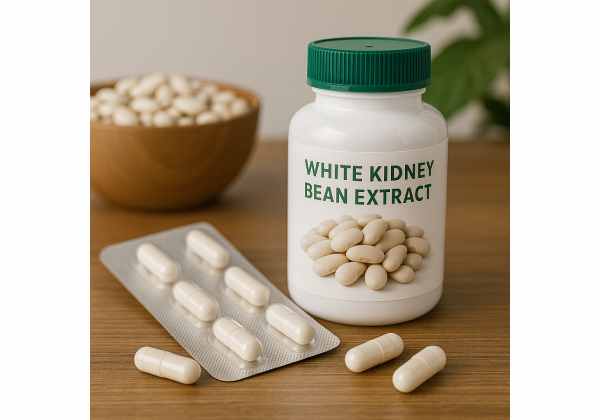
White kidney bean extract is marketed as a “carb blocker,” which makes it sound more powerful and more precise than it really is. The basic idea is plausible: the extract can inhibit alpha-amylase, an enzyme involved in starch digestion, so some carbohydrate from starchy meals may be broken down and absorbed less efficiently. The harder question is whether that translates into meaningful weight loss in real life.
The most accurate answer is mixed. White kidney bean extract may help a little in some people, especially when used before higher-starch meals as part of a calorie-controlled plan, but the evidence is not strong enough to treat it as a major fat-loss tool. It is better understood as a modest, optional supplement with a narrow use case than as a true solution for weight management.
Table of Contents
- What white kidney bean extract is and how it is supposed to work
- Does it actually work for weight loss
- Who might see the most benefit
- Dose timing and what labels actually mean
- Side effects safety and quality concerns
- How it compares with other weight loss options
- Is it worth trying
What white kidney bean extract is and how it is supposed to work
White kidney bean extract usually comes from Phaseolus vulgaris and is sold as a concentrated source of alpha-amylase inhibitors, sometimes called phaseolamin. Alpha-amylase is one of the enzymes that helps break starch into smaller sugars. If that enzyme is partially inhibited, the theory is that some starch from foods like bread, rice, pasta, potatoes, and other dense carbohydrate sources will be digested less efficiently.
That mechanism is the reason “carb blocker” became the popular nickname. But the label can be misleading because it implies an all-or-nothing effect. White kidney bean extract does not turn carbohydrate absorption off. At best, it may reduce digestion of some starch under certain conditions.
A few practical details help explain why results are so variable:
- It is aimed mainly at starch, not sugar.
- It works only if it is taken close to a carbohydrate-containing meal.
- It is more relevant for meals that are actually high in starch.
- Its effect depends on the strength and standardization of the product.
- It does not erase the calories from fats, liquids, desserts, or grazing outside the targeted meal.
That last point is where a lot of disappointment starts. Someone may take a carb blocker before pasta and assume the whole meal is partly “cancelled out.” But if the meal also includes oil, cheese, dessert, alcohol, or a big portion overall, the supplement has not changed the bigger calorie picture very much.
It also helps to separate the supplement from the food itself. Eating beans as part of a high-fiber diet is one thing. Taking a processed bean extract before meals is something else entirely. One is a food pattern. The other is a targeted supplement strategy.
In theory, this kind of extract could be most useful in a narrow scenario: someone who eats a fairly consistent diet, tends to consume most of their excess calories from starchy meals, and wants a modest add-on rather than a dramatic effect. It is far less convincing for someone whose weight gain is driven mainly by snacking, restaurant portions, alcohol, liquid calories, or highly palatable mixed meals.
That is why it is better to think of white kidney bean extract as a starch-digestion modifier, not a general weight-loss engine. The mechanism is real enough to study, but much narrower than the marketing usually suggests.
Does it actually work for weight loss
The short answer is: maybe a little, but not in a way that most people should expect to notice dramatically.
The evidence base for white kidney bean extract is mixed. Older systematic review data found that the overall trial quality was poor and did not support firm conclusions about meaningful weight loss. More recent randomized trials and newer reviews are somewhat more encouraging, but the best interpretation is still modest rather than impressive.
A fair summary of the evidence looks like this:
- Some studies show small reductions in body weight and body fat.
- The effect tends to look better when the extract is standardized and taken before starch-heavy meals.
- Results are usually measured over weeks to a few months, not years.
- The average benefit appears to be limited, not transformational.
- The overall literature still has issues with small sample sizes, short duration, and product variability.
That combination matters. A supplement can have a plausible mechanism and some positive trial results without earning the label of “proven” in the everyday sense people mean when they ask if it works.
The recent studies are important because they suggest the category is not pure hype. But even the better trials do not turn white kidney bean extract into a first-line fat-loss tool. The most realistic view is that it may slightly improve weight outcomes for some users, particularly when the rest of the plan is already organized. That is very different from saying it meaningfully overcomes overeating.
One practical way to frame it is this: if your diet is already on track and you want a small edge at higher-starch meals, the supplement might add something. If your diet is inconsistent, your portions are large, or your calories are drifting in from many directions, it is unlikely to change much.
This is the same problem seen with many weight-loss supplements. The more chaotic the overall eating pattern, the less any targeted supplement matters. A person who would benefit most from white kidney bean extract is usually someone who is already doing most things well. A person hoping the extract will make discipline unnecessary is usually the one most likely to feel disappointed.
So does it work? Somewhat, under the right conditions, in a limited way. That puts it in a very different category from stronger prescription options and also below the importance of getting the basics right, including a workable calorie deficit and avoiding the common diet mistakes that stall weight loss.
Who might see the most benefit
White kidney bean extract is not equally suited to every type of eater or every type of weight-loss plan. If it helps at all, it will usually help most in a fairly specific situation.
The best candidate is someone who:
- eats several meals per week that are clearly starch-heavy
- wants a small supplement, not a major medication-like effect
- already has a reasonably structured eating pattern
- is trying to reduce the calorie impact of portion-heavy carb meals
- understands that the likely benefit is modest
A weaker candidate is someone whose diet is driven more by:
- sweets and sugary drinks
- alcohol
- late-night snacking
- highly processed mixed foods eaten mindlessly
- frequent restaurant meals with large fat and calorie loads
That difference matters because white kidney bean extract is usually discussed as if “carbs” are the whole problem. In practice, many people overeat from a combination of fat, sugar, convenience foods, stress eating, and big portions. A starch blocker does not touch most of that.
It may also appeal more to people using a higher-carb eating style than to those already on a low-carb plan. If someone is eating very few starches, there is not much for the supplement to act on. In that sense, it is a targeted tool, not a universal one.
There is also a psychological fit to consider. Some people use supplements well because they see them as small supports layered onto a solid routine. Others use them as permission to be looser with meals. White kidney bean extract is a poor fit for the second group. If taking it makes you think, “I can afford to eat more pasta, bread, or fries now,” the net result may be neutral or even worse.
A helpful reality check is to look at your diet honestly for one week. If most of your excess calories come from oversized starch servings, the extract has a plausible job. If your real issue is grazing, takeout, dessert, alcohol, or emotional eating, the better move is to address those drivers first. In many cases, a structure like tracking without counting every calorie or more deliberate mindful eating habits will matter far more than a carb blocker.
So the right question is not only “does it work?” It is “does it match the way I actually eat?” For many people, the answer will be no.
Dose timing and what labels actually mean
With white kidney bean extract, timing and label quality matter as much as the ingredient itself.
Many products are sold as “Phase 2,” “phaseolamin,” “carb blocker,” or simply white kidney bean extract. The problem is that the front label often tells you less than you need to know. Two bottles may both say white kidney bean extract, yet contain very different levels of alpha-amylase inhibitor activity.
That is why standardization matters. A more useful label will tell you not only the amount of extract, but also the alpha-amylase inhibiting activity. In practical use, this is often listed in AAIU or a similar potency measure. Without that, the product is harder to judge.
A useful general framework is:
- take it before starch-containing meals
- use it only when the meal actually contains meaningful starch
- do not expect much benefit from taking it with a very low-carb meal
- avoid assuming the product works if the label does not make potency clear
According to current monograph-style guidance used in Canada for weight management claims, products are often standardized around alpha-amylase inhibitor activity and used at a total of 1 gram three times daily, usually before meals, for a total of 3 grams per day. That does not prove this is the best dose for everyone, but it gives a useful real-world reference point and shows that standardization is part of how reputable guidance approaches the ingredient.
| Label feature | Why it matters | What to prefer |
|---|---|---|
| Total extract amount | Tells you how much raw ingredient is included | Useful, but not enough by itself |
| Standardized enzyme inhibition | Shows actual alpha-amylase blocking potency | Prefer products that disclose it clearly |
| Serving timing instructions | The ingredient needs to match the meal | Take before higher-starch meals |
| Blend with other ingredients | Makes it harder to know what is doing what | Prefer simpler formulas |
| Third-party quality signals | Improves confidence in consistency | Prefer products with stronger testing standards |
This is also one of those supplements where “more” is not obviously better. If you take it with meals that do not contain much starch, extra capsules do not solve that mismatch. And if you buy a vague multi-ingredient blend, you may not even know whether the bean extract is present in a useful amount.
If label interpretation is not your strength, it is worth learning how to read supplement labels and why third-party testing matters before spending money on a product in this category.
Side effects safety and quality concerns
White kidney bean extract is usually described as fairly well tolerated, and compared with stronger stimulant-based weight-loss products, that is generally true. But “fairly safe” is not the same as “worth taking without thought.”
The most common side effects are gastrointestinal, which makes sense given how the supplement works. If more starch reaches the lower gut without being fully digested, it can increase fermentation and digestive symptoms.
Common complaints include:
- gas
- bloating
- abdominal discomfort
- changes in stool pattern
- mild diarrhea
For many people these effects are mild. For others they are enough to make the supplement not worth the trouble, especially if meals are already high in fiber or the gut is sensitive.
A less obvious issue is product quality. White kidney bean extract is not one single standardized pharmaceutical ingredient. Products vary in bean source, extraction method, potency, and transparency. That creates a gap between what the research studies and what consumers actually buy. A person may read about a trial using a standardized extract, then purchase a looser commercial formula that uses the same marketing language but not the same potency.
There is also an important distinction between a processed supplement extract and raw or undercooked beans. Raw kidney beans can contain problematic compounds such as phytohaemagglutinin. Properly manufactured extracts are processed differently and are not the same as eating undercooked beans, but this is one more reason why product quality and reputable sourcing matter.
A few groups should be more cautious:
- people with significant digestive sensitivity
- people with diabetes or glucose-lowering therapy who are changing carbohydrate handling
- pregnant or breastfeeding women, because safety data are limited
- children and teens unless guided by a clinician
- people taking multiple supplements who cannot tell which ingredient is causing symptoms
It is also smart to avoid using the supplement as cover for extreme “cheat meals.” A carb blocker plus a very large restaurant meal is not a low-risk loophole. It is just a large meal plus a supplement.
Compared with many products marketed as thermogenic aids, white kidney bean extract is not among the more alarming categories. Even so, it belongs in the same general caution zone as other optional weight-loss supplements: potentially useful, often overmarketed, and best handled with more skepticism than enthusiasm. That is especially true if you have been drawn before to products with bold claims similar to those discussed in fat burner supplement warnings.
How it compares with other weight loss options
White kidney bean extract makes more sense when you compare it honestly with the alternatives.
Its main appeal is that it is relatively simple, usually non-stimulant, and mechanistically targeted. For someone who does not want a stimulant-heavy product and is curious about a meal-based supplement, that is a reasonable niche. But once you compare it against stronger evidence-backed options, its limits become clearer.
Here is the practical hierarchy most people should keep in mind:
- Diet structure and calorie control matter most.
- Protein, fiber, meal quality, and activity matter next.
- Prescription medications, when appropriate, usually have far stronger average effects than white kidney bean extract.
- White kidney bean extract sits in the small-add-on category.
That does not make it useless. It just prevents the category mistake of expecting supplement-level evidence to act like medication-level treatment.
Compared with other supplements:
- It is usually less aggressive than stimulant-heavy formulas.
- It is more targeted than broad “metabolism booster” claims.
- It is less likely to help if your problem is appetite rather than starch-heavy meals.
- It may be easier to tolerate than some products, but it is also less likely to make a clearly noticeable difference.
Compared with a whole-food strategy, it can also look less impressive. Many people would get better results from building meals around more protein and fiber, reducing refined starch portions, and using simple habits that limit overeating. A smart adjustment in daily carbohydrate intake or an increase in fiber-rich foods will usually do more for hunger and calorie control than a carb blocker.
It is also worth noting that the supplement does not teach eating skills. It does not help you navigate weekends, restaurants, travel, stress, or food environment triggers. Those are the situations where weight loss often succeeds or fails. So even if white kidney bean extract provides a measurable effect in a trial, the real-world value may still be limited if the rest of a person’s routine is unstable.
In other words, it is easier to find a narrow scientific rationale for white kidney bean extract than it is to make a strong case that most people truly need it.
Is it worth trying
For some people, yes. For most people, it should sit low on the priority list.
White kidney bean extract may be worth trying if all of the following are true:
- you want a small, meal-targeted supplement rather than a major intervention
- your diet includes regular starch-heavy meals
- you already understand that the likely effect is modest
- you are willing to choose a standardized, clearly labeled product
- you will judge it over several weeks, not a few days
It is probably not worth trying if:
- you want a dramatic or medication-like result
- your overeating comes mostly from snacking, alcohol, desserts, or mixed restaurant meals
- you hope it will “cancel out” poor eating choices
- you dislike digestive side effects
- you tend to buy many supplements instead of tightening the fundamentals
A sensible way to think about it is not “Will this make me lose weight?” but “Is this one of the next best moves for my situation?” Often the answer is no. Many people still have larger gains available from consistent meal structure, better portion control, more walking, higher protein, or fewer calorie-dense extras.
This is where realistic expectations matter most. If a supplement helps by a small amount and does not cause problems, that can be fine. But it should earn its place. If you spend money, add complexity, and get little visible benefit, then it is not useful just because the mechanism sounds clever.
For a person who already has a strong routine and wants to experiment carefully, white kidney bean extract is not an unreasonable supplement. For a person still trying to build the basics, it is usually a distraction. In that stage, learning to start losing weight and keep it off will almost always matter more than adding a carb blocker.
So does white kidney bean extract work for weight loss? A little, sometimes, in the right context. That is a much more honest answer than either “it is a scam” or “it blocks carbs.”
References
- The efficacy of Phaseolus vulgaris as a weight-loss supplement: a systematic review and meta-analysis of randomised clinical trials 2011 (Systematic Review and Meta-Analysis)
- A randomized, double-blinded, placebo-controlled, single-centre trial to determine the efficacy and safety of a Phaseolus vulgaris extract for weight management in obese subjects 2024 (RCT)
- Proprietary alpha-amylase inhibitor formulation from white kidney bean (Phaseolus vulgaris L.) promotes weight and fat loss: a 12-week, double-blind, placebo-controlled, randomized trial 2024 (RCT)
- Therapeutic Potential of White Kidney Beans (Phaseolus vulgaris) in Obesity and Metabolic Health: A Comprehensive Review 2025 (Review)
- WHITE KIDNEY BEAN EXTRACT 2025 (Monograph)
Disclaimer
This article is for general educational purposes only and is not medical advice. White kidney bean extract can cause digestive side effects, may not be appropriate with some medical conditions or medications, and should not be used as a substitute for individualized advice from a qualified clinician or dietitian.
If you found this article helpful, please share it on Facebook, X (formerly Twitter), or any platform you prefer.