Winter savory is a hardy Mediterranean herb with a sharper, deeper flavor than summer savory and a long history as both a kitchen staple and a traditional remedy. Botanically known as Satureja montana, it belongs to the mint family and is prized for its aromatic leaves, essential oil, and naturally warming character. In food, it is used to brighten beans, meats, and vegetable dishes. In herbal practice, it has been associated with digestive comfort, respiratory support, microbial defense, and general stimulation when the body feels sluggish or burdened by damp, heavy meals.
What makes winter savory especially interesting is the overlap between tradition and chemistry. Its essential oil is rich in carvacrol, thymol, p-cymene, and related terpenes, while its extracts also contain rosmarinic acid and other polyphenols. These compounds help explain why the herb is studied for antioxidant, antimicrobial, and digestive-supporting properties. At the same time, not every traditional claim is equally well proven in people.
A useful modern view of winter savory is this: it is most convincing as a culinary herb with medicinal potential, a digestive ally, and a promising aromatic plant whose strongest uses still depend on preparation, dose, and sensible expectations.
Key Facts
- Winter savory may help support digestion, especially after heavy meals, gas, and mild cramping.
- Its aromatic compounds show promising antimicrobial and antioxidant activity in laboratory research.
- A practical traditional tea range is about 1 to 2 g of dried aerial parts per cup, up to 2 or 3 times daily.
- Avoid casual medicinal use of concentrated essential oil, and use extra caution in pregnancy, breastfeeding, and in young children.
Table of Contents
- What winter savory is and how it differs from other savory species
- Key ingredients and medicinal properties of winter savory
- Potential health benefits and what the evidence suggests
- Common uses in food, tea, and traditional herbal practice
- How to choose winter savory products and use them well
- Dosage, timing, and best ways to take it
- Safety, side effects, and who should avoid it
What winter savory is and how it differs from other savory species
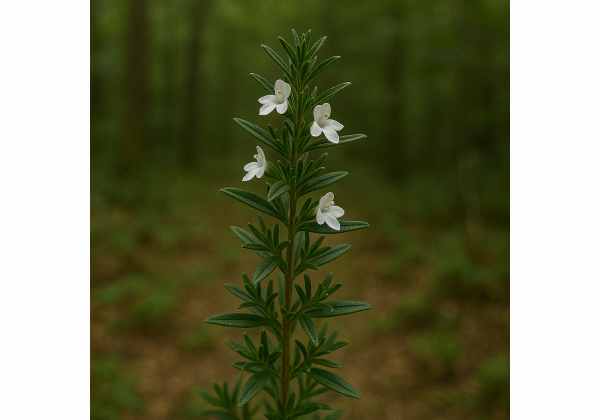
Winter savory, Satureja montana, is a perennial semi-woody herb native to warm, rocky regions of southern Europe and the broader Mediterranean basin. It belongs to the Lamiaceae family, the same botanical group that includes thyme, oregano, mint, basil, rosemary, and many other aromatic culinary herbs. Its leaves are small, narrow, and strongly fragrant, with a taste that is peppery, resinous, and slightly bitter. That intensity is one reason cooks often use it in hearty dishes rather than delicate ones.
The “winter” in winter savory mainly distinguishes it from summer savory, Satureja hortensis. Summer savory is softer, sweeter, and more tender, while winter savory is more robust, more pungent, and often somewhat richer in essential oil. That difference matters for both flavor and medicinal use. When older herb books or folk recipes simply say “savory,” they may not always specify the species, yet the chemistry can vary enough to affect strength and application.
Traditionally, winter savory has been used in several overlapping ways:
- as a culinary digestive herb added to beans, lentils, cabbage, and meat,
- as a household tea for gas, bloating, sluggish digestion, and mild throat irritation,
- as an aromatic herb for respiratory and seasonal support,
- and, in some folk settings, as a stimulating or tonic plant.
Its strongest traditional identity is digestive. This makes sense both culturally and practically. Aromatic herbs from the mint family often earn their place by making rich or difficult foods easier to tolerate. In that sense, winter savory belongs in the same broad culinary-herbal tradition as thyme for aromatic digestive and respiratory support, though its flavor is more peppery and its traditional niche leans more strongly toward carminative use with heavy meals.
The form of the herb also matters. The dried aerial parts are used for tea and cooking, while the essential oil is far more concentrated and should not be treated like the dried herb. Winter savory essential oil can be potent, irritant, and highly variable in composition. Most everyday herbal use is better grounded in the whole herb or a mild infusion rather than in self-prescribed essential oil.
A final reason winter savory deserves careful explanation is that it is often overshadowed by more famous herbs. It lacks the broad consumer recognition of peppermint, oregano, or rosemary, yet it has a strong traditional record and interesting modern chemistry. That makes it a useful herb to know, provided it is approached as a focused digestive and aromatic botanical rather than a cure-all.
Key ingredients and medicinal properties of winter savory
The medicinal character of winter savory comes largely from two chemical groups: volatile essential oil constituents and non-volatile polyphenols.
In the essential oil, the best-known compounds are carvacrol, thymol, p-cymene, gamma-terpinene, and sometimes linalool or beta-caryophyllene, depending on the chemotype and growing conditions. Carvacrol and thymol are especially important because they are strongly associated with antimicrobial and preservative activity. These same compounds appear in related aromatic herbs, but the balance in winter savory can be distinctive and helps explain both its medicinal interest and its strong flavor.
Outside the volatile oil, winter savory also contains phenolic acids and flavonoids. Among these, rosmarinic acid, caffeic acid, chlorogenic acid, rutin, and related antioxidant compounds are especially relevant. These non-volatile constituents are more prominent in tinctures and extracts than in essential oil alone, which is one reason different preparations of the same plant can behave differently.
Together, these ingredients help explain winter savory’s most discussed medicinal properties:
- Carminative, meaning it may help ease gas and digestive discomfort.
- Antimicrobial, especially in laboratory studies of the essential oil.
- Antioxidant, due to both volatile and polyphenolic fractions.
- Mild antispasmodic, which supports its traditional use for cramping and digestive unease.
- Expectorant and anticatarrhal, in traditional respiratory use.
- Food-preserving and flavor-enhancing, which is not just culinary trivia but part of its practical health value.
The chemistry of winter savory is also unusually variable. Soil, harvest timing, climate, drying method, and plant genetics can all change the proportion of carvacrol, thymol, and other volatiles. That means one sample may be more sharply antimicrobial, another more aromatic and gentle, and another richer in certain phenolic compounds. This variability is part of why herbal tradition often relies on the whole plant and repeated experience rather than expecting a single uniform effect from every batch.
A useful practical point is that winter savory combines the properties of a spice herb and a medicinal herb. Many plants are one or the other. Winter savory is both. Its pungency, warming effect, and ability to make heavy food feel easier to digest are not separate from its medicinal chemistry; they are expressions of the same aromatic profile.
This makes winter savory especially interesting for modern readers who want herbs that still make sense in daily life. It is not only something to take as a supplement. It is something to cook with, steep, smell, and use with meals. The strongest case for it comes not from one isolated molecule, but from the interplay of its essential oils and polyphenols across several forms of use.
Potential health benefits and what the evidence suggests
Winter savory has a credible traditional reputation, but the strength of evidence varies depending on the benefit in question.
The most realistic benefit area is digestive support. Traditional use consistently points to winter savory for gas, post-meal heaviness, intestinal cramping, and mild diarrhea-related discomfort. This is plausible because aromatic herbs rich in carvacrol and thymol often stimulate digestion, reduce fermentation-related discomfort, and help settle the stomach after heavy food. Human clinical data are not especially deep, but the combination of historical use, culinary logic, and phytochemistry makes digestive support the most convincing practical application.
A second promising area is antimicrobial activity. Winter savory essential oil has shown antibacterial and antifungal effects in laboratory studies, and this has fueled interest in food preservation, oral preparations, and topical hygiene products. Still, it is important to keep the scale of evidence clear. In vitro antimicrobial activity does not automatically mean a home remedy will cure infection. It supports traditional use and suggests practical potential, but it does not replace medical treatment when infection is serious or persistent.
There is also meaningful interest in antioxidant and anti-inflammatory support. Extracts and tinctures containing rosmarinic acid and other phenolics appear capable of scavenging free radicals and moderating oxidative stress in experimental settings. This may help explain some broader traditional uses for winter savory in tired digestion, seasonal burden, and general restoration after strain.
The herb may also offer mild respiratory support, especially as a warming, aromatic tea for throat irritation or catarrh. In this respect it overlaps with the broader mint-family pattern of combining digestive and respiratory usefulness. Readers familiar with peppermint for digestion and upper-airway comfort will recognize the pattern, though winter savory is usually more warming and pungent than cooling.
A more emerging area is food and gut ecology support. Because winter savory is both edible and antimicrobial, it has attracted interest as a natural preservative and functional culinary ingredient. This is one of the herb’s more practical modern angles. Rather than separating food and medicine, it works at the boundary between them.
Where the evidence is weaker is also important:
- reliable treatment of chronic gastrointestinal disease,
- broad immune enhancement claims,
- established anti-cancer benefit in people,
- and safe, evidence-based internal use of concentrated essential oil.
So the best synthesis is this: winter savory appears most useful for mild digestive complaints, culinary digestive support, and antimicrobial or antioxidant applications that are grounded in traditional use and preclinical evidence. It is promising, but not proven for every benefit sometimes claimed in herb marketing.
Common uses in food, tea, and traditional herbal practice
One of winter savory’s great strengths is that it does not need to be forced into a supplement mindset. It is naturally useful in everyday forms.
1. Culinary seasoning
This is still one of the smartest ways to use winter savory. It pairs especially well with beans, lentils, sausages, roasted vegetables, game, mushrooms, and rich soups. Traditionally, it was often added to foods that tend to cause gas or feel heavy. In that setting, the herb is doing more than flavoring; it is acting as a culinary digestive aid.
2. Herbal tea or infusion
A mild tea made from the dried aerial parts is one of the classic household uses. This is usually taken after meals or during periods of digestive sluggishness, gas, mild cramping, or seasonal throat irritation. Tea is gentler than essential oil and makes the most sense for general home use.
3. Tinctures and liquid extracts
These forms are more concentrated than tea and may capture more of the herb’s polyphenolic profile, depending on preparation. They are convenient, but they vary widely in strength and quality. Tinctures make the most sense when the label clearly states the herb amount or extract ratio.
4. Essential oil use
Winter savory essential oil is mainly relevant for professional aromatherapy, specialized topical products, or carefully formulated preparations. It is not the best entry point for beginners because it can be quite strong and irritating. The whole herb is often more forgiving.
5. Traditional respiratory and oral applications
Some folk uses involve gargles, mouth preparations, and warming teas for the throat or upper airways. These uses fit the herb’s aromatic and antimicrobial identity, though they remain secondary to its digestive role.
A practical way to think about winter savory is this:
- use it in food for daily support and prevention,
- use tea for short-term digestive or seasonal needs,
- and reserve essential oil for very cautious, well-informed use.
This pattern resembles how other culinary aromatics are best used. For example, oregano for culinary and antimicrobial support also sits at the point where food, aroma, and traditional medicine meet. Winter savory is less famous, but it shares that practical versatility.
The most underappreciated aspect of winter savory may be its usefulness in ordinary meals. A herb that improves the flavor of difficult foods while also helping the body tolerate them better is doing something quietly sophisticated. That makes winter savory less dramatic than some trendy botanicals, but often more genuinely useful in real life.
How to choose winter savory products and use them well
Winter savory is available as dried herb, loose tea, capsules, tinctures, and essential oil. The best form depends on your goal, but quality matters more than many buyers expect.
For culinary and tea use, choose dried herb that smells vivid, peppery, and aromatic rather than dusty or stale. The leaves and small flowering tops should look reasonably intact, green-grey rather than brown, and free of excess stems. If the herb smells weak in the jar, it will likely be weak in the cup.
For tinctures, the key questions are:
- Is the botanical name clearly listed as Satureja montana?
- Does the label state the extraction ratio or herb-to-solvent strength?
- Is there a recommended serving size in mL or drops?
- Does the producer explain whether the product is intended for digestive support, topical use, or another purpose?
For capsules, be careful not to assume more is better. Powdered herb capsules may be useful, but they are often less intuitive than tea because they separate the herb from the meal-based context where it naturally shines.
For essential oil, quality and restraint are crucial. Look for a product labeled clearly as Satureja montana essential oil, not a fragrance oil or a vague “savory blend.” Because winter savory oil can be rich in irritating phenols, it should be handled more like a concentrated medicinal oil than a gentle room fragrance. In this respect it deserves caution similar to tea tree in concentrated topical use, even though their traditional purposes are not identical.
A few good rules help avoid disappointment:
- Match the form to the goal.
- Prefer tea or culinary herb for digestive support.
- Use tincture only when the labeling is clear.
- Do not improvise with essential oil internally.
- Buy from suppliers that identify the species and form plainly.
Another useful principle is to let winter savory stay close to its natural context. Herbs that grew into culinary medicine traditions often work best there. A sprinkle in food, a cup of tea after a heavy meal, or a measured short-term infusion may do more good than chasing a “stronger” product with less clarity and more risk.
The best winter savory product is therefore not always the most concentrated. It is the one that fits the reason you are using it and gives you enough information to use it sensibly.
Dosage, timing, and best ways to take it
There is no single official universal dose for winter savory across all forms, so dosage should be guided by preparation and purpose.
For tea or infusion, a practical traditional range is about 1 to 2 g of dried aerial parts per cup, usually steeped in hot water and taken up to 2 or 3 times daily. This is the most reasonable starting point for digestive support at home. Tea works best after meals, during periods of bloating, or when digestion feels slow and crampy.
For culinary use, the dose is naturally flexible. Many people use small pinches to 1 teaspoon of dried herb in soups, stews, beans, or roasted dishes. Culinary use is not standardized like a supplement, but it may still be meaningful over time because winter savory’s value is partly cumulative and contextual.
For tinctures, follow the product label closely. Liquid extracts differ too much in strength to make a universal number especially reliable. In general, tinctures make the most sense for short-term, measured use rather than indefinite, casual dosing.
For essential oil, the best guidance is caution rather than enthusiasm. Oral self-dosing is not a sensible first-line practice. Topical use, if attempted, should be highly diluted and reserved for people familiar with strong aromatic oils. Even then, winter savory essential oil is not the same as a mild herbal tea and should never be treated as such.
Timing depends on the purpose:
- Take tea after meals for digestive heaviness or gas.
- Use culinary herb with difficult foods such as beans, lentils, cabbage, or richer meats.
- Use tincture in short, purposeful intervals rather than all day without a clear reason.
For duration, winter savory is generally best used as a situational or meal-linked herb rather than a daily long-term supplement taken out of context. It is especially useful when digestion needs a nudge, not necessarily as a constant tonic. If you want a gentler daily herb for calm digestion, chamomile for soothing digestive use may sometimes be easier to sustain than winter savory’s more warming style.
The simplest rule is to begin low, observe your response, and use the least concentrated form that fits the goal. For most people, that means starting with food or tea, not extracts or essential oil.
Safety, side effects, and who should avoid it
Winter savory is generally low risk when used in food and modest tea amounts, but that does not make every form equally safe. The biggest safety mistake is assuming that a culinary herb and its essential oil can be used interchangeably.
Possible side effects may include:
- stomach irritation if taken too strongly,
- mouth or throat irritation from concentrated preparations,
- skin irritation from essential oil,
- and, less commonly, allergic reactions in sensitive individuals.
The dried herb in food is the gentlest and best-tolerated form. Tea is usually well tolerated in moderate amounts, though very strong infusions may feel too stimulating or irritating for some people, especially if the stomach is already inflamed.
The essential oil deserves much more caution. Because winter savory oil can be high in carvacrol and thymol, it may irritate skin and mucous membranes if used undiluted. It is not a safe casual oral remedy for most people. Strong aromatic oils can sound attractive because of their potency, but potency without context often leads to avoidable side effects.
People who should use extra caution or avoid medicinal use unless advised otherwise include:
- pregnant or breastfeeding people, because reliable medicinal safety data are limited,
- young children, especially with essential oil use,
- people with active gastritis, reflux, or very sensitive stomachs,
- anyone with known allergy to herbs in the mint family,
- and people using concentrated extracts while also managing complex medical conditions.
For topical aromatics, patch testing is wise. A tiny diluted amount on a small area of skin can help reveal irritation before broader use. If burning, rash, or redness appears, stop use.
A good safety hierarchy looks like this:
- Culinary herb is the mildest and lowest risk.
- Tea is moderate and usually manageable.
- Tincture requires label awareness.
- Essential oil requires the most caution.
That pattern is common among aromatic herbs, especially concentrated oils. If your main goal is digestive comfort with minimal irritation risk, some people may prefer a gentler herb such as fennel for gas and digestive ease, though winter savory can be very effective when used appropriately.
In short, winter savory is safest when treated as a culinary and tea herb first. The more concentrated the form, the more important restraint becomes.
References
- Phytochemical Characterization and Biological Activities of Essential Oil from Satureja montana L., a Medicinal Plant Grown under the Influence of Fertilization and Planting Dates 2024 (Review and Experimental Study)
- Composition and chronic toxicity of dry methanol-aqueous extract of wild-growing Satureja montana 2023 (Safety Study)
- Variability in Biological Activities of Satureja montana Subsp. montana and Subsp. variegata Based on Different Extraction Methods 2022 (Experimental Study)
- Phytochemical Evaluation of Tinctures and Essential Oil Obtained from Satureja montana Herb 2020 (Phytochemical Study)
- Satureja montana L. Essential Oils: Chemical Profiles/Phytochemical Screening, Antimicrobial Activity and O/W NanoEmulsion Formulations 2019 (Review and Experimental Study)
Disclaimer
This article is for educational purposes only and is not a diagnosis, treatment plan, or substitute for professional medical advice. Winter savory may be appropriate as a culinary herb or mild tea, but concentrated extracts and essential oils require much more caution. Do not use winter savory essential oil internally without qualified guidance, and speak with a healthcare professional before medicinal use if you are pregnant, breastfeeding, treating a digestive condition, or considering it for a child.
If this article was helpful, please share it on Facebook, X, or your preferred platform to help more readers find careful, practical herbal information.