Yerba buena (Clinopodium douglasii) is a fragrant trailing herb in the mint family that has long been valued as both a gentle tea herb and a traditional household remedy. In western North America, it is especially associated with soothing minty leaves, a cooling aroma, and folk uses for stomach discomfort, mild aches, colds, and general digestive ease. Its chemistry has not been studied as deeply as better-known mints, but it appears to share several useful traits with related aromatic herbs, including volatile oils and polyphenols that may help explain its traditional reputation.
What makes this plant interesting is not just what it may do, but how it is used. Yerba buena is usually taken as a simple leaf infusion rather than a highly concentrated extract, which makes it approachable for everyday herbal use. At the same time, it deserves a careful, evidence-aware approach. The herb has a long traditional story, but the modern clinical evidence for this exact species remains limited, so the best use of yerba buena is often modest, practical, and safety-first.
Essential Insights
- Yerba buena is traditionally used for mild digestive upset and everyday aches.
- Its mint-family compounds may offer soothing, aromatic, and gently anti-inflammatory effects.
- A practical tea range is 1 to 2 teaspoons dried leaf per 240 mL cup, up to 1 to 3 cups daily.
- People with significant acid reflux, mint-family allergy, or pregnancy-related caution should avoid medicinal use unless advised by a clinician.
Table of Contents
- What Yerba Buena Is and How to Recognize It
- Key Ingredients in Yerba Buena
- Potential Health Benefits and Medicinal Properties
- What the Evidence Actually Shows
- Common Uses and How to Prepare It
- Yerba Buena Dosage Timing and How Long to Use It
- Safety Side Effects and Who Should Avoid It
What Yerba Buena Is and How to Recognize It
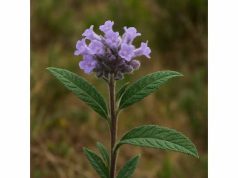
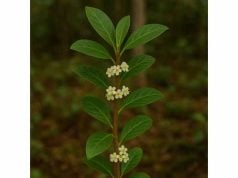
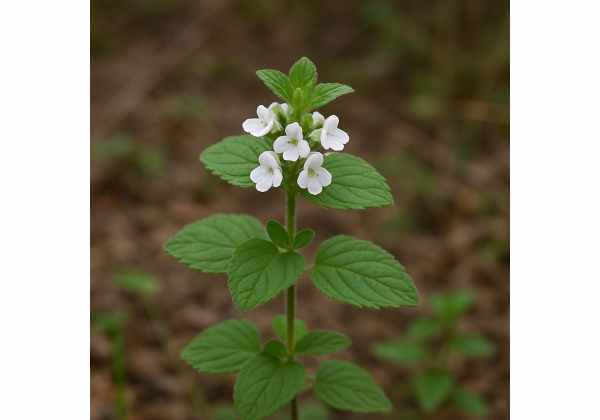
Yerba buena, in the North American sense of the name, refers to Clinopodium douglasii, a low-growing aromatic perennial in the mint family. It forms creeping mats, carries small rounded to oval leaves, and produces delicate pale flowers from the leaf axils. Like other mint relatives, it has opposite leaves and a distinct scent when brushed or crushed. The aroma is one of the easiest clues to its identity: cool, sweet, herbal, and unmistakably mint-like.
One reason this herb can be confusing is that “yerba buena” is a shared common name, not a single guaranteed botanical identity. In different regions, the same name may be used for other mint-family plants, especially Mentha species. For anyone interested in medicinal use, that matters. The taste, chemistry, and safety profile of a tea made from true Clinopodium douglasii may not match a product labeled “yerba buena” in another country or sold as a different mint. If you are harvesting, buying, or writing about the herb, the botanical name is the part that keeps the conversation accurate.
Traditionally, Clinopodium douglasii has been used as both food and medicine. The leaves were brewed as a pleasant herbal tea and also used in folk practice for colds, mild fevers, abdominal discomfort, and general soothing. That dual role is important. Yerba buena has historically not been treated like a harsh medicinal purge or a powerful stimulant. It has been used more like a useful daily herb: aromatic, comforting, and practical.
From a practical standpoint, this herb is best understood as a mild aromatic nervine and digestive mint rather than a dramatic cure-all. People are often drawn to it because it feels accessible. It can be grown in shade, taken as a simple infusion, and used in modest amounts without the intensity of concentrated tinctures or essential oils. That gentler profile is part of its appeal.
If you are new to the plant, focus on three basics before using it: verify the botanical identity, use the leaf rather than a concentrated oil, and keep expectations realistic. Yerba buena shines most in mild, everyday situations rather than severe illness. Readers who enjoy other mint family herbs will recognize the same pattern here: a pleasant aroma, a calming cup, and the most sensible benefits appearing at the level of comfort and support rather than aggressive treatment.
Key Ingredients in Yerba Buena
Yerba buena’s chemistry has not been mapped as thoroughly as peppermint, spearmint, or some heavily commercialized herbal medicines, but the available evidence and broader Clinopodium research point to a familiar mint-family pattern. In plain terms, the plant appears to contain a mix of aromatic compounds and polyphenols that may help explain its scent, flavor, and traditional effects.
The most useful way to think about its key ingredients is by category rather than by pretending the herb has a single magic molecule. Reported or likely contributors include:
- Volatile aromatic compounds, which give the herb its fragrance and may contribute to its cooling, fresh, and mildly soothing character.
- Phenolic compounds, especially compounds in the rosmarinic-acid family, which are often discussed for antioxidant and anti-inflammatory activity.
- Flavonoids, a broad group of plant compounds that may help support the herb’s traditional reputation for gentle tissue-soothing effects.
- Tannins, which can add a subtle astringency and may play a role in topical or mucosal effects.
- Triterpenes and related plant metabolites, which are often explored for their role in plant defense and possible pharmacologic activity.
Among these, rosmarinic acid is the most notable anchor point for understanding yerba buena. It is common in many mint-family plants and is frequently linked in the research literature with antioxidant and anti-inflammatory actions. That does not prove that a cup of yerba buena tea works like a standardized supplement, but it does give a reasonable biochemical explanation for why aromatic mint herbs often feel soothing to the throat, stomach, and upper airways.
Another important point is variability. The chemistry of yerba buena can shift with species confirmation, growing conditions, season, drying method, and the part of the plant used. Fresh leaf, dried leaf, and concentrated essential fractions are not the same thing. That is one reason traditional use often centers on the whole leaf or a leaf infusion. Whole-herb tea tends to deliver a broader and gentler chemical profile than a concentrated oil or extract.
This matters for readers searching for “key ingredients” because the answer is not just a list of compounds. The form of use changes the experience. A mild infusion gives you a lower-intensity mix of water-soluble and lightly aromatic constituents. A concentrated product may emphasize a narrower slice of the chemistry and bring more safety concerns.
So when people describe yerba buena as anti-inflammatory, digestive, or calming, they are usually talking about the combined effect of its aromatic oils and polyphenol-rich leaf chemistry, not a single isolated ingredient. That broader view is more honest, and it fits how the herb has actually been used for generations.
Potential Health Benefits and Medicinal Properties
The potential benefits of yerba buena are best presented in a layered way: strongest as traditional use, moderately plausible from chemistry and mint-family comparison, and only lightly backed by direct modern human research on this exact species. That may sound cautious, but it is the most useful way to understand the herb without overselling it.
1. Digestive comfort
This is the most believable and practical benefit. Yerba buena has a long history as a tea for stomach discomfort, mild cramping, gas, and a sense of digestive heaviness. Aromatic mint-family herbs often feel helpful after meals because they can encourage a relaxing, settling sensation in the gut. In that sense, yerba buena resembles peppermint, though it should be thought of as gentler and less studied rather than interchangeable.
2. Mild pain and tension support
Traditional use often places yerba buena in the category of small everyday aches: headache, muscle discomfort, body soreness, or a crampy stomach. This may relate to aromatic compounds and the broader mint-family tendency toward mild spasm-relieving and soothing effects. For some people, even the smell of the leaves contributes to the perception of relief.
3. Respiratory and throat comfort
Warm yerba buena tea has traditionally been used during colds, throat irritation, and stuffiness. Here again, the likely value is supportive rather than curative. A hot aromatic infusion may feel easier to drink than plain water when someone is congested, chilled, or mildly uncomfortable.
4. Gentle topical use
Traditional herbal practice also includes topical application of cooled tea, crushed leaf, or simple poultices for minor discomforts. This is a lower-confidence use scientifically, but it is a common folk pattern for aromatic herbs with mild astringent and soothing properties.
5. General calming and sensory comfort
Not every herbal effect needs to be dramatic to matter. Yerba buena’s scent, taste, and warmth make it a comforting plant. Some people find that its benefit lies partly in ritual: a cup after meals, a warm drink during a cold, or a familiar herb that signals rest and recovery.
The phrase “medicinal properties” is accurate if used with restraint. Yerba buena may reasonably be described as aromatic, carminative, gently antispasmodic, and potentially soothing. It should not be described as a proven treatment for infections, chronic inflammatory disease, or severe pain. Used within that realistic frame, it remains a genuinely valuable household herb.
What the Evidence Actually Shows
This is where expectations should become sharper. Yerba buena has meaningful traditional use, but the direct clinical evidence for Clinopodium douglasii is still thin. Most of what supports the herb falls into three categories:
- ethnobotanical records documenting how communities have used it,
- laboratory or phytochemical work on Clinopodium species and mint-family compounds,
- evidence from better-studied aromatic mints that helps explain plausible mechanisms.
That does not mean the herb is useless. It means the evidence is uneven. For a reader choosing whether to try yerba buena tea for a mildly upset stomach, that may be enough. For someone hoping it will replace treatment for chronic pain, infection, or gastrointestinal disease, it is not enough.
A sensible reading of the evidence looks like this:
- Traditional use is strong. The herb has a durable record as a tea herb and folk remedy.
- Mechanistic plausibility is moderate. Mint-family plants often contain volatile compounds and polyphenols with soothing, antispasmodic, and antioxidant potential.
- Direct human proof is limited. There are not many rigorous trials on this exact species using standardized preparations and meaningful clinical endpoints.
- Safety data are incomplete. Culinary-style use appears much less concerning than concentrated medicinal use, but absence of evidence is not the same as proof of safety.
This section matters because a lot of herb writing blurs the difference between “used traditionally,” “studied in a lab,” and “proven in humans.” Those are not the same claim. Yerba buena deserves the respect of being described accurately. The best-supported everyday conclusion is that a correctly identified leaf tea may be a reasonable traditional herb for mild digestive or comfort use. The least-supported conclusion would be to call it a clinically proven remedy for major disease.
That also affects how readers should judge results. If yerba buena helps, the improvement is likely to be modest: less bloating, a calmer stomach, a warmer throat, a more comfortable evening, or a small sense of relief during a cold. Those are valid outcomes. They simply belong to supportive care, not miracle medicine.
If a symptom is persistent, severe, or unexplained, use that as the line where home herbal care stops. Ongoing abdominal pain, repeated vomiting, blood in stool, significant shortness of breath, fever that does not settle, or worsening dental pain all deserve standard medical assessment.
Common Uses and How to Prepare It
Yerba buena is most useful when prepared simply. The traditional form is a leaf infusion, and that is still the best place to start. Simple preparations help keep the experience gentle and reduce the chance of problems that can come with concentrated oils or overly strong extracts.
Most common uses
- A warm tea after meals for mild digestive discomfort
- A soothing drink during a cold or scratchy throat
- A mild comfort herb for everyday tension or minor aches
- A cooled infusion for simple topical use on intact skin
- A culinary herb in the same broad family of uses as other mints and savory herbs
How to make a basic infusion
- Use 1 to 2 teaspoons of dried leaf, or about 1 to 2 tablespoons of fresh leaf, per 240 mL cup of hot water.
- Cover and steep for about 5 to 10 minutes.
- Strain and sip slowly.
- Start with one cup to judge tolerance before using it more regularly.
This type of preparation respects the herb’s traditional profile. It is not overly concentrated, it preserves aroma, and it is easy to adjust. If you want a lighter cup, shorten the steep time. If you want a fuller mint note, use fresh leaves.
For topical use
A cooled infusion can be used as a simple compress or rinse on a small area of intact skin. Keep it basic and avoid applying it to deep wounds, infected skin, or areas near the eyes. If the skin stings, reddens, or itches more, discontinue use.
What not to do
- Do not ingest undiluted essential oil.
- Do not assume every “yerba buena” product is Clinopodium douglasii.
- Do not use a strong medicinal preparation when a mild tea would do.
- Do not use the herb to delay care for dental infection, severe reflux, or serious illness.
People who already enjoy spearmint or other kitchen mints often appreciate yerba buena for the same reason: it is easy to use, pleasant to drink, and naturally suited to low-intensity support. In practice, that is where the herb performs best. It is less about dramatic intervention and more about good timing, gentle dosing, and realistic use.
Yerba Buena Dosage Timing and How Long to Use It
Because yerba buena is not a standardized pharmaceutical and the direct clinical literature is limited, dosage should be practical rather than aggressive. For most adults, the safest approach is to use the herb in food-like or tea-like amounts first, then decide whether it suits you.
A practical starting range
- Dried leaf infusion: 1 to 2 teaspoons per 240 mL cup
- Fresh leaf infusion: 1 to 2 tablespoons per 240 mL cup
- Frequency: 1 cup once or twice daily at first
- Typical upper everyday range: up to 3 cups per day for short periods if well tolerated
That range is best viewed as a traditional use range, not a clinically established therapeutic dose. More is not automatically better. In fact, strong minty herbs can become less comfortable when pushed too far, especially in people prone to reflux, nausea, or sensitivity to aromatic plants.
Best timing
- After meals if the goal is digestive comfort
- Warm and slowly sipped during a mild cold
- In the evening if the tea feels comforting rather than stimulating
- As needed for short periods, instead of on autopilot every day for months
How long to use it
For occasional use, a few days to a couple of weeks is a reasonable self-care window. If you find yourself relying on yerba buena daily for ongoing symptoms, that is a sign to step back and ask what the symptom is trying to tell you. Repeated bloating, frequent cramping, chronic sore throat, or recurring headaches deserve a closer look instead of indefinite herb use.
Adjustments that improve tolerance
- Use a weaker cup if you are sensitive to mints
- Drink it after food rather than on an empty stomach
- Avoid very strong late-night servings if you have reflux
- Use plain leaf tea before trying mixed herbal products
Avoid guessing with extracts, capsules, or essential oils unless the product clearly states the botanical identity and provides reliable dosing information. Since “yerba buena” can refer to different plants in different markets, concentrated products create more room for confusion than a simple tea made from a verified leaf.
In short, the best dosage philosophy for yerba buena is low, clear, and short-term: enough to be useful, not enough to turn a gentle herb into an unnecessary risk.
Safety Side Effects and Who Should Avoid It
For most healthy adults, a modest yerba buena leaf tea is likely to be the lowest-risk way to use the herb. Even so, “natural” does not mean risk-free, and safety becomes more important when the plant is misidentified, concentrated, or used medicinally for extended periods.
Possible side effects
- Heartburn or a reflux flare in sensitive people
- Nausea or stomach irritation if taken too strong or on an empty stomach
- Mouth or skin irritation in people sensitive to aromatic herbs
- Allergic reactions, especially in those who already react to mint-family plants
Because yerba buena is an aromatic mint-family herb, some safety cautions are based partly on direct tradition and partly on what is known from better-studied mint preparations. That is a reasonable approach when species-specific data are sparse, but it also means caution is wiser than confidence.
Who should avoid medicinal use unless advised by a clinician
- People with significant GERD or frequent heartburn
- Pregnant or breastfeeding individuals using it in medicinal, not culinary, amounts
- Infants and very young children, especially around concentrated mint oils
- Anyone with a known allergy to mint-family herbs
- People with persistent abdominal pain, gallbladder symptoms, or unexplained nausea
Drug interaction caution
Specific interaction studies on Clinopodium douglasii are limited, but it is still wise to be careful if you take:
- multiple daily prescription medicines,
- sedating medicines,
- acid-suppressing drugs while also using concentrated mint products,
- herbs or supplements with overlapping gastrointestinal or calming effects.
If you are taking medicine for reflux, chronic digestive disease, or pain, medicinal herb use is worth discussing with a clinician or pharmacist. That is especially true if you plan to use more than a cup or two of tea, or anything more concentrated than plain leaf.
Important practical safety rules
- Use correctly identified plant material only.
- Do not ingest essential oil unless specifically formulated for internal use and guided by a qualified professional.
- Stop use if symptoms worsen rather than improve.
- Seek prompt care for severe symptoms instead of trying to “herb your way through” them.
A useful comparison is lemon balm and other gentle kitchen-medicine herbs: they can be genuinely helpful, but their value comes from appropriate use, not from exaggerated claims. Yerba buena belongs in that same thoughtful category.
References
- The Chemical Composition, Pharmacological Activity, Quality Control, Toxicity, and Pharmacokinetics of the Genus Clinopodium L. 2025 (Review)
- A review of ethnobotanical studies reveals over 500 medicinal plants in Mindanao, Philippines 2024 (Review)
- A Comprehensive Review of Rosmarinic Acid: From Phytochemistry to Pharmacology and Its New Insight 2022 (Review)
- Exchange of medicinal plant information in California missions 2020 (Ethnobotanical Review)
- Review article: The physiologic effects and safety of Peppermint Oil and its efficacy in irritable bowel syndrome and other functional disorders 2018 (Review)
Disclaimer
This article is for educational purposes only and is not medical advice, diagnosis, or treatment. Yerba buena may be helpful as a traditional herbal support, but it is not a substitute for professional care, especially for severe pain, persistent digestive symptoms, breathing problems, infection, pregnancy-related concerns, or chronic illness. Herbal effects can vary by species, product quality, dose, and individual sensitivity. If you take prescription medicines, have an ongoing medical condition, or are considering medicinal rather than culinary use, speak with a qualified healthcare professional before using this herb.
If you found this article useful, please share it on Facebook, X, or your preferred platform to help more readers find careful, practical herbal information.