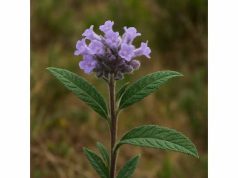
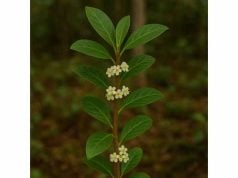
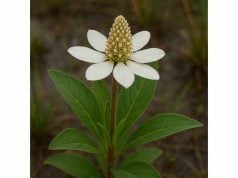
Yerba de la Negrita, botanically known as Calea ternifolia and often sold under the older name Calea zacatechichi, is a bitter aromatic herb native to Mexico and parts of Central America. It is best known as the so-called “dream herb,” a reputation that comes from long-standing ceremonial and traditional use rather than from strong modern clinical evidence. In folk medicine, it has also been used for digestive complaints, fever, appetite changes, and blood sugar concerns.
What makes this plant especially interesting is the gap between tradition and research. Laboratory and animal studies suggest that its compounds may influence sleep architecture, pain perception, mood-related behavior, and glucose handling. At the same time, the evidence in humans remains limited, and safety questions are more important than many casual online descriptions admit. That makes Yerba de la Negrita a plant worth discussing with care. It may have useful properties, especially for dream intensity and relaxation, but it should be approached as a potent, bitter, and not fully understood herb rather than as a gentle wellness tea for everyone.
Essential Insights
- Yerba de la Negrita is most often used for dream vividness, dream recall, and evening relaxation.
- Traditional use and early research also point to digestive, pain-relieving, and possible blood sugar effects.
- A cautious customary tea range is about 1 to 2 g dried aerial parts per cup, usually once in the evening.
- Start low because bitterness, nausea, and next-day grogginess are common at stronger amounts.
- Avoid it if you are pregnant, breastfeeding, taking sedatives, managing liver or kidney disease, or using it for lucid dreaming while living with active psychiatric symptoms.
Table of Contents
- What Yerba de la Negrita Is and Why It Is Known as the Dream Herb
- Key Compounds and Medicinal Properties
- Potential Health Benefits of Yerba de la Negrita
- Traditional Uses and Modern Interest
- Dosage, Timing, and Preparation
- Safety, Side Effects, and Interactions
- How to Use Calea ternifolia Responsibly
What Yerba de la Negrita Is and Why It Is Known as the Dream Herb
Yerba de la Negrita belongs to the daisy family, Asteraceae. It grows as a shrub-like herb and has long been associated with Indigenous and regional medicinal traditions in Mexico. Although the herb is widely marketed online as a lucid dreaming aid, that modern label only captures part of its story. Traditionally, it has been used not only in rituals tied to dreams and divination, but also for ordinary physical complaints such as stomach upset, cough, fever, and metabolic concerns.
Part of the confusion around this plant comes from naming. In scientific and commercial circles, Calea ternifolia and Calea zacatechichi are often used for the same herb. Readers trying to identify products should know both names, because labels, herbal shops, and research papers still alternate between them. That matters when comparing products or trying to match a traditional preparation with published studies.
Its reputation as a dream herb likely comes from its effects on sleep-related experience rather than from a classic stimulant or sedative profile. People do not usually describe it as simply making them “sleepy.” Instead, they often describe more intense dream imagery, easier dream recall, strange awakenings, or a more noticeable transition into sleep. That pattern helps explain why the plant attracts people interested in vivid dreaming, meditation, and altered dream awareness. Still, those reports do not mean the herb has been clinically proven to induce lucid dreams in a dependable way.
Another feature that stands out is taste. Yerba de la Negrita is very bitter. That bitterness is not a side detail. It affects compliance, dosing, and tolerability. Many people stop using it not because it does nothing, but because they dislike the flavor or feel mildly nauseated after taking it. In herbal medicine, bitterness often suggests the presence of bioactive compounds, but it does not guarantee safety or benefit.
The best way to frame this herb is as a traditional, pharmacologically interesting plant with a specialized reputation. It is not equivalent to a bedtime tea for general relaxation, and it is not a proven treatment for insomnia or dream disorders. People comparing it with gentler nighttime herbs may find it helpful to first understand better-studied options such as valerian for sleep support, because Yerba de la Negrita is less predictable and less clinically established.
Key Compounds and Medicinal Properties
The chemistry of Yerba de la Negrita helps explain why it has such a distinct profile. Research on its aqueous extracts and related preparations has identified chlorogenic acid derivatives, flavonoids such as acacetin-related compounds, and several sesquiterpene lactones and germacranolides. These are not just laboratory curiosities. They are the compounds most often discussed when researchers try to explain the herb’s effects on dreams, mood-related behavior, abdominal discomfort, and toxicity.
From a practical standpoint, the herb’s medicinal properties can be grouped into a few broad categories:
- Bitter digestive activity
- Neuroactive or sleep-modifying effects
- Mild analgesic and antispasmodic potential
- Antioxidant and phytochemical activity
- Possible glucose-related effects in preclinical models
The most attention goes to its neuroactive profile. Some researchers think its oneirogenic reputation may be linked to interactions with cholinergic and dopaminergic pathways, along with effects on sleep stages and hippocampal signaling. This is one reason dream-related claims continue to follow the herb. Still, this does not mean Yerba de la Negrita works like a simple sedative. In fact, its effects can feel oddly mixed. Some users report calmness, some report vivid dreams, and others report nausea or restless, fragmented sleep.
Its bitterness also matters medicinally. Bitter herbs often stimulate digestive secretions and are sometimes used before or after meals to support appetite or digestion. That does not prove Yerba de la Negrita is an ideal digestive herb, but it helps explain why traditional medicine did not limit the plant to dream rituals alone.
The sesquiterpene lactones deserve special mention. They likely contribute to biological activity, but compounds in this class can also be irritating or toxic depending on dose, preparation, and individual sensitivity. That is one reason why discussions of this herb should never stop at benefits. A plant can be pharmacologically active and still be poorly suited for casual experimentation.
Another useful perspective is that not all extracts behave the same way. A water infusion, an alcohol extract, and a smoked preparation can expose the body to different amounts and patterns of compounds. That makes the herb harder to standardize than many supplement users assume. A person may have one experience with a tea and a very different one with a concentrated extract.
For readers interested in the overlap between plant chemistry and calming effects, passionflower for nighttime calm offers a good contrast. Passionflower is also associated with relaxation and sleep support, but its evidence base, taste profile, and tolerability tend to be more approachable than those of Yerba de la Negrita.
Potential Health Benefits of Yerba de la Negrita
The most honest way to discuss benefits is to separate traditional use, preclinical findings, and proven human outcomes. Yerba de la Negrita has interesting signals in all three areas, but those signals are not equally strong.
The best-known potential benefit is support for dream vividness and dream recall. This is the core reason people seek the herb today. Traditional use strongly supports this reputation, and newer research has explored mechanisms that could help explain it. Even so, there are no large, high-quality human trials showing that it reliably induces lucid dreaming in the average user. The more accurate statement is that it has a long traditional association with dream enhancement and some neuropharmacological findings that make the claim plausible.
A second possible benefit is relaxation or mood modulation. Animal studies suggest anxiolytic- and antidepressant-like effects at certain doses, while higher doses may be more sedating. That sounds promising, but animal data do not automatically translate into a safe or effective mood herb for people. At present, this should be viewed as preliminary, not clinical proof.
The herb also shows potential digestive and pain-related activity. Folk use includes stomach complaints, cough, and abdominal discomfort, and some experimental work suggests antinociceptive effects, especially in visceral pain models. This fits the way many bitter traditional herbs are used, though again the human evidence is thin. Someone looking mainly for digestive support would usually be better served by a clearer, gentler option such as peppermint for digestive soothing.
A fourth area of interest is blood sugar regulation. Compounds isolated from Calea ternifolia have shown antihyperglycemic activity in preclinical work, and traditional medicine has used the plant in that context. That is scientifically important, but it does not justify self-treating diabetes with this herb. The evidence is still early, and the safety profile is not reassuring enough to support casual metabolic use. People seeking herbs for glucose support are better off starting with plants that are discussed more directly in that context, such as gurmar for blood sugar support.
In summary, the most realistic benefits are these:
- Dream vividness and dream recall support
- Possible evening calm or altered sleep experience
- Mild digestive and abdominal comfort potential
- Experimental glucose-related activity that remains unproven in routine human use
What the herb does not clearly offer is a dependable, well-tested clinical benefit for insomnia, depression, anxiety disorders, or diabetes. That distinction protects readers from the two most common mistakes: assuming tradition equals proof, and assuming a dream herb must also be harmless.
Traditional Uses and Modern Interest
Yerba de la Negrita sits at an unusual crossroads between traditional medicine and internet-era curiosity. In traditional settings, it was not merely a novelty herb taken to make sleep more entertaining. It was part of a larger healing and ritual context. Ethnobotanical reports describe its use in dream-based divination, but also in treating poor appetite, digestive trouble, fever, cough, and diabetes-related concerns. That broader picture helps correct the narrow modern idea that the herb has only one purpose.
Modern interest, however, is much more focused. Most people now find this plant because they are looking for one of three things:
- More vivid dreams
- Lucid dreaming support
- A stronger or stranger nighttime experience
That shift in use changes the risk profile. Traditional use usually sits inside a cultural framework that includes preparation style, purpose, timing, and restraint. Modern use, by contrast, often revolves around experimentation, extracts, and anecdotal online claims. In that setting, people may take too much, use concentrated forms without understanding them, or combine the herb with cannabis, alcohol, or sedatives.
Commercial forms also shape expectations. Yerba de la Negrita is sold as loose herb, tea, tincture, capsules, smoking blends, and concentrated extracts. Those forms are not equivalent. Whole-herb tea tends to be the simplest place to start because it more closely resembles traditional aqueous preparations and makes dose escalation slower. Extracts can feel stronger, but they can also make unwanted effects more abrupt and harder to predict.
There is also a modern tendency to compare this herb with other dream-associated plants. Some people discuss it alongside mugwort, blue lotus, or sedative night herbs. That comparison can be useful, but it can also hide the fact that Yerba de la Negrita is exceptionally bitter and has a more unsettled safety profile than many wellness-oriented sleep herbs. It is often marketed as mystical, but in practice it behaves more like a challenging ethnobotanical than a soft, forgiving bedtime botanical.
Another important modern issue is product identity. Because Calea zacatechichi and Calea ternifolia are both used, and because some botanical products are poorly standardized, consumers can struggle to know what they are actually buying. Correct species labeling, part used, extraction method, and preparation instructions all matter. An herb with active sesquiterpene-rich chemistry should not be treated like a generic tea leaf.
So while traditional use gives this plant cultural depth and therapeutic interest, modern use often strips away the context that made it meaningful and comparatively disciplined. The smarter approach is to learn from both worlds: respect the tradition, but keep modern safety standards in view.
Dosage, Timing, and Preparation
There is no clinically established standard dose for Yerba de la Negrita. That is the first and most important point. Unlike a well-studied supplement with a clear dose range from human trials, this herb is used mostly on the basis of traditional practice, product labeling, and individual experimentation. Because of that, the safest approach is conservative.
For tea use, a cautious customary starting point is about 1 to 2 g of dried aerial parts per cup of hot water, usually taken once in the evening. Some people steep it for 10 to 15 minutes, but a longer steep often makes the bitterness much stronger and can make nausea more likely. Beginners are usually better served by a lighter infusion than a dark, aggressive one.
A practical low-risk approach looks like this:
- Start with the low end of the range, especially if you are sensitive to bitter herbs.
- Use it only in the evening, ideally when you do not need to drive later.
- Do not combine it with alcohol or other sleep aids on the first trial.
- Judge the next day as much as the night itself. Grogginess, stomach upset, and strange sleep can matter as much as dream vividness.
Timing is important. People who use it for dream effects commonly take it 30 to 60 minutes before bed. That schedule makes sense because the goal is not daytime benefit but altered sleep experience. It is less suitable for daytime use, especially if you are unsure how you react to it.
Extracts and capsules require extra caution. When a product is standardized or concentrated, the label may look simpler than tea instructions, but the body’s response may be less forgiving. Strong extracts also make it easier to overshoot a comfortable dose. In practical terms, tea is often the better starting format unless the product gives unusually clear manufacturing information.
Duration of use also deserves restraint. This is not an herb that needs to be used every night for general wellness. Intermittent use usually makes more sense than daily habit use, especially because the evidence base is limited and the safety questions are real. If you find yourself increasing the amount to chase stronger dream effects, that is a sign to stop rather than escalate.
The right dose is not the highest one that produces the wildest dreams. It is the lowest one that gives a desired effect without nausea, hangover-like grogginess, agitation, or other unwanted symptoms. With this herb, moderation is not just good advice. It is part of basic risk control.
Safety, Side Effects, and Interactions
Safety is where Yerba de la Negrita deserves much more caution than it usually gets. Some online descriptions present it as a harmless dream tea, but published toxicology and mechanistic work raise meaningful concerns. That does not prove that a single mild tea will harm everyone, but it does mean the herb should not be approached casually.
The most common immediate side effects are:
- Intense bitterness
- Nausea
- Stomach discomfort
- Vomiting in sensitive users or at higher intakes
- Dizziness
- Grogginess the next morning
- Unsettling or fragmented sleep rather than pleasant rest
Some users also report headache, dry mouth, or a strange “heavy” body feeling. Those reactions matter because they often appear before any desired dream effect is judged worthwhile.
More serious concerns come from toxicology data. Research has reported signs of renal and hepatic toxicity in animal work, along with effects on blood markers and cellular toxicity in other settings. Newer research has also raised concern about neuroglial toxicity and interference with cholinergic and dopaminergic pathways. This does not prove that ordinary consumer use will cause organ damage, but it is strong enough to rule out the common claim that the herb is unquestionably safe because it is natural.
People who should avoid it or use it only under professional guidance include:
- Pregnant or breastfeeding women
- Children and teenagers
- People with liver disease or kidney disease
- Anyone taking sedatives, sleep medications, or alcohol regularly
- People with schizophrenia, psychosis, unstable bipolar symptoms, or severe dissociative symptoms
- Anyone who has had strong reactions to bitter Asteraceae-family herbs
Possible interactions also matter. Combining this herb with sedatives, antihistamines, cannabis, alcohol, or other central nervous system depressants may intensify dizziness, confusion, or next-day impairment. Because some studies suggest enzyme-related effects, it is wise to use added caution with medications that depend on stable metabolism, especially when the herb is being taken repeatedly rather than once.
One more safety point is often overlooked: not every vivid dream is beneficial. If a person is already dealing with nightmares, trauma-related sleep disturbance, panic at night, or unstable mental health, a dream-intensifying herb may worsen the experience rather than help it. In those cases, gentler and more predictable approaches are usually safer.
With Yerba de la Negrita, the real safety rule is simple: if you use it at all, use it sparingly, at a low amount, and with the assumption that it may not suit you.
How to Use Calea ternifolia Responsibly
Responsible use starts with expectation management. Calea ternifolia is not a proven lucid dreaming solution, not a primary treatment for metabolic disease, and not a general-purpose calming tea. It is a traditional herb with unusual sleep-related interest, limited human evidence, and a safety profile that demands respect.
The first step is choosing the right form. A clearly labeled loose herb or simple tea product is usually the most transparent option. It lets you see what you are using and keeps the preparation close to traditional aqueous use. A concentrated extract can be appropriate only if the manufacturer explains the plant part, extraction ratio, and intended serving size in plain language.
The second step is checking your reason for use. If your goal is curiosity about dreams, use the herb rarely and cautiously. If your goal is better sleep, it may not be the best fit, because vivid dreaming and restful sleep are not always the same thing. If your goal is help with digestion or stress, there are often gentler herbs with a more reassuring evidence base.
The third step is watching for problems that mean “stop,” not “take more.” These include persistent nausea, repeated vomiting, morning confusion, headaches, anxiety, worsening nightmares, or any sign that sleep is becoming more disturbing rather than more restorative. The herb does not have to produce a severe reaction to be a bad fit.
Quality also matters. Look for products that specify:
- The scientific name
- The plant part used
- Whether the herb is whole, powdered, or extracted
- A clear serving suggestion
- No mystery stimulant or sedative blends
Finally, use it as an occasional ethnobotanical, not as a daily crutch. People often make poor decisions with herbs when they start treating a niche plant as though it were an essential part of nightly self-care. That pattern increases exposure while blurring whether the herb is truly helping.
A balanced conclusion is this: Yerba de la Negrita is fascinating, historically rich, and pharmacologically active, but it is not an herb to romanticize. Its best use is careful, limited, informed use by adults who understand that traditional reputation and modern safety are not the same thing.
References
- Neuropsychopharmacological Induction of (Lucid) Dreams: A Narrative Review 2024 (Narrative Review)
- Mexican calea (Calea zacatechichi Schltdl.) interferes with cholinergic and dopaminergic pathways and causes neuroglial toxicity 2025
- Calea zacatechichi Schltdl. (Compositae) produces anxiolytic- and antidepressant-like effects, and increases the hippocampal activity during REM sleep in rodents 2021
- Safety of Aqueous Extract of Calea ternifolia Used in Mexican Traditional Medicine 2019
- The genus Calea L.: A review on traditional uses, phytochemistry, and biological activities 2018 (Review)
Disclaimer
This article is for educational purposes only and does not replace medical advice, diagnosis, or treatment. Yerba de la Negrita may affect sleep, mood, digestion, and drug metabolism, and published research raises meaningful safety concerns. Do not use it as a substitute for professional care, especially for insomnia, psychiatric symptoms, diabetes, liver disease, kidney disease, or chronic digestive problems. Speak with a qualified healthcare professional before using this herb if you take prescription medicines, use sedatives, are pregnant or breastfeeding, or have a history of nightmares, panic, or unstable mental health.
If this guide was useful, please share it on Facebook, X, or your preferred platform so others can find a more careful, evidence-aware explanation of Yerba de la Negrita.