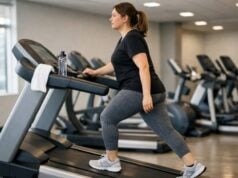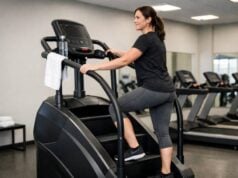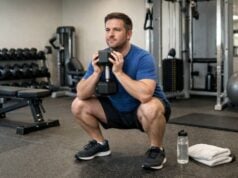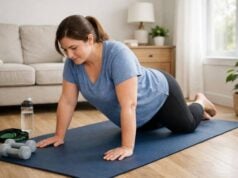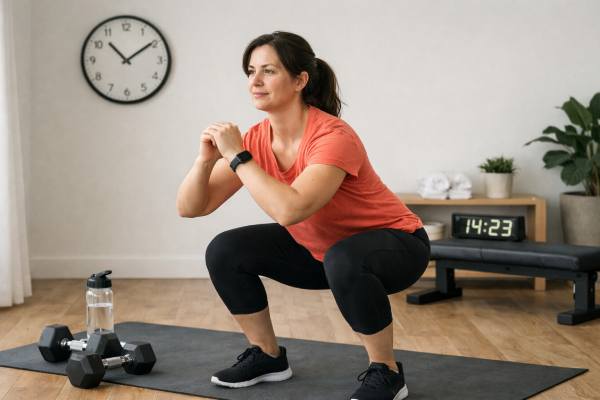
Yes, 15-minute workouts can help with weight loss. The catch is that they work because of consistency, weekly total activity, and what they help you do outside the workout, not because 15 minutes is some special fat-burning number.
A short workout can raise your daily calorie burn, improve fitness, help preserve muscle, and make it easier to stay active on busy days. For many people, that consistency matters more than chasing long, exhausting sessions they rarely complete. The biggest limitation is simple: one 15-minute session does not burn that many calories on its own, so the best results usually come when short workouts are repeated across the week and paired with sensible eating habits.
Table of Contents
- Can 15-minute workouts help you lose weight?
- Why short workouts can still work
- When 15 minutes is enough and when it is not
- Best types of 15-minute workouts for fat loss
- How to build a 15-minute weekly plan
- How to make short workouts more effective
- Common mistakes and realistic expectations
Can 15-minute workouts help you lose weight?
They can, but the honest answer is yes with conditions.
If you do one random 15-minute workout a few times a month, it probably will not change much. If you do 15 minutes most days, push the effort appropriately, and keep your food intake aligned with your goal, those short sessions can absolutely support fat loss.
The key is to stop thinking about a single workout and start thinking in weekly totals.
- Fifteen minutes, 3 times per week = 45 minutes
- Fifteen minutes, 5 times per week = 75 minutes
- Fifteen minutes, 7 times per week = 105 minutes
- Two 15-minute bouts on 5 days = 150 minutes
That is where short workouts become powerful. They are easier to repeat, easier to recover from, and easier to fit into real life. For a parent with young kids, an office worker with a packed schedule, or someone rebuilding consistency after a long break, a workout that actually happens is more useful than a perfect 60-minute plan that keeps getting skipped.
For weight loss, short workouts are usually most effective in one of three ways:
- They help create a modest increase in total energy expenditure.
- They improve fitness and work capacity, making it easier to move more overall.
- They support muscle retention when you are losing weight, especially if some sessions include resistance work.
This also explains why many people see better results from short workouts than they expected. The benefit is often larger than the calories burned during the session itself. A person who starts doing a 15-minute workout every weekday may also walk more, feel more motivated to eat better, and spend less time stuck in an all-or-nothing pattern.
That said, exercise alone usually causes only modest scale loss unless it is paired with a dietary calorie deficit. If your nutrition stays the same and you unconsciously eat back the effort, progress can stall. That is one reason short sessions pair well with a simple eating structure and a realistic calorie deficit.
Why short workouts can still work
A 15-minute workout works for weight loss for the same reason any effective exercise plan works: it increases activity enough, often enough, to matter over time.
The old idea that exercise only “counts” if it is long and continuous has faded. Short bouts can still improve health and can help build enough weekly movement to support fat loss. This is especially useful for people who struggle with time, motivation, commuting to a gym, or recovery from longer sessions.
Consistency beats occasional hero workouts
A hard 75-minute session once a week is not automatically better than five focused 15-minute sessions. In practice, many people recover better, stay more consistent, and avoid the mental resistance that comes with long workouts when the sessions are shorter.
Short workouts also lower the “start-up cost” of exercise. You are more likely to begin when the session feels manageable. That matters because the hardest part of training is often getting started, not the workout itself.
Intensity and exercise choice matter
Fifteen minutes of easy strolling and 15 minutes of brisk intervals, loaded carries, circuit training, or incline walking are not the same. Short sessions work best when they are designed with a purpose.
For example:
- A fast-paced cardio interval session can raise heart rate quickly and improve conditioning.
- A short strength circuit can challenge major muscle groups and help preserve lean mass.
- A brisk walk after meals can increase daily movement with very little recovery cost.
This is why exercise snacking has become such a useful idea. Small bouts done repeatedly can add up, especially when they are spread across the week instead of saved for one big effort.
The workout is only part of the equation
Short sessions often work well because they help you move more for the rest of the day. Someone who finishes a manageable workout may feel more energized, take more steps, and sit less. That boost in everyday activity can matter almost as much as formal exercise. In real-world fat loss, total daily movement and non-exercise activity often make a bigger difference than people realize.
There is also a behavioral advantage. Short workouts reduce perfectionism. They make it easier to stay on track during travel, busy workweeks, stressful seasons, or low-motivation days. Over months, that can be the difference between “I used to work out” and “I am active every week.”
When 15 minutes is enough and when it is not
The best way to think about 15-minute workouts is this: they are often enough to move you forward, but not always enough to do everything.
They are usually enough when your goal is to:
- build a consistent exercise habit
- increase weekly activity from a low baseline
- improve fitness gradually
- support a calorie deficit
- maintain momentum on busy days
- preserve some muscle with short strength sessions
They are often not enough on their own when your goal is to:
- maximize calorie burn from exercise alone
- train for endurance events
- build a high volume of cardio quickly
- do substantial strength work for every muscle group in one session
- overcome a plateau that already includes solid nutrition and regular training
A useful benchmark is the weekly target, not the single session. Public health guidance for adults generally points to at least 150 minutes of moderate activity or 75 minutes of vigorous activity per week, plus muscle-strengthening work at least twice weekly. That means 15-minute workouts can fit the target, but you need enough of them.
Here is the practical math:
- Five vigorous 15-minute sessions can get you to 75 minutes per week.
- Ten moderate 15-minute sessions can get you to 150 minutes per week.
- A mix of short cardio and short strength sessions can cover both fitness and muscle needs.
This is why some people do very well with 15-minute workouts while others do not. If one person uses them daily and another uses them twice a week, the results will look very different.
Longer workouts become more helpful when you want more total training volume or more flexibility within a session. For example, it is easier to warm up gradually, do more sets, accumulate more steady-state cardio, or include both strength and intervals in a 30- to 45-minute session. That is one reason it helps to understand how workout duration changes your options instead of treating every session length as interchangeable.
A good rule is simple: start with the shortest session you will do consistently, then add volume only when your schedule, recovery, and motivation can support it. If 15 minutes gets you moving now, that is enough to begin. Later, you can layer in a few longer sessions or increase frequency if needed.
For people focused mainly on cardio volume, it also helps to know how much cardio per week tends to support fat loss best. Short sessions can absolutely contribute, but totals still matter.
Best types of 15-minute workouts for fat loss
Not every 15-minute workout is equally useful for weight loss. The best ones are time-efficient, easy to repeat, and focused on large muscle groups or sustained movement.
| Workout style | Best for | What 15 minutes looks like | Main upside | Main caution |
|---|---|---|---|---|
| Brisk walking or incline walking | Beginners, recovery days, low-impact fat loss support | Steady brisk pace or short incline intervals | Easy to recover from and easy to repeat often | May need higher frequency to drive bigger results |
| Bodyweight strength circuits | Home training and muscle retention | Squats, hinges, pushes, rows, carries or core work in rounds | Builds or preserves muscle with little equipment | Can become too easy without progression |
| Bike, rower, elliptical, or treadmill intervals | Cardio efficiency | Short work intervals with easy recovery periods | High training effect in limited time | Too much intensity can hurt recovery |
| Low-impact cardio circuits | Joint-friendly home workouts | Marching, step-ups, shadow boxing, fast bodyweight moves | No gym needed and easy to modify | Effort can be too low if pacing slips |
| Walking after meals | Busy schedules and appetite control support | One walk after lunch or dinner | Very practical and low barrier | Less muscle stimulus than strength work |
Best overall choice for most beginners
A mix of walking and simple resistance work is usually the safest and most sustainable place to start. That gives you some calorie burn, some cardiovascular benefit, and some muscle stimulus without needing advanced conditioning.
A solid example:
- 2 to 3 days of brisk walking, incline walking, or bike intervals
- 2 to 3 days of short full-body strength circuits
- 1 to 2 easier movement days such as walking or mobility-focused activity
What about HIIT?
HIIT can fit well into a 15-minute session because it reaches a meaningful training effect quickly. But it is not automatically superior. Very intense workouts can reduce adherence if they leave you wiped out, overly hungry, or dreading the next session. For many people, a moderate-to-hard interval workout done consistently beats maximal effort that lasts one week and disappears the next.
If you are comparing formats, the best option is often the one you can recover from and repeat. That is why the real answer in HIIT versus steady-state cardio is usually “the one you will do enough of.”
For home training, a short bodyweight routine is often one of the best 15-minute options because it removes travel time, setup friction, and excuses.
How to build a 15-minute weekly plan
The best weekly plan is one that gives each short session a job. Do not make every day random. Use a simple structure so you cover cardio, strength, recovery, and progression.
| Day | Session | Focus |
|---|---|---|
| Monday | Brisk incline walk or bike intervals | Cardio |
| Tuesday | Full-body strength circuit | Muscle retention |
| Wednesday | Easy walk after meals | Recovery and movement |
| Thursday | Short interval cardio session | Conditioning |
| Friday | Full-body strength circuit | Muscle retention |
| Saturday | Steady walk, bike, or longer optional session | Extra volume |
| Sunday | Easy walk, mobility, or full rest | Recovery |
A simple structure for each session
A good 15-minute workout usually works best when it is not spent wandering between exercises. Try this:
- 1 to 2 minutes: quick warm-up
- 10 to 12 minutes: main work
- 1 to 2 minutes: easy cooldown or breathing reset
That quick warm-up matters more than people think. Even short sessions feel better and perform better when you prepare your joints, elevate heart rate gradually, and rehearse the movement pattern. A basic warm-up and recovery routine makes short training safer and more productive.
How to progress
Once the plan starts feeling comfortable, improve it in one of these ways:
- move a little faster
- add a round
- reduce rest slightly
- use more resistance
- choose a steeper incline
- add one more 15-minute session to the week
Do not try to progress everything at once. The point of short workouts is that they stay repeatable. A small step up every 1 to 2 weeks is enough.
If you eventually want more structure, you can fold these sessions into a broader weekly workout schedule with a few longer workouts on less busy days. That hybrid approach works very well for people who have unpredictable schedules.
How to make short workouts more effective
If you want 15-minute workouts to produce visible weight-loss results, focus less on novelty and more on leverage. A few adjustments make short sessions work much better.
Use them to protect muscle, not just burn calories
When you are losing weight, muscle retention matters. If you lose weight but also lose too much lean mass, your body composition, strength, and long-term maintenance can suffer. Two or three short strength sessions each week can help preserve muscle while dieting, especially if you are eating enough protein.
Good strength-focused exercises for short sessions include:
- squats or sit-to-stands
- Romanian deadlifts or hip hinges
- push-ups or incline push-ups
- rows with bands or dumbbells
- lunges or split squats
- loaded carries
- planks or anti-rotation core work
Place them where they are easiest to repeat
Timing matters less than convenience. The best session is the one that fits naturally into your life. That could mean:
- before work
- after dropping kids off
- on a lunch break
- right after work before you sit down
- after dinner as a walk
If you constantly wait for the perfect window, you will miss sessions. Habit-friendly timing beats ideal timing.
Watch for appetite compensation
One reason people think short workouts “do not work” is that they unconsciously eat more after exercising. Sometimes it is physical hunger. Sometimes it is a reward mindset. Sometimes it is just a larger portion because the day feels healthier.
This does not mean exercise is the problem. It means the response to exercise matters. If you notice that training makes you snack more, readjust your routine instead of quitting. A balanced meal, enough protein, and awareness of exercise-driven hunger can make a big difference.
Pair short workouts with steps
A powerful combination is one short workout plus a decent daily step count. This works because the workout covers fitness and muscle stimulus while the walking adds sustainable calorie burn with minimal recovery cost. Many people get better fat-loss results from that combination than from a few punishing cardio classes followed by sedentary days.
Common mistakes and realistic expectations
The biggest mistake is expecting a 15-minute workout to do the job of a full lifestyle change. Short workouts help, but they are one tool, not the entire system.
Mistakes that make short workouts underperform
- Too little weekly volume: one or two short sessions per week are often not enough.
- No progression: doing the exact same easy routine for months stops producing change.
- Every session is maximal: too much intensity can wreck adherence and recovery.
- No strength training: relying only on cardio can leave muscle retention on the table.
- Overestimating calorie burn: short sessions are helpful, but the numbers are usually smaller than fitness trackers suggest.
- Ignoring food intake: weight loss still depends heavily on energy balance.
- Choosing workouts you dread: the best plan is the one you can repeat for months.
What results are realistic?
A good expectation is that 15-minute workouts can help you:
- become more consistent
- improve energy and conditioning
- increase daily movement
- lose fat gradually when nutrition supports it
- maintain more muscle during weight loss
- keep progress moving during busy periods
What they usually do not do is trigger dramatic, rapid scale loss all by themselves.
That is not a weakness. It is a reality check. Exercise is excellent for health, body composition, fitness, and long-term maintenance. For pure scale loss, the effect is often modest unless you accumulate enough weekly activity and control the nutrition side as well.
For some people, 15-minute workouts are a starting point. For others, they remain the backbone of the plan because short sessions are what life allows. Both can work.
The real question is not whether 15 minutes is enough in theory. It is whether your 15 minutes are focused, frequent, and part of a weekly system. If they are, short workouts can work surprisingly well.
References
- Aerobic Exercise and Weight Loss in Adults: A Systematic Review and Dose-Response Meta-Analysis 2024 (Systematic Review and Meta-Analysis)
- Resistance training effectiveness on body composition and body weight outcomes in individuals with overweight and obesity across the lifespan: A systematic review and meta-analysis 2022 (Systematic Review and Meta-Analysis)
- Health-Related Benefits and Adherence for Multiple Short Bouts of Aerobic Physical Activity Among Adults 2024 (Review)
- Exercise training in the management of overweight and obesity in adults: Synthesis of the evidence and recommendations from the European Association for the Study of Obesity Physical Activity Working Group 2021 (Review and Recommendations)
- Adult Activity: An Overview 2023 (Official Guidance)
Disclaimer
This article is for general educational purposes only and is not a substitute for personal medical advice, diagnosis, or treatment. If you have heart disease, uncontrolled blood pressure, severe joint pain, recent surgery, or any condition that makes exercise safety unclear, speak with a qualified clinician before starting a new workout routine.
If this article helped, share it on Facebook, X, or any platform your friends, clients, or community use.