Qing hao, also known as Artemisia annua, sweet wormwood, or annual mugwort, is one of the most historically important medicinal herbs in the world. It is best known as the plant source of artemisinin, the compound that transformed modern malaria treatment, but the herb itself has a much broader traditional profile. In classical East Asian medicine, qing hao was used for heat, fever, and intermittent illness patterns, while modern research has explored its antioxidant, anti-inflammatory, antimicrobial, and metabolic effects.
What makes qing hao especially interesting is the gap between herbal tradition and pharmaceutical reality. The whole plant contains many bioactive compounds beyond artemisinin, yet most of the strongest medical evidence applies to purified drugs or standardized extracts rather than casual home use. That means this herb deserves both respect and restraint. Used thoughtfully, qing hao may have value as a carefully chosen medicinal herb with a long history and intriguing modern science. Used carelessly, especially as a do-it-yourself malaria remedy, it can be misunderstood or even risky. The most helpful approach is practical, evidence-aware, and clear about where the herb ends and modern medicine begins.
Key Insights
- Qing hao is best known as the natural source of artemisinin, and it also contains flavonoids, phenolic acids, and other bioactive compounds.
- Traditional and modern evidence suggests possible antioxidant, anti-inflammatory, and carefully selected metabolic or liver-related uses.
- A commonly cited traditional dried-herb range is about 4.5 to 9 g per day, but modern self-use is best kept cautious and short term.
- Qing hao should not be used as a substitute for standard malaria treatment or prevention.
- People who are pregnant, have liver disease, use multiple medications, or want long-term extract use should avoid self-prescribing it.
Table of Contents
- What Qing hao Is and Why It Matters
- Key Ingredients and How Qing hao Works
- Potential Health Benefits and What the Evidence Actually Shows
- Traditional Uses and Modern Practical Applications
- Dosage, Preparation, and Common Mistakes
- Safety, Interactions, and Who Should Avoid It
- The Malaria Question and a Practical Bottom Line
What Qing hao Is and Why It Matters
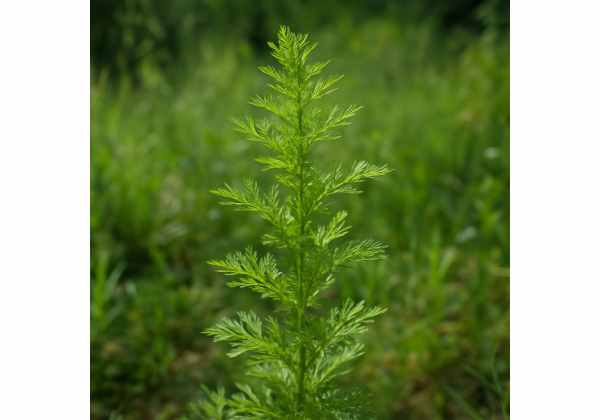
Qing hao refers to Artemisia annua, an aromatic annual plant in the daisy family. It grows with feathery green leaves, a distinctly bitter scent, and a long history of medicinal use in Chinese and other Asian traditions. In English, it is often called sweet wormwood or annual mugwort, although those common names can cause confusion because several other Artemisia species are also called wormwood or mugwort. For readers trying to use herbs responsibly, that distinction matters. Qing hao is not interchangeable with every other Artemisia, even if they share bitterness or aroma.
Its importance today comes from two overlapping stories. The first is historical and herbal: qing hao was traditionally used in preparations for fever, heat, and certain recurring illnesses. The second is modern and pharmaceutical: scientists isolated artemisinin from Artemisia annua, and artemisinin derivatives later became central to modern malaria therapy. That discovery changed global medicine and is one reason this plant is discussed with unusual seriousness compared with many other traditional herbs.
Still, the herb and the drug are not the same thing. This is one of the most important ideas for readers to understand. The whole plant contains artemisinin, but also many other compounds, and the amount of artemisinin in raw plant material can vary widely according to cultivar, harvest timing, drying, storage, and preparation method. A tea, capsule, tincture, powdered leaf, or laboratory-derived medicine can behave very differently in the body. Treating them as equivalent is one of the main sources of confusion around qing hao.
Qing hao also sits at an interesting crossroads between traditional practice and current research. Some people approach it as a classic fever herb. Others see it mainly as the botanical source of an antimalarial drug. Others are drawn to it because of emerging research on antioxidant activity, inflammation, liver health, or adjunctive uses in very early-stage investigation. All of these perspectives contain part of the truth, but none is complete on its own.
This is why qing hao deserves a careful article. It is a real medicinal plant with a major scientific legacy, but it is also a herb that is easy to overstate. The best way to approach it is as a plant with confirmed historical significance, meaningful pharmacology, and a very uneven evidence base outside specific medical contexts. Readers familiar with other wormwood and mugwort relatives will recognize the family resemblance, but qing hao has a distinct place of its own.
Key Ingredients and How Qing hao Works
The most famous compound in qing hao is artemisinin, a sesquiterpene lactone with a unique endoperoxide bridge. That unusual chemical structure is central to why artemisinin became so important in malaria treatment. When it interacts with iron-rich environments associated with malaria parasites, it helps generate reactive intermediates that damage the parasite rapidly. This fast action is one reason artemisinin-based medicines became so valuable, especially when combined with partner drugs.
But qing hao is not only artemisinin. The plant also contains flavonoids, phenolic acids, coumarins, essential oil components, and other phytochemicals that likely influence its overall activity. These include compounds such as quercetin, luteolin, rutin, and scopoletin, along with volatile components that contribute to the herb’s aroma and biological character. This broader matrix is one reason the herb is still studied beyond artemisinin alone. Researchers continue to ask whether the whole plant or specific extracts have actions that are partly separate from isolated drug molecules.
In practical herbal terms, qing hao can be described as bitter, aromatic, and chemically dense. Bitterness often signals digestive and hepatic effects in herbal traditions, while aromatic compounds can influence absorption, sensory response, and mild antimicrobial activity. Its polyphenols and related compounds also help explain why the herb is often discussed for antioxidant and anti-inflammatory potential. These mechanisms are less dramatic than the antimalarial story, but they may matter more for everyday herbal use.
Another important modern point is metabolism and interactions. Laboratory work suggests that Artemisia annua extracts can inhibit enzymes such as CYP2B6 and CYP3A4, which are involved in the breakdown of many medications. This does not mean every cup of qing hao tea will cause a dangerous interaction, but it does mean the plant should not be treated like a harmless bitter tonic when taken in concentrated forms. The stronger the extract, the more the interaction question matters.
The plant’s chemistry also explains why quality control is such a challenge. A fresh leafy top harvested at the right stage is not the same as old dried material stored in heat, and neither is the same as a standardized commercial extract. Even two herbal teas labeled qing hao may differ substantially in strength and chemical balance. That is one reason responsible guidance must avoid giving the impression that all preparations are interchangeable.
For readers who like thinking in broader herbal patterns, qing hao belongs to the group of strongly bioactive plants whose effects come from more than one compound. Like other phytochemical-rich medicinal herbs, it combines a recognizable signature compound with a wider chemical background that may shape its uses, limits, and safety. That makes it fascinating, but it also means it should be used with more care than a casual kitchen herb.
Potential Health Benefits and What the Evidence Actually Shows
Qing hao is one of the rare herbs where the strongest claim is both real and easy to misuse. Yes, this plant gave the world artemisinin. But that does not mean raw herb tea, capsules, or tinctures have the same clinical reliability as artemisinin-based combination medicines. The evidence is strongest where modern, standardized antimalarial therapies are concerned, and much weaker for casual do-it-yourself use of the whole herb.
Outside malaria, the evidence becomes more exploratory. The most realistic way to describe the herb’s broader potential is that qing hao shows promising antioxidant, anti-inflammatory, and immunomodulatory activity in laboratory and animal research, with limited but interesting clinical evidence in a few specific areas. That is meaningful, but it is not the same as having a proven general-purpose remedy.
One area that has drawn attention is liver and metabolic support. Some human research on standardized Artemisia annua extract suggests possible improvement in liver function markers in selected adults with mild non-alcoholic liver dysfunction. This is promising, but readers should keep two things in mind. First, that work involves a specific prepared extract rather than ordinary herb tea. Second, an isolated positive study is not enough to turn qing hao into a default liver supplement. It is a lead, not a conclusion.
Another area is inflammation and oxidative stress. Reviews consistently describe antioxidant and anti-inflammatory properties across extracts, constituents, and experimental models. This helps explain why qing hao has been investigated in settings involving tissue stress, immune signaling, and chronic inflammatory pathways. Even so, many of these discussions remain preclinical. It is reasonable to say the herb may support these processes; it is not reasonable to promise it as treatment for inflammatory disease.
There is also long-standing interest in antimicrobial and antiviral applications. Here again, it is important to separate laboratory potential from proven clinical effect. Extracts may show activity in test systems, and that can be scientifically interesting, but it does not automatically create a home-use recommendation. The same caution applies to cancer-related discussions. Artemisinin derivatives have generated major interest in oncology research, yet human evidence remains limited, context-specific, and far from establishing qing hao as a stand-alone cancer herb.
So what benefits are most defensible for general readers? Three stand out. First, qing hao has legitimate historical value and modern pharmacological importance. Second, standardized extracts may have selected supportive roles in research settings beyond malaria, especially where inflammation or liver markers are involved. Third, the herb’s wider research profile is promising enough to justify ongoing attention, but not enough to justify sweeping health claims.
That is why qing hao should be discussed more like a high-interest medicinal herb than a simple wellness tea. Readers who are used to gentler botanicals such as peppermint for routine digestive comfort should expect a different category here: more pharmacology, more uncertainty, and more need for careful boundaries.
Traditional Uses and Modern Practical Applications
Traditional use gives qing hao much of its identity. In Chinese herbal practice, it was associated with heat, fever, and certain recurring patterns of illness. It was also used in ways that went beyond simple hot tea. Historically, herbal texts and later commentary discussed infusions, extracted juices, and other methods intended to preserve its more delicate active principles. That detail matters because qing hao is one of those herbs where preparation influences both effect and interpretation.
Modern readers usually encounter qing hao in four forms: dried herb for infusion, capsules or powders, tinctures or extracts, and discussions about its pharmaceutical derivatives. Each form belongs in a different mental category. Dried herb and teas sit closest to tradition. Standardized extracts belong more to supplement practice. Artemisinin and its derivatives belong to medicine, not ordinary self-care. Problems arise when people slide from one category into another without noticing.
For traditional-style herbal use, qing hao is most often framed as a short-term herb rather than a daily tonic. It is not a plant most people need to take indefinitely. In gentle modern practice, it may be considered where a practitioner wants a bitter-aromatic herb with cooling, heat-clearing associations, especially when the case is clearly appropriate and short-term. Even then, dosing and duration should stay conservative unless guided by someone experienced.
Some people are tempted to use qing hao very broadly because of its scientific fame. That is usually a mistake. The fact that artemisinin became a landmark drug does not automatically make the whole herb useful for every infection, fever, or inflammatory problem. Practical herbalism works best when a plant is used for the right reason in the right form, not when its most famous story is stretched far beyond the evidence.
A more grounded modern application is education. Qing hao is a good herb for learning how medicinal plants and medicines overlap without becoming identical. It helps readers understand why one plant can support both traditional herbal use and formal drug development, while still requiring totally different standards depending on the goal. That lesson is valuable on its own.
There may also be niche roles for carefully selected supplements, especially when a clinician or qualified practitioner is using a defined extract in a broader plan. But casual experimentation is not the strongest use case. For most readers, qing hao is better appreciated as a specialized herb rather than an everyday one. It is more comparable to a purposeful medicinal tool than to a loose wellness habit.
If you do use qing hao, it makes sense to think in terms of short-term, goal-specific application, modest dosing, and high respect for form and context. That keeps the herb aligned with its strengths and reduces the risk of turning a serious medicinal plant into a vague all-purpose remedy. Compared with friendlier daily herbs such as ginger in routine herbal use, qing hao calls for more selectivity and more restraint.
Dosage, Preparation, and Common Mistakes
Dosage for qing hao is more complicated than it looks. There is no single universal dose because the herb is used in very different ways: traditional dried herb, modern extracts, and pharmaceutical derivatives. The safest way to discuss dosage is to separate traditional herb use from standardized supplement use and to make very clear that neither should be confused with medical malaria treatment.
For the dried herb, traditional references commonly cite about 4.5 to 9 g per day of dried aerial parts, often prepared as an infusion or other water-based preparation. In modern self-care, however, it is usually wiser to start lower and treat this range as a practitioner-level reference rather than an invitation to maximal dosing. A cautious home approach might begin with a smaller portion of dried herb, used briefly and only for a clear purpose. This is especially important because real-world plant material varies in potency.
With extracts and capsules, the problem shifts from tradition to standardization. Products can differ substantially in what they concentrate: whole-herb extract, artemisinin-rich fraction, or a broader phytochemical profile. Some human research has used standardized extract products for several weeks, but that does not mean every commercial qing hao capsule is interchangeable. Label quality, extract type, and intended duration matter a great deal.
Preparation also changes the result. Water infusion does not pull out the same profile as alcohol extraction or concentrated encapsulated products. Heat, steep time, plant age, and storage quality matter too. People often underestimate this and assume “qing hao is qing hao.” It is more accurate to say that every preparation expresses a different version of the plant.
The most common mistakes are easy to list because they come up repeatedly:
- Treating the herb tea as if it were equivalent to artemisinin-based medication.
- Using the herb preventively for malaria or travel without medical guidance.
- Assuming that more bitterness means more effectiveness.
- Taking concentrated extracts for long periods without checking interactions.
- Buying low-quality products and expecting consistent results.
- Ignoring liver symptoms or digestive irritation because the product is labeled “natural.”
Timing should also be practical. If qing hao is used in a traditional-style short-term protocol, it usually makes sense to take it with a defined purpose rather than as a casual daily beverage. If a supplement is used, the product directions and clinical context matter more than generalized folklore. A plant this pharmacologically active is not a good candidate for vague, indefinite use.
The right mindset is cautious specificity. Start with the smallest reasonable amount, keep the duration limited, and reassess quickly if the herb is not clearly appropriate. Readers who like structured herbal routines may find it useful to compare that logic with gentler herbs such as chamomile, which are far more forgiving in everyday use. Qing hao is not the herb to treat casually.
Safety, Interactions, and Who Should Avoid It
Qing hao is not a beginner herb from a safety perspective. In modest, short-term use it may be tolerated by many adults, but concentrated products and prolonged use raise more serious questions. The most important safety themes are liver risk, drug interactions, inappropriate malaria self-treatment, and the general problem of inconsistent product strength.
One clear area of concern is hepatotoxicity. Not everyone who uses qing hao will have liver problems, and some standardized extract studies have reported good tolerability. But there are also reports of liver injury associated with Artemisia annua products and tea use. For practical readers, this means any symptoms such as jaundice, dark urine, marked fatigue, upper abdominal pain, or unexpected nausea deserve prompt medical attention and discontinuation of the product unless a clinician advises otherwise.
Drug interactions are another major issue. Laboratory evidence indicates that Artemisia annua extracts can inhibit CYP2B6 and CYP3A4, which are important drug-metabolizing enzymes. In real life, that raises caution with many medications, especially when qing hao is used as a concentrated extract rather than an occasional tea. The exact degree of interaction may vary, but the responsible guidance is straightforward: do not combine regular qing hao supplementation with prescription medications casually.
People who should be especially cautious or avoid self-prescribing qing hao include:
- pregnant or breastfeeding people
- children unless medically supervised
- people with liver disease or prior supplement-related liver injury
- anyone taking multiple prescription drugs
- people using anticoagulants, seizure medications, psychiatric drugs, or drugs with narrow therapeutic ranges
- anyone looking for malaria prevention or treatment outside standard medical care
Pregnancy deserves special clarification. Artemisinin-based medicines are used in modern malaria care under formal medical guidance, but that does not mean whole-herb qing hao products are appropriate to self-prescribe during pregnancy. The herb, the purified drugs, and the clinical setting are not equivalent. Herbal self-treatment during pregnancy is therefore not a sensible extrapolation.
Long-term use is also questionable. Even when a product is tolerated, there is not enough strong evidence to support indefinite qing hao supplementation for vague wellness goals. This is a short-term, purpose-driven herb at most. If someone wants a long-term daily anti-inflammatory or general wellness plant, there are usually better options with clearer safety profiles.
In practical terms, qing hao should be approached as a herb with meaningful power and meaningful boundaries. It is not enough to ask whether a plant is “natural.” The more useful question is whether it is appropriate, well-prepared, time-limited, and compatible with the person’s health context. Readers who explore liver-focused herbal topics will recognize the same larger principle: bioactive herbs can help, but they can also complicate care when used without enough precision.
The Malaria Question and a Practical Bottom Line
Any honest article on qing hao has to address malaria clearly. Artemisinin came from this plant, and artemisinin-based combination therapies remain one of the major success stories in infectious disease medicine. But this success has also created a misunderstanding: many people assume that because the drug came from the plant, the plant itself can be used casually as tea, powder, juice, or capsule for malaria treatment or prevention. That is not a safe conclusion.
The main problem is inconsistency. Herbal preparations vary too widely in artemisinin content and in overall quality. A patient may receive too little active substance, fail to clear the infection fully, relapse, or contribute to resistance pressure. This is exactly why health authorities have warned against using non-pharmaceutical forms of Artemisia for malaria prevention or treatment. The plant’s importance in medicine is real, but it does not justify replacing standardized therapy with homemade or loosely regulated preparations.
This matters even for readers who are not thinking about malaria directly. It teaches a broader lesson about herbal medicine. A plant can be scientifically important without being suitable for self-treatment in every form. It can be historically valuable without being appropriate for prevention protocols. And it can have fascinating pharmacology without being the best option for casual wellness use.
So where does that leave qing hao for ordinary readers? In a useful but narrow place. It makes sense as a historically important medicinal herb that may have selective short-term herbal use and ongoing research value. It does not make sense as a daily catch-all supplement, a travel malaria preventive, or a substitute for professional care in serious illness.
A practical bottom line looks like this:
- respect qing hao as a serious medicinal plant
- keep self-use conservative, short term, and purpose specific
- never use it as a stand-in for standard malaria treatment or prevention
- check medications and liver history before using extracts
- prefer informed guidance over improvisation
That is the most balanced way to benefit from qing hao’s legacy without turning it into an overextended cure-all. It remains one of the most important medicinal plants in modern history, but its greatest lesson may be that strong herbs deserve strong judgment.
References
- Unlocking the Therapeutic Benefits of Artemisia Annua: A Comprehensive Overview of its Medicinal Properties 2025 (Review)
- Exploring the Therapeutic Potential of Artemisia and Salvia Genera in Cancer, Diabetes, and Cardiovascular Diseases: A Short Review of Clinical Evidence 2025 (Review)
- Artemisia annua L. Extracts Irreversibly Inhibit the Activity of CYP2B6 and CYP3A4 Enzymes 2023
- The use of non-pharmaceutical forms of Artemisia 2019 (WHO)
- Danger of Herbal Tea: A Case of Acute Cholestatic Hepatitis Due to Artemisia annua Tea 2019 (Case Report)
Disclaimer
This article is for educational purposes only and is not medical advice. Qing hao is a medicinal herb with a major role in the history of antimalarial drug discovery, but whole-herb products, teas, capsules, and extracts are not equivalent to prescription antimalarial treatment. Do not use qing hao to diagnose, treat, prevent, or replace care for malaria or any other serious condition. Speak with a qualified healthcare professional before using this herb if you are pregnant, breastfeeding, have liver disease, take prescription medicines, or are considering concentrated or repeated use.
Please consider sharing this article on Facebook, X, or your preferred platform if you found it useful.