Queen’s Delight, also known as stillingia root or yawroot, is a perennial spurge native to the sandy soils of the southeastern United States. In older American herbal practice, the root developed a strong reputation as an “alterative,” a now-historical term used for herbs thought to support elimination, skin health, and long-standing inflammatory or glandular complaints. It was also used for bronchial irritation, constipation, hemorrhoids, and syphilitic skin disease. That history makes the plant sound important, but modern readers need a more careful view. Queen’s Delight is not a gentle daily tonic. It contains irritating diterpene esters and has very limited clinical research behind its traditional claims.
That does not make the plant irrelevant. Its chemistry is biologically interesting, and its historical role in Southern and Eclectic herbalism is well documented. But the gap between old use and modern evidence is large. Today, the most responsible way to understand Queen’s Delight is as a historically significant but high-irritancy herb whose risks and evidence limits matter just as much as its reputation.
Key Takeaways
- Queen’s Delight was traditionally used for chronic skin complaints and sluggish bowel or liver patterns.
- Its root contains irritant diterpene esters that explain both its biological activity and its toxicity concerns.
- Historical oral use centered on about 2 g root, but no safe modern self-care dosage range is established.
- Avoid it during pregnancy or breastfeeding, with ulcers or sensitive mucosa, or as a substitute for treatment of cancer or sexually transmitted infections.
Table of Contents
- What Queen’s Delight is and how it was traditionally used
- Key compounds and medicinal properties in Queen’s Delight
- Historical uses for skin, respiratory, and alterative support
- What modern research actually supports and what it does not
- Queen’s Delight dosage, forms, and why historical use does not equal safe use
- Side effects, interactions, and who should avoid Queen’s Delight
- A practical bottom line and safer modern alternatives
What Queen’s Delight is and how it was traditionally used
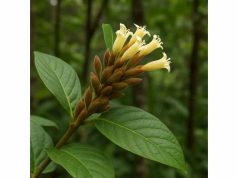
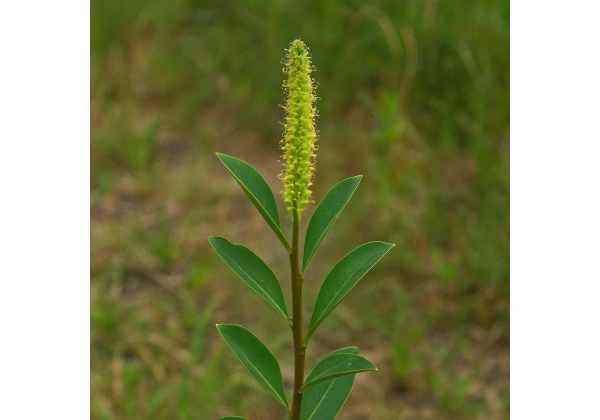
Queen’s Delight, botanically Stillingia sylvatica, belongs to the spurge family, Euphorbiaceae. It grows in dry, sandy landscapes such as pine barrens, sandhills, open woodlands, and scrubby coastal or inland areas. The plant is recognized by its bright green leaves, yellowish flowering spikes, woody rootstock, and acrid white sap released when the stems are broken. That milky sap is a clue to the plant’s temperament. Like many spurges, Queen’s Delight is not a mild kitchen herb. It is sharp, resinous, and historically treated with respect.
The medicinal part is the root, which was used in older Southern, Eclectic, and folk medicine. Historical records describe it as a purgative, irritant, and “alterative.” In nineteenth-century herbal language, an alterative was thought to gradually shift chronic, stubborn conditions rather than provide quick symptomatic relief. Queen’s Delight was therefore used for complaints that older practitioners considered deep-seated or impure, especially certain chronic skin eruptions, glandular swellings, venereal disease patterns, and lingering catarrhal states of the throat or chest.
Traditional records also link the plant with constipation, hemorrhoids, laryngitis, and chronic bronchial irritation. Some sources describe its use after childbirth in specific folk settings and mention external or practical uses such as flea-repelling. These old reports are historically valuable, but they do not create modern proof of benefit or safety. In many cases, they reflect a period when strong irritant plants were used more freely than they would be today.
Queen’s Delight was also adopted by Eclectic physicians, who often combined it with other “blood-purifying” or lymphatic herbs in formulas for chronic skin disorders and glandular conditions. That older language can be misleading for modern readers. Terms such as “blood purifier” and “alterative” do not correspond neatly to modern diagnoses. They usually point toward long-term use in inflammatory skin disease, sluggish digestion, constipated elimination, or chronic mucous irritation. In some historical formulas, Queen’s Delight filled the same broad niche as burdock in traditional alterative and skin-focused formulas, though Queen’s Delight was generally viewed as much harsher.
What matters most today is not simply that the herb was used, but how it was used. It was rarely treated as a pleasant tonic. It was considered active, irritating, and powerful enough to require caution. Modern readers sometimes assume that a long tradition automatically means an herb is gentle and safe. Queen’s Delight is a good example of the opposite. Its history tells us it mattered, but it also tells us it was never casual.
That is the right starting point for understanding the plant: a historically important American root medicine with a strong reputation, a difficult temperament, and a much thinner evidence base than its old fame might suggest.
Key compounds and medicinal properties in Queen’s Delight
Queen’s Delight is chemically interesting for one main reason: it contains irritant diterpene esters. These compounds help explain both the herb’s historical reputation and its safety concerns. The best-known identified constituents include prostratin, gnidilatidin, gnidilatin, and several compounds historically called Stillingia factors. These belong to a family of biologically active diterpene structures that can strongly affect tissues and signaling pathways.
From a research standpoint, that makes the root more than a curiosity. Diterpene esters are not nutritionally gentle compounds. They are potent, reactive plant chemicals associated with irritation, inflammation, and in some settings with laboratory interest in tumor-related or viral mechanisms. That is why Queen’s Delight attracts occasional discussion in scientific or alternative medicine circles even though it has not been well developed into a modern clinical herb.
The problem is that chemical interest and therapeutic usefulness are not the same thing. Queen’s Delight contains compounds worth studying, but that does not automatically support human self-treatment. In fact, the same chemistry that makes the plant fascinating is one reason many modern sources treat it cautiously.
The medicinal properties most often attributed to the herb include:
- Irritant and stimulant action on mucous membranes
- Purgative or cathartic action
- Traditional alterative use in chronic skin and glandular complaints
- Expectorant or bronchial-stimulating use in older medicine
- Laboratory interest in tumor-related pathways
- Historical use in venereal disease and skin eruption formulas
Some older sources also mention resin, tannin, fixed oil, and volatile constituents, along with traces of compounds cataloged in phytochemical databases. But the defining theme remains the diterpene ester content. This is not an herb valued for soothing mucilage, aromatic volatile oils, or food-like polyphenols. It is valued historically because it is physiologically forceful.
This is where caution improves understanding. A modern supplement user might see phrases like “supports detox,” “promotes lymph flow,” or “encourages healthy elimination” and assume Queen’s Delight works like a modern wellness tonic. That is not the right frame. A better comparison is with older strong herbs that had a reputation for pushing the body hard rather than nourishing it gently. Even herbs used for digestion and elimination today, such as dandelion for gentler digestive and hepatic support, generally occupy a much milder place in practice.
Another important point is that whole-root use and isolated compounds are not interchangeable. Prostratin, for example, has attracted modern laboratory interest in HIV latency and cancer-related pathways, but that does not mean crude stillingia root behaves like purified prostratin, or that using the root is a reasonable way to pursue those effects. Whole herbs are chemically messy, and in this case the irritancy profile dominates how the plant should be understood.
So what are Queen’s Delight’s “key ingredients” in a useful practical sense? They are the diterpene esters and related irritant constituents that explain why the herb was historically viewed as active, why it may show biological effects in the lab, and why it is not considered a benign self-care herb. That chemistry is the bridge between the plant’s old reputation and the modern warning labels that increasingly surround it.
Historical uses for skin, respiratory, and alterative support
Queen’s Delight became well known in historical American herbalism because it was used for chronic, stubborn conditions rather than simple day-to-day discomfort. It was especially associated with skin disease, venereal disease patterns, respiratory irritation, sluggish elimination, and what older practitioners described as “depraved” or “impure” states of the blood. Modern readers should translate those phrases carefully. They usually point toward chronic inflammatory skin eruptions, long-standing catarrh, constipation, hemorrhoids, or poorly defined glandular and lymphatic complaints.
Skin use is one of the most common historical themes. The root appeared in formulas for eczema-like eruptions, scaly skin disease, syphilitic lesions, and old ulcerative conditions. In nineteenth-century practice, herbs like stillingia, red clover, poke root, sarsaparilla, and burdock were often grouped together when the goal was long-term correction rather than quick relief. That helps explain why Queen’s Delight later acquired a reputation for “lymphatic” or “blood-purifying” action. These are historical herbal categories, not validated modern mechanisms.
Respiratory use formed another part of the plant’s reputation. Historical sources describe it for chronic laryngitis, hoarseness, bronchial catarrh, and lingering mucous irritation. This does not mean Queen’s Delight is a general cough herb in the modern sense. It was not used like a soothing demulcent. It was used because its harsh, stimulating nature was thought to change chronic stagnant secretions or deep-seated irritation. That is a very different therapeutic logic from the one behind modern throat-soothing herbs.
Older practitioners also used it for constipation and hemorrhoids, likely because of its irritant and purgative effects rather than because it nourished bowel function. This is one reason the herb should not be casually placed beside safer bowel supports. Historical use can explain why people reached for it, but it does not make it a wise first choice today.
A few folk uses are especially revealing. Some records mention its use as a flea repellent, and others note postpartum or women’s-health applications in regional traditions. These details remind us that many old medicinal plants had broad practical roles, not all of which were about internal disease treatment. But again, traditional breadth is not the same as modern validation.
The temptation with herbs like Queen’s Delight is to convert old use lists directly into modern benefit claims. That is where the reading goes wrong. The historical record tells us where the plant sat in practice, not whether it should still be used the same way now. In fact, much of its historical appeal came from a time when strong alteratives were used more aggressively and toxicology was less clearly understood.
For readers interested in the skin-focused side of historical botanical practice, it can be helpful to compare Queen’s Delight with sarsaparilla in traditional alterative and skin formulas. Both carried reputations for chronic skin and “blood” complaints, but Queen’s Delight was generally the more irritant and risky of the two.
The most honest takeaway is that Queen’s Delight had real historical importance, especially for stubborn skin, glandular, and bronchial complaints. But those uses belong to a medicinal culture that often tolerated far more irritation than modern evidence-based herbal practice would accept.
What modern research actually supports and what it does not
Modern evidence for Queen’s Delight is thin. This is the central fact that should shape any serious article about the plant. Contemporary clinical data do not support its traditional claims for syphilis, bronchitis, constipation, hemorrhoids, laryngitis, skin disease, or cancer. Major modern herb references explicitly state that there are no clinical data supporting those uses. That alone changes how the herb should be approached today.
At the same time, the plant has not vanished from scientific interest. Researchers continue to pay attention to isolated constituents such as prostratin and to the irritant diterpene esters found in the root. These compounds have attracted laboratory interest because they interact with cell-signaling systems in ways that may be relevant to cancer biology, inflammation, and viral latency. That is intellectually important, but it does not create a practical recommendation for root extracts in self-care.
This difference matters because Queen’s Delight is often mentioned in relation to the Hoxsey formula, a controversial alternative cancer mixture. The presence of stillingia in such formulas has helped keep the herb in public conversation, but it has also contributed to confusion. Inclusion in a famous alternative cancer formula does not prove anticancer benefit, and current reputable oncology-oriented herbal references do not support that claim.
One useful way to summarize the modern research picture is to separate it into three layers:
- Historical use is broad.
The herb was widely used in older American practice. - Chemical and laboratory interest is real.
The plant contains bioactive diterpene esters and related compounds. - Human evidence is poor.
There are no meaningful clinical trials that establish safe, effective modern use for the traditional indications.
That third point is the most important for readers. A plant may be chemically potent and historically famous while still being clinically underdeveloped. Queen’s Delight falls squarely into that category.
Modern review literature also points out that important gaps in knowledge remain. Even in broader surveys of medicinal plants, stillingia is repeatedly identified as a plant needing further investigation. That is a polite way of saying that the traditional reputation has not been matched by a modern body of evidence.
This is also why exaggerated phrases such as “supports lymphatic detoxification,” “cleanses the blood,” or “offers powerful immune defense” should be treated skeptically when attached to Queen’s Delight. They may echo historical language, but they are not clinically established benefits. In a contemporary setting, herbs with better-defined evidence are usually a better fit for those goals.
That does not mean the plant has nothing to offer scholarship. Queen’s Delight is historically important, chemically rich, and useful for understanding how American herbal medicine evolved. But the question most people ask is whether it has proven modern health benefits. At present, the most accurate answer is no. It has historical uses, intriguing compounds, and a clear need for more research, but not a modern evidence base strong enough to support routine therapeutic use.
For that reason, Queen’s Delight is better treated as a subject of cautious historical interest than as a modern go-to remedy. The research does not support the kinds of broad internal health claims that appear around safer, better-studied herbs.
Queen’s Delight dosage, forms, and why historical use does not equal safe use
Dosage is one of the hardest parts of writing responsibly about Queen’s Delight. Historical herbal practice did use it internally, and one modern summary notes that classical use centered on about 2 g of the root. But that same source immediately warns that the presence of irritant and potentially cytotoxic phorbol-related compounds argues against therapeutic use. In other words, the historical dose is not a modern endorsement.
This is a good example of why dosage history and dosage guidance are not the same thing. Older formulas often used strong plants under models of care that accepted much more irritation and risk than modern practice does. Simply because a root was once given in a certain amount does not mean a current reader should take that amount at home.
Traditional and commercial forms have included:
- Dried root
- Root tincture
- Decoction or strong infusion
- Powdered root
- Inclusion in historical compound formulas
The form matters because fresh root appears more toxic and more irritating than dried material. That is an important safety distinction repeated in older and modern references. It also means that casual foraging and self-preparation are particularly poor ideas.
If someone asks for a safe modern dose, the most honest answer is this: there is no clinically validated oral dosage range for Queen’s Delight that can be recommended for self-treatment. That is stronger and more useful than inventing false precision. It also fits the current evidence base.
A careful modern article should therefore handle dose in three layers:
- Historical dose: around 2 g root in older use.
- Modern evidence-based dose: not established.
- Practical self-care recommendation: avoid unsupervised internal use.
This may frustrate readers who expect every herb article to end with a neat “take 500 mg twice daily” summary. But in this case, uncertainty is the truth. Queen’s Delight is not underdosed by modern consumers; it is under-studied and overly irritating.
This is also why comparison matters. If a person is seeking gentle support for digestion, liver sluggishness, or elimination, a lower-risk herb such as dandelion with a much safer traditional profile makes more practical sense. If the goal is chronic skin support, modern care should center on diagnosis, trigger management, and herbs or products with better tolerability and evidence. Queen’s Delight is simply not the herb to experiment with because you want a “stronger” version of a gentler remedy.
One more point deserves emphasis: homemade doses from raw root or informal online tincture recipes are especially risky. Without standardized constituent testing, you do not know how much irritant diterpene content you are getting. That makes casual “start low and see” experimentation a poor strategy.
So while Queen’s Delight does have a dosage history, it does not have a safe modern self-care dosing framework. The most helpful way to present that fact is clearly: older sources used it, but current responsible practice does not treat those old amounts as permission for unsupervised use.
Side effects, interactions, and who should avoid Queen’s Delight
Safety is where Queen’s Delight becomes most modern. Old herbalism often emphasized what the plant could do. Current evaluation emphasizes what it can irritate. Reputable modern summaries describe the root as a purgative, irritant product and note that it is no longer considered safe for routine therapeutic use. That is a strong warning and should not be softened.
The side effects most often associated with the herb are consistent with its chemistry:
- Burning or irritation of mucous membranes
- Nausea
- Vomiting
- Diarrhea
- Skin itching or eruptions
- Cough
- Dizziness or vertigo
- Fatigue
- Sweating
- Muscle aches
These are not minor marketing disclaimers. They reflect the basic fact that Queen’s Delight is a biologically harsh root. It is more likely to provoke than to soothe.
Topical use is not automatically safer. Because the root constituents are irritating, skin exposure can also be problematic. Older medicine sometimes used the plant externally, but that historical fact should not be read as a modern recommendation for casual salves, washes, or homemade tinctures on inflamed skin. People seeking topical support for irritation or minor skin issues are generally better served by lower-risk options such as witch hazel for better-established topical care rather than an irritant spurge root.
Pregnancy and breastfeeding deserve especially clear caution. Modern references advise avoiding the herb during pregnancy and lactation. Historical use after childbirth in some traditions does not override current safety concerns.
Who should especially avoid Queen’s Delight?
- Pregnant or breastfeeding people
- Anyone with gastritis, reflux, ulcers, or sensitive mucosa
- People prone to severe diarrhea or dehydration
- Those with reactive skin who may respond badly to irritant botanicals
- Anyone considering it as a substitute for treatment of cancer, sexually transmitted infections, or chronic inflammatory disease
- Children
- People self-preparing fresh root without expert supervision
Drug interaction data are not well documented, but that does not mean interaction risk is absent. Because the herb is irritating, purgative, and poorly studied, combining it with medications that already stress the gut or fluid balance is not a sensible experiment. A lack of formal interaction studies should lead to more caution, not less.
There is also a broader toxicologic concern. Because the plant contains phorbol-related compounds and strong diterpene esters, some references note possible mutagenicity or tumor-promotion concerns. That does not mean ordinary exposure has been proven to cause cancer in humans, but it does reinforce the message that this is not a benign wellness herb.
The best safety summary is simple: Queen’s Delight is historically important but modernly questionable. If a plant’s best-supported modern claims are about irritancy and lack of evidence, that information should shape every decision about whether to use it. In most self-care situations, the safer answer is to choose something else.
A practical bottom line and safer modern alternatives
Queen’s Delight is a plant that teaches a useful lesson about herbal medicine: historical reputation is not the same as modern recommendation. It was once considered a serious root medicine for chronic skin disease, glandular problems, venereal conditions, constipation, and bronchial irritation. It was also active enough to be feared, dried carefully, and handled with caution. Modern evidence has not rescued those old claims. Instead, modern evaluation has mostly clarified the herb’s irritancy and the lack of clinical data supporting its traditional uses.
That does not make the plant worthless. It remains historically important in American herbalism, chemically notable, and relevant to anyone studying older Eclectic formulas or the evolution of alternative cancer mixtures. But that kind of relevance is not the same thing as recommending the herb to a general reader looking for help with digestion, skin disease, respiratory irritation, or “detox.”
For most modern users, the most practical question is not “How do I take Queen’s Delight?” but “What am I actually trying to treat?” Once that is clear, safer and better-supported options usually emerge.
If the goal is gentle digestive and elimination support, choose milder herbs and diet-based approaches first. If the goal is chronic skin support, start with diagnosis, barrier care, and targeted topical or internal therapies that have a more reasonable evidence and safety profile. If the goal is bronchial support, a traditional expectorant with a gentler mucosal relationship is usually a better place to start. If the goal is a serious disease such as cancer or a sexually transmitted infection, Queen’s Delight should not be part of unsupervised self-treatment at all.
This is where honesty becomes the most helpful form of herbal writing. Some herbs deserve enthusiastic practical guidance. Queen’s Delight deserves a careful boundary. It may still hold value for historical herbalists, ethnobotanists, and phytochemistry researchers, but it is not a strong candidate for general modern self-care.
A reader who loves plant medicine does not lose anything by hearing that clearly. In fact, that clarity is what protects trust. The best plant literature does not force every herb into a heroic role. Sometimes the most useful thing an article can say is that the plant is interesting, real, and historically important, but not a wise choice for routine use today.
That is the right bottom line for Queen’s Delight: respect its history, understand its chemistry, and let modern caution outweigh old enthusiasm.
References
- Stillingia 2022
- The Phytochemistry of Cherokee Aromatic Medicinal Plants 2018 (Review)
- Do recent research studies validate the medicinal plants used in British Columbia, Canada for pet diseases and wild animals taken into temporary care? 2019 (Review)
- Queen’s Delight Uses, Benefits & Dosage 2025
- New irritant diterpene-esters from roots of Stillingia sylvatica L. (Euphorbiaceae) 1980
Disclaimer
This article is for educational purposes only and does not replace medical advice, diagnosis, or treatment. Queen’s Delight is a historically used but poorly studied herb with recognized irritancy and significant safety concerns. It should not be used to self-treat cancer, sexually transmitted infections, chronic skin disease, digestive disease, or respiratory illness. Avoid it during pregnancy or breastfeeding, and do not use it internally or topically without qualified professional guidance.
If this article helped clarify the topic, please share it on Facebook, X, or any other platform your readers prefer.