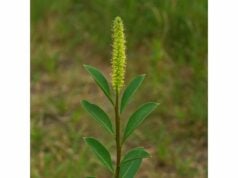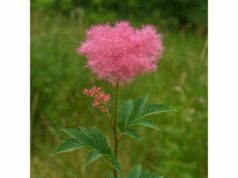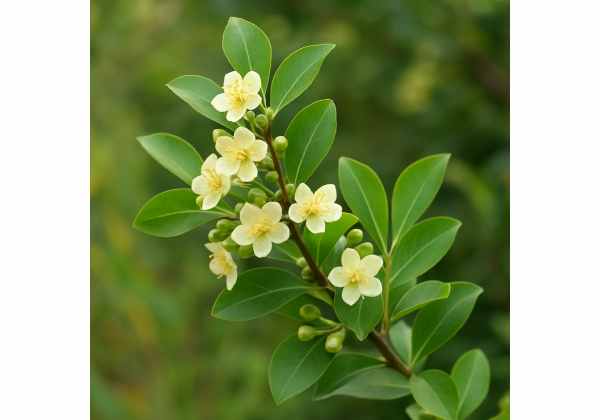
Quillaja, often called soapbark or soapbark tree, is an evergreen tree native to central Chile whose bark has been valued for centuries because it foams when mixed with water. That striking property comes from triterpenoid saponins, the same compounds that have made Quillaja important not only in traditional herbal practice but also in modern food technology, cosmetics, veterinary use, and vaccine science. In herbal history, the bark was used mainly as an expectorant, cleansing agent, and topical wash. In modern science, Quillaja is better known as the source of highly active saponins used in emulsifiers, beverage foaming systems, and advanced vaccine adjuvants such as QS-21.
That dual identity makes Quillaja fascinating, but it also calls for caution. This is not a gentle kitchen herb, and it is not well suited to casual internal self-dosing. Its strongest modern relevance lies in its chemistry, functional applications, and carefully controlled extracts rather than in broad home herbal use. To use or write about Quillaja responsibly, it helps to understand both its benefits and its sharp boundaries.
Essential Insights
- Quillaja is best known for saponins that act as natural foaming, emulsifying, and immune-active compounds.
- Its traditional herbal uses center on expectorant, cleansing, and topical applications rather than broad daily internal use.
- There is no standardized home herbal oral dose, and regulated extract safety is often discussed in terms of about 3 mg saponins/kg body weight per day for food-additive exposure.
- People who are pregnant, breastfeeding, under 18, or prone to gastrointestinal irritation should avoid self-treatment with soapbark bark or concentrated extracts.
Table of Contents
- What Quillaja is and why it stands apart from most herbs
- Key compounds and how Quillaja may work
- Quillaja for respiratory support, cleansing, and traditional uses
- Modern uses, food technology, and vaccine-adjuvant science
- How to prepare and use Quillaja and why home use is limited
- Dosage, timing, and practical best practices
- Safety, side effects, interactions, and who should avoid it
What Quillaja is and why it stands apart from most herbs
Quillaja is the bark of Quillaja saponaria, an evergreen tree native to Chile and long known for its unusually rich saponin content. When the bark is shaken in water, it produces a persistent foam, which is why it became known as soapbark. This immediately sets it apart from many medicinal plants. Most herbs are valued for fragrance, bitterness, tannins, mucilage, or essential oils. Quillaja is defined first by surfactant chemistry.
Historically, that chemistry gave the bark two reputations at once. It was a practical cleansing material used for washing textiles, hair, and delicate fibers, and it was also a medicinal bark employed in smaller, more controlled ways. Traditional uses included expectorant formulas for chest congestion, topical washes for skin and scalp cleansing, and limited internal use where stimulation of secretions or mucous clearance was desired. In those older systems, the plant was not treated like a nutritive tonic. It was considered active, potentially irritating, and best suited to specific purposes.
That traditional caution still matters. Quillaja is sometimes discussed online as if it were just another herbal tea ingredient, but that framing is misleading. The bark contains powerful triterpenoid saponins that can disrupt membranes, irritate mucosa, and produce foaming effects that are useful in technology but less forgiving in careless self-use. In other words, the same chemistry that makes soapbark valuable also explains why it needs more respect than softer household herbs.
Another reason Quillaja stands apart is that modern interest in the plant has shifted dramatically. While traditional herbal use still exists, contemporary science pays closer attention to its purified or standardized saponin fractions. These are used in food emulsification, beverages, veterinary products, and especially vaccine-adjuvant development. That means Quillaja now lives in two worlds: ethnobotany and advanced biomedicine.
For readers used to more familiar respiratory herbs, it may help to compare Quillaja with mullein as a gentler traditional lung herb. Mullein is soft, soothing, and broadly approachable. Quillaja is sharper, more detergent-like, and more technically active. Both may relate to respiratory support, but they do so in very different ways.
This difference is central to using the herb responsibly. Quillaja is not mainly a broad “wellness herb.” It is a specialized bark with strong surfactant and saponin activity, a long but narrower medicinal record, and a much larger modern footprint in industrial and pharmaceutical applications than in casual home herbalism. That does not reduce its value. It simply clarifies what kind of plant it really is.
Key compounds and how Quillaja may work
The defining chemistry of Quillaja is its triterpenoid saponins. These compounds are amphiphilic, meaning one part of the molecule interacts well with water while another part interacts with fats. That structural duality explains almost everything important about the bark. It explains the foam, the emulsifying power, the ability to alter membranes, the bitterness, and much of the biological activity.
Quillaja extracts contain complex mixtures of saponins built around quillaic acid and related aglycones. These molecules occur with attached sugar chains, and the exact arrangement of those chains strongly affects activity. Some fractions are more useful in food systems as foaming agents and emulsifiers. Others are more immunologically active and have become important in adjuvant science. QS-21 is the best-known purified example, but it is only one member of a broader family of Quillaja saponins.
Alongside saponins, Quillaja bark extracts can contain:
- polyphenols
- tannins
- carbohydrates and polysaccharides
- reducing sugars
- minor protein fractions
- trace secondary constituents depending on extract type
Even so, saponins remain the core medicinal and technological actors. They can lower surface tension, form micelles, stabilize emulsions, and interact with biological membranes. In respiratory herbal logic, that may help explain the traditional expectorant use, because saponin-rich plants are often associated with stimulation of bronchial secretions and mucus mobilization. In vaccine science, those same membrane-active and immune-modulating properties help explain why highly purified Quillaja fractions can enhance immune responses.
This is also the chemistry that creates the herb’s safety challenges. Surfactant-like compounds can be irritating to the gastrointestinal tract and are not automatically safe just because they come from a plant. Quillaja saponins are powerful enough that modern food safety assessments focus specifically on their content, not merely on total extract weight.
A useful comparison is ivy leaf and other saponin-containing expectorant herbs. Like Quillaja, ivy owes much of its respiratory reputation to saponins. But Quillaja is the more technically potent and less forgiving bark, which is one reason ivy is more common in everyday herbal cough products while soapbark is used more carefully.
Another notable point is that Quillaja saponins are not just passive foaming agents. They can influence biological systems in ways that are genuinely pharmacologic. Research has linked Quillaja fractions with antiviral, antimicrobial, anti-inflammatory, and immunomodulatory activity, though many of these findings come from in vitro or applied research settings rather than from conventional human herbal trials. That means the bark’s medicinal promise is real, but it is not simple.
In short, Quillaja works the way it does because its saponins sit at the boundary between chemistry and biology. They can change how liquids behave, how membranes respond, and how immune systems are stimulated. That is why the plant has remained relevant for centuries, and why it deserves more caution than a typical household medicinal herb.
Quillaja for respiratory support, cleansing, and traditional uses
In traditional herbal practice, Quillaja was used most often as an expectorant and cleansing bark. The expectorant use fits well with the broader herbal history of saponin-rich plants. These herbs were often chosen when coughs were accompanied by stubborn mucus, thick secretions, or a need to “move” congestion rather than simply soothe irritation. Soapbark was therefore not usually treated as a soft demulcent. It was used when a more active respiratory herb was wanted.
That traditional respiratory role can be understood in three parts. First, saponins are often linked with increased secretion and easier expectoration. Second, the bark’s bitterness and pungent activity may have contributed to its sense of “clearing” stuck congestion. Third, some modern studies suggest antimicrobial and antiviral potential in Quillaja extracts, which may partly support the older view that the plant was useful in infectious or inflammatory respiratory settings.
Still, good herbal judgment matters here. Quillaja is not the ideal choice for everyone with a cough. It is more appropriate when the pattern involves mucus and congestion, not when the throat is dry, irritated, and already too reactive. In that sense, it differs from soothing respiratory plants such as licorice for demulcent airway support, which focus more on coating and calming mucosa. Quillaja tends to act more like a mobilizer than a coater.
Traditional uses also extended beyond the lungs. Soapbark preparations were used externally for:
- scalp cleansing
- washing inflamed or oily skin
- textile and wool cleaning
- delicate foaming cleansers
- some veterinary and household purposes
This topical and cleansing role is not incidental. It is one of the most historically consistent features of the plant. In fact, in many practical settings, Quillaja’s value as a cleanser may have been more visible than its value as a medicine. That is important because it reminds us that “medicinal properties” do not always appear in the same form modern supplement culture expects. Sometimes an herb’s main strength lies in how it alters the physical environment rather than in how it acts internally at a daily low dose.
There are also traditional references to anti-inflammatory use, toothache, and general irritation. These should be treated respectfully but cautiously. The bark does contain biologically active saponins, and some studies support anti-inflammatory activity, but that does not make every folk use clinically established.
The most balanced way to understand Quillaja’s traditional uses is this:
- It was valued as a practical, active bark rather than a gentle tonic.
- It was used internally in limited ways, mainly for expectorant purposes.
- It was widely respected for cleansing and topical foaming uses.
- It was never the kind of herb that invited careless, everyday internal use.
That last point is especially relevant now. Modern readers may be tempted to focus only on “health benefits,” but Quillaja’s real traditional identity includes useful benefits and clear limits. The plant’s value has always depended on knowing when not to use too much of it.
Modern uses, food technology, and vaccine-adjuvant science
Modern Quillaja use has expanded far beyond traditional herbalism. In many ways, soapbark is now more important as a source of refined functional ingredients than as a classic home remedy. This is where the plant becomes especially distinctive among medicinal barks.
One major area is food technology. Quillaja extracts are used as foaming agents, emulsifiers, and stabilizers in products such as beverages and flavor systems. Their amphiphilic saponins help keep oil and water phases better dispersed and create persistent foam in certain drinks. This is not just a technical curiosity. It is one of the reasons Quillaja extracts have undergone detailed safety assessment by food authorities. Modern regulated use is not based on folk tradition alone, but on extract type, saponin content, and exposure estimates.
Another major area is vaccine science. Highly purified Quillaja saponins, especially QS-21 and related fractions, have become important adjuvant components because they can enhance immune responses to vaccine antigens. This is a very different use from traditional bark tea, yet it grows directly out of the same chemistry. The same membrane-active, immunologically potent saponins that make the bark too strong for casual internal use are precisely what make purified fractions valuable in advanced formulations.
This shift has changed how Quillaja should be discussed in a health article. For many plants, the modern story is just a confirmation of traditional folk uses. For Quillaja, the modern story is partly a transformation. The bark still matters as a medicinal plant, but its most impactful contemporary applications may be in regulated extracts, food systems, veterinary practice, and immunology rather than in everyday household herbalism.
This is also why the language of “benefits” needs discipline. It is tempting to turn every industrial or scientific use into a consumer wellness claim, but that would be misleading. For example, the fact that Quillaja-derived QS-21 is used in vaccine adjuvant systems does not mean someone should seek out bark extracts to “boost immunity” at home. Those are completely different contexts.
A better way to organize modern Quillaja relevance is by category:
- food and beverage foaming and emulsification
- regulated extract safety assessment
- antimicrobial and antiviral research applications
- veterinary and aquaculture interest
- highly purified immunoadjuvant fractions
This makes Quillaja unusual among medicinal plants. It sits close to the border between herbal medicine, food science, and biotechnology. Readers who are mainly interested in functional natural ingredients may find it more comparable to widely studied plant-derived functional compounds than to common domestic teas and tinctures.
It also explains why the herb requires more careful writing than many others. With Quillaja, the most interesting facts are true, but they are easy to oversimplify. Yes, it has biologically active saponins. Yes, those saponins have important modern applications. No, that does not make raw bark a general-purpose self-care supplement.
The real significance of modern Quillaja use is not that it proves the bark is safe for casual internal use. It proves the bark is chemically powerful enough that modern science has found controlled, high-value ways to use it. That is a very different kind of endorsement, and it should be understood on those terms.
How to prepare and use Quillaja and why home use is limited
Quillaja can be prepared as bark decoctions, liquid extracts, topical washes, and standardized commercial extracts, but the form matters enormously. This is not a bark where traditional preparation automatically makes home use straightforward. In fact, one of the most important practical truths about Quillaja is that modern home use should be more limited than traditional curiosity might suggest.
Historically, the bark was simmered in water to make foaming liquids for cleansing, and smaller internal preparations were used in expectorant contexts. Today, that does not translate into a strong case for homemade internal use. Modern readers are dealing with concentrated extracts, variable bark quality, uncertain saponin content, and a much clearer understanding that the bark can irritate mucosa and blood cells at high exposure.
The safest uses are usually external or commercial:
- diluted topical cleansers
- product formulations designed for food or cosmetic use
- professionally standardized extracts
- research-grade or regulated industrial fractions
Home-prepared internal use is harder to justify because it is difficult to control dose, saponin concentration, and tolerability. A bark decoction may foam impressively, but that same characteristic should be treated as a warning sign as much as a virtue. Strongly foaming plant extracts are telling you something important about their membrane activity.
If someone is interested in respiratory herbal support, more user-friendly options usually make better sense. Quillaja may be historically valid, but in practice it is often less approachable than herbs such as mullein for gentler expectorant support. That does not mean Quillaja has no place. It means the form and context should be chosen carefully.
For external use, diluted bark extracts can still make sense where a natural foaming and cleansing action is desired. Even here, patch testing matters. Surfactant activity can be helpful for cleansing, but it can also be drying or irritating, especially on damaged skin or mucosa.
A practical hierarchy for modern use looks like this:
- Use regulated commercial products rather than improvised strong bark preparations.
- Favor external or food-technology contexts over unsupervised internal experimentation.
- Treat concentrated extracts as active substances, not casual botanicals.
- Avoid raw-bark dosing unless a qualified professional specifically recommends it.
Another point worth stressing is that Quillaja is not a good “more natural” substitute for all soap, shampoo, cough syrup, or immune products. Its benefits depend on the right concentration and delivery system. That is especially true in modern settings where purified fractions can be far more potent than traditional bark use ever was.
So while this section is about preparation and use, its real conclusion is a limit: Quillaja is a plant whose modern value often increases as its self-directed home use decreases. That is not a contradiction. It is a sign that the plant is chemically important enough to require controlled handling. In practical herbal terms, that means restraint is part of responsible use.
Dosage, timing, and practical best practices
Dosage is the most difficult part of writing responsibly about Quillaja because there is no well-established, evidence-based home herbal oral dose for raw bark that can be recommended confidently for self-care. That is the single most important fact in this section. For most readers, the better framework is not “how much homemade soapbark should I take,” but “what modern exposure benchmarks and practical limits exist.”
In regulated food-additive contexts, safety has been discussed in terms of saponin exposure rather than folk teaspoon measurements. A useful modern benchmark is the acceptable daily intake used in European food-additive evaluation, which has been expressed around 3 mg quillaia saponins per kg body weight per day for certain regulated extract contexts. Older and alternative evaluations have used different numbers, which is one reason raw herbal dosing is a poor fit for casual self-use.
That means the most honest dosage guidance is:
- there is no standardized self-care oral bark dose appropriate for general recommendation
- concentrated extracts should follow their own product specifications
- food-grade products should be used only as labeled
- homemade internal use should not be improvised from raw bark
If someone still encounters traditional internal use guidance, it should be understood as historical rather than a modern consumer recommendation. The gap between bark chemistry and safe standardization is simply too large to ignore.
For practical use, the best “dosing” advice becomes form-specific:
- for food or beverage products, stay within label use
- for topical cleansing products, use dilution and patch testing
- for standardized extracts, follow the exact product instructions
- for research, veterinary, or industrial products, do not extrapolate to self-use
Timing also depends on context. In food systems, Quillaja is used for technological function, not timed medicinal effect. In topical cleansing, timing is based on skin or scalp need. In traditional expectorant use, timing would historically have followed symptom-driven dosing, but again, that is not the best modern model for general readers.
A good best-practice framework is:
- Do not treat Quillaja like a typical daily herbal supplement.
- Separate traditional curiosity from modern practical safety.
- Choose standardized products over raw bark preparations.
- Avoid combining it with other irritant or strongly surfactant substances.
- Stop immediately if it causes gastrointestinal upset, burning, or unusual sensitivity.
One helpful comparison is with ginger as a common internal herb with a much clearer home-use range. Ginger can be dosed at the kitchen-herb level. Quillaja generally should not be. That contrast is useful because it shows why some herbs belong comfortably in household self-care, while others are better kept within labeled commercial or professional frameworks.
The best dosing advice for Quillaja is therefore not a single amount. It is a principle: the plant is more appropriate for regulated extract use than for improvised internal herbal dosing. In a world that often treats every plant as if it should become a tea, that conclusion may sound restrictive. In reality, it is what keeps the article honest and the user safe.
Safety, side effects, interactions, and who should avoid it
Safety is the most important section for Quillaja because this is one of those plants where strong chemistry creates both usefulness and risk. The main concerns center on mucosal irritation, gastrointestinal upset, membrane-disrupting effects of saponins, and the lack of a reliable self-care dosing tradition that can be translated cleanly into modern use.
The biggest practical safety messages are straightforward:
- avoid self-directed internal use of raw bark or concentrated extracts
- do not treat Quillaja as a general immune tonic
- use only regulated or clearly labeled products
- keep the herb away from children unless specifically formulated and medically appropriate
- treat unusual foaming and bitterness as signals of potency, not harmless novelty
People who should generally avoid self-treatment include:
- pregnant adults
- breastfeeding adults
- children and adolescents
- people with active gastritis, ulcer disease, or easily irritated stomachs
- anyone with chronic inflammatory bowel symptoms
- those using multiple irritating herbal extracts or strong detergents on damaged skin
Possible side effects may include:
- nausea
- abdominal irritation
- diarrhea
- throat or stomach burning
- excessive dryness or irritation with topical overuse
- poor tolerance to concentrated saponin-rich products
Another major concern is that saponins can be hemolytic under certain conditions, especially in laboratory contexts or when highly purified fractions interact directly with cells. That does not mean every external or food-grade Quillaja product causes blood-cell damage in ordinary use. It does mean the chemistry is active enough that concentrated products should not be handled casually. This is also one reason the most potent Quillaja fractions are used in highly controlled biomedical formulations rather than in informal self-care.
Interactions are not mapped in the same consumer-friendly way seen with more common supplements, but practical caution still makes sense. Avoid mixing Quillaja with other strongly irritating botanicals or aggressive surfactant-like ingredients, especially for internal use. Topically, avoid using it on broken skin, deep wounds, or highly reactive mucosa unless a professional product specifically directs otherwise.
This is also a plant where “natural” can be misleading. Many readers assume plant-based cleansers or foaming agents must be inherently gentler than synthetic ones. In some contexts that may be true. In others, Quillaja’s saponins are quite capable of irritation if concentration is poorly controlled. Natural origin does not reduce the need for respect.
For external comparison, Quillaja is much harsher than witch hazel as a mild topical astringent. They are not interchangeable. Witch hazel tones. Quillaja can actively foam and strip.
The fairest conclusion is that Quillaja is a valuable but high-boundary plant. Its bark contains compounds important enough to matter in food science, vaccine development, and traditional herbal medicine. That same importance is exactly why casual internal experimentation is a poor idea. Used within controlled contexts, the plant is impressive. Used casually, it is easier to misuse than many readers expect.
References
- Saponins from Quillaja saponaria and Quillaja brasiliensis: Particular Chemical Characteristics and Biological Activities 2019 (Review)
- Chemical and biological characterization of vaccine adjuvant QS-21 produced via plant cell culture 2024
- Follow‐up of the re‐evaluation of quillaia extract (E 999) as a food additive and safety of the proposed extension of uses 2024 (Official Scientific Opinion)
- Perspectives on Saponins: Food Functionality and Applications 2023 (Review)
- Re‐evaluation of Quillaia extract (E 999) as a food additive and safety of the proposed extension of use 2019 (Official Scientific Opinion)
Disclaimer
This article is for educational purposes only and does not replace medical advice, diagnosis, or treatment. Quillaja is a chemically active bark, not a general-use household supplement, and concentrated or improvised internal use may be irritating or unsafe. Seek professional guidance before using soapbark internally, and get medical care promptly for breathing trouble, persistent cough, significant stomach pain, allergic symptoms, or any reaction that feels strong or unusual.
If you found this article helpful, please share it on Facebook, X, or another platform you prefer.