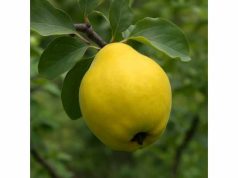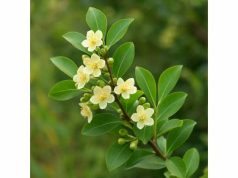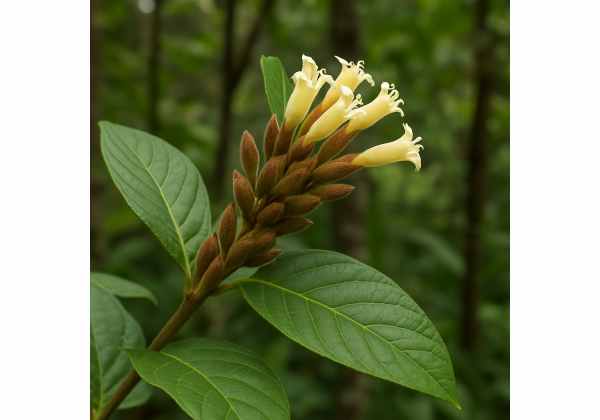
Quinine Bush, usually identified in older botanical and pharmacognosy literature as Remijia peruviana, belongs to the same broader medicinal conversation as cinchona bark. Its bark contains quinine-type alkaloids, and historically it was valued as a bitter febrifuge and as a substitute for classic cinchona in malaria-endemic regions and colonial trade. That history gives the plant a serious medicinal aura, but modern readers need a precise and cautious lens. Quinine Bush is not the same thing as a standardized prescription quinine product, and it does not have a well-developed modern herbal evidence base.
What makes the plant notable is its chemistry. Studies on the bark and leaves have identified quinine-related alkaloids, including quinine, cinchonine, quinidine-type compounds, and several rarer molecules. These help explain why the bark was used for fever, bitterness, and antimalarial interest. Still, most modern claims remain preclinical, historical, or inferred from cinchona alkaloids rather than from clinical trials on the whole herb. That means Quinine Bush is best understood as a historically important, pharmacologically interesting, but poorly standardized medicinal bark that deserves careful handling.
Top Highlights
- Quinine Bush is best known historically as a bitter cinchona substitute for fever and malaria-related traditional use.
- Its bark contains quinine-type alkaloids that explain its bitterness and much of its medicinal interest.
- No validated oral dose range has been established for modern Remijia self-use, and whole bark should not be dosed like prescription quinine.
- Avoid use during pregnancy or breastfeeding, and avoid unsupervised use if you have heart rhythm problems, tinnitus, quinine sensitivity, or are taking multiple prescription medicines.
Table of Contents
- What Quinine Bush is and why it was used
- Key alkaloids and medicinal properties in Quinine Bush
- Historical uses for fever, malaria, and bitter tonic support
- What modern research says and where the evidence stops
- Quinine Bush preparations, dosage, and why standardization matters
- Side effects, interactions, and who should avoid Quinine Bush
- Safer modern options and a practical bottom line
What Quinine Bush is and why it was used
Quinine Bush, listed in much of the older literature as Remijia peruviana, is a South American member of the Rubiaceae family, the same broad plant family that includes cinchona. Its medicinal importance comes from the bark, which was historically collected, dried, and traded as a bitter bark with quinine-like properties. In local and regional traditions, the bark was associated with the broader category of “quina” or cascarilla-type barks used for fevers, weakness after illness, and malaria-related complaints.
That historical role matters because it shapes how the plant is still perceived today. When people hear “quinine bush,” they often assume two things: first, that the plant is simply another form of cinchona bark, and second, that it can be used the same way quinine once was. Neither assumption is quite right. Quinine Bush is related to the cinchona story, but it is not the same thing as a controlled pharmaceutical quinine salt, and it has not been developed into a modern standardized herbal product with the same level of guidance.
Part of the confusion comes from older commerce and nomenclature. Different bark sources were historically grouped together when they were bitter, fever-related, or chemically similar to cinchona. As a result, the literature around Remijia species, cuprea bark, and cinchona substitutes can be fragmented. That makes simple internet summaries unreliable. A plant can be historically important without being clinically interchangeable with the better-known drug isolated from related bark sources.
Traditional and historical use usually centered on three themes:
- Fever and malaria-related illness
- Bitter tonic support during weakness or poor appetite
- General “quina” substitution when classic cinchona bark was unavailable or expensive
Those uses make practical sense in historical context. Before modern antimalarial drugs and laboratory standardization, any bark that was strongly bitter and contained antiplasmodial alkaloids would attract attention. Quinine Bush appears to have been one of those barks.
In modern wellness language, that history can be misleading. “Used for malaria” sounds like a direct recommendation, but it is not. Historical use tells us that the plant was valued in a therapeutic tradition. It does not tell us that a bark tea, tincture, or capsule should be used for malaria today. In fact, the opposite lesson is often more useful: the plant belongs to a powerful medicinal lineage and should not be treated casually.
Readers trying to place Quinine Bush among bitter botanicals may find it helpful to compare its role with gentian as a classic bitter digestive herb. The difference is that gentian is primarily a digestive bitter in modern herbalism, while Quinine Bush belongs to the far more medically charged world of cinchona-type alkaloid barks. That difference in tradition and risk is important.
The safest starting view is this: Quinine Bush is a historically important quinine-like bark source, not a mild tonic and not a substitute for professional treatment of fever or malaria.
Key alkaloids and medicinal properties in Quinine Bush
The medicinal reputation of Quinine Bush rests on its alkaloids. This is the core of the plant’s story. Modern phytochemical studies have identified several cinchona-type and related alkaloids in the bark and leaves, including quinine, cupreine, cinchonine, quinidine-related compounds, acetylated derivatives, and unusual alkaloids isolated from the leaves. These molecules explain why the bark was historically grouped with cinchona substitutes and why it continues to interest pharmacognosy researchers.
The bark appears to be especially important because it contains quinine-type alkaloids directly associated with bitter and antimalarial traditions. The leaves also contain a chemically interesting profile, but their role in historical use was less central than that of the bark. The plant’s major research value lies in showing that quinine-like alkaloid production is not confined to classic cinchona alone.
The most relevant compound groups include:
- Quinine-type alkaloids linked to historical antimalarial interest
- Cinchonine-related alkaloids associated with broader pharmacologic research
- Quinidine-related and cupreine-related compounds with notable chemical and pharmacologic activity
- Rare leaf alkaloids that expand the plant’s chemotaxonomic interest
This chemistry helps explain the main medicinal properties typically associated with Quinine Bush:
- Intense bitterness
- Febrifugal or fever-related historical use
- Antiplasmodial interest in laboratory and traditional settings
- Bitter tonic action
- Broader pharmacologic potential inferred from cinchona alkaloids
The word “inferred” is important. A whole bark preparation is not the same as a purified drug, and a plant containing quinine-type alkaloids is not automatically a reliable dose-delivery system. Modern herbal writing often skips that difference, but it should not. If the bark contains several alkaloids in varying proportions, its real-world effect can be less predictable than the effect of purified quinine sulfate or quinidine used in medical settings.
This also shapes how medicinal properties should be described. It is fair to say the plant has historically important antimalarial and bitter-tonic chemistry. It is not fair to say the whole bark has been clinically proven to treat malaria, digestive disorders, heart rhythm problems, or inflammatory disease. The chemistry is meaningful, but chemistry is not the same as clinical validation.
A second important point is that several cinchona alkaloids have wider pharmacologic literature than the herb itself. Recent review work on cinchonine, for example, discusses anti-inflammatory, antiparasitic, anticancer, anti-obesity, and antimicrobial potential under experimental conditions. But that does not mean Quinine Bush bark should be used as a broad-spectrum remedy. It means some of its constituent alkaloids are scientifically interesting and may deserve further study.
In practical terms, Quinine Bush is better understood as an alkaloid-bearing medicinal bark than as a modern daily herb. Its strongest identity is not nutritional, soothing, or food-like. It is pharmacologically sharp, bitter, and historically tied to fever medicine. That makes it closer in spirit to the world of drug-yielding barks than to gentle herbal tonics.
So when people ask about “key ingredients,” the honest answer is straightforward: Quinine Bush is important because of its cinchona-type alkaloids. Those compounds are the reason the bark mattered historically and the reason it still deserves scientific caution today.
Historical uses for fever, malaria, and bitter tonic support
Historically, Quinine Bush was valued first as a fever bark. That is the lens through which most of its traditional use should be understood. In regions where malaria and recurring fevers were common, any bark with intense bitterness and quinine-like action would become medically important. Quinine Bush appears in that context as a substitute, supplement, or local parallel to more famous cinchona barks.
The most important traditional use themes were:
- Fever and intermittent fever patterns
The bark was taken in settings where people associated illness with cyclical fever, chills, weakness, and relapse. In older medical language, this was one of the classic domains of “quina” barks. - Malaria-related traditional medicine
Historical records and phytochemical findings support why the plant entered antimalarial folk use. That does not mean it is a modern malaria treatment, but it does explain its place in regional medicine. - Bitter tonic use
Like many intensely bitter barks, it was also used to stimulate appetite and support recovery after debilitating illness. - General post-fever convalescence
Plants with strong bitterness were often used when appetite was poor and the body felt weak after recurrent sickness.
These uses fit the logic of traditional medicine well. A very bitter bark with quinine-like alkaloids would naturally be tried for fever, malaise, and periodic illness. It would also be used in smaller tonic-style doses when the goal was restoring appetite and digestive tone after illness rather than directly fighting fever.
Still, a careful modern reader should draw a line between historical plausibility and present-day advice. If someone has malaria or any serious febrile illness now, Quinine Bush should not be used as a home treatment. That is not an anti-herb position. It is a safety position. Malaria is a medical emergency that requires accurate diagnosis and modern treatment, not a bark experiment.
The bitter-tonic side of the plant is easier to understand in a low-stakes way. Strong bitter barks were traditionally used to sharpen appetite and restore digestive readiness. In that sense, Quinine Bush belongs to the same broad family of bitter herbal logic as plants like wormwood in historical bitter and fever-related traditions. But even here, Quinine Bush is not a casual digestive bitter. Its alkaloid profile makes it much more medically charged than an ordinary pre-meal bitter.
One more subtle point matters. Historical use often depended on whole-bark preparations prepared by people who worked inside a local medical tradition. Modern supplement use often removes that context. A consumer buying a bottle online may not know which bark part was used, how concentrated it is, whether the alkaloid content is reliable, or whether the product is even botanically accurate. That disconnect is one reason historical uses cannot simply be copied into modern home practice.
So what should readers take from the old record? Quinine Bush earned its reputation as a bitter, fever-related medicinal bark with traditional antimalarial importance. That history is real and worth preserving. But it belongs to a medical world in which powerful barks were used under very different conditions than those of modern evidence-based self-care.
What modern research says and where the evidence stops
Modern research on Quinine Bush is much narrower than its historical reputation suggests. The strongest evidence does not come from clinical trials of the whole bark in humans. Instead, it comes from phytochemical studies, laboratory screening, and broader reviews of cinchona alkaloids. That distinction matters, because it means many modern claims about the herb are still being inferred from chemistry, not confirmed by clinical use.
What modern research clearly supports:
- The bark contains quinine-type alkaloids.
- The leaves also contain chemically important alkaloids.
- These compounds help explain why the plant was historically valued in fever and malaria traditions.
- Some isolated compounds show biologic activity in laboratory systems, including antifeedant, cytotoxic, and antiparasitic effects.
What the research does not clearly support:
- A validated modern oral herbal dose for whole bark use
- Human clinical efficacy for treating malaria with Remijia bark
- Reliable self-care use for digestive complaints, infections, or inflammatory disease
- A safety profile strong enough to recommend routine use
This is a classic case of a plant with more pharmacologic promise than clinical guidance. Studies on the bark have isolated quinine, cupreine, cinchonine, and related compounds. Studies on the leaves have identified additional rare alkaloids. Reviews of cinchonine and related cinchona alkaloids show a wide range of experimental actions, including anti-inflammatory and antiparasitic effects. But those findings mostly belong to compound-centered or preclinical science.
That means a responsible article cannot honestly say, “Quinine Bush treats malaria,” “Quinine Bush lowers inflammation,” or “Quinine Bush is an evidence-based remedy for appetite and digestion.” At most, it can say that the bark contains alkaloids known for these types of biological activity and that the historical record is consistent with that chemistry.
The evidence limit becomes especially important around malaria. Some bark extracts and cinchona-related alkaloids show antiplasmodial activity in vitro or in animal models, and the historical use is unsurprising for that reason. But none of that creates permission for modern self-treatment. If anything, it highlights why the plant belongs to the borderland between traditional medicine and pharmaceutical drug discovery rather than to the world of relaxed home herbalism.
The broader literature on cinchona alkaloids also complicates how “benefits” should be presented. Compounds such as cinchonine may show multiple experimental activities, but whole-bark exposure is not the same as purified-compound research. A plant with several alkaloids can behave unpredictably, especially when the bark is not standardized.
Readers comparing Quinine Bush with gentler botanicals should keep that difference in mind. If the goal is ordinary digestive bitterness, recovery support, or appetite stimulation, other herbs are easier to dose and far safer to interpret. Quinine Bush remains most relevant as a historically important bark source of quinine-like alkaloids, not as a general modern tonic.
In short, the modern evidence says the plant is real, bioactive, and historically coherent. It does not say the herb is clinically ready for routine wellness use. That is the line where accuracy matters most.
Quinine Bush preparations, dosage, and why standardization matters
Dosage is where Quinine Bush becomes especially difficult to discuss responsibly. A modern herb article normally gives clear ranges in grams, milliliters, or standardized extract amounts. For Remijia peruviana, that kind of confident guidance is not available. There is no widely accepted contemporary monograph that sets a reliable oral self-care dose for the bark, and that is not a small detail. It is one of the most important facts about the plant.
Historically, the bark would have been used in ways broadly similar to cinchona-type bitter barks:
- Dried bark decoctions
- Bark powders
- Tincture-style liquid preparations
- Bitter febrifuge mixtures
- Regional compound formulas
But historical use does not solve the dosing problem. The amount of alkaloids in bark can vary. The ratio of quinine-type compounds is not guaranteed. Product identity can also be uncertain because old commerce often grouped related “quina” barks together. This means that even a historical preparation style does not easily translate into a modern safe-use recommendation.
The most practical modern rule is this: do not dose Quinine Bush as if it were purified quinine, and do not use prescription quinine ranges to estimate how much bark is safe.
That distinction is crucial. Prescription quinine is a defined drug. Quinine Bush bark is a mixed botanical source that may contain quinine, cinchonine, quinidine-type compounds, and other alkaloids in varying proportions. Those are not equivalent situations.
A careful way to think about preparations is:
- Whole bark is chemically variable.
- Crude powders are less predictable than purified alkaloids.
- Tinctures may intensify uncertainty if the extraction strength is not clearly stated.
- Homemade decoctions are especially hard to standardize.
- Finished products without alkaloid content data are difficult to evaluate.
This is why modern responsible use often becomes a non-use recommendation. If a plant cannot be dosed reliably, and if its clinically relevant alkaloids are already known as drugs with narrow safety margins, the bar for unsupervised use rises sharply.
That does not mean no one ever used it. It means we should not pretend that a historical bark medicine has the same level of clarity as a modern supplement such as psyllium, magnesium, or peppermint oil. In fact, readers looking for a gentler bitter or convalescent herb are often better served by dandelion as a safer everyday bitter option rather than a quinine-type bark.
So what should a modern reader do with the dosage question? Treat the lack of a validated dose as meaningful evidence in itself. It tells you the herb is not ready for ordinary self-experimentation. It also tells you that any product making simple, broad dosing claims should be read skeptically.
The most honest dosage answer, then, is not a number. It is a warning: whole-bark Quinine Bush is not standardized enough for confident home dosing, and its alkaloid-bearing nature makes that uncertainty more serious, not less.
Side effects, interactions, and who should avoid Quinine Bush
Because Quinine Bush contains quinine-type alkaloids, safety has to be taken seriously even when herb-specific clinical data are sparse. The whole bark is not as well studied as pharmaceutical quinine, but the chemistry is enough to justify caution. In practical terms, that means it should be approached as a potentially high-risk medicinal bark rather than a low-risk wellness herb.
The most relevant safety concerns come from three areas:
- Bitter and gastrointestinal burden
Very bitter alkaloid-rich barks can irritate sensitive stomachs, especially if taken in strong decoctions or concentrates. - Quinine-like adverse effects by inference
Because the bark contains quinine-type compounds, clinicians and cautious herbalists treat quinine sensitivity, tinnitus-like reactions, thrombocytopenia history, and cardiac risk as reasons to avoid unsupervised use. - Standardization failure
Even when an herb is “natural,” uncertain alkaloid concentration can make safety harder to predict than with a drug whose dose is known.
Potential adverse effects or warning signs may include:
- Nausea
- Stomach irritation
- Headache
- Dizziness
- Ringing in the ears
- Visual disturbance
- Palpitations
- Rash or hypersensitivity-type reaction
Some of these symptoms resemble cinchonism, the classic cluster linked to quinine exposure. It would be irresponsible to claim that every Quinine Bush product will cause the same pattern as quinine medication, but it would be equally irresponsible to ignore the possibility. A bark containing quinine-type alkaloids deserves more caution than an ordinary bitter herb.
People who should avoid Quinine Bush or only consider it under expert supervision include:
- Pregnant or breastfeeding people
- Anyone with known quinine hypersensitivity
- People with heart rhythm disorders
- Those taking QT-prolonging or antiarrhythmic medicines
- People with a history of drug-induced thrombocytopenia
- Anyone with unexplained tinnitus, visual problems, or recurrent dizziness
- People trying to self-treat fever or malaria instead of seeking medical care
Drug interactions are another important concern. Because this is not a standardized mainstream herb, interaction data for the whole bark are poor. But poor data do not equal low risk. If the bark contains clinically active cinchona-type alkaloids, combining it with prescription medicine without supervision is not sensible. That is especially true for anticoagulants, antiarrhythmics, malaria medicines, and drugs with narrow safety margins.
A final safety point is quality control. The biggest risk may not even be the plant alone, but the combination of strong alkaloids with uncertain sourcing. A mislabeled bark, an unstable extract, or an untested online product adds avoidable uncertainty to a plant that is already difficult to standardize.
So the best safety guidance is simple and practical: Quinine Bush is not a beginner herb, not a casual fever remedy, and not a substitute for modern quinine-based or antimalarial medical care. If the chemistry is strong enough to matter, it is also strong enough to deserve restraint.
Safer modern options and a practical bottom line
Quinine Bush is one of those plants that can easily be over-romanticized. It sounds powerful because it is powerful. It sounds historic because it is historic. And it sounds medically important because it sits close to the story of quinine, one of the most consequential plant-derived drugs in medical history. But none of that automatically makes the bark a good modern self-care herb.
The strongest modern lesson from Quinine Bush is not that everyone should take it. The strongest lesson is that whole medicinal plants and purified drugs are not the same thing, even when they share chemical ancestry. Remijia peruviana matters because it shows how South American medicinal bark traditions extended beyond classic cinchona and into a broader world of bitter antimalarial and quinine-like plants. That is fascinating. It is also a reason for precision.
If your main goal is malaria treatment, the answer is straightforward: do not use Quinine Bush as a self-directed alternative. Use modern diagnosis and treatment. If your main goal is appetite or bitter digestive support, there are safer herbs with much clearer modern use profiles. If your main goal is herbal research, ethnobotany, or pharmacognosy, then Quinine Bush becomes far more interesting, because its role in quinine-type alkaloid chemistry is real.
This is why the plant fits best into three categories:
- Historical medicinal interest
- Phytochemical and pharmacologic interest
- Cautious professional or academic discussion
It fits poorly into:
- casual home use,
- do-it-yourself fever medicine,
- online “detox” formulas,
- or vague immune and energy marketing.
For most readers, the practical question is not whether Quinine Bush is “good.” It is whether it is the right herb for the problem at hand. Most of the time, the answer will be no. A gentler bitter may be better for digestion. A diagnosed treatment pathway is better for malaria or serious fever. A purified drug is better when a defined alkaloid effect is actually needed.
That may seem less exciting than calling the plant a forgotten miracle, but it is far more useful. Quinine Bush deserves respect precisely because it is not simple. It belongs to a lineage of medicinal barks that changed medical history, but it also belongs to a category of plants where chemistry, safety, and standardization cannot be separated.
The most honest bottom line is this: Quinine Bush has real historical and phytochemical significance, but its modern “health benefits” are narrower and less clinically validated than its name suggests. Treat it as a plant of medicinal history and alkaloid interest, not as a casual herbal tonic.
References
- Bioactive cinchona alkaloids from Remijia peruviana 2005
- Five new alkaloids from the leaves of Remijia peruviana 2004
- Bitter plants used as substitute of Cinchona spp. (quina) in Brazilian traditional medicine 2013
- Cinchonine: A Versatile Pharmacological Agent Derived from Natural Cinchona Alkaloids 2024 (Review)
- Diversity and severity of adverse reactions to quinine: A systematic review 2016 (Systematic Review)
Disclaimer
This article is for educational purposes only and does not replace medical advice, diagnosis, or treatment. Quinine Bush is a quinine-type alkaloid bark with limited modern clinical evidence as a whole herb and no well-established self-care dosing framework. It should not be used to self-treat malaria, serious fever, heart rhythm problems, or any condition that needs professional diagnosis. Because of its chemistry and lack of standardization, pregnancy, breastfeeding, drug interactions, and quinine sensitivity all require extra caution.
If this article was useful, please share it on Facebook, X, or another platform your readers trust.