Crataegus monogyna is much better known to most herbalists and botanists as common hawthorn or one-seeded hawthorn than as “quicksilver.” It is a thorny tree or hedgerow shrub with white spring blossoms, bright red autumn berries, and one of the deepest medicinal histories of any European heart herb. In traditional medicine, its flowers, leaves, and fruits have been used for circulation, mild nervous heart complaints, emotional tension, and general cardiovascular resilience. Modern research has focused on its flavonoids, procyanidins, triterpenes, and phenolic acids, which help explain why hawthorn has earned such a durable reputation.
Even so, this is a plant that benefits from careful framing. Much of the stronger clinical evidence applies to standardized hawthorn preparations that may combine Crataegus monogyna, C. laevigata, or related hawthorn material, rather than to isolated home-prepared C. monogyna alone. The herb is promising, but it is not a substitute for cardiac evaluation or prescription care. This article explains what the plant is, what its key compounds do, where the benefits seem most credible, how it is used, what typical dosage ranges look like, and which safety issues deserve the most respect.
Top Highlights
- Hawthorn leaf, flower, and fruit are most strongly associated with traditional cardiovascular support and mild nervous palpitations.
- Its best-known compounds include flavonoids and oligomeric procyanidins that may support circulation, vascular tone, and antioxidant balance.
- Standardized leaf-and-flower extracts are often used in the range of 160 to 900 mg daily, while tea preparations may use 1 to 2 g per cup.
- Avoid unsupervised use if you are pregnant, breastfeeding, scheduled for surgery, or taking digoxin, cardiac glycosides, or blood pressure medicines.
Table of Contents
- What Quicksilver Is and Why Crataegus monogyna Is Better Known as Hawthorn
- Key Ingredients and Medicinal Properties of Crataegus monogyna
- Potential Health Benefits and Where the Evidence Is Strongest
- Traditional and Modern Uses of Hawthorn Leaf Flower and Fruit
- Dosage Forms Timing and Practical Guidelines
- Common Mistakes Product Quality and When Self-Care Is Not Enough
- Safety Side Effects Interactions and Who Should Avoid It
What Quicksilver Is and Why Crataegus monogyna Is Better Known as Hawthorn
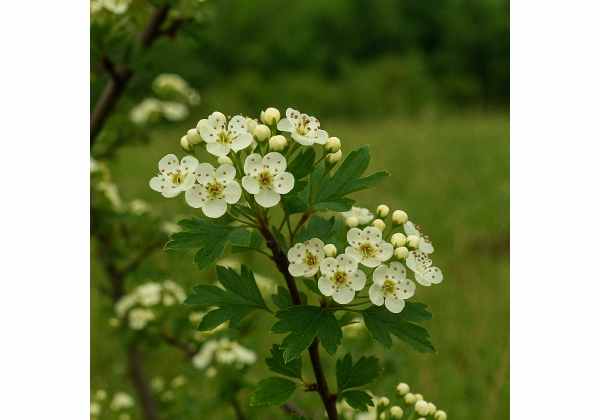
Crataegus monogyna is a small deciduous tree or large shrub in the rose family, Rosaceae. It is native to much of Europe, western Asia, and North Africa, and it has naturalized widely in other regions. The plant is most familiar as a hedgerow tree, with deeply lobed leaves, clusters of white flowers in spring, and small red fruits known as haws in autumn. It also carries sharp thorns, which partly explain why hawthorn has such a strong place in folklore, boundaries, and protective symbolism.
The title here uses “quicksilver,” but that is not the plant’s standard English common name. In botanical, horticultural, and medicinal references, Crataegus monogyna is usually called common hawthorn, one-seeded hawthorn, or simply hawthorn. That matters because common-name confusion often leads readers to the wrong plant profile or to product names that contain hawthorn as only one ingredient. For medicinal purposes, the botanical name is far more reliable than the uncommon label.
Another important point is that hawthorn medicine is often broader than a single species. Many official monographs and clinical products refer to hawthorn leaf with flower or hawthorn fruit, and these may include Crataegus monogyna, C. laevigata, or closely related hawthorn material. That means C. monogyna absolutely belongs inside the hawthorn evidence base, but not every human trial isolates this species alone. A careful article should keep that distinction visible rather than oversimplifying the science.
The plant parts most often used are:
- the leaf and flower, especially in spring and early summer,
- the fruit, harvested ripe in autumn,
- and less commonly, other tissues that are not the primary focus of medicinal use.
This matters because the plant part shapes the product. Leaf-and-flower extracts are common in standardized cardiovascular preparations. Fruits are more often used in foods, syrups, teas, preserves, and some traditional tonics. The chemistry overlaps, but it is not identical.
Hawthorn also sits in a useful middle ground between food and medicine. The berries can be eaten when properly prepared, though they are mealy and more often turned into jelly, syrup, vinegar, or wine than eaten by the handful. At the same time, the plant is one of the best-known Western herbs for cardiovascular support, which gives it a stronger medicinal identity than many wild fruits.
For readers used to herbs that act quickly, hawthorn can be surprising. It is generally not a dramatic stimulant, sedative, or instant digestive herb. Its reputation comes from slow, supportive, longer-view use, especially for circulation and mild heart-related symptoms after serious disease has been excluded. In that sense, it belongs with more gradual cardiotonic traditions, not with fast symptom suppressors.
Key Ingredients and Medicinal Properties of Crataegus monogyna
The medicinal profile of Crataegus monogyna is built around a dense mix of polyphenols and related phytochemicals. Unlike herbs that rely on one standout alkaloid or one sharply acting volatile oil, hawthorn works through a broader network of compounds that seem to influence vascular tone, oxidative stress, endothelial function, and cardiac signaling in more subtle ways.
The best-known compounds are flavonoids. These include hyperoside, vitexin derivatives, rutin, quercetin-related compounds, and other flavonols and flavones. Flavonoids help explain hawthorn’s long association with vascular protection, antioxidant activity, and blood-flow support. They are also part of why hawthorn leaf and flower preparations are often standardized around defined flavonoid or procyanidin content.
A second major group is oligomeric procyanidins, often called OPCs or oligomeric proanthocyanidins. These compounds attract a great deal of attention in cardiovascular herbal medicine because they may support vascular integrity, endothelial responsiveness, and circulation. If you are familiar with the broader world of plant antioxidants, hawthorn’s procyanidin profile has some conceptual overlap with grape-seed polyphenols, although the plants, preparations, and traditional use patterns are different.
Hawthorn also contains phenolic acids such as chlorogenic and caffeic acid derivatives, along with triterpenic acids, amines, and minor constituents that contribute to the plant’s overall medicinal character. The fruits contain valuable pigments and phenolics as well, which is why they are sometimes used not only as herbal material but also as a functional food ingredient.
Together, these compounds support several well-known medicinal properties:
- antioxidant activity,
- mild vasorelaxant or circulation-supportive effects,
- possible positive effects on cardiac contractility and rhythm,
- endothelial and vascular support,
- mild calming effects in stress-related heart sensations,
- and broader cardioprotective potential.
This does not mean hawthorn is a stand-in for prescription cardiology. It means the plant has enough biological plausibility that its historical use is easier to understand. The combination of flavonoids and procyanidins is especially important because hawthorn is not usually valued for one dramatic symptom action. It is valued for how these compounds work together over time.
Another useful distinction is between fruit and leaf with flower. Fruit is often seen as gentler, more food-like, and more suitable for syrups, vinegars, and preserves. Leaf and flower are more central in many standardized medicinal extracts and regulatory monographs. That does not make fruit unimportant, but it does explain why many clinical and official dosage frameworks focus on leaf-and-flower preparations.
In modern herbal language, hawthorn is often described as a cardiovascular trophorestorative or gentle cardiotonic. Those words are imperfect, but they capture the basic idea: it is thought to support heart and vessel function gradually, especially when taken consistently and appropriately. That slower, system-wide pattern is one reason hawthorn has endured for centuries rather than appearing as a short-lived herbal trend.
Potential Health Benefits and Where the Evidence Is Strongest
Hawthorn’s strongest modern reputation is cardiovascular, but the details matter. Some of the best evidence applies to standardized hawthorn extracts or broader Crataegus preparations rather than to homemade Crataegus monogyna tea alone. Even so, the overall picture is meaningful enough that hawthorn remains one of the few classic Western herbs consistently discussed in heart-health conversations.
1. Mild cardiovascular support
This is the core use. Hawthorn has long been associated with circulation, mild functional heart complaints, and a sense of support when the heart feels strained by stress rather than by acute disease. Clinical and observational work on standardized hawthorn extracts suggests possible benefits for exercise tolerance, symptom burden, vascular function, and quality of life in selected cardiovascular contexts. These effects are generally supportive and adjunctive, not curative.
2. Blood pressure support
Recent meta-analytic work suggests hawthorn may help lower blood pressure in some people, although the evidence still varies across preparations and studies. This is promising, but it should not be exaggerated. Hawthorn is better viewed as a modest complementary option, especially when paired with broader lifestyle measures, rather than as a replacement for antihypertensive treatment. People looking at plant-based blood-pressure support often compare it with hibiscus for mild blood pressure support, though hawthorn’s traditional heart focus is broader.
3. Palpitations linked with nervousness
This is one of the clearest official traditional uses in Europe. Hawthorn leaf-and-flower preparations are recognized for temporary nervous cardiac complaints, such as palpitations or a sensation of extra heartbeats associated with mild anxiety, once serious conditions have been excluded. That framing is useful because it shows both where hawthorn may help and where it should not be used casually.
4. Mild mental stress and sleep support
This surprises some readers, but official hawthorn monographs also include mild symptoms of mental stress and support for sleep. The effect is subtle. Hawthorn is not a classic sedative in the way valerian is, but it may help when emotional tension and bodily strain overlap. That is one reason hawthorn sometimes appears in evening heart-calming or nerve-soothing formulas.
5. Antioxidant and anti-inflammatory support
Preclinical work on Crataegus monogyna leaves, stems, flowers, and fruits consistently points to strong polyphenol-driven antioxidant potential and interesting anti-inflammatory activity. This helps explain why the plant is being explored beyond classical cardiac use, though these findings should not be overextended into disease-treatment promises.
Where should expectations stay modest? Hawthorn is not a fast rescue remedy for chest pain, arrhythmia, or severe hypertension. It is not a substitute for emergency evaluation or for established treatment in significant heart disease. Its role is slower and narrower: supportive, often adjunctive, and best understood as part of an overall cardiovascular care strategy rather than a stand-alone fix.
That balanced position is one reason hawthorn has remained relevant. It does not promise everything. But where the evidence is strongest—mild cardiovascular support, blood pressure assistance, and stress-related cardiac sensations—it has enough tradition and modern research behind it to deserve serious attention.
Traditional and Modern Uses of Hawthorn Leaf Flower and Fruit
Hawthorn’s appeal is partly that it bridges food, folk medicine, and modern phytotherapy. The flowers and leaves are medicinal. The fruits are medicinal but also culinary. And the plant as a whole carries a long cultural history that makes its current uses easier to understand.
In traditional European herbalism, leaf and flower were often taken as infusions, fluid extracts, tinctures, or later as tablets and capsules. These preparations were associated with “nervous heart” states, palpitations, stress-related unease, and long-view support for circulation and cardiac tone. This use pattern has survived into modern regulatory monographs, which is notable because many folk claims disappear when formal assessment becomes stricter.
The fruit, or haw, has its own track record. It is used in syrups, vinegars, jams, jellies, fruit pastes, and tonics. Hawthorn berry is more food-like than leaf and flower, yet it still contributes to the broader medicinal picture because it contains useful polyphenols and is often taken for gentle cardiovascular nourishment. In many traditional households, fruit preparations were the easier and more familiar way to engage with the plant.
Modern uses usually fall into five categories:
- Standardized extracts
These are the main form used in clinical studies and formal supplement products. They are most often based on leaf with flower, sometimes fruit, and are standardized to flavonoids or procyanidins. - Tea and infusion
A classic traditional use, especially for leaf and flower. This is gentler and less standardized than commercial extracts. - Liquid tinctures and fluid extracts
These remain common in herbal practice because they are easy to combine with other calming or circulatory herbs. - Food and tonic preparations
Syrups, vinegars, preserves, and berry concentrates are popular because they make hawthorn approachable. - Combination formulas
Hawthorn is often blended with other herbs aimed at emotional calm, circulation, or mild vascular support. In that kind of formula, a gentler companion such as lemon balm for everyday stress support may make practical sense when tension and palpitations overlap.
A crucial point is that modern hawthorn use is usually adjunctive. Even in better-studied extracts, it is not presented as a replacement for heart medicines in people with diagnosed cardiovascular disease. It is more often positioned as support for mild symptoms, early-stage vascular resilience, or general cardiovascular maintenance under supervision.
There is also a time dimension to hawthorn. Unlike herbs used for rapid digestive relief or quick sleep support, hawthorn is often taken consistently over weeks or months. This is why official and clinical dosing frameworks tend to include longer-use language rather than one-off symptom dosing.
The best practical summary is that hawthorn is strongest when the preparation matches the goal. Leaf and flower are the main medicinal core. Fruit is gentler and more food-based. Standardized extracts offer the clearest dosing structure. And all of these forms work best when readers understand that hawthorn is a support herb, not an emergency tool.
Dosage Forms Timing and Practical Guidelines
Dosage for Crataegus monogyna is best discussed through the lens of official monographs and standardized hawthorn products rather than improvised home use. That is because much of the available dosing guidance applies to hawthorn leaf and flower or fruit preparations that may include C. monogyna, C. laevigata, or their hybrids. The safest and most accurate approach is to present these as hawthorn ranges relevant to C. monogyna, not as rigid self-dosing commands for every homemade preparation.
For hawthorn leaf-and-flower tea, official European draft monograph guidance includes 1 to 2 g of comminuted leaf and flower infused in 150 to 250 mL boiling water, up to four times daily, with a maximum of about 6.8 g daily. This is one of the most traditional and accessible forms.
For standardized leaf-and-flower extracts, official and governmental monographs describe a range of roughly 160 to 900 mg per day, depending on the extract type and standardization. Some other official-style frameworks extend higher depending on product format, but the clearest practical takeaway is that many reputable standardized products fall within the lower hundreds of milligrams rather than in giant multi-gram doses.
For fruit, Canadian monograph guidance allows ranges such as 0.6 to 3.5 g of dried fruit per day, while standardized fruit extracts may appear around 300 to 750 mg daily. Fruit-based products are often experienced as gentler, though that does not remove the need for care in people using cardiac medications.
Timing is fairly flexible. Hawthorn can be taken with food or between meals depending on tolerance and product instructions. Because it is not usually a fast-acting herb, regular daily use matters more than exact time of day. Some people prefer it in divided doses, especially with extracts or tinctures, while others use tea once or twice daily for a calmer routine.
A few practical guidelines help keep hawthorn use sensible:
- Choose a clearly labeled product that states whether it uses fruit, leaf and flower, or a standardized extract.
- Use the package dose if it differs from general monograph ranges, provided the product is reputable.
- Give the herb time. Hawthorn is usually evaluated over weeks, not over a single day.
- Do not add it casually to an already complex heart regimen without checking interactions.
Another often-overlooked point is duration. Some official frameworks suggest using hawthorn for several weeks before judging benefit, and some products are intended for ongoing use rather than short bursts. That makes hawthorn more like a steady companion herb than a quick symptom herb.
If someone wants cardiovascular support but has not yet clarified whether the issue is pressure, stress, rhythm sensation, or metabolic risk, it is worth remembering that other plants such as garlic for broader cardiometabolic support may be more directly suited to a different goal. Hawthorn works best when the aim is truly hawthorn-like: gentle cardiovascular and circulatory support, especially where stress and the heart overlap.
Common Mistakes Product Quality and When Self-Care Is Not Enough
Most problems people have with hawthorn do not come from the plant itself. They come from misunderstanding what hawthorn is good at, how slowly it tends to work, and when self-care is no longer the right lane.
The first common mistake is treating hawthorn as an emergency heart herb. It is not. Hawthorn is not a rescue medicine for chest pain, fainting, sudden shortness of breath, or acute arrhythmia symptoms. Its traditional and modern role is supportive, not emergent. If symptoms are intense, new, or worsening, a clinician should evaluate them before any herb is added.
The second mistake is assuming all hawthorn products are equivalent. They are not. A berry syrup, a home-dried tea, and a standardized leaf-and-flower extract may all be “hawthorn,” but they can behave very differently. Standardized clinical extracts are not interchangeable with homemade fruit vinegar. Readers who want predictable use need to respect that difference.
The third mistake is expecting an instant result. Hawthorn often works slowly and is usually assessed over time. Someone who takes it for two days and feels nothing may conclude it is useless, when the herb was never designed for quick dramatic effects in the first place.
The fourth mistake is borrowing strong claims from broader hawthorn literature and applying them directly to every Crataegus monogyna preparation. Some evidence is species-specific, but much of it is extract-specific or genus-wide. The responsible interpretation is that C. monogyna is a major hawthorn species within that tradition, not that every leaf or berry product has equal evidence.
The fifth mistake is ignoring the heart because the herb feels gentle. A plant with a calming reputation can still sit in a serious symptom picture. If swelling in the legs, chest discomfort, breathlessness, marked palpitations, or exercise intolerance appear, that is not a reason to simply increase the hawthorn dose. It is a reason to seek medical assessment.
Product quality matters too. A stronger hawthorn routine should ideally involve:
- a product that clearly states plant part,
- extract ratio or standardization when relevant,
- reputable manufacturing,
- and instructions that fit adult use and the intended indication.
Loose fruit or flower from a trusted herb supplier can still be useful, but the closer the goal gets to cardiovascular symptom support, the more helpful consistency becomes.
Hawthorn is often best used at the edge between wellness and medicine. That can make it valuable, but it can also make it easy to misuse. It is a plant for steady guidance, not for improvisation. And the line between “I want support” and “I need diagnosis” should remain visible the whole time.
Safety Side Effects Interactions and Who Should Avoid It
Hawthorn is generally considered one of the safer classic cardiovascular herbs, but safe does not mean consequence-free. Its main safety concerns involve symptom delay, medication overlap, pregnancy uncertainty, and a smaller set of side effects such as nausea, abdominal discomfort, rash, and itching.
The most common reported side effects are relatively mild:
- abdominal pain,
- nausea,
- rash,
- and pruritus or itching.
These are not especially common, but they are credible enough to appear in official monographs. In practical use, most people tolerate hawthorn well, especially when the product is reputable and the dose is appropriate.
The more important issue is interaction caution. Hawthorn can overlap with cardiac and vascular treatments, especially because it is often chosen by the same people who are already taking medications. Official or governmental monographs advise caution with:
- digoxin or other cardiac glycosides,
- blood pressure medication,
- and in newer official draft material, surgery-related bleeding risk has also been noted.
This does not mean hawthorn is forbidden in all medicated adults. It means it should not be layered onto a heart regimen casually. Someone already taking prescription cardiovascular drugs should ask a clinician or pharmacist before adding it.
Pregnancy and lactation are also areas of uncertainty. Official monographs state that safety has not been established and recommend avoiding medicinal use during pregnancy and breastfeeding because adequate data are lacking. This is a standard and sensible precaution.
Another safety point is age. Some official traditional uses are restricted to adults, especially for nervous cardiac complaints. That makes sense, because heart-related symptoms in younger people often deserve evaluation rather than herbal self-treatment.
The biggest practical warning is diagnostic. If symptoms worsen during use, or if any of the following occur, medical help should be sought promptly:
- swelling of ankles or legs,
- chest pain,
- breathlessness,
- pain spreading to the arm, neck, or upper abdomen,
- or worsening palpitations.
This warning is not alarmist. It is part of what makes hawthorn responsible medicine rather than romantic herb lore. A plant used around the heart must always be framed with symptom awareness.
Who should be especially cautious or avoid hawthorn unless guided professionally?
- people taking digoxin or other cardiac medicines,
- people on blood pressure treatment,
- people who are pregnant or breastfeeding,
- children and adolescents using it for heart-related symptoms,
- people with upcoming surgery,
- and anyone with undiagnosed chest or circulation symptoms.
Hawthorn is safest when its reputation is kept realistic. It is supportive, not heroic. It can be well tolerated, but it can also complicate medication plans or delay needed evaluation if used casually. Used thoughtfully, it has real value. Used as a substitute for diagnosis, it becomes much less useful.
References
- Hawthorn (Crataegus monogyna Jacq.): A Review of Therapeutic Potential and Applications – PMC 2026. (Review)
- Hawthorn (Crataegus spp.) Clinically Significantly Reduces Blood Pressure in Hypertension: A Meta-Analysis of Randomized Placebo-Controlled Clinical Trials – PMC 2025. (Meta-Analysis)
- Real world effectiveness of Hawthorn special extract WS 1442 in a retrospective cohort study from Germany 2024. (Observational Study)
- Phenolic Composition of Crataegus monogyna Jacq. Extract and Its Anti-Inflammatory, Hepatoprotective, and Antileukemia Effects – PMC 2024. (Preclinical Study)
- NATURAL HEALTH PRODUCT HAWTHORN 2021. (Official Monograph)
Disclaimer
This article is for educational purposes only and is not medical advice. Hawthorn can be a useful traditional and supplemental herb, but it is not a replacement for professional evaluation of chest pain, shortness of breath, leg swelling, irregular heartbeat, or diagnosed cardiovascular disease. Because hawthorn may interact with heart medicines, blood pressure treatment, and surgery planning, speak with a qualified healthcare professional before using it medicinally if you take prescription drugs, are pregnant or breastfeeding, or have persistent symptoms.
If you found this article useful, please consider sharing it on Facebook, X, or another platform you prefer.