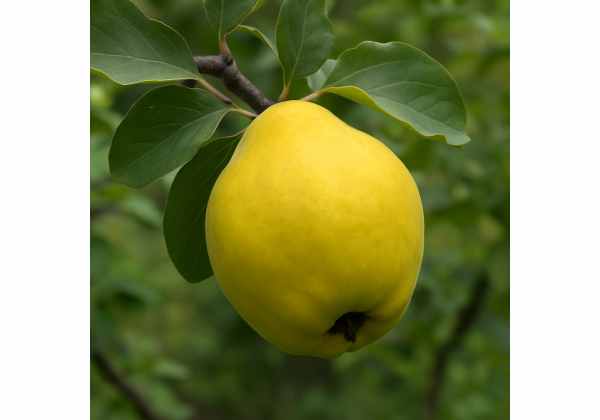
Quince is an old orchard fruit with a long history in both food and traditional medicine. Botanically known as Cydonia oblonga, it looks a little like a lumpy golden pear, but its value goes far beyond appearance. The fruit, peel, leaves, and seeds have all been used in different ways, with the fruit prized for its pectin, polyphenols, and firm flesh, and the seeds known for their soothing mucilage. In the kitchen, quince is usually cooked rather than eaten raw, which softens its dense texture and tames its astringency. In traditional systems of care, it has been used for digestive upset, nausea, reflux-like symptoms, sore throat, and skin irritation.
What makes quince especially interesting today is that it sits in a rare middle ground between culinary fruit and medicinal plant. It offers fiber, antioxidants, and useful phytochemicals, while a small number of human studies suggest that quince syrup may help certain digestive complaints. At the same time, not every traditional claim is equally well proven. A helpful guide to quince has to distinguish between its best-supported uses, its food-based benefits, and the areas where caution still matters.
Brief Summary
- Quince fruit and peel provide fiber, pectin, and polyphenols that may support digestion and antioxidant balance.
- Quince syrup has shown promising results in small studies for reflux-related symptoms and nausea in pregnancy.
- A practical food-style amount is about 100 to 150 g of cooked quince, or about 1 tablespoon of studied quince syrup 3 times daily in trial settings.
- Avoid chewing or crushing medicinal quince seeds, and use extra caution during pregnancy, with food allergies, or when using concentrated seed preparations.
Table of Contents
- What Quince Is and Which Parts Are Actually Used
- Key Ingredients in Quince Fruit, Peel, Leaves, and Seeds
- Quince Health Benefits and What the Evidence Best Supports
- How Quince Is Used for Digestion, Sore Throat, and Skin Support
- Culinary Preparations, Seed Mucilage, and Practical Ways to Use Quince
- Quince Dosage, Serving Size, and Best Timing
- Safety, Side Effects, Interactions, and Who Should Avoid It
What Quince Is and Which Parts Are Actually Used
Quince is the fruit of Cydonia oblonga, a small tree in the rose family. It has been cultivated for centuries across the Mediterranean region, western Asia, and many temperate parts of the world. Unlike apples or pears, quince is rarely enjoyed fresh from the hand. Raw fruit is usually too hard, tart, and astringent for most people, but slow cooking turns it fragrant, tender, and deeply aromatic. That transformation is part of the fruit’s identity and one reason quince has stayed important in preserves, pastes, syrups, and compotes.
From a health perspective, quince is unusual because several parts of the plant have distinct traditional roles. The fruit is the most obvious food and medicinal part. The peel is especially rich in fiber and polyphenols. The seeds release a slippery mucilage when soaked in water, and this has a long history of soothing use for the throat, gut, and skin. The leaves also contain phenolic compounds and have attracted laboratory interest, though they are much less important than the fruit and seeds in practical home use.
That difference between plant parts matters. When people say “quince benefits,” they often mix together evidence from fruit flesh, peel extracts, seed mucilage, and leaf studies as if they were all the same. They are not. A bowl of stewed quince is one thing. A strained gel made from soaked seeds is another. A concentrated peel or leaf extract is something else again. Good guidance has to separate them.
In traditional food culture, quince has also been valued for how well it bridges nourishment and function. It is a fruit, but it behaves almost like a kitchen remedy. A cooked quince dish may help settle the stomach. A quince syrup may be taken more like a digestive aid than a dessert. A seed mucilage may be prepared more like a demulcent than a fruit product. That flexibility is part of why the plant appears in Persian, Mediterranean, and broader folk medical traditions.
One helpful comparison is with apple pectin and other fruit-derived digestive fibers. Quince is not a pectin supplement, but it belongs in the same conversation because much of its practical value comes from fiber, gelling compounds, and astringent polyphenols rather than from strong stimulant chemistry. That makes it gentler than many classic herbs, but also more dependent on preparation.
So the most accurate starting point is simple: quince is both a food and a traditional remedy, and the part you use determines what kind of effect you can reasonably expect.
Key Ingredients in Quince Fruit, Peel, Leaves, and Seeds
Quince earns its medicinal reputation through a combination of fiber, polyphenols, organic acids, tannins, and seed mucilage. It is not a single-compound plant. Its actions depend on which part of the fruit or plant is used and whether it is cooked, extracted, or soaked.
The fruit flesh contains pectin, soluble fiber, sugars, vitamin C in variable amounts, organic acids, and a broad mix of phenolic compounds. The fruit’s astringency comes partly from tannins and related polyphenols, especially when raw. Cooking softens both the texture and the sharpness of that astringent edge. The peel often concentrates valuable phytochemicals even more than the flesh does, which is one reason peel powders and extracts have drawn interest in food and antioxidant research.
The main compound groups worth knowing are:
- Pectin and soluble fiber, which help explain quince’s gelling quality and much of its digestive usefulness.
- Polyphenols, including flavan-3-ols and phenolic acids, linked to antioxidant and anti-inflammatory activity.
- Tannins, which contribute to the fruit’s drying, astringent feel and may partly explain older uses for loose stools.
- Organic acids, which shape flavor and may influence how the fruit behaves in preserves and syrups.
- Seed mucilage, a water-soluble polysaccharide gel that gives quince seeds their soothing, demulcent reputation.
The seeds deserve special attention. When whole quince seeds are soaked, they release a slippery mucilage that has long been used in soothing preparations. That mucilage behaves differently from the fruit itself. The fruit is more food-like and pectin-rich. The seed gel is more coating and softening, which is why it is often compared with classic soothing plants such as marshmallow root and other demulcent herbs. The important practical distinction is that seed mucilage is generally prepared by soaking whole seeds and using the gel, not by chewing or crushing the seeds.
Leaves are the least relevant part for most readers, but they should not be ignored. Quince leaves contain phenolic compounds and antioxidant-active constituents, and some laboratory research has looked at their anti-inflammatory and red-blood-cell protective potential. Still, this remains more experimental than everyday. Fruit and seed preparations are more grounded in actual traditional and household use.
A final point about chemistry: quince is often discussed as if it were only a sweet preserve fruit, but that misses its functional complexity. It can act as an astringent, a fiber-rich digestive food, and a soothing mucilage source depending on the part used. That is why the fruit fits so naturally between nutrition and herbalism. It is not chemically dramatic in the way some medicinal roots are, but it is versatile, layered, and practical.
Quince Health Benefits and What the Evidence Best Supports
Quince has a broader medicinal reputation than many people expect, but the evidence is uneven. Some benefits are strongly plausible because of the fruit’s fiber and polyphenol content. A few have small human trials behind them. Others remain mostly laboratory or traditional claims. The most helpful way to discuss quince is to separate the best-supported uses from the more speculative ones.
The benefits with the strongest footing are these:
- Digestive support, especially for reflux-like symptoms in certain small studies
- Relief of nausea in pregnancy, based on a small randomized trial using quince syrup
- Antioxidant support, thanks to the fruit and peel’s polyphenol profile
- Soothing mucosal support, especially from seed mucilage
- General dietary fiber support, particularly from cooked fruit and peel
The digestive evidence is the most practically interesting. Small randomized studies suggest that quince syrup or quince-based preparations may help reduce symptoms of gastroesophageal reflux disease in children and in pregnancy-related reflux settings. These studies are promising, but they do not prove that every homemade quince product works the same way. They do, however, support the broader traditional idea that quince can be a stomach-settling fruit.
Another clinically interesting area is nausea and vomiting in pregnancy. One trial found quince syrup compared favorably with vitamin B6 for mild-to-moderate symptoms over a short period. That does not mean pregnant people should automatically self-medicate with any quince product. It does mean that quince has at least some human evidence that reaches beyond laboratory antioxidant claims.
The antioxidant and anti-inflammatory story is stronger on the food science side than on the clinical side. Quince fruit, peel, and leaves contain phenolic compounds with demonstrated antioxidant activity in experimental models. Peel, in particular, appears especially rich in fiber and polyphenols. This makes quince a good example of how a traditional fruit can have meaningful functional-food potential even when disease-treatment claims remain preliminary.
Seed mucilage belongs in a slightly different category. Its main appeal is soothing rather than antioxidant. The gel formed by soaked seeds can coat tissues and has been explored for wound, skin, and mucosal support. In spirit, this places it closer to aloe vera and other soothing plant gels than to a classic tonic fruit. Still, most of the strongest wound-healing evidence remains preclinical or topical rather than broad human clinical proof.
The least reliable way to talk about quince is to turn every laboratory finding into a headline health promise. Claims around blood sugar control, anticancer action, cardiovascular protection, and immune effects are interesting but not equally established in people. The most honest summary is narrower and stronger: quince appears useful as a digestive-supportive fruit, a polyphenol-rich food, and a source of soothing seed mucilage, with a few promising human studies supporting specific traditional uses.
How Quince Is Used for Digestion, Sore Throat, and Skin Support
Quince is one of those plants whose uses make more sense when grouped by preparation type rather than by abstract pharmacology. The fruit, syrup, and seed mucilage do different jobs. Understanding that keeps the plant practical and prevents the usual mistake of assuming every quince product should help every problem.
For digestion, quince is most often used in cooked or syrup form. Traditional systems have valued it for nausea, stomach irritation, poor appetite, reflux-like symptoms, and bowel imbalance. From a modern perspective, this is plausible for several reasons. The fruit contains pectin, tannins, and polyphenols, all of which can influence texture, satiety, and the feel of the digestive tract. Small clinical studies on quince syrup support this digestive role, especially in reflux-related symptoms and pregnancy-associated nausea.
For sore throat and irritated mucosa, the best-known preparation is the seed mucilage. Whole seeds are soaked in water until they release a slippery gel, and that mucilage is then used as a soothing liquid or external preparation. This is one of quince’s most traditional demulcent-style uses. The effect is not stimulating or bitter. It is coating and calming, more comparable to soothing botanicals than to pungent digestive herbs. That is why, for throat comfort, quince seed mucilage belongs in a different lane from ginger and other warming digestive herbs.
For skin support, quince seed mucilage and some fruit or peel extracts have been studied in topical contexts. The strongest modern enthusiasm here comes from wound-healing and dermocosmetic research, not from broad traditional dermatology. Seed mucilage has been used in gels, creams, and wound models because of its soothing, film-forming, and moisture-holding properties. The evidence is still strongest for topical experimental use rather than casual self-treatment of complex skin disease.
A practical way to think about the main uses is this:
- Cooked fruit or syrup for stomach comfort, gentle astringency, and digestive support
- Seed mucilage for soothing irritated throat or skin surfaces
- Peel-rich food preparations for fiber and polyphenol intake rather than for acute symptom relief
This makes quince especially useful in households that value food-based remedies. It is less like a high-potency capsule herb and more like a transition plant between kitchen and medicine cabinet. That can be an advantage. Food-style remedies are often easier to tolerate and simpler to use.
Still, the same rule applies across all uses: the gentlest and best-supported applications are not always the most dramatic ones. Quince is usually at its best when it is asked to soothe, support, and complement care, not replace it. A throat coat is one thing. A treatment for persistent reflux, severe nausea, or infected skin is another.
Culinary Preparations, Seed Mucilage, and Practical Ways to Use Quince
Quince shines when its preparation matches its nature. Unlike many fruits, it is rarely best when raw. Its practical use depends on transforming the fruit or handling the seeds correctly, and that is where much of the confusion around quince begins.
The most familiar form is cooked quince fruit. Stewing, baking, poaching, or slowly simmering the fruit softens its dense flesh, deepens its floral aroma, and makes it far easier to enjoy. This is the form that fits everyday food use best. Stewed quince can be eaten alone, mixed into yogurt or porridge, turned into compote, or used in savory dishes with meat or grains. Quince paste and quince jelly are also classic preparations, though they can be sugar-heavy and function more as preserves than as health foods.
A second practical form is quince syrup. This matters because the best human studies used syrup-like preparations rather than raw fruit. Quince syrup sits between food and remedy: concentrated enough to be dosed, but still recognizably fruit-based. In traditional practice, that makes sense. Syrups are easy to take, easy to digest, and well suited to nausea or reflux support.
The third major form is seed mucilage. This is made by soaking whole seeds in water and allowing the outer layer to release a clear or slightly cloudy gel. The liquid can then be strained and used in small amounts for throat soothing or as a simple topical support. The important rule is to use the gel, not to chew the seeds. This keeps the preparation aligned with traditional use and avoids unnecessary exposure to compounds found in the seed interior.
Common practical uses include:
- stewed fruit as part of breakfast or dessert,
- syrup in measured spoonfuls during short-term digestive use,
- strained seed mucilage for temporary throat soothing,
- and topical gel use in simple skin applications.
Each form has strengths and limits. Cooked fruit is nutritionally broad but less concentrated. Syrup is more targeted but can also bring added sugar, depending on the product. Seed mucilage is soothing, but it is not a stand-in for medical care or a reason to improvise with crushed seeds. People looking mainly for digestive fiber may also find value in comparing quince with other prebiotic and gel-forming fibers, although quince is more food-based and less standardized than most fiber supplements.
The best practical rule is that quince works well when it stays close to its traditional forms. Cook the fruit. Use syrup thoughtfully. Soak the seeds whole and strain the gel. Do not overcomplicate it, and do not assume the most concentrated form is automatically the best one.
Quince Dosage, Serving Size, and Best Timing
Quince dosing depends entirely on the form being used. There is no single standard “quince dose” that applies equally to fruit, syrup, peel powder, leaf extract, and seed mucilage. The most practical way to approach dosage is to separate food-style use from product-style use.
For cooked fruit, a reasonable daily amount is:
- 100 to 150 g cooked quince
- or about 1/2 to 1 cup stewed fruit
- taken with meals or as part of breakfast or dessert
This amount fits quince’s identity as a functional fruit rather than a concentrated herb. It gives room for digestive and fiber benefits without making the fruit feel medicinal or burdensome.
For quince syrup, the most defensible guidance comes from the human studies rather than from folklore. One nausea trial used 1 tablespoon three times daily, while one reflux-related pregnancy study used a product-specific quince sauce after meals. Because commercial syrups vary widely, the right practical rule is to follow the product label unless a clinician recommends otherwise. The trial evidence is promising, but it does not justify guessing at homemade equivalents and calling them standardized treatment.
For seed mucilage, formal dosing is less clear. A household preparation usually begins with a small amount of whole seeds soaked in water, with the strained gel taken in modest amounts as needed for throat or mucosal soothing. Since standardized clinical doses are lacking, it is better to keep this use brief and small rather than try to force an exact gram-based regimen.
Timing also matters:
- After meals often makes sense for reflux or upper-digestive comfort.
- Between meals or when the throat feels irritated may suit seed mucilage.
- Consistently across several days is more realistic for syrup-based digestive use than one-off dosing.
There are also a few practical mistakes worth avoiding:
- Treating quince jam like a medicinal syrup
- Assuming more syrup is better just because studies were encouraging
- Taking seed preparations without straining the gel
- Expecting raw quince fruit to behave like cooked fruit
A useful food-based mindset helps here. Quince usually works best as a measured supportive food or short-course traditional preparation, not as a high-dose supplement. Readers seeking a purely culinary approach can simply start with cooked fruit portions. Readers using a syrup for reflux-like or nausea-related symptoms should be more label-aware and conservative.
The clearest takeaway is that quince dosage should stay preparation-specific, moderate, and realistic. This is not a plant where a single milligram figure solves everything. It is a fruit with several useful forms, and the best amount depends on which form you are actually using.
Safety, Side Effects, Interactions, and Who Should Avoid It
Quince is generally safe when eaten as a cooked food, but medicinal use is more nuanced. The biggest safety differences come from the part of the plant used. Fruit preparations are usually straightforward. Seed-based preparations require more care. Concentrated extracts, as always, deserve the most caution.
For the fruit, the most likely side effects are simple digestive ones. Because quince is rich in pectin and can be astringent, some people may notice fullness, constipation, or stomach discomfort if they eat large amounts, especially in concentrated paste or preserve form. The fruit is also often prepared with sugar, which changes its health profile. A heavily sweetened quince jelly is not the same thing as stewed fruit or a clinician-guided syrup.
For the seeds, caution increases. The mucilage from soaked whole seeds has a long record of soothing use, but whole seeds should not be chewed or crushed for casual medicinal use. Like several other seeds in the rose family, quince seeds can contain cyanogenic glycosides, which is why the traditional use of the strained gel is more sensible than ingesting the crushed seed material itself.
People who should use caution or avoid medicinal quince use include:
- People with known allergies to quince or related fruits
- Pregnant or breastfeeding people, unless using food amounts or clinician-guided products
- Anyone considering concentrated seed preparations or crushed seeds
- People with significant constipation or bowel slowing, if using large amounts of astringent fruit products
- People taking multiple medications, since fiber-rich fruit products can sometimes affect timing of absorption
Medication interaction data for quince are limited, but common sense still applies. High-fiber fruit products may reduce absorption of some medicines if taken at the exact same time. Spacing medications and concentrated quince preparations by an hour or two is a reasonable precaution. People with severe reflux, persistent vomiting, or unexplained digestive symptoms should also remember that food-based support is not the same as diagnosis.
Topical use of seed mucilage is usually gentle, but even gentle products can irritate highly reactive skin. Patch-testing a small area first is wiser than applying it broadly. That is especially true when the source or preparation quality is uncertain.
The best safety summary is simple. Quince fruit is usually low-risk in food amounts. Syrups and therapeutic products should be used more intentionally. Seed mucilage is the traditional soothing form, but the seeds themselves should not be casually chewed or crushed. Used with those distinctions in mind, quince remains one of the more practical and approachable plants that truly can live in both the kitchen and the herbal cabinet.
References
- Quinces (Cydonia oblonga, Chaenomeles sp., and Pseudocydonia sinensis) as Medicinal Fruits of the Rosaceae Family: Current State of Knowledge on Properties and Use 2024 (Review)
- Valorization of quince peel into functional food ingredients: A path towards “zero waste” and sustainable food systems 2022 (Open Research Article)
- Cydonia oblonga: A Comprehensive Overview of Applications in Dermatology and Cosmetics 2025 (Review)
- A comparative study of ranitidine and quince (Cydonia oblonga mill) sauce on gastroesophageal reflux disease (GERD) in pregnancy: a randomised, open-label, active-controlled clinical trial 2018 (RCT)
- Comparison of quince with vitamin B6 for treatment of nausea and vomiting in pregnancy: a randomised clinical trial 2017 (RCT)
Disclaimer
This article is for educational purposes only and is not medical advice. Quince is both a food and a traditional medicinal plant, but not every preparation has the same evidence, safety profile, or appropriate use. Do not use quince to self-treat severe reflux, persistent vomiting, dehydration, pregnancy complications, or chronic skin problems without professional guidance. Food use is generally safer than concentrated medicinal use, and seed preparations should be handled carefully, using soaked whole seeds and strained mucilage rather than crushed seeds.
If this article helped you, please consider sharing it on Facebook, X, or another platform you prefer so more readers can find balanced, practical information about quince.