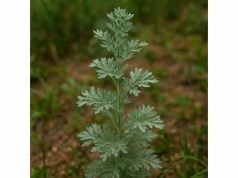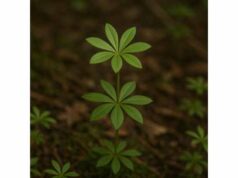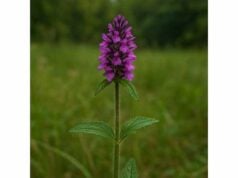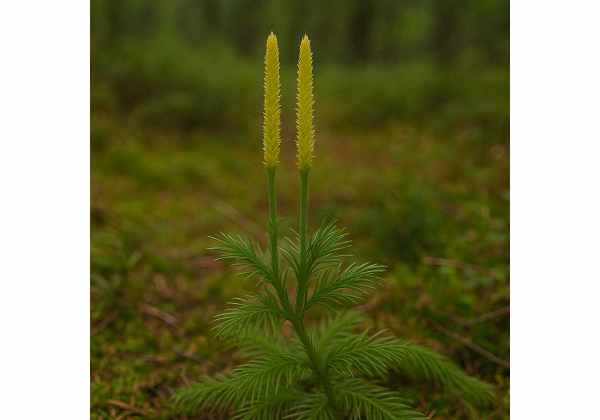
Wolf’s claw, better known botanically as Lycopodium clavatum, is an old medicinal plant with an unusual profile. It is not a true moss, even though it is often called clubmoss, and it is not mainly valued for flowers, roots, or culinary use. Instead, traditional interest has centered on the aerial herb and especially its fine yellow spores, which were once used as a protective dusting powder for tender skin and in older materia medica for urinary, digestive, and inflammatory complaints. Modern research has added a new layer by identifying alkaloids, triterpenoids, phenolics, and highly durable spore-shell material called sporopollenin.
Yet wolf’s claw is also a plant that benefits from restraint. Its homeopathic reputation is much broader than its herbal evidence base, and its modern clinical support remains limited. The most credible picture is narrower and more practical: a historically valued clubmoss with topical spore use, intriguing alkaloid chemistry, early anti-inflammatory and anticholinesterase findings, and no well-standardized modern oral herbal dose. It is interesting, but it is not a casual everyday herb.
Essential Insights
- Wolf’s claw spores were traditionally used as a dry protective powder for tender or irritated skin.
- Extracts of Lycopodium clavatum show antioxidant, anti-inflammatory, and anticholinesterase potential in early research.
- No standardized modern oral herbal dose exists; historical internal spore doses of about 650 mg to 1.3 g are largely outdated and not a current self-care recommendation.
- Pregnant or breastfeeding people, children, anyone with chronic illness, and anyone considering internal crude-herb use should avoid unsupervised use.
Table of Contents
- What Wolf’s Claw Is and Why It Has Had Medicinal Interest
- Key Compounds in Wolf’s Claw
- Potential Health Benefits and Medicinal Properties
- Traditional Uses and Modern Practical Applications
- What the Research Actually Supports
- Dosage, Preparation, and Best Ways to Use It
- Safety, Side Effects, and Who Should Avoid It
What Wolf’s Claw Is and Why It Has Had Medicinal Interest
Wolf’s claw is a creeping evergreen clubmoss in the Lycopodiaceae family. Its long trailing stems, upright branches, and narrow leaves make it look halfway between a fern ally and a miniature conifer. That ancient appearance is not misleading. Lycopodium clavatum belongs to a very old plant lineage, and that partly explains why it stands apart from most familiar medicinal herbs.
It is also known by names such as clubmoss, running pine, stag’s-horn moss, and wolf’s foot. These names can be confusing. The plant is not a true pine and not a true moss. In herbal writing, getting that right matters because people often assume “mosses” are interchangeable, or they confuse this plant with unrelated decorative ground covers. Medicinally, Lycopodium clavatum is a specific species with a specific tradition.
Historically, interest in wolf’s claw came from two different parts of the plant. The first was the whole herb or aerial parts, which entered traditional medicine systems for digestive, urinary, rheumatic, and inflammatory complaints. The second was its spores. These are the fine, yellow, highly water-repellent particles released from the mature cones. Older medicine and pharmacy found them useful because they flowed easily, stayed dry, and reduced sticking. They were dusted on irritated skin, used in pill-making, and later became important in industrial and drug-delivery applications.
That double identity is what makes the plant distinctive. Many herbs are valued for essential oils, bitters, mucilage, or aromatic flavor. Wolf’s claw is different. Its reputation comes partly from alkaloid-rich herbal extracts and partly from a spore material with unusual physical properties.
Traditional medical interest seems to have clustered around several themes:
- urinary and kidney-related folk use
- digestive and liver-related folk use
- external use of spores for chafed or tender skin
- wound-related or inflammatory traditional applications
- later experimental interest in neurological and anti-inflammatory chemistry
This is where modern readers need a little caution. A great deal of the popular reputation of “Lycopodium” now comes from homeopathy, where the name refers to highly diluted preparations and a completely different dosing logic. That is not the same thing as using the botanical herb or its spores. An article on wolf’s claw as an herb should therefore keep herbal, topical, and homeopathic identities separate.
Another important point is that this plant grows slowly. Clubmosses are not fast, disposable weeds. They are often slow-spreading and vulnerable to careless harvesting. That means sustainability is part of any responsible modern discussion. Even when a plant has a long traditional history, that does not mean unlimited wild collection is wise.
So why has wolf’s claw had medicinal interest for so long? The answer is not one miracle property. It is the combination of ancient ethnobotanical use, unusual spores, and chemically interesting alkaloids that has kept the species relevant from folk medicine to modern pharmacology.
Key Compounds in Wolf’s Claw
Wolf’s claw is chemically more interesting than its modest appearance suggests. Modern reviews describe Lycopodium clavatum as a source of lycopodane-type alkaloids, triterpenoids, flavonoids, and phenolic compounds. Together, these help explain why the plant has attracted repeated pharmacological interest even though human clinical evidence remains limited.
The alkaloids are the most distinctive part of the story. Clubmoss alkaloids are structurally unusual and often discussed in relation to acetylcholinesterase inhibition, anti-inflammatory effects, and broader neuropharmacologic potential. In Lycopodium clavatum, lycopodine is one of the best-known named alkaloids, and older work has identified it as a major component of active alkaloid fractions.
A simple way to understand the chemistry is to divide the plant into two medicinally relevant domains.
The herb and alkaloid-rich extracts
These are associated with:
- lycopodane-type alkaloids
- triterpenoids
- flavonoids
- phenolic compounds
These constituents are the main reason researchers explore wolf’s claw for anti-inflammatory, antioxidant, anticholinesterase, hepatoprotective, and experimental anticancer effects.
The spores
These are associated with:
- sporopollenin-rich outer shells
- remarkable chemical stability
- hydrophobic, free-flowing powder properties
- usefulness as microcapsules in drug-delivery research
This distinction matters because it prevents one of the biggest misunderstandings about the plant. The spores are not simply a powdered version of the whole herb. They behave differently, have different traditional uses, and are increasingly valued for their material-science potential rather than as crude internal herbal medicine.
This chemistry also helps explain why wolf’s claw has a reputation that feels broader than its validated uses. The plant clearly contains biologically active molecules, and the spore shell is a genuinely useful natural biomaterial. That makes the species easy to overstate. People see alkaloids, antioxidant effects, and drug-delivery potential, and then assume it must be a powerful everyday remedy. But interesting chemistry and good self-care practice are not the same thing.
In practical herbal terms, the compounds suggest three real takeaways.
First, wolf’s claw is not just folklore. It has serious phytochemical interest.
Second, the most promising constituents do not automatically justify crude self-dosing. Many alkaloid-rich plants are intriguing precisely because they are potent and complex, not because they are easy household herbs.
Third, some of the most exciting modern uses of Lycopodium clavatum may end up being technological rather than traditional. Its sporopollenin shells are now discussed as carriers for oral delivery and other innovative biomedical applications. That is a very different future from simply drinking the herb as tea.
If someone is mainly interested in cognitive-support botanicals with a more familiar modern profile, bacopa is a much more direct example of a better-known nootropic herb. Wolf’s claw remains chemically fascinating, but its strongest role is still exploratory rather than mainstream.
Potential Health Benefits and Medicinal Properties
The health benefits of wolf’s claw are best described as traditional and preclinical rather than clinically established. That distinction is crucial. The plant is promising, but it is not one of the better-validated modern herbs.
The clearest traditional benefit is topical skin protection from the spores. Older medical use valued lycopodium spores as a dry, smooth powder for irritated, damp, or friction-prone skin. The spores reduced sticking and chafing and helped keep surfaces dry. This is one of the most concrete, practical, historically consistent uses of the species.
A second area of interest is anti-inflammatory activity. Experimental studies on Lycopodium clavatum extracts and alkaloid fractions suggest that the plant can reduce inflammatory signaling or inflammation-related tissue changes in laboratory and animal models. This fits well with traditional applications related to irritated tissues and wound-healing support, though it still does not amount to strong human clinical proof.
A third area is antioxidant potential. Modern reviews and animal work point to reduced oxidative stress markers after treatment with wolf’s claw extracts. This helps explain why the plant keeps appearing in liver, bowel, and protective pharmacology research.
A fourth area is anticholinesterase activity and neuropharmacologic interest. This is where wolf’s claw often gets pulled into discussions of memory and cognition. Some Lycopodiaceae alkaloids, including compounds from Lycopodium species, can inhibit acetylcholinesterase. That is scientifically meaningful. But it is important not to slide from “contains AChE-inhibiting alkaloids” to “works as a memory remedy.” Those are not the same claim.
A fifth area is experimental gastrointestinal and hepatoprotective relevance. Animal studies have reported protective effects in inflammatory bowel and liver-related models. Again, this is promising, but it remains preclinical.
A balanced summary of wolf’s claw’s most plausible medicinal properties would look like this:
- topical protective and drying support from the spores
- anti-inflammatory effects in early studies
- antioxidant potential
- experimental anticholinesterase activity
- preliminary hepatoprotective and gastrointestinal interest
That is already quite a lot, but it needs context. The problem with this herb is not lack of interesting findings. The problem is that many of those findings remain upstream from real-world use. They help justify research. They do not yet justify broad clinical claims.
It is also useful to keep the traditional pattern in view. This plant was not mainly famous because it gave people energy, improved sleep, or gently aided digestion in the way many common herbs do. It was more specialized. The spores had practical external uses, and the herb attracted attention where stronger physiologic activity was desired.
For urinary folk uses, for example, a more directly targeted herb such as uva ursi makes more sense in modern herbal discussion. Wolf’s claw may have a urinary history, but it is not the clearest contemporary urinary herb.
So the most honest answer to “What are the benefits?” is this: wolf’s claw has real traditional uses and intriguing pharmacology, with the strongest practical legacy in topical spore use and the strongest modern promise in preclinical alkaloid and biomaterial research.
Traditional Uses and Modern Practical Applications
Wolf’s claw has been used across several traditional medicine systems, but its applications have never been as simple or as standardized as those of mainstream kitchen herbs. Ethnobotanical and historical records describe use for kidney and bladder complaints, digestive disturbances, liver problems, rheumatic pain, inflammatory conditions, and skin protection. Yet in real-world practice, some of those uses are much more defensible than others.
The most grounded traditional use is external spore application. This made sense for practical reasons. The spores are fine, dry, smooth, and difficult to wet. Those qualities made them useful for:
- dusting tender skin
- reducing friction in moist or rubbed areas
- keeping surfaces dry
- preventing sticking in powders and pills
- serving as a protective surface layer
That is a much more concrete historical use than vague claims about balancing the whole body.
Internal traditional uses were broader but less standardized. Various records describe wolf’s claw for urinary complaints, stomach or liver complaints, stone-related problems, rheumatic pain, and generalized inflammatory states. Some limited reports and later reviews even mention conditions such as urolithiasis and hyperuricemia. These traditions matter, but they need to be translated carefully for modern readers. Folk use is not the same as proven indication.
Modern practical applications of the plant fall into three buckets.
Topical heritage use
This is still the easiest part of the plant to understand. The spore powder behaves like a plant-derived protective dusting agent.
Experimental herbal interest
Researchers continue to explore extracts and alkaloids for anti-inflammatory, antioxidant, and anticholinesterase actions.
Biomaterial and drug-delivery use
This may be the most modern and distinctive role of all. Processed lycopodium spores are increasingly discussed not just as medicinal powders but as natural microcapsules with controlled-delivery potential.
At the same time, there is a major modern complication: homeopathy. Many people encounter “Lycopodium” first as a homeopathic remedy. That can blur the conversation badly. Homeopathic preparations are highly diluted products and should not be treated as evidence for the crude herb, the spores, or the botanical extract. The traditions overlap in name, but not in a straightforward pharmacologic way.
A respectful modern use profile therefore looks like this:
- Recognize the spore powder as the plant’s clearest traditional practical use.
- Treat internal crude-herb use cautiously because it is less standardized.
- Separate homeopathic reputation from herbal evidence.
- Avoid assuming that promising laboratory chemistry equals an established self-care herb.
For readers mostly interested in gentle skin support rather than a historically unusual spore powder, calendula is a much more familiar modern topical herb. Wolf’s claw remains interesting, but it is more historically and pharmacologically specialized.
That specialization is part of the plant’s appeal. It reminds us that some herbs were valued not because they were pleasant daily companions, but because they did one or two unusual things well.
What the Research Actually Supports
The research on wolf’s claw is compelling, but it needs strong boundaries. The best-supported claims are chemical and preclinical, not clinical.
What the research supports fairly well:
- Lycopodium clavatum contains alkaloids, triterpenoids, flavonoids, and phenolics.
- Alkaloid fractions show anticholinesterase potential.
- Extracts have shown anti-inflammatory and antioxidant effects in laboratory and animal models.
- Animal work suggests possible benefit in inflammatory bowel and oxidative stress models.
- The spores are a valuable source of sporopollenin and have genuine biomedical material potential.
What the research does not yet support strongly:
- a large body of human clinical trials
- a standardized herbal dose for routine self-use
- reliable herbal recommendations for neurological disease
- broad claims for kidney, liver, or digestive disorders in ordinary consumers
This distinction matters because wolf’s claw is exactly the kind of plant that can be exaggerated by one-step logic. A review shows anticholinesterase activity, so people assume Alzheimer’s benefit. A rat colitis study looks positive, so people assume inflammatory bowel self-treatment. A review mentions traditional urinary use, so people assume kidney-stone management at home. Each of those leaps is too large.
A more faithful reading is that wolf’s claw is a serious candidate for further study, not a mature consumer herb.
This is especially true in the cognitive area. Lycopodiaceae alkaloids are indeed important in acetylcholinesterase research, but the most famous compound in that conversation, huperzine A, is associated more strongly with other members of the family than with everyday wolf’s claw preparations. That is why the presence of related alkaloid activity in Lycopodium clavatum should be treated as pharmacologic interest rather than as a reason to self-dose the herb for memory.
The same caution applies to gastrointestinal findings. The rat colitis study is interesting because it suggests anti-inflammatory and antioxidant effects in the gut. But even good animal data do not automatically justify using wolf’s claw for ulcerative colitis or Crohn’s disease in people.
What research actually supports, then, is a narrower set of conclusions:
- The plant deserves scientific attention.
- Its chemistry is genuinely bioactive.
- Its spores have innovative nontraditional biomedical potential.
- Human herbal use remains under-standardized and under-validated.
That is still a strong outcome. Not every plant with traditional use turns out to be chemically impressive. Wolf’s claw clearly is. But being impressive in the lab is not the same as being ready for routine herbal medicine.
If someone mainly wants a gentler and better-established herb for daily digestive comfort, wolf’s claw is rarely the first place to start. It belongs more to the category of specialized traditional botanicals that researchers continue to explore because the chemistry is too interesting to ignore.
Dosage, Preparation, and Best Ways to Use It
Dosage is the weakest and most caution-heavy part of the wolf’s claw picture. Unlike common digestive teas or standardized laxative herbs, Lycopodium clavatum does not have a modern, well-accepted oral herbal dose for everyday self-care.
That is the first thing readers should know.
The clearest historical dose information applies to the spores, not the whole herb. Older materia medica described internal spore doses in the range of roughly 10 grains to 1 scruple, which corresponds to about 650 mg to 1.3 g. But this is best understood as a historical note, not a modern recommendation. Those older dosing traditions arose in a different medical context, before current expectations for standardization, toxicology, and evidence.
So how should the plant be approached now?
For topical spore use
This is still the most sensible traditional format. The powder was used lightly and externally, not in thick layers and not on deep tissue. In practical terms, the safest traditional-style use is a thin surface dusting on intact skin where dryness and friction reduction are desired.
For crude herbal internal use
There is no well-standardized modern self-care dose. This is where people should be especially cautious. Whole-herb teas, tinctures, and powders are sold in some herbal markets, but the evidence base is not strong enough to make confident routine dosing recommendations.
For processed spore applications in modern science
These belong mostly to laboratory and pharmaceutical development, not home herbal practice.
For homeopathic preparations
These have completely separate dosing systems and should not be confused with botanical herb dosing.
This leads to a practical rule that suits the evidence: if wolf’s claw is being used in a traditional way at all, external spore use is easier to justify than internal crude-herb use.
Preparation also matters. The spores and the herb are not the same medicine. A tea made from aerial parts is not the same as spore powder, and neither is equivalent to a modern extract enriched for alkaloids. That means one of the biggest safety problems is assuming all forms carry the same effect.
A sensible modern hierarchy looks like this:
- thin external spore use on intact skin
- cautious expert-guided use of standardized extracts if relevant
- avoid improvised oral dosing from wild-collected or poorly standardized crude herb
It is also worth saying that not every traditional herb needs to be modernized into a daily supplement. Wolf’s claw may be one of those plants whose future lies more in purified constituents and biomaterials than in routine home infusion.
For readers seeking a simpler topical botanical that is easier to dose and understand, witch hazel offers a much more straightforward path. Wolf’s claw remains historically important, but dosage is precisely where its limitations become most obvious.
Safety, Side Effects, and Who Should Avoid It
Wolf’s claw is not a casual herb. That does not mean it is wildly dangerous in all forms, but it does mean the safety story depends heavily on the part used and the route of exposure.
Spore powder used externally has historically been considered the gentlest and most practical form. Even here, there are cautions. Fine powders can be inhaled, and anything that can be inhaled deeply into the lungs is worth treating respectfully. Historical case literature also suggests that if lycopodium spores are introduced into surgical or deep tissue sites, they can behave like foreign material and cause long-delayed granulomatous reactions. That is one reason modern use should stay external and superficial.
Crude internal herbal use is less clearly standardized and therefore harder to describe as safe. The plant’s alkaloid and polyphenol complexity is part of its pharmacologic appeal, but it is also the reason improvised dosing is not wise.
Likely or possible side effects with inappropriate use include:
- stomach irritation
- nausea
- headache
- throat or airway irritation from inhaled powder
- unpredictable effects from crude oral dosing
- skin irritation in sensitive users
There is also a very practical nonmedical safety issue: the spores are highly flammable. Historically they were used in flash effects because they ignite readily when dispersed. That is not just a curiosity. It means spore powder should be kept away from open flame, sparks, and heat sources.
People who should avoid unsupervised use include:
- pregnant or breastfeeding people
- children
- people with chronic lung disease or asthma if powder inhalation is a possibility
- anyone planning internal use of crude herb or spores
- people with complex medical conditions or multiple medicines
- anyone harvesting wild material without precise plant identification
Sustainability belongs in the safety section too. Clubmosses are slow-growing. Overharvesting can damage local populations far more easily than people expect. Even if a species is not globally rare, careless collection can still be ecologically irresponsible. Cultivated or responsibly sourced material is the better choice.
Another important clarification is that homeopathic “Lycopodium” does not answer the safety question for crude botanical wolf’s claw. Highly diluted pellets and actual herbal powders are different products with different risk profiles. People often confuse the two because they share a Latin name.
The most balanced conclusion is this: wolf’s claw spores have a real historical place as an external protective powder, but internal herbal use is much less standardized and should not be treated as routine self-care. The plant is better respected as a specialized traditional botanical and a modern research subject than promoted as a simple household remedy.
References
- From traditional medicine to modern therapeutics: phytochemistry, pharmacology, and innovative sporopollenin-based drug delivery systems of Lycopodium clavatum L 2026 (Review)
- Unearthing nature’s remedy: An exploration into Lycopodium’s medicinal and therapeutic potential 2024 (Review)
- Lycopodium Mitigates Oxidative Stress and Inflammation in the Colonic Mucosa of Acetic Acid-Induced Colitis in Rats 2022 (Preclinical Study)
- Fractionation of Lycopodiaceae Alkaloids and Evaluation of Their Anticholinesterase and Cytotoxic Activities 2021 (Preclinical Study)
- Appraisal of anti-inflammatory potential of the clubmoss, Lycopodium clavatum L. 2007 (Preclinical Study)
Disclaimer
This article is for educational purposes only and is not medical advice. Wolf’s claw has a long traditional history and interesting modern pharmacology, but crude herbal use is not well standardized, and the strongest modern evidence remains preclinical. Anyone who is pregnant, breastfeeding, has chronic illness, takes prescription medicines, has lung disease, or is considering internal use of Lycopodium clavatum in any non-homeopathic form should speak with a qualified healthcare professional first.
If you found this article helpful, please share it on Facebook, X, or another platform you prefer.