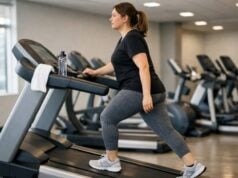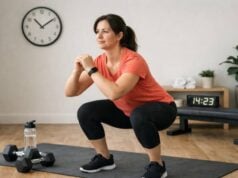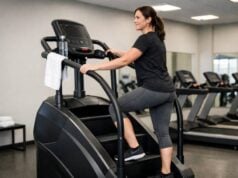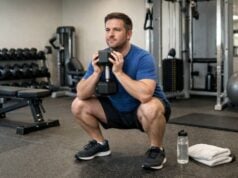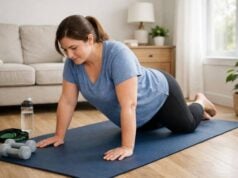
A desk job can make a day feel oddly tiring even when you have barely moved. Hours disappear in email, meetings, deadlines, and screen time, and by evening it can seem as if exercise now requires a second shift of motivation. That is why many office workers do not need a more extreme plan. They need a smarter one. The most effective approach is usually not a single hard workout that tries to cancel out ten sedentary hours, but a daily system built from steps, movement breaks, and short bursts of strength or mobility that fit into real workdays. When those small pieces are placed well, they raise calorie burn, reduce stiffness, improve energy, and make formal exercise easier to maintain. This article lays out a practical office and desk job movement plan, including step targets, break timing, micro-workout ideas, weekly structure, and ways to stay consistent when work is busy instead of waiting for a perfect schedule that never arrives.
Table of Contents
- Why Desk Jobs Quietly Slow Fat Loss
- Daily Step Targets That Actually Help
- How to Break Up the Workday
- Micro-Workouts You Can Do at Work
- A Realistic Weekly Office Movement Plan
- How to Stay Consistent on Busy Days
Why Desk Jobs Quietly Slow Fat Loss
Desk jobs do not cause weight gain because sitting is somehow uniquely fattening. The real problem is that office work quietly lowers total daily movement while making the day feel mentally draining. That combination is rough for fat loss. You burn fewer calories through normal activity, then finish work feeling too tired to do much about it.
This is why many office workers feel stuck even when they are “good” for one hour at the gym. A tough workout helps, but it often cannot fully offset a day built around eight to ten hours of sitting, minimal walking, frequent convenience food, and low energy by evening. The missing piece is usually not more intensity. It is more movement spread through the whole day.
This kind of movement matters because it adds up in three useful ways:
- It raises daily energy expenditure without feeling like formal training
- It reduces the long unbroken sitting stretches that make people feel stiff and sluggish
- It makes exercise feel more familiar and less like a separate, heroic event
That is why daily movement is often discussed under the broader idea of non-exercise activity. These are the calories you burn through walking, standing, stair use, short breaks, errands, pacing during calls, and all the other small actions that disappear in sedentary routines. For office workers, increasing this layer of movement is often one of the fastest ways to make a weight-loss plan work better.
A desk job also changes how people think about exercise. Many assume the answer is to “make up for it” with intense evening cardio. Sometimes that works for a week or two. More often it creates an all-or-nothing cycle: long sedentary days, occasional hard workouts, then inconsistency when life gets busy. A better model is to treat the workday itself as part of your activity plan.
That means accepting a simple truth: your body responds to what the whole day looks like, not just what happens at 6:30 p.m. A day with 8,500 steps, three short movement breaks, one set of stairs, and a 12-minute micro-workout often supports fat loss better than a day with 2,300 steps and one punishing spin class.
This is also why office workers should stop thinking only in terms of “exercise” and start thinking in terms of movement opportunities. When movement is built into work, commuting, lunch, meetings, and transition times, it becomes easier to stay active even when formal workouts are not perfect.
That shift in mindset matters. You are not trying to become someone with endless free time. You are building a work-compatible plan that makes sitting less dominant and movement more automatic.
Daily Step Targets That Actually Help
Most office workers do not need a dramatic step goal on day one. They need a target that is clearly above baseline and realistic enough to repeat. That is the sweet spot.
If you work at a desk, your natural total may be surprisingly low. Some people finish a normal office day with only 2,500 to 4,500 steps before any planned walk. That means the first useful goal is often not 10,000. It is simply getting out of the very low range.
A practical way to think about step targets is:
- Under 4,000 steps: very sedentary day
- Around 5,000 to 7,000 steps: improvement, but still needs intention
- Around 7,500 to 9,000 steps: solid daily movement for many office workers
- Around 10,000 or more: strong target if time, recovery, and schedule allow
For fat loss, the best target is the one you can hit on most workdays without turning it into a second job. For many people, that means starting with 6,000 to 8,000 steps, then progressing once that feels normal. A target that fails four days a week is less useful than a slightly lower target you hit almost every day.
This is where step goals become practical instead of abstract. You do not reach them by “walking more” in a vague sense. You reach them by attaching steps to parts of the day you already have:
- A 10-minute walk before work
- A lap around the building after lunch
- Walking during phone calls
- Parking farther away
- Taking the long route to the restroom or printer
- A short evening walk to close the step gap
These small blocks are often enough to transform the day. For example, three 10-minute walks can add roughly 2,500 to 3,500 steps for many adults. That means someone stuck at 4,000 can often reach 7,000 or more without adding a long workout.
If you like a more ambitious benchmark, 10,000 steps for weight loss can be useful, but it should be treated as a helpful upper target, not a daily pass-fail test. Some people do better with a weekly average, such as 8,000 on weekdays and 10,000 to 12,000 on weekends. Others prefer a minimum floor, such as never going below 6,000.
The best office-worker step plan usually has three layers:
- A minimum floor you can hit even on busy days
- A normal target for most workdays
- A stretch target for lighter or more flexible days
That structure keeps you out of perfection mode. It also reduces the common problem of doing well Monday through Thursday and collapsing into near-zero movement on the most stressful day of the week.
Steps are not everything, but they are one of the easiest ways to make a desk job less sedentary. Used well, they give your day shape, protect your energy, and create steady calorie burn without requiring a full costume change or a commute to the gym.
How to Break Up the Workday
If steps are the foundation, movement breaks are the glue. They stop the workday from turning into one long, unmoving block.
A lot of people know they “should take breaks,” but the advice stays vague and never becomes a routine. The fix is to stop treating breaks as random acts of wellness and start treating them as scheduled movement prompts. In practice, that usually means standing or moving briefly every 30 to 60 minutes, then adding one or two longer walking breaks during the day.
A useful office pattern looks like this:
- Every 30 to 60 minutes: stand up, walk briefly, or change position
- Every 2 to 3 hours: take a more deliberate 3- to 5-minute movement break
- Once or twice per workday: add a 10-minute walking block
This structure works because it is realistic. Most jobs do not allow constant pacing, but most jobs do allow very short interruptions if you plan them well.
Good movement breaks do not need to be complicated. They can include:
- Walking to refill water
- One flight of stairs up and down
- A quick lap around the office
- Standing during a call
- Ten bodyweight squats
- Shoulder rolls, calf raises, or marching in place
The goal is not to win a fitness badge every hour. The goal is to reduce uninterrupted sitting and keep your body from switching into full desk mode for half the day at a time.
This is also where timing matters. Many people do better with “anchor breaks” tied to recurring events instead of relying only on timers. For example:
- After finishing a meeting, walk for two minutes
- Before opening email again after lunch, take a quick lap
- During every afternoon energy dip, do a 3-minute reset
- After a long focus block, stand before starting the next task
These anchors make movement feel less disruptive because it is connected to moments that already exist. They also pair well with habit stacking, where you attach a small action to a regular cue instead of depending on willpower.
If you work from home, breaks can be even more intentional because you control more of the environment. Set the printer farther away. Keep resistance bands nearby. Use stairs between tasks. If you work in an office, look for friction points you can turn into movement, like distant restrooms, a farther coffee station, or walking to a coworker instead of messaging them when practical.
The most important point is that breaks should be small enough to survive busy days. A five-minute break you actually take is more useful than a 20-minute reset you postpone until it disappears. Over time, those interruptions can noticeably improve step totals, comfort, alertness, and adherence to the rest of your fat-loss plan.
Breaks are not wasted time. For desk workers, they are part of the training plan.
Micro-Workouts You Can Do at Work
Micro-workouts are short bursts of purposeful movement that take roughly 2 to 10 minutes. They are useful because they solve a common office problem: you may not have time for a full workout in the middle of the day, but you usually have time for something.
That “something” can matter more than people think. Short movement sessions can raise heart rate, reduce stiffness, wake up tired muscles, and make the day feel more active overall. They also lower the barrier to exercise. Once a person gets used to doing six minutes of movement at work, a 25-minute evening workout often feels less intimidating.
The key is to keep the sessions simple, repeatable, and low-friction. A good office micro-workout does not require a mat, long warm-up, or shower. It also should not leave you red-faced right before a client call unless that is fine in your setting.
Here are a few practical templates.
- Two-minute desk reset
- 10 sit-to-stands
- 10 wall push-ups
- 20 marching steps per side
- 10 calf raises
- Five-minute strength snack
- 12 chair squats
- 10 desk or wall push-ups
- 10 reverse lunges per side
- 20-second plank against desk
Repeat once if time allows
- Six-minute stair block
- Walk stairs briskly for 45 seconds
- Easy walk for 45 seconds
Repeat four times
- Mobility and posture reset
- 8 hip hinges
- 10 band pull-aparts if available
- 8 thoracic rotations per side
- 20-second chest opener
- 10 glute squeezes
These sessions work best when you rotate them based on your day. On a heavy meeting day, a short mobility break may be perfect. On a lower-pressure day, a stair interval block may give you a stronger training effect.
Micro-workouts also do not need to replace formal training. They can support it. Someone following a no-equipment bodyweight routine or a band workout plan can use micro-sessions as extra movement between main workouts, not as a substitute for all structured exercise.
A few rules keep them useful:
- Leave a little energy in reserve
- Prioritize good form over speed
- Choose movements that fit your clothes and workspace
- Keep one or two default routines ready so you do not have to think
- Use them to add movement, not create dread
One mistake is turning every micro-workout into high-intensity punishment. That usually backfires. A better approach is to match the session to the moment. Some should feel like activation. Some can feel challenging. Not all need to be hard.
The real power of micro-workouts is behavioral. They prove that movement can fit inside a workday in small, useful pieces. Once that belief changes, consistency usually improves everywhere else too.
A Realistic Weekly Office Movement Plan
A desk job movement plan works best when it is built like a weekly system, not a collection of good intentions. The goal is to know what a normal Monday looks like before Monday gets chaotic.
Here is a realistic template for many office workers trying to lose fat while keeping the plan manageable.
Monday to Friday foundation:
- Daily step floor: 6,000 to 7,000
- Normal weekday target: 7,500 to 9,000
- Stand or move every 30 to 60 minutes
- One 10-minute walk during the workday
- One micro-workout on 3 to 5 workdays
Weekly exercise structure:
- Two to three strength sessions
- Two to four intentional cardio or brisk walking sessions
- One lighter recovery day with extra steps
- Weekend step catch-up if weekdays were tight
A sample workweek could look like this:
Monday
- Morning 10-minute walk
- Two 3-minute breaks during work
- Short strength session after work
Tuesday
- Walking meeting or lunch walk
- Five-minute stair micro-workout
- Normal evening routine
Wednesday
- Morning steps plus two desk breaks
- Short cardio session or brisk treadmill walk
Thursday
- Movement break every hour during a heavy desk day
- 6-minute bodyweight micro-workout
- Optional easy walk after dinner
Friday
- Morning walk
- Strength session
- Extra lap before leaving work to avoid ending the week inactive
Weekend
- Longer walk, hike, errands on foot, or a more relaxed active day
This structure works because it does not ask every day to do everything. Some days emphasize steps. Some add a micro-workout. Some include formal training. That reduces the mental load and fits better around real work patterns.
The plan also protects against a common office-worker trap: saving all activity for evenings and weekends. That can work, but it often makes weekdays too sedentary. A better pattern is to keep weekdays active enough that weekends build on momentum rather than trying to rescue the week.
If formal exercise is part of your plan, a simple three-day strength setup often pairs well with desk-job movement goals. It leaves room for walking and brief cardio without making recovery too messy. If your main struggle is fitting everything into life, it helps to think in terms of a routine that matches your schedule rather than copying someone else’s training split.
The best weekly plan should answer three questions in advance:
- What is my minimum movement target on busy workdays?
- Where will my steps come from if meetings take over?
- What short default session will I do when there is no time for a full workout?
If you can answer those, you already have a plan strong enough to survive ordinary work stress. That matters more than having an ideal plan that only works on unusually calm weeks.
How to Stay Consistent on Busy Days
Busy days are where movement plans either become real or collapse into wishful thinking. The answer is not to expect perfect discipline. It is to make the plan smaller, more flexible, and harder to skip.
The first rule is to separate your minimum from your ideal. Your ideal day might include 9,000 steps, a 30-minute workout, and several breaks. Your minimum day might be 6,000 steps, two short movement breaks, and a 4-minute micro-workout. That minimum keeps momentum alive when the calendar explodes.
The second rule is to reduce decision-making. Busy people do not need more options. They need defaults. For example:
- Default walk: 10 minutes after lunch
- Default break: stand and move after every meeting
- Default micro-workout: squats, desk push-ups, and marching for 4 minutes
- Default rescue strategy: evening walk if step count is low by 6 p.m.
The third rule is to make the environment help you. Keep walking shoes visible. Leave a band near your desk. Put your water bottle where you must stand to refill it. Schedule recurring reminders. Good office movement plans are easier when the setup removes friction instead of adding it.
It also helps to stop expecting the workday to “give you time.” Most people have to claim movement in small pieces. That is not a flaw in the plan. It is the design. A 3-minute break, a walking call, and a short evening lap are often exactly how consistency looks for office workers.
Another useful mindset shift is to treat steps and breaks as insurance, not extras. Even if a formal workout disappears, the day is still productive if you kept movement alive. This is one reason so many people do well with simple non-calorie tracking methods such as daily step totals, checkboxes for breaks, or weekly activity goals. Visible wins help maintain motivation when the scale is slow.
When work stress is the real problem, beware of the “I will restart Monday” trap. Missing one workout is normal. Missing all movement for four days because one deadline-heavy day went badly is the real issue. This is where a simple reset protocol helps:
- Hit your step floor tomorrow
- Take one walk during the workday
- Do one short movement session
- Resume the normal plan at the next available slot
This works because it avoids drama. Fat loss is rarely ruined by one sedentary day. It is undermined by letting one sedentary day turn into a lost week.
Finally, remember that office movement plans are supposed to reduce friction, not create guilt. The goal is not to become obsessed with standing every 22 minutes or hitting a magical step number. The goal is to make a desk-based life more active, more comfortable, and more supportive of long-term weight control.
If the plan fits your real life, it will still work on the weeks when motivation is average. That is usually the strongest sign that you built it well.
References
- WHO guidelines on physical activity and sedentary behaviour 2020 (Guideline)
- Effectiveness of interventions on sedentary behaviors in office workers: a systematic review and meta-analysis 2024 (Systematic Review and Meta-Analysis)
- Effectiveness of workplace interventions with digital elements to reduce sedentary behaviours in office employees: a systematic review and meta-analysis 2024 (Systematic Review and Meta-Analysis)
- Effects of Exercise Snacks on Cardiometabolic Health and Body Composition in Adults: A Systematic Review and Meta‐Analysis 2025 (Systematic Review and Meta-Analysis)
- Effects of Interrupting Prolonged Sitting with Physical Activity Breaks on Blood Glucose, Insulin and Triacylglycerol Measures: A Systematic Review and Meta-Analysis 2020 (Systematic Review and Meta-Analysis)
Disclaimer
This article is for general educational purposes only and is not a substitute for medical advice, diagnosis, or treatment. If you have chest pain, severe shortness of breath, recent surgery, uncontrolled blood pressure, significant joint pain, or a medical condition that affects safe activity, get personalized guidance from a qualified clinician before changing your exercise or workday movement routine.
If this article was useful, please share it on Facebook, X, or your preferred platform so it can help other desk workers build a movement plan that actually fits real life.