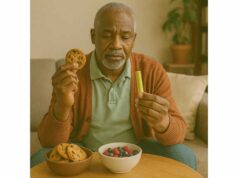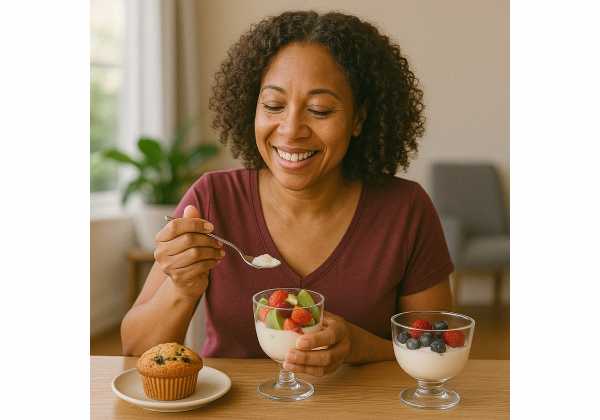
Dessert fits healthy aging best when it becomes a planned pleasure instead of a blood sugar ambush. A sweet food eaten alone, late at night, or on top of a low-protein day often hits harder: glucose rises faster, hunger returns sooner, and energy drops. The same dessert behaves differently when it follows a balanced meal, comes in a smaller portion, includes protein or fiber, and uses fruit, cocoa, nuts, yogurt, or spices for flavor.
Healthy dessert strategy does not require a sugar-free life. It asks for better structure: smaller added-sugar loads, slower digestion, more nutrient density, and fewer “sweet snacks” that act like dessert but fail to satisfy. The strongest choices give sweetness, texture, and enjoyment while protecting muscle, metabolic health, sleep, and appetite control. A bowl of Greek yogurt with berries and dark chocolate shavings often serves aging physiology better than a large cookie eaten alone at 10 p.m.
Table of Contents
- Why Dessert Hits Differently with Age
- The Smart Dessert Formula
- Choose Desserts That Slow the Glucose Rise
- Timing Dessert for Steadier Energy
- Sweeteners, Portions, and Labels
- Dessert Ideas That Support Longevity
- Real-Life Dessert Rules That Stick
- When Dessert Needs a More Personal Plan
Why Dessert Hits Differently with Age
Dessert affects aging bodies through more than calories. A sweet food changes glucose, insulin, triglycerides, appetite signals, sleep timing, dental health, and the overall nutrient quality of the day. These effects become more noticeable in midlife and later life because muscle mass, insulin sensitivity, sleep depth, and daily movement often decline unless a person trains and eats deliberately.
Muscle acts like a storage site for glucose. After a meal, insulin helps move glucose out of the bloodstream and into muscle and liver tissue. Less muscle, lower activity, poor sleep, and excess visceral fat all reduce that glucose-handling capacity. This is one reason a dessert that felt harmless at 30 leaves some adults at 55 feeling sleepy, hungry, or foggy an hour later.
Dessert also competes for dietary space. Healthy aging requires enough protein, fiber, potassium, magnesium, calcium, omega-3 fats, polyphenols, and total calories to maintain function without excess fat gain. A large sweet at the end of a low-protein day crowds out foods that protect muscle and metabolic health. A smaller dessert after a protein-rich meal fits much better.
Added sugar deserves special attention because it concentrates sweetness without bringing the fiber and structure found in whole fruit, legumes, oats, or dairy. A medium apple contains natural sugar, water, fiber, polyphenols, and chewing resistance. A soda, candy bar, or frosted pastry delivers sugar quickly and usually encourages faster intake. Desserts and sweet snacks also rank among the largest sources of added sugar in many diets.
The pattern matters more than a single dessert. One slice of birthday cake eaten with family after dinner is different from nightly grazing on cookies, sweet cereal, flavored coffee drinks, and “healthy” bars. Repeated sugar hits throughout the day keep appetite stirred up and make it harder to notice true hunger.
Aging-friendly dessert strategy uses three ideas:
- Keep added sugar modest most days.
- Pair sweetness with protein, fiber, fat, or acidity to slow digestion.
- Treat dessert as part of the meal pattern, not a separate grazing habit.
People who track glucose, A1c, or insulin resistance often notice that dessert quality and timing change their numbers. For a broader food approach to steadier glucose, see food habits that flatten blood sugar spikes.
The Smart Dessert Formula
A smart dessert has sweetness, satisfaction, and a slower metabolic release. The simplest formula is:
Protein or fiber + fruit or cocoa + healthy fat + controlled added sugar.
This structure turns dessert from a fast sugar delivery system into a mixed food. Mixed foods usually digest more slowly than refined carbohydrates eaten alone. That slower release supports steadier energy and better appetite control.
A useful everyday dessert includes at least two of these four anchors:
- Protein: Greek yogurt, skyr, cottage cheese, ricotta, milk, kefir, tofu pudding, chia pudding with milk, or a protein-rich custard.
- Fiber: berries, apples, pears, kiwi, chia seeds, ground flaxseed, oats, beans in brownies, or nut flours.
- Healthy fat: walnuts, almonds, pistachios, peanut butter, tahini, extra-virgin olive oil in citrus desserts, or avocado in mousse.
- Polyphenols: cocoa, berries, cherries, cinnamon, coffee, tea, citrus zest, pomegranate, or dark-colored fruit.
Portion size still counts. Adding nuts and yogurt improves the dessert, but it does not erase a large sugar load. A small dessert built well usually satisfies better than a large dessert built from white flour, sugar, and fat with little protein or fiber.
| Dessert element | Why it helps | Easy examples |
|---|---|---|
| Protein | Improves fullness and supports muscle maintenance | Greek yogurt, cottage cheese, kefir, tofu pudding |
| Fiber | Slows digestion and supports gut health | Berries, chia, oats, apples, pears |
| Healthy fat | Adds richness and slows stomach emptying | Nuts, seeds, tahini, peanut butter |
| Polyphenols | Adds plant compounds linked with cardiometabolic health | Cocoa, berries, coffee, tea, cinnamon |
| Modest added sugar | Preserves enjoyment without turning dessert into a glucose surge | 1–2 teaspoons honey, maple syrup, sugar, or jam |
The formula works because it respects how people actually eat. A person who craves chocolate after dinner rarely wants plain fruit only. A better strategy is to build a chocolate dessert that carries more nutritional value: plain Greek yogurt, cocoa powder, a small amount of maple syrup, berries, and chopped walnuts. The result tastes like dessert but behaves more like a balanced snack.
Protein deserves extra attention with aging. Many adults eat too little protein at breakfast and lunch, then snack on sweets in the afternoon. That pattern increases cravings and makes evening dessert harder to control. A dessert with 10–20 g of protein helps, but it works best when the entire day supports muscle. For daily and per-meal ranges, see protein targets for longevity.
Fiber also changes the dessert experience. Berries, chia, oats, and nuts add bulk and texture, so a smaller amount feels more complete. People who struggle with cravings often do better when dessert requires chewing and spoonfuls instead of disappearing in a few bites. For daily fiber targets and food sources, see fiber for longevity.
Choose Desserts That Slow the Glucose Rise
Desserts produce different glucose responses depending on ingredients, structure, portion size, and the meal eaten before them. A small bowl of berries with yogurt differs greatly from a large muffin, even if both taste sweet. Liquid sugar usually acts fastest. Refined flour plus sugar also moves quickly, especially when eaten alone.
Glycemic load gives a practical lens. Glycemic index describes how quickly a carbohydrate food raises blood sugar under testing conditions. Glycemic load also considers the amount of carbohydrate in a typical portion. Watermelon has a higher glycemic index than some fruits, but a normal serving has a moderate carbohydrate load because it contains so much water. A dense brownie, cookie stack, or sweet pastry usually brings more concentrated carbohydrate and calories in less volume.
For real life, use this dessert ranking:
| Better most days | Use with portion awareness | Limit to occasional treats |
|---|---|---|
| Greek yogurt with berries and nuts | Small homemade oatmeal cookie | Large bakery muffin |
| Cottage cheese with cinnamon and peaches | Dark chocolate with fruit | Frosted cake with sweet drink |
| Chia pudding with cocoa | Fruit crumble with oat topping | Candy eaten alone |
| Baked apple with walnuts | Small ice cream after dinner | Sugary coffee dessert drink |
| Kefir smoothie bowl with berries | Rice pudding with milk and cinnamon | Donuts or sweet rolls as snacks |
Several dessert upgrades work especially well.
Use whole fruit instead of fruit juice
Whole fruit brings water, fiber, chewing time, and structure. Juice removes most of that structure and makes sugar easier to overconsume. A cup of berries, orange segments, kiwi, apple slices, or pear wedges usually supports satiety better than juice-based sorbet or a sweet drink.
Dried fruit needs smaller portions. Dates, raisins, figs, and dried mango concentrate sugar because water has been removed. They fit best as flavor accents: one chopped date in yogurt, a few raisins in baked oats, or two dried figs with walnuts.
Choose cocoa-rich options over candy-style chocolate
Dark chocolate and unsweetened cocoa powder bring cocoa flavanols, bitterness, and intensity. Milk chocolate and chocolate candy often bring more sugar, less cocoa, and easier overeating. A practical portion is 10–20 g of dark chocolate with fruit or nuts. Cocoa powder stirred into yogurt, chia pudding, oats, or warm milk gives chocolate flavor with little or no added sugar.
A deeper guide to cocoa quality and flavanols is available in dark chocolate and cocoa flavanols.
Make creamy desserts protein-rich
Creaminess helps dessert feel satisfying. Instead of relying only on cream, sugar, or butter, use protein-rich bases:
- Greek yogurt with cocoa and berries
- Skyr with cinnamon and grated apple
- Cottage cheese blended with vanilla and lemon zest
- Kefir smoothie bowls with chia
- Silken tofu chocolate mousse
- Ricotta with roasted strawberries
These choices work because they satisfy the desire for a sweet, creamy finish while adding nutrients that many aging adults need.
Use texture to create satisfaction
Fast-eating desserts invite overshooting. Texture slows the meal and improves satisfaction. Add chopped nuts, toasted oats, seeds, cacao nibs, apple slices, pear, berries, or a small crumble topping. Texture also helps people enjoy less sugar because crunch and aroma provide sensory contrast.
Timing Dessert for Steadier Energy
Dessert timing changes its impact. The same sweet food usually behaves better after a balanced meal than as a stand-alone snack. A meal with vegetables, protein, healthy fat, and fiber slows stomach emptying and reduces the speed of glucose entry into the bloodstream. Dessert then arrives into a digestive system already handling a mixed meal.
The most reliable timing rule is simple: eat dessert after a real meal, not before dinner and not alone when hungry.
This rule helps in three ways. First, hunger no longer drives portion size. Second, protein and fiber from the meal reduce the glucose surge. Third, dessert feels like a finish, not the start of a snack cycle.
Food order also helps. Eating protein, vegetables, legumes, or salad before starch and sugar tends to lower the post-meal glucose rise compared with eating refined carbohydrates first. For dessert, this means a meal sequence such as salad, fish, beans or lentils, vegetables, and then a small dessert usually works better than bread, dessert, and then the main meal.
A short walk after a dessert-containing meal adds another layer. Muscle contractions help move glucose out of the bloodstream. A 10–20 minute easy walk after dinner often improves post-meal glucose handling without requiring a workout. Even light movement around the kitchen, stairs, or a relaxed neighborhood walk beats sitting still immediately after a large meal.
Late-night dessert creates a separate challenge. Glucose tolerance tends to decline later in the day, and large sweet foods near bedtime worsen reflux, sleep quality, and next-morning hunger for some people. A dessert at 7:30 p.m. after dinner usually works better than cookies at 10:30 p.m. in front of a screen.
For people who sleep poorly, evening dessert should stay small, protein-rich, and not too fatty. A heavy, sugary dessert close to bed often creates a mix of fullness, thirst, reflux risk, and restlessness. Better evening options include plain yogurt with kiwi, cottage cheese with berries, warm milk with cinnamon, or a small square of dark chocolate with walnuts. More ideas appear in evening nutrition for sleep in aging.
Dessert also fits better on active days. After resistance training, a long walk, cycling, gardening, or a hike, muscles become more ready to store glucose. This does not make sugar “free,” but it gives sweet foods a better physiological context. On sedentary days, choose smaller portions and more protein-fiber structure.
Sweeteners, Portions, and Labels
Aging-friendly dessert planning treats all added sugars as added sugars. Honey, maple syrup, coconut sugar, brown sugar, agave, date syrup, and cane sugar differ in flavor and small mineral content, but they still add sugar. Their health halo often leads to larger portions.
A useful conversion: 4 g of sugar equals about 1 teaspoon. A dessert with 20 g of added sugar contains about 5 teaspoons. That number makes labels easier to understand.
The American Heart Association recommends no more than 25 g of added sugar per day for most women and 36 g per day for most men. Some people need less, especially those with diabetes, fatty liver, high triglycerides, insulin resistance, or weight-loss goals. Instead of turning those numbers into perfectionism, use them as a reality check. A single bakery dessert can exceed a full day’s added-sugar target.
Nutrition labels help when used quickly:
- Check added sugars, not only total sugars. Total sugars include natural sugars from fruit and dairy.
- Notice serving size. Many packages contain two or more servings.
- Look for sugar names. Syrup, honey, molasses, dextrose, maltose, sucrose, glucose, fructose, and juice concentrate all count.
- Compare similar products. Yogurts, granolas, bars, and puddings vary widely.
- Watch “no added sugar” desserts. They still contain calories, refined starch, saturated fat, or sugar alcohols.
Non-sugar sweeteners have a narrower role than marketing suggests. Stevia, monk fruit, sucralose, aspartame, saccharin, and other low-calorie sweeteners reduce sugar in a recipe or beverage, but they should not become the foundation of a sweet-heavy diet. A person who replaces sugar with sweeteners but keeps the same desire for intense sweetness often stays stuck in the same craving loop.
Sugar alcohols such as erythritol, xylitol, sorbitol, maltitol, and isomalt appear in many “keto” and “diabetic” sweets. They lower sugar content, but they often cause gas, bloating, or diarrhea when portions climb. Maltitol in particular raises blood sugar more than many people expect. Xylitol also poses severe danger to dogs, so xylitol-containing desserts need careful storage.
A better long-term approach is to lower the sweetness level gradually. Use spices, aroma, fruit, cocoa, vanilla, citrus zest, toasted nuts, and salt contrast. Many people adapt within a few weeks when they stop chasing ultra-sweet flavors several times daily.
For a more detailed comparison of honey, stevia, erythritol, and other options, see sugar and sweeteners in healthy aging.
Dessert Ideas That Support Longevity
The best longevity desserts feel enjoyable enough to repeat and simple enough to prepare. They do not need specialty ingredients or complicated rules. They start with familiar foods and adjust the balance.
Greek yogurt chocolate bowl
Mix plain Greek yogurt with unsweetened cocoa powder, vanilla, and 1–2 teaspoons of maple syrup or honey. Add berries and chopped walnuts. This gives protein, polyphenols, fiber, and crunch. For a thicker texture, let it sit for 10 minutes before eating.
Baked apple with walnuts
Core an apple, fill it with chopped walnuts, cinnamon, and a small spoon of raisins or oats, then bake until soft. Add plain yogurt on the side. The apple provides sweetness and fiber; walnuts add richness; yogurt adds protein.
Chia cocoa pudding
Stir chia seeds into milk or fortified soy milk with cocoa, vanilla, and a small amount of sweetener. Refrigerate for several hours. Top with berries. Chia creates a creamy texture and adds fiber, omega-3 alpha-linolenic acid, and volume.
Cottage cheese fruit bowl
Top cottage cheese with sliced peaches, berries, cinnamon, and pistachios. This works especially well for people who want dessert but need a higher-protein evening snack.
Dark chocolate fruit plate
Pair 10–20 g dark chocolate with strawberries, orange slices, or pear. Add almonds or walnuts if the meal was low in fat. This small plate feels intentional and usually satisfies better than nibbling chocolate straight from the package.
Frozen kefir berry bowl
Blend frozen berries with plain kefir or Greek yogurt until thick. Add a spoon of ground flaxseed or chia. This gives the cold pleasure of sorbet with more protein and fiber.
Protein-rich rice pudding
Use milk or fortified soy milk, cooked rice, cinnamon, vanilla, and a modest amount of sugar. Stir in Greek yogurt after cooling for extra protein. Keep the portion small and pair it with berries.
Olive oil citrus yogurt
Top plain Greek yogurt with orange segments, lemon or orange zest, a drizzle of extra-virgin olive oil, chopped pistachios, and a tiny amount of honey. The flavor feels grown-up, bright, and satisfying.
Bean or lentil brownies
Black beans or lentils add moisture and fiber to brownies. They do not make brownies a free food, but they improve texture and reduce reliance on refined flour. Keep portions modest and serve with berries.
Poached pears with spices
Simmer pears with cinnamon, cloves, vanilla, and citrus peel. Serve with ricotta or yogurt. This dessert works well for dinner guests because it feels elegant without requiring heavy sugar.
The most dependable dessert template is a bowl: protein base, fruit, crunchy fat, and a small sweet accent. Once that template becomes familiar, dessert stops feeling like a choice between restriction and overindulgence.
Real-Life Dessert Rules That Stick
Dessert strategy fails when it relies on willpower alone. The environment needs to make the better choice easier.
Start by deciding which desserts deserve a place in your life. Keep the ones you truly enjoy and stop buying the ones you eat only because they are there. Many people do not actually love the stale cookies, random candy, or sweetened bars they graze on. They eat them because they are visible, available, and easy.
A useful weekly rhythm looks like this:
- Most days: fruit-forward, protein-rich desserts such as yogurt bowls, chia pudding, cottage cheese, or baked fruit.
- A few times per week: small portions of favorite sweets after balanced meals.
- Special occasions: enjoy the real dessert, eat it slowly, and return to your normal pattern at the next meal.
Do not keep “trigger desserts” in bulk. If ice cream leads to repeated bowl refills, buy single portions when you truly want it. If cookies disappear by the sleeve, buy one excellent bakery cookie instead of a large package. Better food boundaries are not moral judgments; they are design choices.
Plating dessert helps. Put the portion in a bowl or on a small plate, sit down, and eat without scrolling. Eating from the package removes natural stopping cues. Screen eating also reduces satisfaction because attention goes elsewhere while the food disappears.
Use the “add before subtract” method. Before cutting dessert, add protein at breakfast, fiber at lunch, and a planned sweet option after dinner. Cravings often fade when meals become more complete. Skipping meals, under-eating protein, and staying dehydrated increase the pull of sugar later.
Restaurant dessert needs a different tactic. Restaurant portions often serve two to four people. Share one dessert, order coffee or tea alongside it, and take several slow bites before deciding whether you want more. The first bites usually deliver the most pleasure. Chasing the last bites often adds calories without much added satisfaction.
Travel also rewards planning. Pack nuts, dark chocolate squares, protein-rich yogurt when available, roasted chickpeas, fruit, or high-fiber bars with modest added sugar. Airport desserts and hotel lobby sweets become less tempting when hunger is already handled. For more travel-specific food planning, see travel-friendly longevity foods.
Cravings deserve curiosity, not panic. A nightly craving often points to one of five causes: low protein, low fiber, poor sleep, stress, or habit pairing. If dessert feels automatic after sitting on the couch, change the cue. Make tea, brush teeth, take a short walk, or eat a planned yogurt bowl at the table before screen time begins.
When Dessert Needs a More Personal Plan
Some people need tighter dessert boundaries because their glucose, lipids, liver markers, or symptoms show poor tolerance. Personalization matters most when dessert triggers strong sleepiness, shakiness, reflux, binge episodes, or high glucose readings.
Warning signs include:
- Needing sweets daily to get through the afternoon
- Feeling sleepy or foggy 30–90 minutes after dessert
- Waking hungry after late-night sweets
- Rising A1c, fasting glucose, fasting insulin, or triglycerides
- Increasing waist circumference
- Frequent reflux after evening dessert
- Loss of control around specific foods
- Dental problems linked with frequent sugar exposure
Testing helps turn guesses into information. A1c reflects average blood glucose over roughly three months. Fasting glucose shows one moment in time. Fasting insulin, triglycerides, HDL cholesterol, waist circumference, and liver enzymes add more context. Some people use continuous glucose monitors for short experiments to compare desserts, timing, and post-meal walking. Testing should guide behavior without creating fear of normal glucose variation.
For deeper interpretation, see A1c, fasting glucose, and fasting insulin testing. People who want a short-term view of personal meal responses can also explore continuous glucose monitoring for longevity.
Diabetes, prediabetes, kidney disease, eating disorders, digestive disorders, and medications change the plan. People using insulin or sulfonylurea drugs need medical guidance before making major carbohydrate changes because hypoglycemia risk matters. People with a history of binge eating often do worse with rigid dessert bans and better with structured, non-chaotic inclusion.
A personal dessert experiment works well for many adults:
- Choose one common dessert pattern to test for two weeks.
- Eat it only after a protein-rich meal.
- Keep added sugar around 10–15 g for that dessert.
- Add a 10–20 minute walk afterward when possible.
- Track energy, hunger, sleep, cravings, waist, or glucose readings.
- Adjust the portion, timing, or ingredients based on results.
The best dessert plan leaves you calm around food. It supports health markers, preserves pleasure, and removes the exhausting cycle of restriction and rebound eating. A sweet finish belongs in a longevity diet when it respects the rest of the plate.
References
- How Much Sugar Is Too Much? 2024 (Official Page)
- Dietary Sugar Intake and Incident Type 2 Diabetes Risk: A Systematic Review and Dose-Response Meta-Analysis of Prospective Cohort Studies 2025 (Systematic Review)
- The Effects of Soluble Dietary Fibers on Glycemic Response: An Overview and Futures Perspectives 2022 (Review)
- Culinary strategies to manage glycemic response in people with type 2 diabetes: A narrative review 2022 (Review)
- After Dinner Rest a While, After Supper Walk a Mile? A Systematic Review with Meta-analysis on the Acute Postprandial Glycemic Response to Exercise Before and After Meal Ingestion in Healthy Subjects and Patients with Impaired Glucose Tolerance 2023 (Systematic Review)
- Use of non-sugar sweeteners: WHO guideline 2023 (Guideline)
Disclaimer
This article is educational and does not replace care from a qualified health professional. People with diabetes, prediabetes, kidney disease, digestive disorders, eating disorder history, or glucose-lowering medications should personalize dessert choices with their clinician or registered dietitian. Seek medical advice for unexplained weight change, frequent hypoglycemia symptoms, persistent reflux, or rising glucose markers.