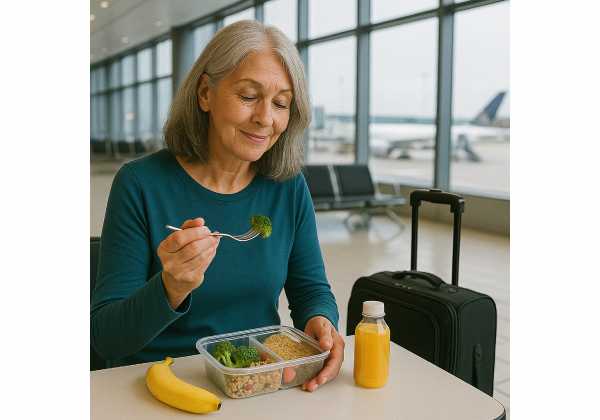
Travel days change appetite, timing, sleep, and digestion. Airport meals lean salty, sweet, oversized, or rushed. Hotel breakfasts often swing between pastries and heavy buffets. A longevity-minded travel plan keeps the body supplied with protein, fiber, polyphenols, fluids, and steady energy without turning every trip into a food project. The best choices are simple: a protein anchor, colorful plant foods, slow-digesting carbohydrates when needed, and fats that help keep meals satisfying.
Travel food also needs to survive real conditions: early flights, delays, small hotel refrigerators, business dinners, limited menus, and fatigue. The strongest strategy is to decide before hunger gets loud. Pack a few shelf-stable foods, scan menus in the right order, protect hydration, and treat ultra-processed snacks as backup rather than the default. Airports and hotels rarely offer perfect meals, but they offer enough workable parts to build food that supports muscle, glucose control, gut comfort, and recovery.
Table of Contents
- Travel Food Priorities for Healthy Aging
- Pack Before You Go: Shelf-Stable Longevity Foods
- Airport Meals: Better Choices by Location
- Hotel Breakfasts and Room Meals That Work
- Hydration, Caffeine, Alcohol, and Sodium on the Road
- Food Safety and Digestion During Travel
- Special Situations: Blood Sugar, Late Arrivals, and Long Travel Days
- A Simple Longevity Travel Day Template
Travel Food Priorities for Healthy Aging
Travel eating works best when each meal has a job. The job is not perfection. The job is to protect the basics that support healthy aging: muscle maintenance, metabolic steadiness, vascular health, gut function, and recovery after disrupted sleep.
Start with protein. Midlife and older adults need enough high-quality protein to support muscle repair and reduce the slow drift toward frailty. A useful travel target is 25–40 g protein per meal, adjusted for body size, activity level, and medical needs. Eggs, Greek yogurt, cottage cheese, chicken, fish, tofu, lentils, edamame, turkey, and protein-rich dairy all work. Smaller adults or lighter meals sit closer to 25 g. Larger adults, active travelers, and people doing resistance training often need the higher end. For more detail on daily and per-meal ranges, use protein targets for longevity as the broader framework.
Add plants next. Vegetables, fruit, beans, lentils, oats, whole grains, nuts, seeds, herbs, cocoa, coffee, and tea bring fiber and polyphenols. Polyphenols are plant compounds that help explain why berries, extra-virgin olive oil, tea, coffee, cocoa, herbs, and colorful vegetables fit so well in healthy aging patterns. Fiber improves fullness, bowel regularity, and post-meal glucose control. A reasonable travel target is 8–12 g fiber per main meal, with gentler choices on flight days if your gut reacts to sudden fiber increases. Build this gradually, especially before long flights.
Choose fats that help the meal last. Extra-virgin olive oil, avocado, nuts, seeds, olives, and fatty fish give meals staying power without the blood sugar swing that follows many sweet airport snacks. Fried foods and creamy sauces usually add calories without adding much satiety, and they often worsen reflux or sluggishness during travel. A small packet of nuts often beats a pastry because it combines fat, magnesium, and some protein.
Use carbohydrates according to the day. Long walking days, business trips with early workouts, and active vacations need smart carbs: oats, beans, lentils, whole-grain bread, potatoes, rice, fruit, and yogurt. Sedentary flight days usually feel better with smaller portions of starch and more vegetables. The travel version of flattening blood sugar spikes is straightforward: eat protein first, add produce, keep sweet drinks rare, and walk after larger meals when possible.
A strong plate looks like this:
- Protein anchor: eggs, yogurt, fish, chicken, tofu, beans, lentils, cottage cheese, turkey, or lean meat.
- Plant volume: salad, vegetable soup, berries, fruit, roasted vegetables, beans, greens, or slaw.
- Slow carbohydrate: oats, whole-grain bread, potatoes, brown rice, quinoa, fruit, or legumes.
- Healthy fat: olive oil, nuts, seeds, avocado, olives, or salmon.
- Drink: water, sparkling water, unsweetened tea, or coffee earlier in the day.
Travel meals also need sodium awareness. Airports and restaurants use salt heavily because it improves flavor and keeps people coming back. One sandwich, soup, or packaged bowl often contains 800–1,500 mg sodium. That does not ruin the day, but repeated high-sodium meals plus low fluid intake often leads to thirst, swelling, and poor sleep. Pair salty meals with water and potassium-rich foods such as bananas, oranges, potatoes, beans, yogurt, leafy greens, and tomatoes.
Pack Before You Go: Shelf-Stable Longevity Foods
A small food kit removes the worst travel decisions. Pack enough for one delayed meal and one snack, not a suitcase full of groceries. The best travel foods are compact, protein-forward or fiber-rich, low mess, and safe at room temperature.
The best packable foods
Choose foods that cover different needs. A protein item prevents the “pastry breakfast plus snack bar lunch” pattern. A fiber item helps bowel regularity. A polyphenol-rich item adds nutritional density. A calming item, such as herbal tea or plain oatmeal, helps when flights or late dinners disrupt the day.
| Food | Why it helps | Smart use |
|---|---|---|
| Plain roasted nuts | Healthy fats, magnesium, some protein | Use 30 g as a snack or breakfast add-on |
| Single-serve nut butter | Satisfying fat with portable calories | Pair with apple, banana, or oats |
| Protein powder packets | Easy protein when meals are weak | Mix with water, milk, or hotel yogurt |
| Low-sugar protein bar | Meal backup during delays | Look for 15–25 g protein and at least 3 g fiber |
| Instant plain oatmeal | Whole grain, beta-glucan fiber | Add nuts, berries, yogurt, or protein powder |
| Roasted chickpeas or edamame | Plant protein and fiber | Use instead of chips for crunch |
| Dark chocolate, 70% or higher | Cocoa polyphenols and controlled sweetness | Pack 10–20 g portions |
| Green or black tea bags | Polyphenols with a steady caffeine dose | Use in hotel rooms or airport lounges |
Pack foods in small portions. Large bags invite mindless eating during long waits. Portion nuts into small bags, choose bars you actually tolerate, and avoid unfamiliar high-fiber snacks before long flights. Sugar alcohols such as sorbitol, maltitol, and large doses of erythritol trigger gas or urgency in some people.
Protein bars deserve extra scrutiny. The best bar is boring: short ingredient list, 15–25 g protein, 3–10 g fiber, and no syrupy coating that turns it into candy. Bars high in collagen provide protein grams on the label, but collagen lacks enough leucine to support muscle protein synthesis as well as whey, dairy, soy, egg, fish, poultry, or mixed plant proteins. Collagen bars are fine as snacks, but they should not replace the main protein source at breakfast or dinner.
Cold items for short travel windows
Some foods travel well for a few hours with a cold pack: Greek yogurt, cottage cheese, hummus, boiled eggs, cheese sticks, cut vegetables, fruit, turkey roll-ups, or tofu cubes. These foods work for road trips, short airport transfers, and hotel arrival meals. They need temperature control. Perishable foods should stay cold and should not sit at room temperature through a long travel day.
A compact insulated lunch bag with two cold sources changes the options. It lets you eat a real breakfast before an early flight or carry a balanced lunch through a delay. Use it when the day has a predictable window. Skip it when security, customs, or heat exposure make safe storage unlikely.
The tiny hotel kit
A small kit turns a basic hotel room into a useful breakfast station:
- Instant oatmeal packets without added sugar
- Protein powder packets
- Nuts or ground flaxseed
- Cinnamon
- Tea bags
- A travel spoon
- Electrolyte packets without large amounts of added sugar
- A reusable water bottle
This kit pairs well with hotel purchases: plain yogurt, milk, fruit, salad kits, rotisserie chicken, smoked salmon, hummus, prewashed vegetables, or microwaveable grain cups. It also reduces reliance on late-night vending machines.
For longer trips, apply the same logic as longevity meal prep: choose repeatable parts, not complicated recipes. A hotel meal of yogurt, berries, nuts, and oats is not fancy, but it delivers protein, fiber, polyphenols, minerals, and steady energy in five minutes.
Airport Meals: Better Choices by Location
Airport food feels chaotic because hunger, time pressure, and menu design collide. Use a simple scan order: protein first, vegetables second, starch third, sauce last. This order works in cafés, fast-casual counters, lounges, and convenience stores.
Cafés and coffee shops
Coffee shops are reliable for breakfast but weak for vegetables. Choose the most protein-rich item, then add fruit or nuts. Better options include egg bites, egg sandwiches, Greek yogurt, oatmeal with nuts, plain latte, cottage cheese cups, or a turkey sandwich. Less useful options include muffins, croissants, sweetened blended drinks, and giant cookies that provide quick calories without enough protein.
A good café breakfast looks like one of these:
- Egg bites plus fruit and coffee
- Plain Greek yogurt with berries and nuts
- Oatmeal with nuts plus a separate protein item
- Egg sandwich with extra egg, fruit, and water
- Cappuccino or latte plus a protein bar from your bag
Coffee is a useful travel drink when timed well. It supports alertness and contributes polyphenols, but large late-day doses disrupt sleep. A common rule works: keep most caffeine before local noon when crossing time zones, or at least 8 hours before intended bedtime. Travelers sensitive to caffeine need a longer buffer. A deeper look at coffee and tea habits fits naturally with coffee and tea for longevity, especially for people using them daily.
Fast-casual bowls and salad counters
Bowls are often the easiest airport win. Ask for double vegetables, a clear protein, beans or lentils when available, and sauce on the side. Good bases include greens, brown rice, quinoa, beans, or a mix. Choose grilled chicken, salmon, tofu, shrimp, eggs, turkey, or legumes. Add avocado or olive oil dressing when available.
Watch the hidden sodium. Airport bowls with pickled vegetables, cheese, olives, dressings, and marinated meats often taste fresh but contain a full day’s worth of sodium. Keep the flavor, but control the dose: one salty topping, dressing on the side, water alongside.
Sandwich shops
A sandwich becomes more longevity-friendly with four changes: choose whole-grain bread when available, double the vegetables, pick lean or minimally processed protein, and use mustard, hummus, avocado, or olive oil instead of heavy creamy sauces. Turkey, tuna, egg, chicken, grilled vegetables, hummus, and mozzarella with tomato all work. Processed meats such as salami, bacon, and pepperoni are better treated as occasional flavor accents than daily travel staples.
A sandwich alone rarely provides enough produce. Add fruit, a side salad, vegetable soup, or unsweetened yogurt. Skip chips by default. If you want crunch, choose nuts, roasted chickpeas, or popcorn in a modest portion.
Convenience stores and newsstands
Airport stores look snack-heavy, but they usually contain enough parts for a decent meal. Look for plain yogurt, boiled eggs, cheese, nuts, fruit, hummus cups, tuna packets, whole-grain crackers, jerky with lower sodium, unsweetened tea, sparkling water, and salads. A workable meal might be boiled eggs, fruit, nuts, and water. Another is tuna, whole-grain crackers, a banana, and tea.
The least helpful pattern is a sweet coffee drink plus a granola bar plus a bag of candy. That combination creates a sugar-heavy meal with little protein and little volume. It also tends to wear off during boarding, when choices shrink further.
Airport lounges
Lounges make overeating easy because food is free and fragmented. Build one plate instead of grazing through five small passes. Start with eggs, yogurt, beans, chicken, fish, tofu, or cheese. Add fruit, salad, vegetables, or soup. Then choose bread, rice, potatoes, or dessert only if it still fits the day.
Alcohol in lounges deserves special caution. A pre-flight drink worsens dehydration for some travelers, lowers food judgment, and fragments sleep. Sparkling water with lime, tomato juice, unsweetened iced tea, or coffee early in the day usually works better.
Hotel Breakfasts and Room Meals That Work
Hotel breakfast often decides the whole travel day. A high-sugar breakfast makes airport snacks and large dinners more likely. A protein-rich breakfast steadies appetite and improves the odds of making better choices later.
Buffet breakfast without the buffet spiral
Walk the buffet once before taking food. Then build one plate around protein and plants. Strong options include eggs, smoked salmon, plain Greek yogurt, cottage cheese, beans, vegetables, fruit, oats, nuts, and whole-grain toast. Use pastries as an optional taste, not the structure of the meal.
A balanced hotel breakfast might be:
- Omelet with vegetables, plain yogurt, berries, and coffee
- Greek yogurt with oats, nuts, and berries, plus boiled eggs
- Beans, eggs, tomatoes, fruit, and tea
- Smoked salmon, whole-grain toast, cucumbers, fruit, and water
Many hotel breakfasts offer protein in forms that come with extra sodium or saturated fat, such as bacon, sausage, processed ham, and cheese-heavy casseroles. Use these as smaller sides if you enjoy them. Make eggs, yogurt, fish, beans, or cottage cheese the main protein more often.
Oatmeal needs a protein partner. Plain oats with nuts and berries supply fiber and polyphenols, but the protein content stays modest unless you add Greek yogurt, milk, protein powder, eggs, or cottage cheese. This small upgrade turns a carb-heavy breakfast into a steadier meal.
Mini-fridge meals
A hotel room with a mini-fridge supports simple meals that feel better than delivery. Buy two proteins, two plant foods, one slow carbohydrate, and one healthy fat. That covers several meals.
Good hotel grocery combinations include:
- Greek yogurt, berries, nuts, oats
- Cottage cheese, tomatoes, whole-grain crackers, olive cups
- Salad kit, rotisserie chicken, avocado, fruit
- Hummus, baby carrots, boiled eggs, whole-grain pita
- Smoked salmon, cucumbers, yogurt, rye crackers
- Tofu or edamame, microwave rice, prewashed greens, olive oil packet
Use prewashed produce when kitchen access is limited. Choose sealed containers, avoid damaged packaging, and keep cold foods cold. If the refrigerator barely chills, use it only for low-risk items and buy perishables in smaller amounts.
Room-service and delivery choices
Room service works well when you ask for simple changes. Choose grilled fish, chicken, tofu, eggs, bean dishes, vegetable soups, salads with protein, or stir-fries with sauce on the side. Ask for extra vegetables instead of fries or chips. Request dressing and sauces separately. Choose fruit or yogurt instead of a large dessert when the meal already feels heavy.
Late arrivals need a smaller meal. Heavy meals close to bedtime worsen reflux and reduce sleep quality. A better late hotel meal is yogurt with nuts, an omelet, soup with protein, cottage cheese and fruit, or a salad with chicken. If you need starch after a long travel day, choose a small portion of rice, potatoes, oats, or whole-grain bread rather than a large fried meal.
For restaurant-heavy trips, eating out with longevity in mind uses the same method: protein, produce, smart carbs, and sauces controlled at the table.
Hydration, Caffeine, Alcohol, and Sodium on the Road
Travel increases dehydration risk through dry cabin air, long sitting, disrupted routines, salty meals, and reduced drinking to avoid restroom stops. Older adults also tend to have weaker thirst signals, and some medications affect fluid balance. Hydration is not only about water; it also involves sodium, potassium, meal timing, and alcohol.
Use urine color and frequency as simple feedback. Pale yellow urine and regular bathroom trips usually suggest adequate intake. Very dark urine, dizziness, headache, dry mouth, constipation, and unusual fatigue suggest you need fluids and possibly electrolytes. Medical conditions such as heart failure, kidney disease, liver disease, and some endocrine disorders require individualized fluid guidance.
A practical travel rhythm:
- Drink 300–500 ml water in the morning before leaving.
- Carry an empty bottle through security and fill it before boarding.
- Drink steadily rather than chugging large amounts at once.
- Pair salty meals with water and potassium-rich foods.
- Use electrolytes when sweating, walking in heat, vomiting, having diarrhea, or taking long flights with poor intake.
Electrolyte packets vary widely. Some contain enough sugar to count as a sweet drink. Others provide sodium without much potassium or magnesium. Choose based on the situation. A hot walking day calls for more sodium than a quiet indoor conference. Routine sipping all day on high-sodium packets is unnecessary for most people. For a broader framework, see hydration and electrolytes for healthy aging.
Caffeine needs timing. Coffee and tea fit well in longevity nutrition, but late caffeine becomes a sleep problem. Poor sleep then worsens appetite regulation and cravings the next day. On eastbound trips, morning light and morning caffeine help the new schedule. On westbound trips, avoid using caffeine so late that bedtime slides too far.
Alcohol is a poor recovery tool during travel. It disrupts sleep architecture, worsens snoring and reflux in many people, increases dehydration risk, and lowers the quality of next-day food choices. If you drink, keep it with a meal, alternate with water, and avoid alcohol close to bedtime. On long-haul flights, skipping alcohol is the easiest upgrade.
Sodium is not automatically bad, especially during heat, sweat, or long walking days. The problem is the repeated airport pattern: salted snacks, processed sandwiches, restaurant sauces, cured meats, and little potassium-rich produce. Balance salty travel meals with fruit, vegetables, beans, yogurt, potatoes, and water. People with hypertension, kidney disease, heart failure, or salt-sensitive blood pressure need stricter guidance from their clinician.
Food Safety and Digestion During Travel
Food safety matters more with age because foodborne illness hits harder in older adults, pregnant people, and those with weakened immune systems. Travel adds risk because food sits unrefrigerated, buffets stay open, and unfamiliar kitchens handle large volumes.
The safest travel rule is the two-hour rule: perishable foods should not sit at room temperature for more than 2 hours, or more than 1 hour in hot conditions above 90°F. This includes cooked meat, poultry, fish, eggs, dairy, cut fruit, cooked grains, and leftovers. Airport delays and warm taxis count. If a yogurt cup, chicken wrap, or egg sandwich has been unrefrigerated too long, discard it.
Avoid high-risk buffet items that look lukewarm, picked over, or poorly covered. Choose foods that are clearly hot, clearly cold, freshly replenished, or individually sealed. Be careful with raw sprouts, unpasteurized juices or dairy, undercooked eggs, raw seafood, and deli salads that have sat out. When traveling internationally, local water safety rules matter; bottled or treated water is the safer default where tap water quality is uncertain.
Digestion has its own travel rhythm. Constipation is common because of sitting, dehydration, low fiber, time-zone changes, and ignoring bathroom urges. Prevent it early:
- Drink water before coffee.
- Include fruit daily, especially kiwi, oranges, berries, pears, or prunes.
- Eat oats, beans, lentils, vegetables, or whole grains when available.
- Walk after meals and during layovers.
- Keep magnesium-rich foods such as nuts, seeds, legumes, and dark chocolate in the rotation.
- Avoid suddenly doubling fiber on a flight day.
High-FODMAP foods such as large portions of onions, garlic, beans, wheat, apples, and certain sweeteners cause gas in sensitive people. That does not make them unhealthy. It means timing matters. Save big bean bowls and large raw salads for days with flexible bathroom access, not right before a long flight or important meeting.
Reflux also flares during travel. Large late meals, alcohol, peppermint, chocolate, coffee, fried foods, and lying down soon after eating often worsen symptoms. Choose smaller late meals, keep dinner earlier when possible, and walk for 10–15 minutes after eating. Hotel pillows do not replace a real reflux plan, but elevating the upper body helps some people.
Food safety also includes reheating. Leftovers should reach steaming hot throughout. Hotel microwaves heat unevenly, so stir foods, rotate containers, and allow standing time. If you cannot refrigerate and reheat safely, order a smaller portion instead of saving leftovers.
Special Situations: Blood Sugar, Late Arrivals, and Long Travel Days
Travel magnifies patterns that already exist. People prone to glucose spikes, reflux, constipation, migraines, swelling, or poor sleep usually do better with a more deliberate plan.
Blood sugar and insulin resistance
Airport food often stacks refined starch, sugar, and fat in the same meal: pastry and sweet coffee, pizza and soda, fries and dessert. This combination is easy to overeat and tends to leave people tired. A better pattern is protein plus fiber first, then carbohydrates in a portion that matches activity.
Good glucose-friendly travel meals include:
- Omelet with vegetables and fruit
- Salad bowl with chicken, beans, and olive oil dressing
- Greek yogurt with berries, nuts, and oats
- Lentil soup with side salad
- Salmon with vegetables and potatoes
- Turkey sandwich on whole grain with extra vegetables
A 10-minute walk after a larger meal improves how the body handles glucose. Airports are built for walking; use the terminal loop before sitting at the gate. Travelers using insulin or glucose-lowering medication need personalized advice for time zones, meal delays, and hypoglycemia prevention.
Long-haul flights
Long flights reward simple food. Eat a balanced meal before boarding when possible. Bring one protein backup and one fiber-rich snack. Drink water steadily. Skip alcohol if sleep or swelling is a concern. Choose the in-flight meal parts that serve you: protein, vegetables, fruit, yogurt, salad, rice, or potatoes. Leave the parts that do not, especially when they are dry, overly sweet, or not enjoyable.
Movement matters. Stand, walk the aisle when allowed, and flex calves during long sitting. Food does not replace movement for circulation, but hydration and a lower-salt pattern help reduce the heavy, swollen feeling many travelers notice after long flights.
Early flights
For flights before 8 a.m., decide breakfast the night before. Good options include overnight oats with protein powder, Greek yogurt with nuts and berries, boiled eggs with fruit, or a protein smoothie. Relying on the airport often leads to sweet coffee and pastries because those are the fastest options.
A small pre-flight meal beats boarding hungry. Even 20–30 g protein before an early flight helps prevent a large mid-morning snack spiral. If appetite is low, use drinkable protein such as kefir, milk, soy milk, or a simple shake.
Late arrivals
Late arrivals call for “sleep-protective food.” Choose enough protein to prevent waking hungry, but keep the meal small and easy to digest. Yogurt, cottage cheese, eggs, soup, tofu, hummus with vegetables, or a small turkey sandwich work better than a heavy burger, fries, and alcohol.
If the hotel area has limited food, use the room kit: oatmeal, protein powder, nuts, tea, and fruit from the airport store. This is not glamorous, but it protects sleep and the next morning.
Travel with training
Active travelers need more fuel, especially when walking all day, hiking, skiing, or strength training. Keep protein steady, add carbohydrates around activity, and use sodium strategically in heat. A hotel-room strength session or brisk walk also improves appetite regulation and glucose handling. Nutrition and movement reinforce each other; pairing travel meals with hotel-room and park workouts makes the trip feel less disruptive.
A Simple Longevity Travel Day Template
A travel day template removes repeated decisions. Adjust portions to body size, hunger, health conditions, and activity. The structure matters more than the exact foods.
| Time | Food choice | Why it works |
|---|---|---|
| Before leaving | Greek yogurt, berries, oats, nuts, coffee or tea | Protein, fiber, polyphenols, and slow energy |
| At airport | Water bottle filled after security | Protects hydration before boarding |
| Delay snack | Protein bar or roasted edamame plus fruit | Prevents pastry-and-candy decisions |
| Lunch | Bowl with chicken or tofu, greens, beans, rice, sauce on side | Balanced protein, plants, carbs, and controlled sodium |
| Afternoon | Unsweetened tea, sparkling water, nuts if hungry | Steady energy without late caffeine overload |
| Dinner | Fish, chicken, tofu, or beans with vegetables and potatoes or grains | Recovery meal with protein and potassium-rich plants |
| Late hotel option | Cottage cheese or yogurt with fruit | Light protein before sleep when dinner was missed |
A shorter version fits in one sentence: protein at breakfast, water before boarding, one packed backup, vegetables at lunch, caffeine early, alcohol rarely, and a light dinner when arrival is late.
The easiest airport rule is to buy food before desperation. Hunger changes standards. Make the next choice while you still feel calm: fill water, buy yogurt, choose the bowl, pack the nuts, or order the grilled protein. Travel delays then become inconvenient instead of nutritionally derailing.
The best hotel rule is to create one reliable breakfast. Breakfast sets the tone for appetite, bowel habits, and blood sugar. Even when dinners are social or unpredictable, a consistent breakfast gives the day structure. Yogurt, oats, berries, nuts, eggs, smoked salmon, vegetables, beans, and fruit cover most needs.
The best long-term rule is to return to normal quickly. One airport dessert, salty dinner, or missed vegetable serving does not matter much. The pattern matters. At the next meal, rebuild the plate: protein, plants, slow carbs if needed, healthy fat, and water. That simple reset turns travel nutrition from an all-or-nothing test into a repeatable skill.
References
- Diet strategies for promoting healthy aging and longevity 2024 (Review)
- Optimal dietary patterns for healthy aging 2025 (Cohort Study)
- Protein and Aging: Practicalities and Practice 2025 (Review)
- Hydration Strategies in Older Adults 2025 (Review)
- Ultra-processed foods and risk of all-cause mortality 2025 (Systematic Review)
- Preventing Food Poisoning | Food Safety | CDC 2025 (Official Page)
Disclaimer
This article is educational and does not replace medical nutrition advice from a qualified professional. People with diabetes, kidney disease, heart failure, food allergies, gastrointestinal disorders, immune suppression, or prescribed fluid or sodium limits should personalize travel food choices with their clinician or registered dietitian.