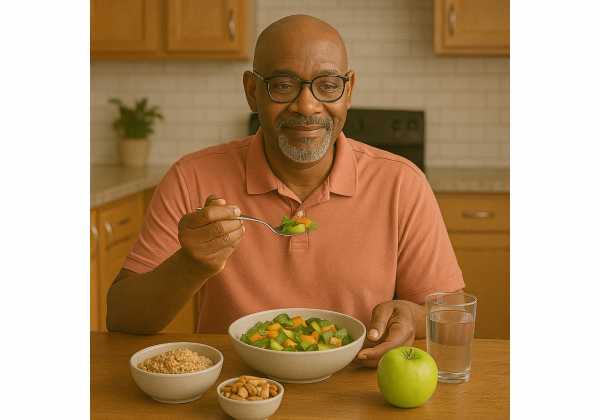
Blood sugar rises after meals because digested carbohydrate enters the bloodstream as glucose. That rise is normal. The problem is a repeated pattern of sharp peaks, long recoveries, and big swings that leave the body asking for more insulin throughout the day. Over time, this pattern often travels with higher triglycerides, more visceral fat, fatty liver, blood pressure strain, inflammation, and lower insulin sensitivity.
Food habits shape those curves more than single “good” or “bad” foods. A bowl of rice, a piece of fruit, or a slice of bread behaves differently depending on portion size, fiber, protein, fat, meal order, cooking method, sleep, activity, and time of day. Flattening spikes does not require a joyless diet or permanent carb avoidance. It means building meals that release glucose more slowly, keep you full longer, and support muscle, energy, and metabolic health as you age.
Table of Contents
- Why Glucose Spikes Matter for Longer Health
- Build Meals That Slow Glucose Entry
- Choose Carbs That Work With Your Metabolism
- Use Order, Timing, and Portion Skills
- Flatten Spikes With Breakfast, Snacks, and Dessert
- Personalize With Tests, CGM, and Symptoms
- Common Mistakes and Safer Adjustments
- A Seven-Day Starter Plan
Why Glucose Spikes Matter for Longer Health
A healthy glucose response rises after eating, peaks, and returns toward baseline within a few hours. The body handles this with insulin, muscle uptake, liver storage, and movement of glucose into cells. A flatter curve usually means the meal was digested at a steadier pace and the body did not need a large insulin surge to manage it.
Repeated sharp spikes matter because they often signal low metabolic flexibility. Metabolic flexibility means your body shifts well between using glucose and fat for energy. When insulin resistance develops, the same meal produces a higher glucose rise, a larger insulin response, or a slower return to baseline. That pattern often appears years before type 2 diabetes.
Glucose spikes also matter because they interact with other longevity markers. A person with high post-meal glucose often also has higher waist circumference, higher triglycerides, lower HDL cholesterol, higher blood pressure, or early fatty liver. These patterns rarely move alone. Improving meal quality often improves several of them at once.
For people without diabetes, a single spike after a large meal is not a crisis. A birthday meal, restaurant dinner, or bowl of white rice after a hard workout does not define metabolic health. The pattern across weeks matters more. Frequent spikes after ordinary meals, energy crashes, strong cravings two hours after eating, and fasting glucose drifting upward deserve attention.
Glucose also ties closely to brain and vascular aging. Blood vessels, nerves, kidneys, and the retina are sensitive to long-term high glucose exposure. In diabetes, better glucose control clearly reduces microvascular complications. In the broader longevity context, stable blood sugar supports healthier blood vessels, steadier energy, and lower cardiometabolic risk.
Useful numbers give context. A fasting glucose below 100 mg/dL and an A1c below 5.7% are commonly used as normal lab cutoffs, while higher values move into prediabetes and diabetes ranges. A two-hour glucose below 140 mg/dL after a standard glucose challenge is generally considered normal. These cutoffs do not replace individual medical advice, but they help explain why everyday meal patterns matter. For a deeper lab-focused view, A1c, fasting glucose, and fasting insulin give different clues about glucose exposure and insulin demand.
Build Meals That Slow Glucose Entry
A meal that flattens blood sugar usually has four parts: protein, high-fiber plants, a smart carbohydrate, and a healthy fat. This structure slows digestion, improves fullness, and gives carbohydrates a better metabolic context.
Protein comes first because it protects muscle and lowers the chance that a meal becomes mostly starch or sugar. Most adults aiming for healthy aging do well with a clear protein anchor at each main meal. A practical range is 25–40 g protein per meal, with higher needs for larger bodies, active people, and older adults dealing with muscle loss. Eggs, Greek yogurt, fish, poultry, tofu, tempeh, lentils, beans, cottage cheese, and lean meats all work. For more detail on aging muscles, meal size, and leucine, use protein targets for longevity as a companion topic.
Fiber changes the glucose curve because it slows stomach emptying, delays carbohydrate absorption, feeds gut bacteria, and improves fullness. The most useful plate habit is to include a large serving of non-starchy vegetables or legumes with meals that contain starch. Aim for at least 25–38 g total fiber per day, and increase gradually if your current intake is low. A sudden jump from 10 g to 35 g often causes bloating, gas, or constipation unless fluids rise too.
Healthy fats help flatten meals when used in reasonable amounts. Extra virgin olive oil, avocado, nuts, seeds, tahini, and fatty fish slow digestion and improve taste, which makes high-fiber meals easier to repeat. Fat is not a free pass, though. Very high-fat meals, especially with refined carbohydrates, slow glucose early but keep energy intake high and sometimes extend elevated glucose later. Pizza, fries, pastries, and creamy desserts often create delayed glucose rises that last longer than expected.
The easiest framework is a “protein plus plants plus smart carb” plate:
| Plate part | Practical amount | Examples |
|---|---|---|
| Protein | 25–40 g | Salmon, eggs, tofu, chicken, Greek yogurt, lentils |
| Non-starchy plants | 2 fists or half the plate | Salad, broccoli, peppers, mushrooms, cabbage, greens |
| Smart carbohydrate | 1 cupped hand to 1 fist | Beans, oats, berries, barley, lentils, potatoes, brown rice |
| Healthy fat | 1–2 thumbs | Olive oil, nuts, seeds, avocado, tahini |
This plate works because it changes the speed of glucose entry. White rice alone acts differently from rice eaten with salmon, vegetables, olive oil, and vinegar-based dressing. Bread alone acts differently from sourdough topped with eggs and served with tomatoes. Fruit juice acts differently from whole berries stirred into unsweetened Greek yogurt.
Liquid calories deserve special attention. Sweet drinks, large juices, sweetened coffee drinks, sports drinks, and sweet teas deliver glucose or fructose quickly and require little digestion. They are among the easiest blood sugar habits to improve. Replace them with water, sparkling water, unsweetened tea, coffee without sugar, or a smaller serving of milk or kefir when it fits the meal.
Choose Carbs That Work With Your Metabolism
Carbohydrates differ in structure, fiber, particle size, water content, acidity, and how fast the body digests them. A glucose-friendly diet does not treat all carbs as equal.
Low-glycemic and lower-glycemic-load choices usually produce smaller rises than refined starches and sugars. Glycemic index describes how quickly a carbohydrate food raises glucose compared with a reference food. Glycemic load adds portion size. In daily life, glycemic load is often more useful because a large portion of a medium-glycemic food still creates a high glucose demand. For a fuller explanation, glycemic load and healthy aging connects food choices with post-meal spikes.
Legumes are among the best carbohydrates for flatter glucose. Lentils, chickpeas, black beans, kidney beans, peas, and soybeans combine starch with fiber, protein, minerals, and resistant starch. A cup of lentil soup usually produces a steadier curve than a similar calorie load from white bread or crackers. Legumes also support cholesterol, gut health, and fullness, which makes them valuable beyond blood sugar.
Whole intact grains beat finely milled grains. Steel-cut oats, barley, rye kernels, quinoa, buckwheat, farro, and intact brown rice digest more slowly than flour-based products. “Whole grain” bread still varies widely. A dense rye bread with visible seeds behaves differently from soft whole-wheat bread made mostly from fine flour. Look for at least 3–5 g fiber per serving and a short ingredient list.
Fruit works best in whole form. Berries, apples, pears, citrus, kiwi, peaches, and plums bring fiber, water, polyphenols, and chewing time. Dried fruit is more concentrated, and juice removes much of the structure that slows absorption. A small handful of raisins is easy to overeat; a bowl of grapes or berries gives more volume and usually a gentler response. Pairing fruit with yogurt, nuts, or a meal lowers the chance of a sharp rise.
Starchy vegetables deserve nuance. Potatoes, sweet potatoes, corn, peas, squash, and beets are not automatically “bad.” Portion, preparation, and pairing decide the response. A large baked potato eaten alone often spikes higher than a smaller boiled potato cooled and reheated, served with fish, salad, and olive oil. Cooling cooked potatoes, rice, and pasta increases resistant starch, a form that resists digestion and feeds gut bacteria.
Refined starches create the most trouble when they become the center of the meal. White bread, large pasta portions, crackers, pretzels, pastries, sweet cereals, and white rice bowls digest quickly unless balanced with protein, fiber, and fat. You do not need to ban them, but they need context. A small pasta serving with beans, vegetables, olive oil, and seafood behaves differently from a large bowl of plain pasta with little protein.
A simple swap list helps:
| Instead of | Choose more often | Why it helps |
|---|---|---|
| Sweet cereal | Greek yogurt with berries and nuts | More protein, fiber, and fat |
| White toast with jam | Eggs with seeded toast and tomatoes | Slower digestion and more fullness |
| White rice bowl | Lentils, beans, barley, or mixed rice plus vegetables | More fiber and resistant starch |
| Juice | Whole fruit | More chewing, fiber, and volume |
| Crackers alone | Hummus with vegetables | Less refined starch, more protein and fiber |
| Dessert on an empty stomach | Dessert after a balanced meal | Slower glucose entry |
Smart carbohydrate choices work best when repeated often enough to become normal. For a broader food list, whole grains, legumes, and carb timing adds more examples.
Use Order, Timing, and Portion Skills
Meal order changes glucose because the stomach does not release all foods into the intestine at the same speed. Eating vegetables and protein before starch usually blunts the rise from the carbohydrate portion of the meal. This does not require strict rituals. Start with salad, soup, vegetables, yogurt, eggs, tofu, fish, or beans; eat bread, rice, potatoes, pasta, or dessert later in the meal.
A practical order looks like this:
- Begin with vegetables, salad, broth-based soup, or fermented vegetables.
- Eat several bites of protein and healthy fat.
- Add starch or fruit after the meal has started.
- Save sweets for after the meal, not before it.
Portion size still matters. Food order softens the curve, but it does not erase the glucose effect of a very large carbohydrate load. A useful starting point is one cupped hand of cooked starch for smaller or less active adults and one to two cupped hands for larger, more active adults. People with diabetes, prediabetes, or high post-meal readings often need a more precise plan.
Timing also matters because insulin sensitivity follows a daily rhythm. Many people handle carbohydrates better earlier in the day than late at night. A large late dinner, especially after poor sleep or a sedentary day, often produces a longer glucose rise. Eating most calories earlier, keeping dinner balanced, and leaving two to three hours between the last large meal and bed improves both glucose and sleep for many adults.
Breakfast is a common turning point. A sweet breakfast with cereal, juice, toast, and jam sets up a fast rise and a midmorning crash. A protein-rich breakfast with eggs, yogurt, cottage cheese, tofu, smoked fish, beans, or protein-fortified oats usually creates steadier energy. People who skip breakfast and then eat a large refined lunch sometimes see higher lunchtime spikes. Meal timing is personal, but the first meal of the day deserves enough protein and fiber. For more detail, see breakfast timing and composition.
Post-meal movement works quickly. A 10–20 minute walk after a carbohydrate-containing meal helps muscles pull glucose from the bloodstream without needing as much insulin. Even light walking helps. Standing, dishes, stairs, gentle cycling, or a short walk around the block all work better than sitting still for hours. This habit becomes especially useful after dinner, when many people otherwise sit until bedtime. For a movement-based approach, post-meal walking and NEAT pairs well with food changes.
Vinegar and acidity offer a small extra tool for some meals. Vinegar-based dressing, pickled vegetables, lemon juice, and fermented foods often fit naturally with vegetables and legumes. They are not magic, and they do not cancel a large dessert or sugary drink. People with reflux, gastroparesis, swallowing problems, or dental enamel concerns should avoid using vinegar as a “shot.” Use it as food: dressing on salad, pickles with a meal, or lemon on fish and vegetables.
Flatten Spikes With Breakfast, Snacks, and Dessert
The meals that spike blood sugar most often are not always dinner. Breakfast, snacks, and desserts create many of the largest swings because they often contain refined starch or sugar without enough protein.
A glucose-friendly breakfast has at least 25 g protein, a fiber source, and little added sugar. Good options include Greek yogurt with berries, chia, and walnuts; eggs with vegetables and a slice of seeded toast; tofu scramble with beans and salsa; cottage cheese with fruit and ground flax; or steel-cut oats cooked with milk and topped with nuts. Oats work best when the portion is moderate and the bowl includes protein. A huge bowl of instant oats with honey and banana often acts more like dessert than breakfast.
Coffee drinks also matter. Black coffee, espresso, or coffee with a splash of milk has little glucose effect. Sweetened lattes, flavored syrups, bottled coffee drinks, and large blended drinks often contain the sugar of a dessert. Keep sweetness small and treat sweet coffee as part of a meal rather than a stand-alone morning habit.
Snacks should solve a real problem: hunger, long gaps between meals, training needs, or medication timing. Grazing all day keeps insulin active and makes it harder to understand true hunger. When you need a snack, combine protein and fiber. Try apple with peanut butter, Greek yogurt, boiled eggs with vegetables, hummus with peppers, edamame, nuts with berries, or cottage cheese with cinnamon. Crackers, pretzels, granola bars, rice cakes, and sweets alone often create a quick rise followed by more hunger.
Dessert works better after a balanced meal than on an empty stomach. A sweet eaten after protein, vegetables, and fat enters a slower digestive stream. Keep the serving satisfying but contained: two squares of dark chocolate, berries with yogurt, baked apple with cinnamon, chia pudding, or a small shared restaurant dessert. The aim is not to turn dessert into a moral test. It is to prevent a sweet food from becoming a glucose roller coaster.
Some dessert upgrades are simple:
- Add berries, nuts, or Greek yogurt to reduce the need for a large sweet portion.
- Choose desserts with protein or fat, such as yogurt-based desserts or nut-based options, over pure sugar drinks and candy.
- Eat dessert slowly after a meal instead of standing at the counter while hungry.
- Keep sweet foods out of the “snack by default” role.
Late-night sweet snacking deserves special care. A sweet snack near bedtime often raises overnight glucose, worsens reflux, and disrupts sleep. If evening hunger is real, choose protein-forward options such as plain yogurt, cottage cheese, kefir, a boiled egg, or a small handful of nuts. If the urge is stress or habit, a sleep routine works better than more food.
Personalize With Tests, CGM, and Symptoms
Personal glucose responses vary. The same bowl of rice produces different curves in different people. Sleep, stress, menstrual cycle stage, menopause, muscle mass, gut microbiome, medications, training status, and the previous meal all influence the result. Personalization helps, but it should not turn eating into fear.
Start with basic markers. A1c estimates average glucose exposure over roughly three months. Fasting glucose shows one morning snapshot. Fasting insulin, when interpreted carefully, adds insight into insulin demand. Triglycerides, HDL cholesterol, waist circumference, blood pressure, ALT, and liver fat markers also help show whether glucose handling is part of a wider metabolic pattern.
Continuous glucose monitors add meal-level feedback. A CGM shows how your body responds to meals, sleep, stress, alcohol, illness, and exercise. For people with diabetes, CGM use has clear medical value. For people without diabetes, short-term CGM use works best as an educational experiment rather than a permanent scoreboard. A two- to four-week trial often reveals which breakfasts spike, whether late meals linger overnight, and how strongly post-meal walks help. For setup and interpretation, continuous glucose monitoring for longevity explains practical use cases.
Avoid overreacting to every peak. CGM sensors have measurement lag and normal error. A single reading matters less than the pattern. Useful questions include:
- Does glucose return toward baseline within two to three hours?
- Do ordinary meals repeatedly rise much higher than expected?
- Do late dinners stay elevated into sleep?
- Does a short walk improve the curve?
- Do certain foods trigger cravings, fatigue, or hunger soon after eating?
Symptoms add another layer. A sharp rise and fall sometimes feels like sleepiness, shakiness, irritability, hunger, or strong cravings two to four hours after eating. These symptoms are not proof of dangerous glucose swings, but they are useful clues. A balanced meal that keeps you full for four hours is usually more useful than a meal that looks healthy but leaves you hunting for snacks 90 minutes later.
People taking insulin, sulfonylureas, or other glucose-lowering medications need medical guidance before changing carbohydrate intake sharply. Reducing carbs, skipping meals, fasting, or adding post-meal exercise changes medication needs and raises hypoglycemia risk. The safest approach is coordinated adjustment, not guesswork.
Common Mistakes and Safer Adjustments
The most common mistake is replacing refined carbs with too much saturated fat and too little fiber. Blood sugar improves for a while, but LDL cholesterol, ApoB, constipation, and gut diversity often move in the wrong direction. A glucose-friendly longevity diet should still emphasize plants, legumes, nuts, seeds, olive oil, fish, fermented foods, and minimally processed meals.
Another mistake is chasing perfect flatness. A healthy body should raise blood glucose after a meal. Fruit, beans, oats, and potatoes create rises because they contain carbohydrate, not because they are harmful. The aim is a controlled curve and a return toward baseline, not a lifeless line. Over-restriction often backfires through cravings, low training energy, social stress, or loss of dietary variety.
Many people also under-eat protein while cutting carbs. This is risky in midlife and later adulthood because muscle is a major glucose sink. More muscle improves glucose storage and insulin sensitivity. Cutting carbohydrates without protecting protein and strength training misses one of the strongest metabolic levers.
“Healthy” packaged foods also mislead. Granola, gluten-free crackers, oat bars, fruit snacks, sweetened yogurt, veggie chips, and smoothies often produce big glucose rises. The front label matters less than the ingredients, fiber, protein, and portion. A useful label check is simple: at least 10 g protein for a snack-sized dairy or bar, at least 3 g fiber per serving for grain products, and added sugar kept low enough that the food still behaves like food rather than candy.
Smoothies are another trap. Blending breaks structure and makes it easy to drink more fruit than you would chew. A better smoothie uses protein powder or Greek yogurt, a modest fruit portion, leafy greens, chia or flax, and no juice. Drink it slowly with a spoon if needed.
Carbohydrate fear creates its own problems. Active people, lean people, and those doing resistance training often handle smart carbs well, especially around exercise. Beans, potatoes, oats, fruit, whole grains, and dairy can support training, sleep, thyroid function, mood, and dietary satisfaction. The right amount varies, but the food quality and timing often matter more than a harsh carb ceiling.
Safer adjustments start small:
| Problem pattern | First adjustment |
|---|---|
| Sleepy after lunch | Cut the starch portion by one-third and add vegetables plus protein |
| Hungry 90 minutes after breakfast | Add 15–25 g more protein and remove sweet drinks or juice |
| High evening glucose | Eat dinner earlier, reduce refined starch, walk 10–15 minutes |
| Cravings after dessert | Eat dessert after dinner, not alone; add berries or yogurt |
| Constipation after lowering carbs | Add legumes, chia, ground flax, vegetables, and fluids |
| Big spikes from rice or pasta | Reduce portion, cool and reheat, add protein and vegetables |
The strongest plan is repeatable. If a habit requires constant willpower, it will fade. Make the default breakfast higher in protein. Keep beans, frozen vegetables, canned fish, eggs, yogurt, berries, and nuts available. Cook extra lentils or rice and cool leftovers. Use olive oil and vinegar dressing. Walk after dinner. These ordinary moves change glucose curves without turning food into a project.
A Seven-Day Starter Plan
A starter week should be simple enough to repeat and flexible enough for real life. Use it to practice meal structure, not to follow a rigid menu. Pick one change per meal and watch how energy, hunger, cravings, and digestion respond.
Day 1: Make breakfast protein-forward. Replace cereal, toast with jam, or a pastry with Greek yogurt, berries, chia, and walnuts, or eggs with vegetables and seeded toast. Keep coffee unsweetened or lightly sweetened.
Day 2: Add vegetables before starch at lunch. Start with salad, soup, or leftover vegetables. Eat protein next, then rice, bread, potatoes, or fruit. Notice whether afternoon sleepiness changes.
Day 3: Upgrade the main carbohydrate. Swap white rice, white bread, or crackers for lentils, beans, barley, oats, quinoa, rye, or cooled potatoes. Keep the portion moderate and add olive oil or avocado.
Day 4: Walk after dinner. Eat a normal balanced dinner, then walk 10–20 minutes. Keep the pace easy enough to talk. This habit works especially well after meals with rice, potatoes, pasta, bread, or dessert.
Day 5: Change the snack pattern. Skip automatic grazing. If hunger is real, choose protein plus fiber: yogurt with berries, hummus with vegetables, edamame, nuts with fruit, or cottage cheese with cinnamon.
Day 6: Handle dessert with structure. Eat dessert after a balanced meal, use a smaller portion, and add berries, nuts, or yogurt when it fits. Avoid eating sweets alone while hungry.
Day 7: Review the week. Keep the two habits that gave the clearest benefit. Many people notice better afternoon energy from protein at breakfast and fewer evening cravings from a post-dinner walk. Build from there.
A weekly rhythm might look like this:
| Meal | Default structure | Easy examples |
|---|---|---|
| Breakfast | Protein + fiber + low sugar | Eggs and vegetables; Greek yogurt bowl; tofu scramble |
| Lunch | Plants + protein + smart carb | Lentil salad; chicken bowl; bean soup |
| Dinner | Protein + cooked vegetables + measured starch | Fish with potatoes and greens; tofu stir-fry; turkey chili |
| Snack | Protein or fat + produce | Apple with nut butter; yogurt; hummus and peppers |
| Dessert | After a meal, small and satisfying | Dark chocolate; berries and yogurt; shared dessert |
After the first week, adjust based on your weakest link. If breakfast is steady but dinner is late and heavy, work on dinner timing. If meals are balanced but snacks are sugary, fix snacks. If food is strong but glucose remains high, look at sleep, stress, activity, medications, and labs with a clinician.
Flattening blood sugar is less about restriction and more about metabolic pacing. Food enters the body in a sequence. Digestion has a speed. Muscles need fuel. The liver responds to timing. Your daily habits decide whether glucose arrives as a flood or a steady stream. A longevity-minded plate makes that stream easier to handle.
References
- 6. Glycemic Goals, Hypoglycemia, and Hyperglycemic Crises: Standards of Care in Diabetes-2026 2026 (Guideline)
- The role of low glycemic index and load diets in medical nutrition therapy for type 2 diabetes: an update 2024 (Review)
- Nutritional strategies to attenuate postprandial glycemic response 2022 (Review)
- Efficacy of a meal sequence in patients with type 2 diabetes: a systematic review and meta-analysis 2022 (Systematic Review)
- Reducing postprandial glucose in dietary intervention studies and the magnitude of the effect on diabetes-related risk factors: a systematic review and meta-analysis 2021 (Systematic Review)
- Dietary fibre and whole grains in diabetes management: Systematic review and meta-analyses 2020 (Systematic Review)
Disclaimer
This article is educational and does not replace care from a qualified clinician, registered dietitian, or diabetes educator. People with diabetes, prediabetes, pregnancy, kidney disease, eating disorder history, digestive disorders, or glucose-lowering medications should get personalized guidance before making major changes to carbohydrate intake, fasting, or exercise timing.