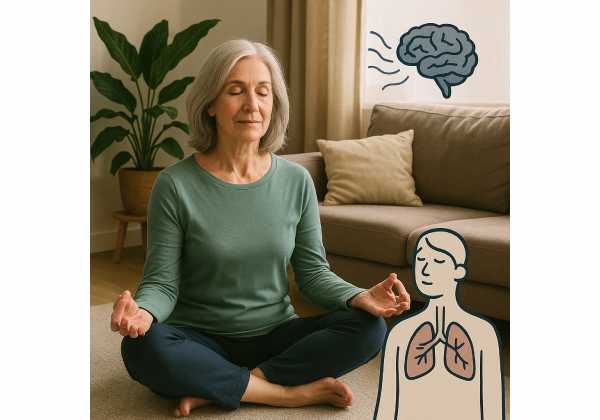
Meditation trains the body to leave stress mode more efficiently. That matters with age because repeated stress, poor sleep, pain, worry, and late-day rumination keep the hypothalamic-pituitary-adrenal axis, or HPA axis, working harder than it should. The HPA axis controls cortisol, a hormone that rises in the morning, responds to challenge, and should settle as the day winds down.
Mindfulness does not erase stress. It changes the relationship with stress. A few minutes of steady attention on breathing, body sensations, sound, or movement gives the brain a clearer signal: the present moment is manageable. Over time, that signal helps reduce emotional reactivity, supports sleep, and improves recovery between demands. For healthy aging, the value is not mystical or complicated. It is a repeatable daily practice that helps the nervous system shift from alarm to regulation.
Table of Contents
- How Mindfulness Changes Stress Biology
- The HPA Axis and Healthy Aging
- Benefits for Sleep, Mood, and Cognitive Aging
- Choosing the Right Practice
- A Simple Routine That Builds Over Time
- Common Mistakes and Easy Fixes
- Safety, Trauma, and When to Get Help
- How to Track Progress Without Overtracking
How Mindfulness Changes Stress Biology
Mindfulness works by interrupting automatic stress loops. A stressful thought, email, argument, blood pressure reading, or poor night of sleep often triggers a full-body reaction before conscious choice catches up. Muscles tighten. Breathing becomes shallow. Attention narrows. The brain starts predicting danger, even when the problem is ordinary and solvable.
Meditation inserts a pause. During practice, you place attention on one steady anchor, such as breathing, sound, walking, or body sensation. When the mind wanders, you notice it and return. That small return is the training. It teaches the brain to recognize a thought without immediately obeying it.
The HPA axis sits inside a larger stress network. The sympathetic nervous system creates the fast “fight-or-flight” response. The HPA axis creates a slower hormonal response by releasing cortisol. Cortisol helps mobilize energy, sharpen alertness, and handle acute demands. The problem begins when stress has no clean ending. Rumination, sleep loss, loneliness, pain, overtraining, alcohol, late meals, and constant alerts all extend the stress signal.
Mindfulness helps in three practical ways:
- It reduces threat appraisal. The brain learns that a thought is not the same as an emergency.
- It improves interoception, the ability to notice internal signals such as tension, heartbeat, hunger, and fatigue.
- It supports parasympathetic recovery, especially when paired with slower breathing, relaxed posture, and a predictable routine.
This is why mindfulness pairs so well with breathwork for sleep and stress. Breath practice gives the nervous system a direct rhythm to follow; mindfulness adds awareness, patience, and emotional regulation.
Meditation also changes behavior. A person who notices tension earlier often stops clenching the jaw, answers more slowly, takes a walk, starts bedtime earlier, or avoids a second glass of wine. These choices lower the total stress load. The practice is simple, but its effects spread through the day.
The HPA Axis and Healthy Aging
A well-regulated HPA axis rises in the morning, responds to challenge, and quiets at night. This rhythm supports daytime energy, glucose control, blood pressure regulation, immune balance, and sleep timing. Healthy aging depends on that rhythm because recovery becomes less forgiving with age.
Cortisol follows a circadian pattern. It usually rises sharply after waking, stays higher in the morning, declines through the day, and reaches its lowest point around midnight. That pattern is useful. Morning cortisol helps you get moving. Lower evening cortisol helps melatonin, body temperature, and sleep pressure do their work.
Chronic stress disrupts this pattern. Some people feel wired at night and flat in the morning. Others feel emotionally numb, inflamed, hungry for quick energy, or unable to recover after ordinary demands. Cortisol testing is not a simple “stress score,” and a single morning value rarely explains daily stress. Hair cortisol, salivary cortisol curves, and cortisol awakening response testing appear in research, but daily habits remain more useful for most people than chasing one lab result.
Mindfulness helps the HPA axis most when it becomes part of a larger recovery rhythm. A steady wake time, morning light, regular meals, movement, social connection, and evening darkness all reinforce the same message: the body is safe enough to repair. For a broader rhythm, resetting your body clock strengthens the same biology that meditation tries to calm.
The aging body also carries more background stressors. Joint discomfort, caregiving, grief, medical appointments, financial pressure, and sleep fragmentation raise the allostatic load, which means the wear and tear created by repeated adaptation. Meditation lowers that load by reducing the frequency, intensity, and duration of stress reactions.
It does not need to create bliss. A useful session might feel ordinary: five minutes of breathing, ten distractions, and ten returns. The body still receives practice in ending a stress cycle.
Stress signals that meditation often helps
Meditation is especially useful when stress appears as patterns rather than single events:
- You wake at 3 a.m. and start problem-solving.
- You feel tired but restless in the evening.
- Small irritations create a large physical reaction.
- Blood pressure rises during medical visits or tense conversations.
- You eat quickly, breathe shallowly, or hold your breath while working.
- Your wearable shows lower recovery after emotionally demanding days.
- You recover slowly from exercise despite reasonable training volume.
These signs do not prove cortisol dysregulation. They show that the nervous system needs more reliable recovery cues. Meditation supplies one of those cues.
Benefits for Sleep, Mood, and Cognitive Aging
Meditation supports healthy aging most clearly through sleep, mood, attention, and stress recovery. The effects are usually modest, but modest daily improvements matter when repeated for months and years.
For sleep, mindfulness helps by reducing bedtime arousal. Many adults do not lack sleep knowledge; they lack a way to stop rehearsing the day. Mindfulness teaches the mind to notice thoughts without turning each one into a project. Body scans, breath awareness, and gentle open-monitoring practices fit well in the last hour before bed. They work best alongside good sleep timing, a cool room, and lower light exposure. For people tracking deep sleep, REM, or sleep efficiency, sleep quality in aging is the broader frame: meditation is one tool, not the whole sleep plan.
Mood also matters for longevity. Persistent anxiety, depression, anger, and rumination increase stress exposure and often weaken sleep, movement, and social connection. Mindfulness-based programs show benefits for distress, anxiety, depression symptoms, and well-being in many adult groups, though they do not outperform every active intervention. Walking groups, cognitive behavioral therapy, exercise, social support, and structured relaxation also help. The useful point is practical: meditation gives people a portable skill for handling repetitive thoughts and emotional surges.
Cognitive aging is closely tied to attention control. Mindfulness trains sustained attention, task switching, and awareness of mind wandering. It does not guarantee protection from dementia, and it should not be sold as brain insurance. It does support the daily behaviors that protect the brain: better sleep, lower stress reactivity, more emotional flexibility, and less avoidance. When low mood or anxiety interferes with memory, motivation, or social life, the connection between depression, anxiety, and cognitive aging deserves direct attention.
Meditation also improves relationship patterns. A calmer pause before reacting changes conversations, especially in long marriages, caregiving, workplace stress, and family conflict. Less reactivity reduces emotional cleanup later. That protects sleep and recovery more than people realize. Strong social ties remain one of the most important recovery signals in later life, and social connection and sleep often improve together.
What results usually look like
Most people should expect gradual shifts rather than dramatic breakthroughs. Early benefits often appear within 1 to 2 weeks as better awareness: “I noticed I was spiraling sooner.” Sleep and mood changes often need 4 to 8 weeks of steady practice. More durable changes usually come from daily repetition, not long occasional sessions.
Research on older adults suggests mindfulness interventions produce small to moderate benefits across stress, sleep, anxiety, depression, and mental functioning. That fits real life. A 10-minute practice will not cancel chronic overload, but it helps the body recover faster after stress and helps the mind choose fewer stress-amplifying behaviors.
Choosing the Right Practice
The best meditation is the one that fits your nervous system today. Sitting silently with eyes closed is not the only option. Some people settle with movement, sound, or touch before they tolerate stillness. Older adults with pain, trauma history, grief, insomnia, or anxiety often do better with a gentler entry point.
| Practice | Best fit | How to start | Age-friendly adjustment |
|---|---|---|---|
| Breath awareness | Busy mind, irritability, mild stress | Watch the breath at the nose, chest, or belly for 3–10 minutes. | Keep the breath natural; do not force deep breathing. |
| Body scan | Sleep trouble, pain tension, evening arousal | Move attention slowly from feet to head. | Skip painful areas or name them gently without trying to relax them. |
| Walking meditation | Restlessness, stiffness, afternoon stress | Walk slowly and feel each step for 5–15 minutes. | Use a safe hallway, garden path, or flat route. |
| Loving-kindness practice | Grief, resentment, loneliness, self-criticism | Repeat kind phrases toward yourself and others. | Begin with a neutral person or pet if self-kindness feels difficult. |
| Open monitoring | Experienced meditators, rumination awareness | Notice thoughts, sounds, and sensations as passing events. | Use after several weeks of anchor-based practice. |
| Mindful daily activity | People who resist formal practice | Give full attention to tea, showering, dishes, or stretching. | Pair with an existing habit to make it automatic. |
Focused attention suits beginners because it gives the mind a clear job. Pick one anchor. Return to it. Repeat. That is enough.
Body scans work well before bed because they shift attention away from verbal thinking and toward sensation. They also reveal hidden bracing in the forehead, jaw, shoulders, hands, abdomen, hips, and feet. Relaxation is welcome, but awareness comes first.
Walking meditation helps people who feel trapped by sitting. It also adds balance, foot awareness, and gentle movement. For older adults, that makes it practical and safe when the environment is stable.
Loving-kindness practice fits emotional stress. The phrases do not need to feel profound. Simple language works: “May I be steady. May I be safe. May I meet this moment with patience.” Over time, this practice softens harsh internal dialogue, which is a major source of chronic stress.
Mindfulness-based stress reduction and mindfulness-based cognitive therapy are more structured. Traditional programs often run for 8 weeks, with weekly group sessions and home practice. They suit people who want instruction, accountability, and a tested format. A self-guided routine works too, especially when the aim is daily stress recovery rather than treatment of a mental health condition.
A Simple Routine That Builds Over Time
A small daily routine beats an ambitious plan that collapses after a week. Start with 5 minutes a day. Build to 10–20 minutes on most days. Add longer sessions only after the habit feels normal.
Week 1: teach the body the pause
Practice for 5 minutes once daily. Choose a time that already has a natural cue, such as after brushing your teeth, after morning coffee, or before turning down the bed.
Sit upright but not stiff. Place both feet on the floor. Let the hands rest. Notice breathing wherever it feels clearest. When attention wanders, silently say “thinking” or “wandering,” then return to the breath. Do not judge the number of distractions. The return is the exercise.
At the end, ask one question: “What is the state of my body right now?” Name it plainly: tight, sleepy, warm, rushed, calm, heavy, alert. This builds interoception.
Weeks 2–3: add evening downshifting
Keep the 5-minute morning practice and add a 5- to 10-minute body scan in the evening. Do it before screens, not after falling into a scrolling loop. Pair it with dimmer light and a consistent wind-down. This is also the right time to review habits that keep the brain alert; screen hygiene at night strengthens the same evening signal.
For the body scan, move slowly through the body. Notice contact, temperature, pressure, pulsing, tingling, or numbness. If you find tension, soften around it rather than forcing it to release.
Weeks 4–8: make it flexible
Increase one practice to 10–15 minutes on most days. Add walking meditation once or twice weekly. Use a 1-minute reset during stressful moments:
- Feel both feet.
- Exhale slowly.
- Notice one sound.
- Relax the jaw and shoulders.
- Ask, “What is the next useful action?”
This short reset is powerful because it moves meditation from the cushion into daily life. It helps before blood pressure checks, hard conversations, medical appointments, driving, caregiving tasks, and bedtime.
A realistic weekly rhythm
A sustainable week might look like this:
- 5 mornings: 10 minutes of breath awareness.
- 3 evenings: 10 minutes of body scan.
- 2 days: 10 minutes of mindful walking.
- Daily: one 60-second reset during stress.
- Weekly: one longer 20-minute practice, class, or guided session.
This rhythm supports stress resilience for longevity because it trains recovery repeatedly. It also leaves room for real life. Missing a day is not failure. Restarting the next day is the skill.
Common Mistakes and Easy Fixes
Meditation fails most often because people expect the wrong result. The mind does not go blank. Thoughts do not stop. A good session is not always peaceful. The practice is the repeated act of noticing and returning.
| Problem | What it usually means | Better response |
|---|---|---|
| “I cannot stop thinking.” | You are noticing the mind clearly. | Use a simple label: “thinking,” then return to the anchor. |
| “I get sleepy every time.” | The body is tired or the posture is too relaxed. | Practice earlier, sit upright, open the eyes, or try walking meditation. |
| “I feel more anxious.” | Stillness is making body sensations louder. | Use eyes-open practice, sound, walking, or shorter sessions. |
| “I keep forgetting.” | The habit has no cue. | Attach practice to brushing teeth, tea, medication, or bedtime. |
| “It feels boring.” | The brain is used to stimulation. | Shorten the session and focus on one vivid sensation at a time. |
| “I only meditate when stressed.” | The skill is being used too late. | Practice on ordinary days so it works during hard days. |
Another common mistake is turning meditation into performance. Wearables, streaks, apps, and heart rate data help some people, but they also create pressure. A lower heart rate during meditation is pleasant, not required. A restless session still builds skill.
People with insomnia often misuse meditation by trying to force sleep. That creates effort, and effort keeps the brain awake. Use mindfulness to rest the body and reduce struggle. If insomnia lasts more than a few weeks, structured CBT-I for midlife insomnia has stronger evidence than meditation alone.
Pain creates another challenge. Sitting still in pain teaches frustration, not mindfulness. Change position, use cushions, lie on the side, or practice walking. The instruction is not “ignore pain.” The instruction is “notice pain without adding fear, anger, and prediction when possible.”
Safety, Trauma, and When to Get Help
Meditation is low-risk for most adults, but it is not risk-free. A small number of people experience increased anxiety, panic, emotional flooding, depersonalization, traumatic memories, or worsening depression during intensive or poorly matched practice. This matters because older adults often carry grief, medical trauma, caregiving strain, or long histories of pushing through distress.
Gentle practice is safer than forceful practice. Keep the eyes open if closing them feels unsafe. Focus on external sounds, the feeling of the feet, or objects in the room. Practice for 2–5 minutes instead of 20. Choose walking meditation over silent sitting. Work with a trauma-informed teacher or licensed mental health professional when practice brings up intense memories or fear.
Stop or change the practice if you notice:
- panic or dread that grows during sessions;
- feeling unreal, detached, or outside the body;
- flashbacks or intrusive traumatic images;
- worsening depression or hopelessness;
- strong pressure to meditate for hours despite distress;
- sleep that worsens after evening practice.
Meditation should not replace medical care, psychotherapy, medication review, sleep apnea testing, pain treatment, or support for depression and anxiety. It works best as part of care, not as a substitute for care.
People with bipolar disorder, psychosis history, severe PTSD, active substance withdrawal, or recent major loss should use extra caution with intensive retreats or long silent practice. Short, grounded, guided sessions are usually safer than unstructured long sessions.
The safest instruction is simple: stay within your window of tolerance. That means enough attention to notice the body, but not so much intensity that you feel overwhelmed. Mindfulness should widen steadiness, not prove toughness.
How to Track Progress Without Overtracking
Track the life changes that meditation is supposed to support. Calm during the session is less important than recovery after stress, sleep quality, mood stability, and wiser choices during the day.
Use a weekly check-in rather than constant scoring. Rate each item from 0 to 10:
- How reactive was I this week?
- How quickly did I recover after stress?
- How was my sleep onset?
- How often did I wake with rumination?
- How steady was my mood?
- How often did I pause before reacting?
- How consistent was my practice?
Look for trends over 4 weeks. One bad night or one stressful day means little. A pattern means something.
Wearables provide useful context when interpreted carefully. Resting heart rate, HRV, sleep timing, and sleep regularity often show how the body handles stress load. Meditation does not always raise HRV immediately, and chasing a higher score creates stress. Use wearable data as a conversation with your body, not a verdict. For a balanced approach, HRV and recovery tracking explains what those numbers do and do not show.
Progress often appears in ordinary moments:
- You notice jaw tension before a headache builds.
- You take three breaths before answering a tense message.
- You stop replaying a conversation sooner.
- You fall asleep without solving every problem.
- You pause before snacking from stress.
- You recover faster after a poor night.
- You choose a walk, call, stretch, or early bedtime before burnout hits.
These shifts are the real longevity value. Meditation gives the aging body more chances to return to baseline. Over months, that means less time stuck in alarm, more time in repair, and a steadier relationship with the demands of daily life.
References
- Mindfulness Interventions in Older Adults for Mental Health and Well-Being: A Meta-Analysis 2025 (Meta-Analysis)
- Mindfulness-Based Interventions and the Hypothalamic–Pituitary–Adrenal Axis: A Systematic Review 2024 (Systematic Review)
- Effectiveness of stress management interventions to change cortisol levels: a systematic review and meta-analysis 2024 (Systematic Review)
- Mindfulness-based programmes for mental health promotion in adults in nonclinical settings: A systematic review and meta-analysis of randomised controlled trials 2021 (Systematic Review)
- Meditation and Mindfulness: Effectiveness and Safety 2022 (Official Page)
- Mindfulness Meditation and Improvement in Sleep Quality and Daytime Impairment Among Older Adults With Sleep Disturbances: A Randomized Clinical Trial 2015 (RCT)
Disclaimer
This article is educational and does not replace guidance from a qualified health professional. Meditation and mindfulness should not delay care for insomnia, depression, anxiety, trauma symptoms, sleep apnea, severe stress, or medical conditions that need diagnosis and treatment. Stop or modify practice if it worsens distress, panic, dissociation, or sleep.