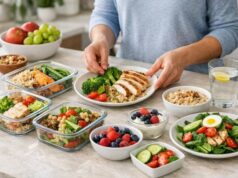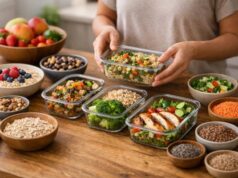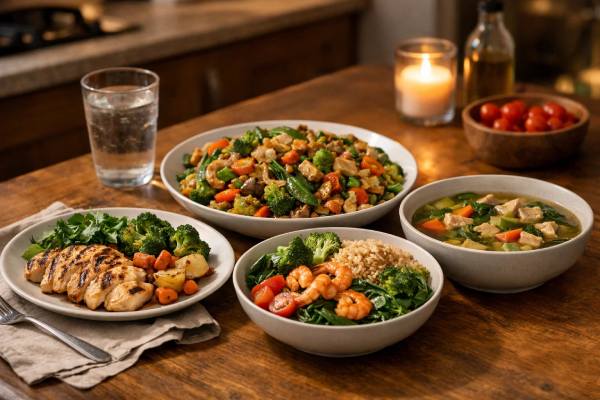
Dinner is often the meal that makes or breaks a calorie deficit. By the end of the day, hunger is higher, decision fatigue is real, and it is easy for a “healthy” dinner to turn into a takeout order, extra snacks, or a meal that is technically low in calories but leaves you prowling the kitchen an hour later. The answer is not eating less food at dinner. It is building dinners that give you enough protein, enough volume, and enough flavor to feel finished when the meal is over.
This guide explains how low-calorie dinners for weight loss actually work, how to build them without feeling deprived, and which easy dinner ideas are most likely to keep you consistent.
Table of Contents
- What Makes a Low-Calorie Dinner Work
- Build a Filling Dinner Plate
- Easy Low-Calorie Dinner Ideas
- Match Dinner to Your Calorie Target
- Meal Prep and Shortcuts for Busy Nights
- Common Low-Calorie Dinner Mistakes
- When to Adjust Your Dinner Strategy
What Makes a Low-Calorie Dinner Work
A good low-calorie dinner does not feel small. It feels balanced, filling, and predictable enough that you can repeat it on busy weeknights. That matters because weight loss usually comes from a consistent overall calorie deficit, not from one ultra-light dinner followed by an evening of cravings.
The most satisfying low-calorie dinners usually share four traits:
- They start with protein. Protein tends to be the anchor that makes dinner feel substantial. In practical terms, many people do well with roughly 25 to 40 grams at dinner, depending on body size, appetite, and daily targets.
- They use food volume well. Meals built around vegetables, broth-based soups, salad, beans, or other high-volume foods take up more space on the plate and in the stomach without pushing calories too high.
- They control calorie-dense extras. Oils, creamy sauces, cheese, nuts, garlic bread, and restaurant-style add-ons can double the calories of a dinner that looks healthy on paper.
- They still taste good. Meals that rely only on “clean” ingredients but ignore texture, seasoning, and satisfaction are hard to stick with for long.
This is why a grilled chicken breast and plain steamed broccoli can fail just as easily as a burger and fries. The first meal may be too joyless and too lean to satisfy. The second is usually easy to overeat. The sweet spot is somewhere in the middle: enough food to feel done, but not so much energy density that dinner wipes out your deficit.
It also helps to think about what happens after dinner. A 350-calorie meal that leaves you eating cereal, crackers, and chocolate at 9:30 p.m. is not really a 350-calorie dinner. A 450-calorie dinner that keeps you comfortably full until bed may be the better fat-loss meal.
So the goal is not to make dinner as light as possible. The goal is to make dinner calorie-aware and appetite-aware at the same time. That is the kind of meal you can repeat on weeknights, after workouts, during stressful weeks, and on the days when motivation is not especially high.
Build a Filling Dinner Plate
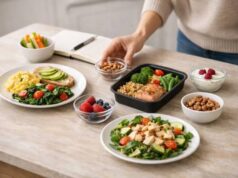
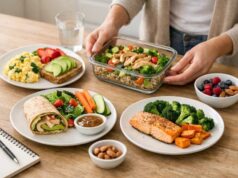
The easiest way to create a satisfying low-calorie dinner is to use a simple plate formula instead of hunting for a new recipe every night. A dinner plate built this way is flexible enough for different cuisines, calorie targets, and food preferences, but structured enough to prevent random overeating.
A practical dinner template looks like this:
- Lean protein: chicken breast, turkey, lean ground beef, shrimp, white fish, salmon, eggs, egg whites, Greek yogurt-based sauces, tofu, tempeh, or edamame
- High-volume produce: roasted vegetables, stir-fried vegetables, salad greens, cauliflower rice, zucchini noodles, mushrooms, broccoli, cabbage, green beans, peppers, tomatoes, or a broth-based vegetable soup
- Smart starch or legume: potatoes, sweet potatoes, rice, quinoa, beans, lentils, corn, or whole-grain pasta
- Flavor support: salsa, mustard, hot sauce, herbs, spices, lemon, vinegar, garlic, ginger, soy sauce, light dressings, or measured portions of cheese and olive oil
A useful visual guide is:
- half the plate from vegetables or salad
- one quarter from protein
- one quarter from starch, fruit, or legumes
That is very similar to the logic behind a high-protein plate, with a little more attention paid to calorie density. The goal is not perfection. It is making the satisfying part of the meal come from protein and produce first, not from the most calorie-dense ingredients.
Vegetables matter more than many people expect. They are not there as decoration. They add chewing time, volume, texture, and a visual sense that the meal is generous. If your dinners often feel too small, increasing your use of low-calorie vegetables is one of the fastest fixes.
Flavor matters too. A common mistake is assuming “low-calorie” means bland. In practice, low-calorie dinners work better when they feel like real food:
- taco bowls with lime, salsa, and cilantro
- garlic-ginger stir-fries
- tomato-based pasta sauces
- lemon-herb chicken
- curry-spiced lentils
- buffalo chicken with Greek yogurt ranch
- burger bowls with pickles, onion, and mustard
You also do not need to fear carbs at dinner. Potatoes, beans, rice, and pasta can all fit, especially when portions are deliberate and the meal still centers on protein and volume. Most dinners get into trouble not because they contain carbs, but because the starch is oversized and the protein and vegetables are undersized.
If you can learn one dinner skill, make it this: build the plate in layers. Protein first. Vegetables second. Starch third. Extras last. That order alone makes portion control easier.
Easy Low-Calorie Dinner Ideas
The best low-calorie dinner ideas are not complicated recipes with 18 ingredients. They are repeatable meals you can make from grocery-store staples, frozen vegetables, cooked grains, and a few sauces or spice blends. The table below gives you easy options that are filling enough for weight loss and realistic enough for normal life.
| Dinner idea | Approx. calories | Approx. protein | Why it satisfies |
|---|---|---|---|
| Sheet-pan chicken, broccoli, and baby potatoes | 420 to 500 | 35 to 40 g | High protein, high volume, and easy portion control |
| Turkey taco bowl with black beans, salsa, and cauliflower rice | 400 to 480 | 30 to 38 g | Lots of flavor with modest calories |
| Salmon, green beans, and roasted potatoes | 450 to 550 | 30 to 35 g | More richness, but still balanced and filling |
| Egg-white and veggie frittata with side salad | 300 to 380 | 25 to 30 g | Light but protein-forward for lower targets |
| Shrimp stir-fry with mixed vegetables and rice | 380 to 470 | 30 to 35 g | Fast cooking and easy to bulk up with vegetables |
| Lean burger bowl with lettuce, tomato, pickles, and oven fries | 420 to 520 | 30 to 35 g | Feels like comfort food without the calorie hit |
| Lentil pasta with turkey meat sauce and zucchini | 430 to 520 | 35 to 45 g | Higher protein than standard pasta dinners |
| Baked potato topped with buffalo chicken and Greek yogurt | 400 to 500 | 35 to 40 g | Very satisfying for people who like hearty dinners |
| Tofu and edamame vegetable stir-fry | 380 to 460 | 25 to 32 g | Plant-based, fiber-rich, and filling |
| Soup and salad combo with rotisserie chicken | 350 to 450 | 25 to 35 g | High volume and especially useful on appetite-heavy nights |
Here are a few easy ways to use those meals in real life:
- For the “I want comfort food” night: try the burger bowl, buffalo chicken potato, or lentil pasta. These usually work better than trying to white-knuckle your way through a tiny dinner.
- For the “I have no time” night: use shrimp stir-fry, egg frittata, or rotisserie chicken soup and salad. These can be faster than ordering takeout.
- For the “I want a big plate of food” night: sheet-pan chicken, taco bowls, and soup-plus-salad dinners tend to give the best volume.
- For the “I need something plant-based” night: tofu and edamame stir-fry or lentil pasta are easy wins.
You can also make many of these in simpler formats. Turn taco bowls into taco salads. Turn burger bowls into lettuce-wrap burgers. Swap rice for extra vegetables or potatoes for beans. The structure matters more than the specific recipe.
A few rules make these dinners work better:
- Measure oil instead of free-pouring it.
- Use cheese as a topping, not the main event.
- Build sauces around yogurt, salsa, mustard, tomato, vinegar, broth, or soy-based mixtures.
- Add bulk before adding calories. Extra mushrooms, cabbage, zucchini, green beans, spinach, broccoli, and shredded lettuce go a long way.
- Keep frozen vegetables, cooked grains, and pre-cooked proteins around for nights when energy is low.
If you want more variety in this style, rotating meals from easy high-protein, high-fiber dinners or using methods from air fryer meals for weight loss can make weeknights much easier.
Match Dinner to Your Calorie Target
There is no perfect dinner calorie number for everyone. The right amount depends on your daily intake, hunger pattern, activity, and how your other meals are set up. Still, it helps to use a practical range.
Many people do well when dinner lands around 25 to 35 percent of daily calories. In rough terms, that often looks like this:
- Daily target around 1,200 to 1,400 calories: dinner often fits around 300 to 450 calories
- Daily target around 1,500 to 1,700 calories: dinner often fits around 400 to 550 calories
- Daily target around 1,800 calories or more: dinner often fits around 500 to 650 calories
These are not rules. They are starting points. Someone who barely eats breakfast may need a larger dinner. Someone who prefers a bigger lunch may want dinner lighter. What matters is whether your dinner size helps you stay consistent for the whole day.
When in doubt, keep these parts steady first:
- protein
- vegetables
- reasonable flavor
Then adjust the calorie-dense parts:
- starch portion
- added fats
- cheese
- sauces
- bread or chips on the side
That order matters. If dinner needs to come down by 100 to 150 calories, trimming the oil, cheese, or starch is usually easier than shrinking the protein. If you want dinner to feel bigger without adding many calories, double the vegetables or add a broth-based soup or salad starter.
Macro tracking can make this even easier. If you already monitor protein per meal, dinner becomes much more straightforward: hit your protein target, build volume, and make the rest fit your calories. If you do not track, visual guides from the plate method still work well.
You can also scale dinner based on the day:
- After a workout: keep protein high and allow a fuller carb portion.
- Sedentary day: keep protein high, but lean more on vegetables and beans.
- Very hungry evening: build a bigger plate with lower-energy-density foods instead of pretending you do not want dinner.
- Social meal: keep breakfast and lunch structured, then enjoy a higher-calorie dinner without turning the whole day into a free-for-all.
The key is to stop thinking in extremes. Dinner does not need to be huge, but it also should not be so tiny that the evening becomes a battle.
Meal Prep and Shortcuts for Busy Nights
Low-calorie dinners are much easier when your kitchen is set up for them. Most people do not overeat at dinner because they lack nutrition knowledge. They overeat because they are tired, hungry, short on time, and surrounded by convenience foods that are easy to overshoot.
A few staples solve that problem:
- frozen vegetables
- bagged salad kits or plain greens
- microwaveable rice or potatoes
- canned beans and lentils
- rotisserie chicken
- cooked shrimp
- eggs and liquid egg whites
- Greek yogurt
- salsa, mustard, broth, soy sauce, and spice blends
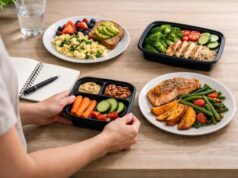
With those on hand, you can make a decent dinner in 10 to 20 minutes without feeling like you are “on a diet.”
A simple weeknight system works well:
- Pick two proteins for the week. For example, chicken and lean turkey, or tofu and shrimp.
- Pick three vegetables. One frozen, one fresh, one salad option.
- Pick two carb sources. Potatoes and rice, or beans and pasta.
- Pick two flavor profiles. Taco and garlic-herb, or buffalo and teriyaki.
- Repeat combinations instead of reinventing dinner nightly.
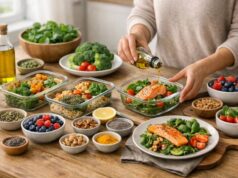
That approach turns one grocery trip into several dinners without much thought. It is also why dedicated high-protein dinner meal prep works so well for fat loss. You reduce the number of evening decisions and increase the odds that the meal you eat is the meal you planned.
Convenience foods can help, too. There is nothing wrong with using:
- frozen grilled chicken strips
- precut vegetables
- steam-in-bag broccoli
- jarred marinara
- prewashed salad greens
- canned soup with added lean protein
- frozen cauliflower rice
- air-fried frozen potatoes
The trick is to use convenience around a sound structure, not around ultra-processed “diet” meals that leave you hungry.
A beginner-friendly shopping list is often more powerful than an ambitious recipe file. If your fridge and freezer are stocked for fast dinners, you are less likely to default to delivery or scavenging for snacks. Building from a solid weight loss grocery list makes low-calorie eating much more automatic.
Remember, dinner success is usually won before 6 p.m. It starts with what you bought, what you prepped, and whether your easiest option at home supports your goal.
Common Low-Calorie Dinner Mistakes
Many dinners look healthy but are not very weight-loss friendly in practice. Others are technically low in calories but too unsatisfying to repeat. A few common mistakes explain most of the trouble.
Making dinner too small.
This is one of the biggest errors. A dinner that is little more than a protein shake, a plain salad, or a tiny portion of food may look disciplined, but it often backfires. Extreme restraint at dinner can become overeating later at night.
Underrating calorie-dense extras.
One tablespoon of oil is manageable. Several unmeasured pours are not. The same goes for creamy dressings, mayo-heavy sauces, nut toppings, garlic bread, butter, shredded cheese, and “just a few” tortilla chips. These are common reasons dinner calories run far higher than expected.
Letting starch crowd out protein.
A giant bowl of pasta, rice, or cereal-style comfort food may feel satisfying at first, but it often does not keep hunger controlled as well as a meal that includes enough protein. Many of the foods that make a calorie deficit harder are not forbidden foods. They are foods that become easy to overeat when eaten alone or in oversized portions.
Skipping vegetables because they feel boring.
Dinner gets a lot easier when volume is built in. If your plate is mostly protein and starch, calories climb faster and fullness tends to fade sooner. Vegetables, soups, salads, and beans make the meal feel larger.
Assuming restaurant salads are always light.
Some salads are excellent. Others are basically fried chicken, cheese, tortilla strips, candied nuts, and sweet dressing served over lettuce. “Salad” is not the same as “low-calorie.”
Having no plan for after dinner.
Sometimes the dinner itself is fine, but the evening habit is the problem. If you routinely snack while watching television or need something sweet before bed, plan for it. A structured snack or dessert is often better than turning the whole night into unplanned grazing. Strategies that work for late-night snacks for weight loss can save a good dinner from being undone later.
A useful rule is this: if a dinner leaves you both hungry and mentally preoccupied with food, it is probably too restrictive. If it leaves you stuffed and sleepy, it is probably too calorie-dense. The goal is the middle ground where you feel satisfied, not stuffed.
When to Adjust Your Dinner Strategy
Even a sensible low-calorie dinner plan may need adjustments. The right dinner is the one that helps you stay consistent, not the one that looks the most impressive on paper.
Your current strategy may need work if:
- you are hungry again within an hour or two
- you keep ending the night with unplanned snacks
- you feel low on energy during evening workouts
- your dinner portions feel hard to sustain
- you spend the whole evening thinking about food
When that happens, adjust the structure before assuming you need more willpower.
A few reliable fixes:
- Increase protein slightly. An extra 10 to 15 grams can make a noticeable difference.
- Add more volume. Soup, salad, roasted vegetables, cauliflower rice, or beans often work better than simply adding another small starch portion.
- Move calories toward dinner. If evenings are your hardest time, a slightly larger dinner and slightly lighter breakfast or lunch may improve adherence.
- Stop trying to “save up” all your calories. For some people, arriving at dinner ravenous leads to overeating. A more balanced day works better.
- Check the bigger picture. Poor sleep, high stress, a chaotic workday, or too-light daytime eating can make dinner feel impossible to manage.
There are also cases where dinner needs more individualized planning. People with diabetes, digestive disorders, pregnancy-related nutrition needs, or those using appetite-altering medications may need a different approach. Athletes and highly active people often need more dinner carbohydrates than sedentary adults. People with very low evening appetite may do better with smaller meals plus a planned snack later.
Most importantly, remember that consistency beats intensity. A satisfying 450-calorie dinner you can repeat five nights a week is usually more effective than a 250-calorie dinner that leads to a nightly rebound. Fat loss works best when dinner supports the rest of your life instead of competing with it.
References
- Dietary Guidelines for Americans, 2020-2025 2020 (Guideline)
- Obesity in Adults: A 2022 Adapted Clinical Practice Guideline for Ireland 2022 (Guideline)
- Enhanced protein intake on maintaining muscle mass, strength, and physical function in adults with overweight/obesity: A systematic review and meta-analysis 2024 (Systematic Review and Meta-Analysis)
- Cereal Fibers and Satiety: A Systematic Review 2026 (Systematic Review)
- Downsizing food: a systematic review and meta-analysis examining the effect of reducing served food portion sizes on daily energy intake and body weight 2023 (Systematic Review and Meta-Analysis)
Disclaimer
This article is for general educational purposes only. Low-calorie dinners can support weight loss, but calorie needs, appetite, medical conditions, medications, and activity levels vary, so this information is not a substitute for personalized medical or nutrition advice, diagnosis, or treatment.
If this article helped you, share it on Facebook, X, or any platform your friends, clients, or community use most.