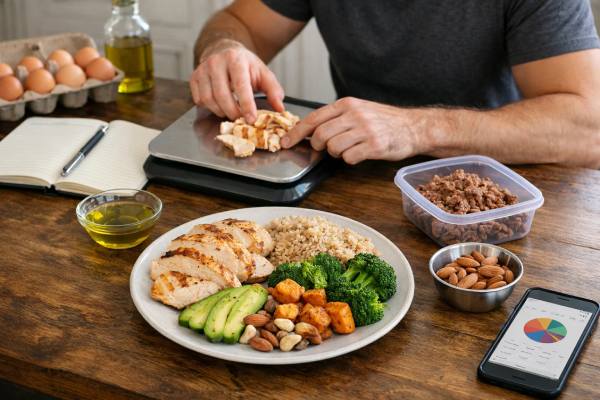
The best macros for men trying to lose weight are not built around a single perfect ratio. They are built around a calorie deficit, enough protein to protect muscle, enough carbs to support training and daily energy, and enough fat to keep the diet satisfying. For most men, protein is the macro that deserves the most attention, while carbs and fats can be adjusted based on preferences, activity, and adherence.
This guide explains how to set calories, where protein should usually land, how to split carbs and fats, and what a realistic macro setup looks like for fat loss. You will also see example macro splits, food choices, and the most common mistakes that make cutting harder than it needs to be.
Table of Contents
- Do men need different macros for fat loss
- Start with calories before macros
- Protein is the priority macro
- How to set carbs and fat
- Sample macro setups for men
- Best foods for hitting your macros
- How to adjust macros when progress stalls
- Mistakes men make with fat-loss macros
Do men need different macros for fat loss
Men do not need a completely separate set of nutrition rules, but macro targets often look different for men in practice because men are more likely to have a larger body size, higher total calorie needs, and more lean mass to preserve during weight loss. That changes the numbers, even when the principles stay the same.
The biggest mistake is assuming there is one ideal macro ratio for all men. There is not. A man who lifts four to five days per week, weighs 220 pounds, and wants to cut while keeping strength will not eat like a sedentary man who weighs 165 pounds and mainly wants to reduce body fat with walking and basic training. Their calorie budgets, protein totals, and carb needs will be different.
What usually matters most is this:
- Protein should be high enough to support fullness and muscle retention.
- Calories still drive fat loss more than the macro ratio itself.
- Carbs should match activity and training demands.
- Fat should stay high enough for satisfaction, hormone support, and adherence.
That last point is important because many men overcomplicate macro setup. They spend too much time trying to decide between “high carb” or “low carb” and not enough time checking whether their total calorie intake is actually in a deficit. In real life, fat loss is usually slower when the diet is technically clever but hard to follow.
Men also tend to run into two specific issues. Some cut calories too aggressively and lose training performance, energy, and diet consistency. Others keep calories too high because they assume bigger body size automatically means they need large “bulking style” meals even in a cutting phase. A better strategy is to start from a realistic deficit, then use macros to make that deficit easier to maintain.
If you want a broad overview of how a male fat-loss plan should fit into the bigger picture, a guide to a practical weight loss plan for men can help frame the nutrition side within training, habits, and lifestyle. The best macro setup is not the one that looks most impressive online. It is the one that helps you lose fat while still training well and functioning like a normal person.
Start with calories before macros
Before you choose a protein, carb, and fat split, you need a calorie target. Macros matter, but calories set the direction. Without a calorie deficit, even a “clean” or high-protein diet can stall fat loss.
For most men trying to lose weight, the most sustainable starting point is a moderate deficit rather than an aggressive one. Cutting too hard tends to backfire through hunger, poor workouts, late-night eating, and weekend rebounds. A moderate deficit is usually easier to stick with and more likely to protect lean mass.
A practical process looks like this:
- Estimate maintenance calories.
- Reduce intake by a moderate amount.
- Set protein first.
- Split the remaining calories between carbs and fats.
- Track results for two to four weeks before making major changes.
A good fat-loss setup should allow steady progress while still leaving enough energy for lifting, steps, work, and sleep. Men who train hard often do much better with a “slower but steadier” cut than with an extreme approach that crushes performance.
| Step | What to do | Why it matters |
|---|---|---|
| Estimate maintenance | Use body size, activity, and current intake trends | Gives you a realistic baseline |
| Create a deficit | Reduce calories moderately, not aggressively | Improves adherence and training quality |
| Set protein | Make protein the first macro you lock in | Supports muscle retention and fullness |
| Set carbs and fats | Adjust based on preference and activity | Makes the plan easier to sustain |
| Review progress | Use 2 to 4 weeks of trend data | Prevents overreacting to short-term fluctuations |
For men who are unsure where their calories should land, it helps to review how to calculate maintenance calories and then compare that to a realistic calorie target for weight loss. Once calories are set, macros become a tool for improving satiety, performance, and consistency rather than a distraction from the real goal.
Protein is the priority macro
For men trying to lose weight, protein is usually the most important macro to get right. It does more than any other macro to support fullness, reduce overeating, and help preserve muscle during a calorie deficit. That matters even more for men who lift weights or want to avoid looking smaller and softer as they lose body fat.
A useful target for many men cutting weight is roughly 0.7 to 1.0 grams of protein per pound of goal body weight or, in some cases, per pound of leaner reference weight. Another practical way to think about it is that most men dieting seriously do well somewhere around 130 to 220 grams per day, depending on body size and training volume.
That range is wide because needs differ. A 160-pound man with moderate activity may do very well around 140 to 170 grams. A 230-pound man cutting while strength training several times per week may feel and perform better closer to 180 to 220 grams.
Protein helps in several ways:
- It increases satiety more than carbs or fats for many people.
- It helps protect lean mass in a deficit.
- It has a higher thermic effect of food.
- It makes meals feel more structured and appetite-resistant.
Another smart move is to spread protein across the day instead of pushing nearly all of it into dinner. For many men, three to five protein feedings works well. That might mean 30 to 50 grams at each main meal, plus one or two protein-focused snacks if needed.
Here is a practical daily structure:
- Breakfast: 30 to 40 grams
- Lunch: 35 to 45 grams
- Dinner: 40 to 50 grams
- Snack or shake: 20 to 30 grams
That pattern often works better than a light breakfast, average lunch, and huge steak dinner, because it keeps hunger under better control and supports muscle protein synthesis throughout the day.
The easiest foods for hitting protein are usually lean meats, Greek yogurt, eggs, cottage cheese, fish, protein powder, tofu, and high-protein convenience options. If you need a more detailed food list, a guide to high-protein foods with serving sizes is useful. You may also want to check how many grams of protein per day supports weight loss if your current intake is nowhere near where it should be.
For most men, getting protein right solves more diet problems than endlessly debating carb percentages.
How to set carbs and fat
Once protein is set, the rest of your calories can be divided between carbs and fats. This is where preferences matter more than dogma. Men often ask whether low carb is better for fat loss, or whether higher carbs are needed to keep muscle. In most cases, the better approach is the one you can sustain while training well and staying in a deficit.
Carbs are especially useful for:
- lifting performance
- higher step counts and conditioning work
- recovery
- meal satisfaction
- easier adherence for people who like rice, potatoes, oats, fruit, and bread
Fats are especially useful for:
- taste and satiety
- hormone support
- slower digestion
- making meals feel less restrictive
A practical floor for fat intake is important. Going too low often leaves meals dry, unsatisfying, and hard to maintain. For many men, keeping fat somewhere around 20 to 35 percent of total calories works well. Carbs can then fill the remaining calories after protein and minimum fat are accounted for.
Here is a helpful rule of thumb:
- More active men usually feel better with moderate to higher carbs.
- Less active men may prefer a slightly lower-carb setup if it helps appetite control.
- Men who love carb-based foods often adhere better on moderate carbs rather than trying to force keto-style dieting.
- Men who tend to overeat refined carbs may benefit from shifting some calories toward protein and fats while keeping carbs mostly from whole-food sources.
What matters most is not whether your split is 35 percent carbs or 40 percent carbs. It is whether your setup keeps workouts solid, cravings manageable, and total intake under control.
If you want more detail, it helps to compare low-carb versus low-fat approaches and understand how much fat supports satiety. Many men discover they do best in the middle: protein high, fat moderate, carbs adjusted to training and preference.
That kind of setup is usually less exciting on social media, but more effective over months.
Sample macro setups for men
Sample macro targets can help make this more concrete. These are not prescriptions, but they show what a sensible fat-loss setup can look like at different calorie levels.
| Calories | Protein | Carbs | Fat | Who it may fit |
|---|---|---|---|---|
| 1,900 | 170 g | 170 g | 55 g | Smaller or less active man cutting steadily |
| 2,200 | 180 g | 220 g | 60 g | Average active man lifting regularly |
| 2,500 | 200 g | 260 g | 70 g | Larger active man with higher maintenance needs |
| 2,800 | 210 g | 320 g | 75 g | Very active or larger man cutting slowly |
You can see the pattern: protein stays high, fat stays reasonable, and carbs rise or fall based on calorie level and activity. That is usually more practical than trying to force one fixed ratio onto every male dieter.
A few common setups work well:
- High-protein, moderate-carb, moderate-fat: often the most flexible and sustainable option
- High-protein, lower-carb, higher-fat: useful for some men with lower activity or stronger appetite control on reduced carbs
- High-protein, higher-carb, lower-fat: useful for men doing more lifting, sports, or high step counts
The best way to choose among them is not ideology. It is honest observation. Ask:
- Are my workouts improving or holding steady?
- Am I hungry all day?
- Am I able to stay consistent on weekends?
- Am I losing weight at a reasonable pace?
- Do my meals feel satisfying enough to repeat?
If you want a broader, less sex-specific overview, a guide on macros for fat loss and muscle retention is useful. Men who prefer a meal-based approach rather than pure macro numbers may also do well with macro-friendly meal ideas that make the targets easier to hit.
A good macro plan should feel specific enough to be useful, but not so rigid that one restaurant meal makes you think the day is ruined.
Best foods for hitting your macros
The best macro setup on paper is still useless if your food choices make it hard to follow. Men trying to lose weight generally do best when they choose foods that make high protein easier, keep hunger low, and do not burn too many calories on low-satiety extras.
For protein, the highest-value foods are usually:
- chicken breast or thighs
- lean beef
- turkey
- eggs and egg whites
- Greek yogurt
- cottage cheese
- fish and seafood
- protein powder when convenience matters
For carbs, prioritize foods that also help fullness and performance:
- potatoes and sweet potatoes
- oats
- rice
- fruit
- beans and lentils
- whole-grain breads or wraps when portions are controlled
For fats, focus on foods that improve satisfaction without getting careless with portions:
- olive oil
- avocado
- nuts and seeds
- salmon
- nut butter in measured amounts
Many men also do better when they build meals around simple templates instead of freestyle eating. A few reliable examples:
- chicken, rice, and vegetables
- eggs, oats, and fruit
- Greek yogurt, berries, and cereal
- lean beef, potatoes, and salad
- tuna wrap with fruit and yogurt
This is where food quality and macro quality overlap. Highly processed foods can technically fit your macros, but they often make cutting harder because they are less filling and easier to overeat. In contrast, meals built from protein, produce, and minimally processed carbs tend to feel more substantial.
If meal ideas are a weak point, check out the best foods to eat in a calorie deficit and practical high-protein, low-calorie meals. Hitting macros gets easier when the foods themselves do more of the work for you.
How to adjust macros when progress stalls
When progress slows, most men assume they need a more extreme macro ratio. Usually they do not. The first step is to check whether the original plan is truly being followed and whether the slowdown is real.
Before changing anything, look at:
- body-weight trend over two to four weeks
- waist measurements
- gym performance
- average daily steps
- weekend intake
- extra bites, drinks, and untracked meals
Many stalls are not macro problems at all. They are consistency problems, portion creep, or the normal result of a shrinking calorie deficit as body weight drops.
When a real adjustment is needed, use a simple order:
- Tighten tracking accuracy if needed.
- Keep protein where it is.
- Reduce calories modestly, often by trimming carbs or fats.
- Reassess after another two to three weeks.
Protein is usually the last macro you want to cut. It is doing too much useful work in a deficit. Most adjustments should come from carbs, fats, or both depending on what matters less for your satiety and training.
For example:
- If training feels flat, reduce fats first and preserve more carbs.
- If hunger is the main issue, reduce carbs from less filling sources and keep enough fats for meal satisfaction.
- If weekend overeating is the issue, do not slash weekday calories. Fix the weekend pattern.
This is also where activity matters. Some men respond better by adding a little movement rather than cutting food further. Extra steps, better workout consistency, or slightly improved meal structure can sometimes restart progress without making the diet harsher.
If you need a framework for this stage, it helps to review when to recalculate calories during weight loss and how to adjust calories and macros during a stall. The best adjustments are usually small, not dramatic.
Mistakes men make with fat-loss macros
Most macro plans fail because of a few recurring mistakes, not because the ratio was off by five percent.
One common problem is setting calories far too low. Men often assume that suffering equals effectiveness, so they push calories down hard, lose performance, feel miserable, and then overeat on weekends. A better cut is one you can keep running long enough to matter.
Another mistake is underestimating the role of protein. Some men spend hours debating whether carbs should be 35 percent or 40 percent while eating only 90 to 110 grams of protein on a cut. That usually makes appetite control and muscle retention harder than necessary.
A third issue is thinking “macro-friendly” means unlimited. Nuts, granola, wraps, cheese, sauces, and protein bars can all fit a macro plan, but they can still make the deficit disappear if portions drift.
Other common mistakes include:
- saving most calories for night and getting too hungry during the day
- using restaurants and cheat meals as a reward loop
- changing macros every few days instead of gathering enough data
- assuming more cardio means carbs must be cut dramatically
- ignoring sleep, stress, and step count while obsessing over macro precision
There is also a psychological trap. Men who like structure may start treating macros as a test of perfection. That can create a cycle where one off-plan meal becomes a full-blown write-off. In that case, the issue is no longer nutrition knowledge. It is rigidity. Many people benefit from addressing all-or-nothing thinking and strengthening consistency instead of relying on motivation.
The best macro plan for men trying to lose weight is not the one with the most complicated math. It is the one that keeps protein high, calories appropriate, meals satisfying, and behavior steady enough to let the plan work.
References
- Obesity Management in Adults: A Review 2023 (Review)
- Enhanced protein intake on maintaining muscle mass, strength, and physical function in adults with overweight/obesity: A systematic review and meta-analysis 2024 (Systematic Review)
- 8. Obesity and Weight Management for the Prevention and Treatment of Diabetes: Standards of Care in Diabetes—2025 2025 (Guideline)
- International Society of Sports Nutrition Position Stand: diets and body composition 2017 (Position Statement)
- Effect of Low-Fat vs Low-Carbohydrate Diet on 12-Month Weight Loss in Overweight Adults and the Association With Genotype Pattern or Insulin Secretion: The DIETFITS Randomized Clinical Trial 2018 (RCT)
Disclaimer
This article is for general educational purposes only and is not a substitute for personal medical, nutrition, or fitness advice. If you have a medical condition, take medication, have a history of disordered eating, or want help setting macros around a health concern, speak with your doctor or a registered dietitian before making major diet changes.
If this article helped, share it on Facebook, X, or any platform you prefer so someone else can use it to build a smarter fat-loss plan.