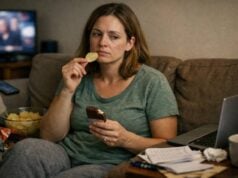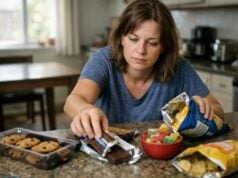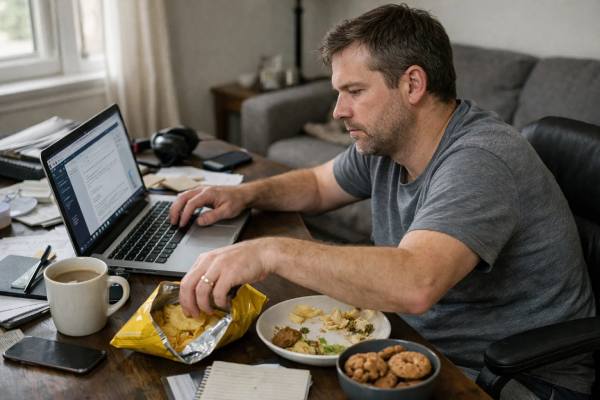
Remote work can make weight loss easier in some ways and harder in others. You may have more control over your food, fewer commutes, and more flexibility in your day. But you may also move less, snack more, lose track of meal times, and let work spill into the rest of your life. Over time, that combination can quietly push your eating, activity, and sleep in the wrong direction.
The fix is not trying to be more disciplined every hour. It is building habits that make a home workday more structured, more active, and less snack-driven by default. This article explains how remote work affects weight-loss routines, which habits matter most, and how to build a work-from-home setup that supports better movement, meals, and recovery.
Table of Contents
- Why remote work can disrupt weight loss
- Create anchors for your workday
- How to sit less without derailing work
- Stop automatic snacking at home
- Use meals and breaks to prevent schedule drift
- Build a home environment that supports better choices
- What a realistic remote work routine looks like
- How to recover after off days
Why remote work can disrupt weight loss
Working from home changes more than your location. It changes your cues, your movement patterns, your access to food, and your sense of time. That is why people often gain weight or feel less consistent after shifting to remote work even when they still care about their health.
The biggest problems usually come from three patterns.
The first is more sitting with less incidental movement. At an office, you may walk to the car, train, bus, elevator, restroom, printer, coworker’s desk, conference room, or lunch spot without thinking much about it. At home, the distance between your bed, coffee, desk, kitchen, and couch may be a few steps. That means daily movement often drops even if you still do the same formal workouts.
The second is constant food proximity. At home, your kitchen is always available. So are leftovers, snack cabinets, delivery apps, and the idea that a small bite “does not really count.” This becomes especially problematic when work is stressful, boring, or mentally draining. Food is close, private, and easy.
The third is schedule drift. Without a commute or clear office boundaries, many people start work earlier, end later, delay lunch, skip breaks, or slide into a rhythm where work and home life blend together. That can throw off meal timing, movement, stress management, and sleep. Once the day loses structure, it becomes easier to graze, postpone workouts, and keep sitting.
This is why remote work can feel paradoxical. You have more freedom, but sometimes worse habits. Freedom without structure often becomes drift.
A useful mindset is to stop thinking, “Working from home makes weight loss impossible,” and start thinking, “Working from home removes some default structure, so I need better personal structure.” That is different. It turns the problem into something you can design around.
This is also why many people do better when they focus on repeatable systems instead of motivation. The same principles behind weight loss habits for busy people apply here too: reduce friction, use clear cues, and make the healthy choice easier during your most distracted hours.
Create anchors for your workday
Remote work becomes messy when the day has no clear anchors. In an office setting, some of those anchors happen automatically: getting dressed, leaving the house, commuting, a lunch break, coworkers wrapping up, the trip home. At home, you often need to create those markers yourself.
Anchors matter because they reduce drift. They tell your brain when the workday starts, when it pauses, and when it ends. Without them, many remote workers stay half in work mode all day, which makes movement, meals, and rest more random.
A strong remote-work routine usually has four anchors:
- a start-of-day anchor
- a midday anchor
- a movement anchor
- an end-of-day anchor
Your start-of-day anchor could be a short walk, getting dressed before opening your laptop, making breakfast first, or sitting down with a written plan for the day. The point is to begin the day on purpose rather than rolling directly from bed into work.
Your midday anchor should protect lunch and a short reset. It does not need to be elaborate. It just needs to happen reliably enough that you do not work through hunger and then overeat later.
Your movement anchor is what stops you from staying in one position all day. That might be a brief walk after lunch, standing during some calls, or a timer that triggers short movement breaks.
Your end-of-day anchor is especially important. Without it, work can stretch into the evening, which often leads to stress snacking, late dinners, and worse sleep. A shutdown ritual could be closing your laptop, tidying the desk, writing tomorrow’s top tasks, changing clothes, or taking a short walk that marks the transition out of work mode.
A simple table can help show what that looks like.
| Anchor | What it does | Simple example |
|---|---|---|
| Start of day | Creates a deliberate beginning | Get dressed, eat breakfast, and sit down at the same time each weekday |
| Midday | Protects lunch and a mental reset | Step away from the desk for lunch at a planned time |
| Movement | Breaks up sitting and restores energy | Take a short walk or stand between meetings |
| End of day | Stops work from bleeding into the evening | Write tomorrow’s list, close the laptop, and leave the workspace |
If you want these anchors to hold up under stress, attach them to cues that already exist. That is why habit stacking works so well. You are not inventing new moments from scratch. You are attaching a small action to something that already happens every day. And if your biggest problem is the day stretching later and later, protecting sleep consistency becomes part of the same system, not a separate goal.
How to sit less without derailing work
One of the biggest remote-work traps is assuming that a daily workout cancels out long hours of sitting. Workouts help, but they do not fully solve a day built around uninterrupted chair time. The better approach is to keep your workout if you have one and also reduce how static your workday feels.
This does not mean pacing around your house all day or buying expensive equipment. It means building small, repeatable movement habits into the workday so sitting is interrupted more often.
A few approaches work especially well:
- stand up when meetings end
- walk during phone calls that do not require a screen
- keep water away from your desk so refilling it creates movement
- use a short movement break before opening the kitchen
- do a lap around the room or hallway after sending a big email or finishing a task
- use a treadmill desk or walking pad only if it genuinely helps rather than turning into clutter
The key is not dramatic effort. It is frequency. Short movement breaks are easier to repeat than trying to “make up for it” with one big push later.
That is why short bursts of activity, sometimes called movement or exercise snacks, can be so useful during remote work. They fit the environment. A minute or two of walking, stair climbing, standing, mobility work, or bodyweight movement is easier to insert into a home workday than a full extra workout session.
It also helps to stop framing movement as a break from productivity. For many people, it improves productivity. Prolonged sitting can make you feel sluggish, mentally flat, and more likely to snack for stimulation. Moving a little can restore attention and make the next block of work easier.
A realistic goal is not “never sit for too long again.” It is “make stillness less continuous.” Even a few extra interruptions each day can change how the day feels.
If you need an easy starting point, try this:
- Stand up at the end of every meeting.
- Add one short walk after lunch.
- Add one more movement break during your usual low-energy period.
That is enough to create momentum without making the plan fragile. If you want a more specific structure, movement snacks for appetite control and step habits for busy days fit especially well with remote work because they make movement easier to sprinkle across the day instead of postponing it until you are already tired.
Stop automatic snacking at home
Remote work snacking is rarely just about hunger. More often, it happens because food is close, work is mentally tiring, and the kitchen becomes a fast source of relief, distraction, or stimulation.
The pattern often looks like this:
- you hit a frustrating task
- you feel bored or restless
- you wander into the kitchen
- you grab something without fully deciding
- you return to your desk still not especially satisfied
That kind of eating can add up quickly because it often happens in small, forgettable amounts.
The first step is to separate real hunger from work-triggered eating. True hunger usually builds more gradually and is open to several meal options. Work-triggered snacking is often sudden, specific, and linked to mood or mental fatigue.
Common remote-work snack triggers include:
- boredom between tasks
- stress after a difficult email or call
- procrastination before a demanding task
- reward-seeking after finishing something hard
- under-eating earlier in the day
- habit loops tied to coffee, afternoon slumps, or screen fatigue
The most effective fix depends on the trigger. If you are genuinely hungry, you probably need a planned snack or a better meal structure. If you are just overloaded or restless, food may not solve the actual problem.
That is why remote workers do well with planned snack decisions instead of constant access. A few useful rules are:
- eat snacks from a plate or bowl, not directly from a package
- decide on snack times before the day gets busy
- keep protein- and fiber-based options visible and easy
- do not bring food back to the desk unless it is a planned meal
- pause before kitchen trips and ask what you actually need
A short pause is often enough to reveal the real need:
- food
- water
- movement
- a screen break
- stress relief
- a change of environment
If stress is a big driver, it helps to know the difference between physical hunger and emotional cues. That is where stress snacking at work has a lot in common with remote-work eating, even if the setting is different. And if you notice yourself eating whenever work feels dull, understanding decision fatigue and overeating can make the pattern easier to interrupt.
A useful question to ask before opening the fridge is: Am I feeding hunger, or am I trying to change my state? Sometimes the answer is still to eat. But when the answer is “change my state,” the better solution may be a walk, a stretch, fresh air, or a clearer break from the screen.
Use meals and breaks to prevent schedule drift
Remote work often weakens the line between “I am working” and “I am living.” One of the first places that shows up is food timing. Lunch gets delayed. Breakfast becomes coffee. Dinner slides later because work never clearly stopped. Then late-night snacking becomes easier because the whole day feels off.
Meal timing does not need to be rigid to help. What matters is having enough structure that hunger does not become chaotic. Regular meals create rhythm. They also reduce the chance that you end the day underfed, stressed, and vulnerable to overeating.
A few habits help a lot:
- eat breakfast within a consistent window if skipping it leads to later cravings
- protect lunch from meetings and desk work when possible
- avoid letting work push dinner too late on a regular basis
- use planned afternoon snacks if long gaps lead to evening overeating
- step away from the desk for meals whenever you can
Stepping away matters more than it seems. Desk eating often blurs meal boundaries, encourages mindless finishing, and makes you feel like you never really paused. Even 15 to 20 minutes away from your screen can make meals feel more complete and reduce grazing later.
It also helps to think of breaks as appetite control tools, not wasted time. A short walk, proper lunch, or non-screen pause can prevent the kind of mental exhaustion that often becomes afternoon sugar seeking or end-of-day snack attacks.
One of the most useful remote-work habits is a protected lunch window followed by a short walk or reset. That combination helps in several ways:
- it interrupts sitting
- it creates a clear middle-of-day marker
- it improves the odds that you actually notice fullness
- it lowers the chance of stress eating later
If your workdays regularly blur together, stronger meal routine consistency can help restore structure. And if late work pushes your meals later and later, it is worth paying attention to late dinner habits because the problem is often less about one late meal and more about an entire day with no solid anchors.
Remote work tends to go better when meals and breaks are treated as part of your work system, not interruptions to it.
Build a home environment that supports better choices
At home, your environment has even more influence because there is less separation between work space, eating space, and downtime. If your setup encourages sitting, grazing, and blurred boundaries, your habits will usually follow.
A strong remote-work environment does not need to be perfect. It just needs to reduce friction for the choices you want more often.
Start with your workspace. If possible, work in a defined area rather than wherever you happen to land. A clear work zone reduces the urge to work from the couch, eat from bed, or drift toward the kitchen every time attention drops.
Then look at your food environment. Ask:
- What food is easiest to grab?
- What food is most visible?
- What food sits near the path between my desk and the kitchen?
- Which options actually help when I am hungry during work?
Good environmental changes include:
- keeping snack foods less visible
- putting fruit, yogurt, or prepped protein options at eye level
- storing tempting foods in less convenient spots
- not leaving food on the counter “for later”
- keeping water visible and easy to refill
- having one or two planned lunch options ready before the workweek starts
This is where environment often beats intention. If the easiest option at 3:30 p.m. is a balanced snack, you are more likely to eat one. If the easiest option is cookies and scrolling, that usually wins instead.
It also helps to create distance between work stress and food cues. A lot of remote workers wander into the kitchen simply because it is the nearest change of scene. So make other reset options obvious too. That could mean shoes by the door, a filled water bottle, a yoga mat in view, or a chair near a window for a five-minute non-food break.
If you tend to make better choices when healthy options are more obvious, improving how you make healthy choices easier at home can do a lot of the heavy lifting. And if your pantry and fridge currently encourage grazing more than meals, a simple food environment reset can make remote work feel less like a constant snack test.
Your home does not need to become a wellness retreat. It just needs to stop making the least helpful choice the easiest one.
What a realistic remote work routine looks like
The best remote-work routine is not the most optimized one. It is the one you can still follow on an ordinary Tuesday when meetings run long and your energy is average.
A realistic routine might look like this:
| Time block | Habit focus | Example |
|---|---|---|
| Morning start | Day anchor | Get dressed, eat breakfast, and start work at a consistent time |
| Mid-morning | Movement interruption | Stand up after meetings or walk during one phone call |
| Lunch | Meal and break | Eat away from the desk and take a short walk |
| Afternoon slump | Planned response | Have a structured snack or a short movement break instead of random grazing |
| End of workday | Shutdown ritual | Write tomorrow’s tasks, close the laptop, and leave the workspace |
| Evening | Recovery and boundaries | Dinner at a reasonable time, less screen drift, and a calmer wind-down |
What matters most is not the exact timing. It is the sequence. The day should have shape. That shape helps protect weight-loss habits because it reduces the sense that the whole day is one long work blob with food scattered through it.
A few realistic principles help:
- repeat breakfast and lunch more often than you think you need to
- keep one backup lunch and one backup dinner at home
- build movement into transitions instead of waiting for a “good time”
- shut work down before evening eating turns into stress relief
- aim for better, not perfect
This is also where remote work overlaps with general habit design. The more you can make the right action obvious, small, and tied to a cue, the less often you need to negotiate with yourself. If your afternoons are the weak point, plan that block first. If evenings slide into couch-and-snack mode, strengthen your end-of-day routine instead of just criticizing your willpower later.
A short walk after lunch, especially one as simple as a 10-minute walk after meals, fits remote work especially well because it supports digestion, breaks up sitting, and creates a clean transition back into the afternoon. And if your mornings set the tone for the whole day, a stronger morning routine can reduce the odds of the entire schedule drifting by noon.
A good routine should feel stable, not strict. You should be able to miss one piece without the whole day collapsing.
How to recover after off days
Remote work makes it easy for one unstructured day to turn into several. Maybe you sat too long, snacked all afternoon, skipped a walk, worked late, and ended the night feeling off. That does not mean the routine failed. It means the routine needs a reset.
The biggest mistake after an off day is overcorrecting. People often respond by trying to be ultra-healthy the next day, which usually creates more friction than they can sustain. A better reset is smaller and more specific.
Start by identifying what actually went wrong:
- Did the day start too late?
- Did you skip lunch and get overhungry?
- Did stress drive the snacking?
- Did meetings wipe out movement?
- Did work bleed into dinner and bedtime?
Then restart the smallest useful pieces first:
- consistent wake time
- proper breakfast or lunch
- one protected walk
- one planned snack
- a definite end-of-day shutdown
You do not need to earn your way back into a routine. You just need to re-enter it.
A short reset checklist can help:
- Choose tomorrow’s meal anchors.
- Decide when your first movement break will happen.
- Pick one afternoon snack strategy.
- Set an end-of-day stop time.
- Put the environment back in your favor before bed.
This kind of recovery matters because remote work tends to reward drift. If you do not reset deliberately, the least structured version of the day often becomes the new normal. That is why articles on restarting healthy habits after a bad week and habit relapse prevention fit this topic so well. They are really about shortening the distance between “off track” and “back on track.”
Remote work does not require a perfect routine. It requires a recoverable one. The more quickly you can restore your anchors after a messy day, the easier it is to avoid turning temporary drift into a permanent pattern.
References
- Time to Form a Habit: A Systematic Review and Meta-Analysis of Health Behaviour Habit Formation and Its Determinants 2024 (Systematic Review and Meta-Analysis)
- The impact of working from home on sedentary behaviour and physical activity compared to onsite work in the working population: a systematic review and meta-analysis 2025 (Systematic Review and Meta-Analysis)
- Working-from-home persistently influences sleep and physical activity 2 years after the Covid-19 pandemic onset: a longitudinal sleep tracker and electronic diary-based study 2023 (Longitudinal Study)
- Work from home and the association with sedentary behaviors, leisure-time and domestic physical activity in the ELSA-Brasil study 2023 (Observational Study)
- Exercise Snacks as a Strategy to Interrupt Sedentary Behavior: A Systematic Review of Health Outcomes and Feasibility 2025 (Systematic Review)
Disclaimer
This article is for general educational purposes only and is not a substitute for medical, nutrition, or behavioral health advice. If weight gain, fatigue, overeating, or low activity are linked to a medical condition, chronic pain, sleep disorder, or significant distress, speak with a qualified healthcare professional.
If this article helped you, please share it on Facebook, X, or your preferred platform so someone else working from home can build healthier routines with less friction.