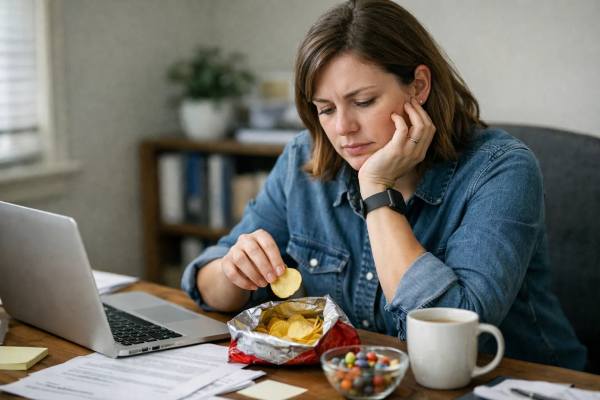
Stress snacking at work usually is not about weak willpower. It is often a mix of pressure, mental fatigue, skipped meals, easy access to snack foods, and habits that run in the background while your attention is somewhere else. That is why people can finish a sleeve of crackers during email triage or eat candy after a difficult meeting without feeling physically hungry first.
The good news is that this pattern is very changeable. Once you understand what is driving it, you can make a few targeted changes that lower urges, reduce autopilot eating, and help you stay more satisfied during the workday. The key is not trying to be perfect. It is building a work routine that makes the better choice easier before stress spikes.
Table of Contents
- Why Busy Workdays Trigger Snacking
- Real Hunger or Stress Urge?
- The Office Triggers That Matter Most
- A Workday Eating Pattern That Helps
- What to Do When the Urge Hits
- Set Up Your Environment Before You Need Willpower
- When to Get Extra Help
Why Busy Workdays Trigger Snacking
Work stress creates the perfect setup for mindless eating because it affects attention, emotion, and routine at the same time. When you are overloaded, your brain starts looking for quick relief, quick energy, or both. Snack foods are easy, available, and rewarding. They also require very little decision-making, which matters when your mental bandwidth is already low.
That is why stress snacking often shows up on days that feel chaotic rather than on days when you are simply hungry. Deadlines, inbox pressure, awkward conversations, task switching, and long stretches of focused screen work can all raise the chance that food becomes a fast form of distraction or comfort. For many people, the habit is less “I need calories” and more “I need a break, a reward, or a reset.”
Busy days also create practical problems that make snacking more likely. You may delay lunch, drink too much coffee instead of eating, or go too long without protein and fiber. Then the urge hits fast in the afternoon, when energy and self-control both feel lower. That overlap between pressure and under-fueling is a big reason workday eating can feel so hard to manage.
Another issue is decision fatigue. The more choices you make all day, the harder it can feel to pause and make one more thoughtful choice about food. That is one reason people who struggle with decision fatigue and overeating often find evenings and late afternoons especially difficult. Stress also changes how rewarding highly palatable foods seem in the moment, which is why crunchy, salty, sweet, or creamy foods can feel unusually hard to resist on demanding days. That pattern is part of the broader connection between stress and weight loss cravings.
The goal is not to eliminate all snacking. A well-timed snack can prevent overeating later and steady your energy. The real goal is to stop eating on autopilot. Once you separate planned eating from stress-driven nibbling, the problem becomes much easier to solve.
Real Hunger or Stress Urge?
One of the most useful skills is learning to tell the difference between physical hunger and a stress-triggered urge. They can overlap, so this is not about making a perfect diagnosis every time. It is about getting just enough awareness to respond more accurately.
| Clue | More like physical hunger | More like stress snacking |
|---|---|---|
| How it starts | Builds gradually over time | Shows up suddenly, often after a trigger |
| Body signals | Stomach emptiness, low energy, mild shakiness, trouble focusing | Tension, restlessness, irritability, urge to chew or escape |
| Food preference | Several foods sound good | Usually one specific comfort food sounds best |
| Eating pace | You can eat normally | You want to eat fast and get immediate relief |
| After eating | You feel satisfied and can move on | The urge may linger, or guilt may show up quickly |
A simple check can help before you reach for food. Ask yourself three questions:
- When did I last eat a real meal or snack?
- What do I feel in my body right now?
- Would a balanced snack sound good, or do I only want a very specific treat?
If you have not eaten for four or five hours and a yogurt, fruit, or sandwich sounds appealing, that is probably real hunger. If you just had lunch, feel keyed up after a tense meeting, and only want chocolate, chips, or the office pastries, stress is probably driving the urge.
Still, do not force this into an all-or-nothing test. Sometimes it is both. You might be mentally stressed and physically under-fueled. In that case, the best answer is usually a planned snack plus a short reset, not trying to white-knuckle your way through it.
It can also help to track patterns for a week. Keep it basic: time, trigger, what you ate, and what you actually needed. Many people quickly notice a theme such as “3:30 p.m. after long calls,” “right before a hard task,” or “after skipping lunch.” That pattern gives you something concrete to fix.
The Office Triggers That Matter Most
Most workday snacking is not random. It follows a small set of repeat triggers. Once you spot them, you can start changing the setup instead of blaming yourself.
The most common trigger is visibility. If candy is on the counter, trail mix is open on your desk, or break-room leftovers are constantly in view, your brain has to keep resisting the cue. That drains attention fast. A basic food environment reset often helps more than another round of self-discipline.
The second big trigger is friction and overload. When you are bouncing between tasks, working through lunch, or trying to push through an afternoon slump, food becomes a convenient pause button. Snacking can feel like a reward, a break, or a way to delay something stressful for a few minutes.
Social cues matter too. Office food is often tied to birthdays, meetings, celebrations, and shared routines. You may not be hungry at all, but eating feels like the default thing to do. Add in boredom during repetitive tasks, and snacking gets even more automatic.
A few triggers deserve special attention because they are easy to miss:
- Skipped or tiny meals earlier in the day. This often looks like stress snacking but is partly rebound hunger.
- Too much caffeine and too little food. You may feel wired, tired, and snacky at the same time.
- Long sitting stretches. Physical stagnation can blur into mental restlessness.
- “I deserve it” thinking after a hard block of work. Reward eating is common when days feel draining.
- Open-ended grazing. Eating from a bag, bowl, or communal snack jar makes it hard to notice how much you are having.
A practical way to think about this is to ask, “What happens right before I snack?” not “Why do I have no control?” That shift is important. It moves you from self-criticism to problem-solving.
For many people, better workday eating has less to do with motivation and more to do with systems. That is why habits around breaks, meals, movement, and food placement matter so much in office worker weight loss habits. The less often you rely on willpower in a stressful moment, the easier consistency becomes.
A Workday Eating Pattern That Helps
One of the strongest ways to reduce mindless snacking is to make sure your workday is not built on long gaps, random bites, and reactive eating. A steadier rhythm usually works better than trying to “be good” until hunger and stress both explode.
That does not mean everybody needs the exact same meal schedule. It means your day should include enough structure that you are not hitting the afternoon on fumes. For most people, that looks like a consistent first meal, a real lunch, and a planned snack on longer days instead of waiting until you are desperate.
A simple formula works well:
- Protein to improve staying power
- Fiber-rich carbs for steadier energy
- Some fat for satisfaction
- Enough overall food that you are not compensating later
This is where meal timing habits for better appetite control can make a real difference. You do not need a rigid clock, but you do need a pattern. If your mornings are packed, decide in advance whether you will eat breakfast before work, bring one with you, or eat a substantial early lunch. If meetings tend to push lunch late, schedule a small bridging snack before the danger zone.
It also helps to stop thinking of snacks as failures. A planned snack is often a tool, not a problem. The problem is unplanned grazing that never really satisfies you. A snack works best when it looks like a mini meal rather than a handful of random office food.
Examples that tend to work better than vending-machine grazing include:
- Greek yogurt and fruit
- Apple and string cheese
- Cottage cheese and berries
- Roasted edamame and a piece of fruit
- Turkey roll-ups and crackers
- Hummus with vegetables and pretzels
You do not need to count every gram, but getting enough protein earlier in the day often makes a noticeable difference in cravings. If that is a weak spot for you, it may help to learn roughly how much protein per meal for weight loss is typically satisfying.
Most importantly, avoid the restrict-then-rebound cycle. People often eat lightly all day to “save calories,” then struggle with intense snacking by late afternoon or on the commute home. That is not a lack of discipline. It is often an under-fueling pattern with stress layered on top.
What to Do When the Urge Hits
Even with a better routine, urges will still happen. The key is having a response ready before you are in the middle of one. That is where a short, repeatable plan helps.
Use this five-step method when you feel the pull to snack but are not sure what you need:
- Pause for one minute.
Put the food decision on hold briefly. That short pause interrupts autopilot. - Name the trigger.
Ask: am I hungry, overwhelmed, bored, frustrated, tired, avoiding a task, or just reacting to food being around? - Choose the matching response.
If you are hungry, eat a real snack. If you are stressed, try a reset first. If you are unsure, do both in sequence: quick reset, then reassess. - Make the snack deliberate.
Put it on a plate, napkin, or container. Sit down if possible. Avoid eating from a large package while working. - Move on without drama.
If you ate something unplanned, do not turn one moment into a lost day. Reset at the next decision.
A stress reset does not need to be elaborate. Good options include:
- Ten slow breaths
- A two-minute walk
- Filling your water bottle
- Standing up and stretching
- Stepping away from your screen
- Writing the next one small task you need to do
This is where mindful eating for weight loss can be genuinely practical. In a work setting, mindfulness is not about creating a perfect Zen experience. It is about noticing, “I am stressed and reaching for food automatically,” early enough to make a better choice.
Another powerful tool is a prewritten plan. Use simple if-then planning for cravings such as:
- If I want candy after a stressful email, then I will walk to refill my water first.
- If I get the 3 p.m. urge, then I will eat my packed snack instead of searching the office kitchen.
- If I want to snack while finishing a task, then I will set a five-minute timer and reassess when it ends.
These plans work because they remove negotiation from the moment. When stress is high, fewer decisions usually means better decisions.
Set Up Your Environment Before You Need Willpower
The best time to deal with stress snacking is before the stressful moment arrives. A few small systems can make a big difference.
Start with your desk. Keep water visible. Keep highly tempting snack foods out of sight or out of immediate reach. If you bring snacks to work, portion them before the day starts rather than keeping full-size bags nearby. A small barrier helps. So does making your planned option easier than the impulsive one.
Next, build an emergency kit for long days. This prevents the classic “I got too busy and now I will eat whatever is here” problem. Useful items include:
- A protein-forward shelf-stable snack
- A fiber-rich option
- A backup lunch item
- Gum or mints if oral habit is part of the issue
- A reusable water bottle
- A short list of nearby food options that fit your goals
If you need ideas, stocking a few high-protein snacks for weight loss and a few high-fiber snacks for weight loss can make workdays much easier. The goal is not to create a perfect food stash. It is to make the decent option easy when your brain is tired.
Your calendar matters too. Block lunch if your schedule tends to erase it. Put a reminder on your phone for a planned mid-afternoon snack if that is your trouble window. Take a short movement break before the time you usually start grazing, not after.
It also helps to separate eating from working when possible. Even five minutes away from your inbox can make a snack feel more satisfying and less mindless. When eating stays tied to typing, scrolling, and meetings, it becomes harder to notice fullness or enjoyment.
Finally, lower the emotional charge around food. Work treats do not have to be forbidden. When everything is either “good” or “bad,” people often swing between rigid control and overeating. A more sustainable approach is to decide ahead of time what is worth it, what is not, and how to fit it in without turning it into a daily reflex.
When to Get Extra Help
Stress snacking is common, but that does not mean you should ignore it if it feels frequent, intense, or hard to control. If mindless eating is happening most workdays, causing a lot of distress, or leading to larger overeating episodes later, it may be worth getting more support.
Pay closer attention if any of these are true:
- You often eat in secret or feel out of control around food
- A single snack turns into a much larger episode regularly
- You swing between strict restriction and overeating
- Food feels like your main way to cope with stress, anxiety, or sadness
- You are also dealing with poor sleep, burnout, or major mood changes
In those cases, the answer is usually not a stricter snack rule. It is addressing the full pattern. That may include meal structure, sleep, stress management, therapy, nutrition support, or all of the above. Sometimes the most effective next step is talking with a registered dietitian, therapist, or physician, especially if your eating feels compulsive or emotionally heavy.
It is also worth zooming out if work is only one part of the problem. Some people notice the same pattern at night, on weekends, or after emotionally draining events. That suggests the issue is less about the office itself and more about the way stress is being managed overall.
A good outcome does not mean never snacking at work again. A good outcome looks more like this: fewer automatic eating episodes, steadier energy, less guilt, more predictable hunger, and faster recovery when a stressful day throws you off. That is a meaningful change, and it is realistic.
References
- Stress and eating behaviours in healthy adults: a systematic review and meta-analysis 2022 (Systematic Review and Meta-Analysis)
- Daily Work Stressors and Unhealthy Snacking: The Moderating Role of Trait Mindfulness 2023 (Empirical Study)
- Mindfulness meditation modulates stress-eating and its neural correlates 2024 (Experimental Study)
- Effects of mindfulness-based interventions on food craving in adults: a systematic review and meta-analysis of controlled clinical trials 2025 (Systematic Review and Meta-Analysis)
- A Narrative Review on Sleep and Eating Behavior 2025 (Review)
Disclaimer
This article is for general educational purposes only. It is not medical advice and is not a substitute for professional diagnosis, nutrition counseling, or treatment. If stress snacking feels compulsive, is tied to anxiety or low mood, or is affecting your health, speak with a qualified healthcare professional.
If you found this article useful, consider sharing it on Facebook, X, or your preferred platform so it can help someone else manage stressful workdays with more control and less guilt.