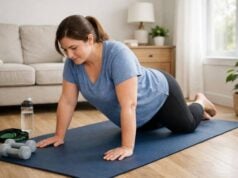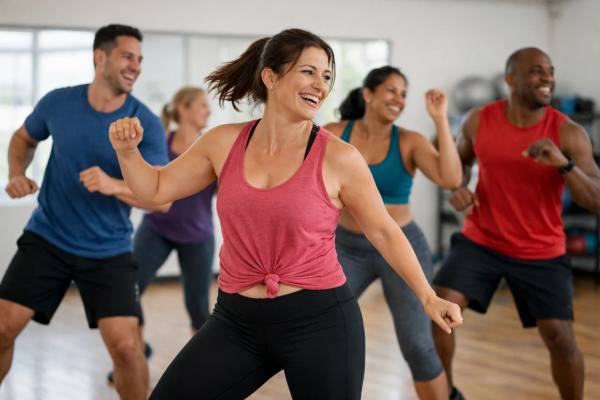
Zumba can help with weight loss, but not because it has some special fat-burning effect that other cardio does not. It works when it helps you move hard enough, often enough, and consistently enough to support a calorie deficit. For many people, the real advantage is that it feels more like a fun class than a chore, which makes it easier to keep showing up.
This article breaks down whether Zumba is effective for fat loss, how many calories it typically burns, what affects the number on the watch or tracker, who it suits best, and how to fit it into a weekly plan that actually works.
Table of Contents
- Does Zumba work for weight loss?
- How many calories does Zumba burn?
- Why Zumba can be effective beyond calories
- Drawbacks and who should modify
- How often should you do Zumba?
- Sample Zumba weight-loss week
- How to get better results from Zumba
Does Zumba work for weight loss?
Yes, Zumba can work for weight loss. The better way to say it is that Zumba can be an effective tool for fat loss when it helps you burn calories, improve fitness, and stay active consistently over time.
That distinction matters. Zumba is not a shortcut around the basics. It does not override overeating, and it does not melt belly fat from one area. Like any other cardio workout, it supports weight loss by increasing energy expenditure and making it easier to create or maintain the calorie gap needed for fat loss. If your food intake stays high enough to cancel out the calories you burn, progress will be slow or nonexistent.
Still, Zumba has one major advantage over many other workouts: people often enjoy it enough to keep doing it. That makes it more useful than a “perfect” workout you dread and quit after two weeks.
A few reasons Zumba can be effective for weight loss include:
- It is usually a moderate-to-vigorous cardio session.
- It can raise your heart rate for a sustained period.
- It often lasts 30 to 60 minutes.
- It may improve aerobic fitness, making other forms of exercise feel easier.
- The class format can increase accountability and adherence.
- It often feels less monotonous than treadmill or bike sessions.
That last point is more important than it sounds. Weight loss is rarely limited by finding a workout that looks good on paper. It is usually limited by what someone can repeat week after week. If dancing to music keeps you engaged, Zumba may be more effective for you than a machine-based workout that burns a similar number of calories but bores you into skipping sessions.
There are also limits. Zumba alone is usually not enough for the best long-term body composition results. If you only do cardio and never strength train, you may miss out on some of the benefits of preserving lean mass while dieting. That is why Zumba works best as part of a broader plan that also includes some strength work, enough daily movement, and nutrition that supports fat loss. A general guide to the best exercises for weight loss can help put Zumba in the right context rather than treating it like the whole plan.
The other key truth is that Zumba supports fat loss best when it is paired with a sensible eating pattern. If a person finishes class starving, then “rewards” themselves with extra calories, the workout may not move the scale much. That does not mean Zumba failed. It means the total energy balance still matters. This is why understanding how a calorie deficit works is still essential even when your exercise routine is strong.
So the honest answer is simple: Zumba works for weight loss when it helps you stay active consistently enough to support a real, sustainable calorie deficit.
How many calories does Zumba burn?
Zumba can burn a meaningful number of calories, but there is no single number that applies to everyone. In real life, calorie burn depends on your body size, fitness level, class intensity, how much you move between songs, how much jumping or arm work is included, and even how complex the choreography is.
A simple rule is that a harder, more continuous class burns more than a stop-and-start class where you spend a lot of time learning steps. Someone moving with high effort for 50 minutes will also burn more than someone taking frequent breaks and staying at a light pace.
For many adults, a practical estimate looks like this:
| Session length | Easier or lighter class | Moderate to hard class |
|---|---|---|
| 30 minutes | About 150 to 220 calories | About 200 to 320 calories |
| 45 minutes | About 220 to 320 calories | About 300 to 450 calories |
| 60 minutes | About 300 to 420 calories | About 400 to 600 or more calories |
These are broad ranges, not guarantees. Smaller beginners doing lower-impact versions may land near the lower end. Larger people in fast, athletic classes may land near or above the upper end.
A few things can push calorie burn higher:
- Higher effort and less idle time
- Bigger arm movements
- More jumps, squats, and directional changes
- Longer classes
- Better conditioning that allows you to work continuously
- Heavier body weight
A few things can push calorie burn lower:
- Frequent pauses to follow choreography
- Low-impact modifications
- Shorter song blocks
- Beginner classes with more instruction time
- Holding back because of fatigue, pain, or low fitness
One useful mindset is to treat calorie numbers as estimates for planning, not exact truth. Watches, apps, and cardio machines can be off by quite a lot. They may still be useful for comparing your own sessions, but they are not perfect measures of fat loss. A tracker saying you burned 550 calories does not mean you should immediately eat back 550 calories.
It is also worth remembering that Zumba is only one piece of total daily energy expenditure. A class that burns 350 calories is helpful, but the bigger weekly picture still matters more than a single session. If Zumba leaves you energized and you keep moving the rest of the day, the benefit is larger than if you finish class and spend the next six hours on the couch.
If you like comparing activities, a breakdown of calories burned by common exercises can help you see how Zumba stacks up against walking, cycling, and other cardio options. Most people find that Zumba falls into the same general territory as other moderate-to-vigorous cardio, with the exact number depending mostly on effort.
That is the main takeaway from the calorie question: Zumba can burn a respectable amount, but your class style and effort matter more than any generic internet number.
Why Zumba can be effective beyond calories
One reason Zumba works well for some people is that its value goes beyond the calorie number. A lot of weight-loss advice focuses so heavily on energy burn that it misses the factors that actually decide whether someone stays with a plan.
Zumba often helps because it improves adherence.
Many people quit workouts for predictable reasons: boredom, embarrassment, too much impact, lack of motivation, or feeling like exercise is punishment for eating. Zumba can soften some of those barriers. Music gives the class pace and energy. Group participation creates momentum. The dance format makes time pass faster than it does on a treadmill. And because it feels more social and expressive, some people stop thinking of it as a chore.
That matters because consistency beats intensity spikes. A person who does Zumba three times a week for six months will usually get better results than someone who forces themselves through a “harder” workout twice, hates it, and gives up.
Zumba can also support weight loss in a few other ways:
- It improves cardiovascular fitness. Better fitness makes daily movement easier and can raise your tolerance for other workouts.
- It builds exercise confidence. Feeling capable in one class can make it easier to try other forms of training.
- It can increase total weekly activity. People who enjoy one active habit are often more open to adding another.
- It may improve mood and reduce stress. That can indirectly help with overeating driven by stress or low motivation.
- It can make exercise feel identity-friendly. Some people will not call themselves “runners” or “gym people,” but they will gladly go dance.
This is one of Zumba’s most underrated strengths. It widens the doorway into exercise for people who dislike traditional workouts. That makes it especially helpful for those restarting after a long break or trying to build a routine they do not resent.
There is also a body-composition angle. While Zumba is mainly cardio, it still involves repeated lower-body work, directional changes, balance demands, and bursts of faster movement. That will not replace proper resistance training, but it can still offer more whole-body challenge than a very passive cardio session. It can also pair well with a lower-impact or beginner-friendly routine such as low-impact home cardio for days when you want movement without a full class.
Another benefit is that class-based training can reduce the mental effort of planning. You show up, follow along, and finish. That may sound simple, but reducing decision fatigue is useful in weight loss, where too many daily choices already compete for willpower. This is also why readers who struggle with motivation often do better when they focus on consistency rather than waiting to feel motivated.
So while Zumba absolutely burns calories, its bigger advantage for many people is behavioral. It is often easier to repeat, easier to enjoy, and easier to make part of your real life than more mechanical forms of cardio. For long-term weight loss, that matters a lot.
Drawbacks and who should modify
Zumba is not ideal for everyone, and pretending otherwise makes the article less useful.
The first issue is impact. Some classes include jumping, quick pivots, fast lateral steps, and repeated direction changes. That can be great for energy and intensity, but it can also be tough on knees, ankles, hips, or the pelvic floor, especially in people with higher body weight, a low fitness base, or previous injuries.
The second issue is coordination. If you feel lost every time the choreography changes, your workout may become more frustrating than effective. That does not mean you are “bad” at it. It just means the class may be moving too fast for your current comfort level. Beginners often do better with simpler instructors, lower-impact versions, or standing farther back where there is less pressure to keep up perfectly.
Third, not all Zumba classes are equally hard. Some feel like a true cardio workout. Others are more dance-oriented, with more breaks and less sustained effort. That does not make the easier class useless, but it does mean your expectations should match the format.
You may need to modify, choose a gentler version, or try something else first if you have:
- Significant knee, hip, ankle, or back pain
- Poor balance
- Recent surgery
- Severe deconditioning
- Pelvic floor symptoms with jumping
- A heart or lung condition that requires exercise guidance
- Dizziness or neurological issues affecting coordination
For some people, Zumba Gold or a low-impact dance class is the better starting point. These versions usually keep the music and class energy while lowering impact and complexity. If joint comfort is your main concern, looking at joint-friendly cardio options may help you choose between dance, walking, cycling, or other lower-impact formats.
Another group that may need a different approach is absolute beginners with obesity who are not yet comfortable with repeated fast transitions. A simple walking plan, bike, or low-impact beginner routine may be a better base before moving into a full dance class. That does not mean Zumba is off-limits forever. It may just mean the timing matters. Some readers in that position do better starting with a low-impact beginner workout plan and then layering in dance classes later.
Technique and pacing also matter more than many people realize. If you go too hard too quickly, you can end up sore enough to skip your next few sessions. That is a poor trade-off during a fat-loss phase. You want a class that is challenging enough to count, but repeatable enough to keep.
In short, Zumba is effective for many people, but the best version is not always the loudest, hardest, or fastest one. Often the smartest choice is the class that lets you train consistently without pain, dread, or recovery problems.
How often should you do Zumba?
For most people trying to lose weight, doing Zumba 2 to 4 times per week is a strong starting range.
That is enough to build a real cardio habit without letting one type of workout dominate the whole plan. It also leaves room for strength training, recovery, walking, and normal life.
A simple way to think about frequency is this:
- 2 times per week: good starting point for beginners or busy schedules
- 3 times per week: strong sweet spot for many people
- 4 times per week: good for experienced exercisers who recover well
- 5 or more times per week: possible for some, but usually only if class intensity and impact are managed carefully
The right number depends on more than motivation. It depends on how hard your classes are, whether they include lots of jumping, what else you are doing during the week, and how well your joints and energy levels hold up.
For example, someone doing three intense Zumba classes plus two strength sessions may already have a full week. Someone doing two lighter Zumba classes may still have room for more walking, cycling, or lifting. That is why there is no perfect number that fits everyone.
A good target is to place Zumba inside your broader cardio total. If you are trying to lose weight, a helpful guide is how much cardio per week supports fat loss. Zumba can count toward that weekly total just like brisk walking, biking, or treadmill work.
You should also think about what Zumba does not fully cover. It is mainly cardio, not a complete strength program. If fat loss, muscle retention, and long-term body composition matter to you, it helps to pair Zumba with resistance training. A separate guide on how often to strength train for weight loss can help you decide how much lifting to add without overloading your schedule.
A few practical signs you are doing enough Zumba:
- Your weekly activity is clearly higher than before
- Your fitness is improving
- You can stay reasonably consistent for months, not just days
- You are not constantly sore or exhausted
- Your nutrition still supports a deficit
A few signs you may be doing too much:
- Nagging joint pain
- Heavy fatigue that lowers your daily movement
- Classes become sloppy because you never recover
- You skip strength work because cardio takes all your energy
- Hunger spikes so much that your diet becomes harder to manage
That last point is important. More cardio is not always better if it makes appetite harder to control or reduces recovery. The right frequency is the one that helps, not the one that leaves you feeling constantly depleted.
For many people, three weekly classes plus walking and two strength sessions is a very balanced setup. It gives enough cardio for meaningful calorie burn, enough variety to prevent boredom, and enough structure to support steady fat loss.
Sample Zumba weight-loss week
The best weekly setup depends on fitness level, but Zumba usually works better when it is part of a balanced routine instead of the only thing you do.
Here is a practical example for someone whose goal is weight loss, better fitness, and decent recovery.
| Day | Session | Main goal |
|---|---|---|
| Monday | Zumba class | Moderate to hard cardio |
| Tuesday | Strength training | Muscle retention and overall body composition |
| Wednesday | Brisk walk or easy recovery movement | Low-stress calorie burn and recovery |
| Thursday | Zumba class | Cardio volume and enjoyment |
| Friday | Strength training | Maintain strength while dieting |
| Saturday | Zumba class or longer walk | Extra activity without extreme stress |
| Sunday | Rest or light walking | Recovery |
This kind of plan works because it spreads the load. Zumba handles a good portion of your aerobic work, strength training protects lean mass, and walking fills in extra calorie burn without a big recovery cost.
You can simplify it further if needed:
- Beginner version: 2 Zumba classes, 2 to 4 walks, 1 to 2 strength sessions
- Intermediate version: 3 Zumba classes, 2 strength sessions, regular daily walking
- Busy-week version: 2 Zumba classes, 2 short lifts, and an effort to keep steps up
If you prefer more structure, a guide to building a weekly workout schedule for weight loss can help you map cardio and strength together. If you are newer to lifting, a straightforward 3-day strength training plan may also pair well with one or two dance sessions.
One caution: do not make every Zumba session an all-out effort. Some classes will naturally feel harder than others, and that is fine. But if you turn every workout into a maximal performance, recovery and hunger can become problems. It is often smarter to let one class be your hard session, one be solid but moderate, and one be more about movement, fun, and volume.
A good weekly plan should leave you feeling trained, not trashed. That is one of the simplest ways to tell whether your Zumba routine is helping your weight-loss goal or quietly making it harder.
How to get better results from Zumba
Zumba helps most when you stop treating it like a one-off calorie event and start using it as part of a repeatable system.
Here are the habits that make the biggest difference.
- Show up consistently before chasing harder classes.
A class done three times a week for four months will beat a “perfect” class done twice before quitting. - Use effort, not just attendance, as a measure.
It is possible to hide in the back and move lightly the whole time. That still has value, but fat-loss results improve when at least some sessions reach a genuine moderate-to-hard effort. - Add strength training.
Zumba is cardio first. If you want better body composition and muscle retention while losing weight, strength work matters. - Keep daily movement high.
A few weekly classes help, but steady walking and general movement outside class still matter a lot. - Do not eat back every calorie you think you burned.
This is one of the fastest ways to erase progress. - Manage post-class hunger.
Cardio can make some people ravenous. Having a solid recovery meal or snack planned can prevent a loose evening of snacking. A guide to post-workout meals for weight loss can help with that part. - Progress in ways that fit the format.
You cannot always increase a Zumba class the way you can increase treadmill speed, but you can still progress by attending more regularly, taking fewer breaks, adding an extra class per week, or choosing a slightly more challenging instructor once your fitness improves. - Watch for plateaus caused by habit drift.
Sometimes the class is the same, but your effort slips, your food portions grow, or your non-exercise movement drops. If fat loss stalls, it is worth reviewing the whole pattern rather than blaming Zumba.
One more practical insight: people often overestimate the value of “exercise choice” and underestimate the value of “exercise fit.” Zumba may not be the mathematically highest-calorie workout you could do. But if it is the format you enjoy, recover from, and repeat for months, it can easily become one of the most effective options for you.
That is why Zumba works so well for some people. It blends cardio, rhythm, class energy, and consistency in a way that lowers resistance to exercise. For weight loss, that can be a real advantage.
The final verdict is straightforward. Zumba is not magic, but it is absolutely a legitimate weight-loss tool. It can burn a useful number of calories, improve fitness, and help many people stay active long enough to see real results. If you enjoy it, can recover from it, and combine it with sensible eating and some strength training, it can be a very smart part of your plan.
References
- Health Benefits of Zumba Fitness Training: A Systematic Review 2016 (Systematic Review)
- Is dancing an effective intervention for fat loss? A systematic review and meta-analysis of dance interventions on body composition 2024 (Systematic Review)
- Aerobic Exercise and Weight Loss in Adults: A Systematic Review and Dose-Response Meta-Analysis 2024 (Systematic Review)
- Adult Activity: An Overview 2023 (Official Guidance)
- Physical and Psychological Benefits of a 12-Week Zumba Gold® Exercise Intervention in Postmenopausal Sedentary Women from Low Socioeconomic Status 2025 (Controlled Intervention)
Disclaimer
This article is for general educational purposes only and is not a substitute for medical advice, diagnosis, or treatment. If you have joint pain, balance problems, a heart condition, pelvic floor symptoms, or any medical concern that could affect exercise tolerance, speak with a qualified healthcare professional before starting Zumba or increasing workout intensity.
If this article helped you, share it on Facebook, X, or your favorite platform so more people can find a realistic, enjoyable way to make cardio part of a sustainable weight-loss plan.