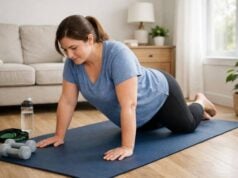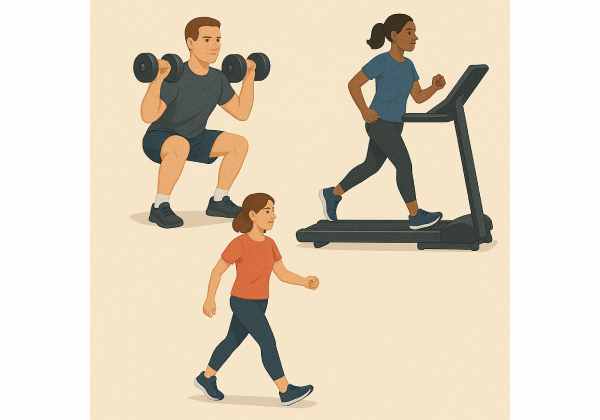
The best exercises for weight loss are not always the ones that leave you the most exhausted. They are the ones that help you burn calories, preserve muscle, improve fitness, and fit your life well enough that you keep doing them. That is why the smartest weight-loss approach usually is not “pick one perfect workout.” It is combining strength training, cardio, and more daily movement in a way you can actually sustain.
If you want the short answer, here it is: strength training helps protect muscle, cardio helps increase calorie burn and fitness, and daily steps make it easier to stay active outside formal workouts. This guide explains how each type of exercise helps with fat loss, which options tend to work best for different people, and how to build a practical weekly plan.
Table of Contents
- What makes an exercise good for weight loss
- Why strength training belongs in most plans
- Which cardio exercises work best
- Why steps matter more than people think
- How to choose the right exercise for you
- A smart weekly mix of strength, cardio and steps
- Mistakes that make exercise less effective for fat loss
What makes an exercise good for weight loss
People often judge exercise only by how many calories it burns in a single session. That matters, but it is not the whole story. The best exercise for weight loss is the one that improves your overall energy balance without creating so much fatigue, hunger, soreness, or schedule stress that you quit after two weeks.
A truly useful weight-loss exercise has several strengths:
- it helps you expend energy
- it is repeatable across weeks and months
- it does not beat up your joints or recovery
- it supports muscle retention or at least does not work against it
- it fits your schedule, fitness level, and preferences
This is why two people can get very different results from the same workout. One person thrives on cycling four times per week. Another gets shin splints, hates it, and starts skipping sessions. For the second person, cycling is not the “best exercise,” even if it looks good on paper.
It also helps to separate three related but different goals:
- Burn calories during the workout
Activities like brisk walking, cycling, rowing, or intervals can help here. - Preserve or build lean mass while dieting
Strength training matters most here. - Increase total daily movement
Steps, standing, walking breaks, and general activity matter more than people expect.
That is why good weight-loss plans do not rely on one training style alone. Cardio-only plans often burn calories well but do less to protect muscle. Strength-only plans help body composition and performance but may not raise overall daily activity enough if the rest of the day is sedentary. Steps-only plans can work surprisingly well for beginners, but they are stronger when paired with resistance training.
A useful way to compare exercise types is this:
| Exercise type | Main fat-loss benefit | Biggest limitation | Best use |
|---|---|---|---|
| Strength training | Helps preserve muscle and improve body composition | Usually burns fewer calories during the session than hard cardio | Foundation of most long-term plans |
| Cardio | Raises calorie expenditure and fitness | Can create more fatigue or hunger if overdone | Structured calorie-burning sessions |
| Daily steps | Makes it easier to stay active consistently | Intensity is lower, so progress depends on volume and consistency | Everyday movement and adherence |
One more point matters: exercise works best when it supports a sensible calorie deficit rather than trying to outrun overeating. If your training is solid but food intake quietly drifts upward, results slow fast. That is why exercise pairs best with a realistic calorie deficit strategy, not an “earn your food” mindset.
The headline is simple. The best exercise for weight loss is not one exercise. It is the combination that helps you stay active enough, recover well enough, and keep showing up long enough to make fat loss happen.
Why strength training belongs in most plans
If you only remember one thing from this article, make it this: strength training deserves a place in most weight-loss plans, even if your main goal is fat loss and not muscle gain.
Why? Because when you lose weight, you do not want the loss to come from muscle as well as fat. Resistance training helps tilt the outcome in a better direction. It supports lean mass, improves strength, and often makes your body look and perform better even when the scale is moving slowly.
This is one reason strength training can feel “underrated” for fat loss. A hard lifting session may not show the biggest calorie number on a smartwatch, but it contributes to better body composition and helps prevent the “smaller but softer and weaker” outcome many people dislike.
Strength training is especially useful for:
- preserving muscle during a calorie deficit
- improving long-term metabolic health
- supporting joints and posture
- making daily activity feel easier
- helping you maintain weight loss later
It is also a strong fit for people who have been burned by cardio-heavy plans. If every fat-loss attempt has felt like endless jogging and eventual burnout, lifting may make the process feel more sustainable.
The best strength exercises for weight loss are usually compound movements that train multiple muscle groups at once. Examples include:
- squats and squat variations
- Romanian deadlifts or hip hinges
- rows
- presses
- split squats or lunges
- pulldowns or assisted pull-ups
- push-ups
- carries
These movements do not need to be complicated. In fact, simpler is often better, especially for beginners.
A strong beginner structure is:
- 2 to 4 strength sessions per week
- mostly full-body training
- 5 to 7 main movements per session
- progressive overload over time
That could mean adding a little weight, a rep or two, or an extra set once your current workload feels solid. If you want a practical place to start, a 3-day strength training plan is often enough to create real progress without overwhelming recovery.
The other key with lifting during weight loss is not to slash food so aggressively that performance collapses. If your energy is low, your workouts are flat, and your strength falls every week, you are making it harder to keep muscle. That is also why adequate protein matters. A solid daily target from a protein intake plan for weight loss makes resistance training far more useful.
Strength training will not always produce the fastest short-term drop on the scale. But for many people, it improves the quality of weight loss. That is a big difference. Losing 10 pounds while keeping more muscle is not the same as losing 10 pounds while becoming weaker, flatter, and less active.
For long-term results, strength training is not optional in the sense that everyone must become a serious lifter. But some form of regular resistance work is one of the smartest investments you can make.
Which cardio exercises work best
Cardio earns its place in a weight-loss plan because it helps increase energy expenditure, improves cardiovascular fitness, and can be adjusted to almost any fitness level. The mistake is assuming that the best cardio is automatically the hardest cardio.
In reality, the best cardio exercise for weight loss is usually the one you can do often enough and hard enough to matter, without turning recovery into a mess.
Brisk walking
Brisk walking is one of the most effective weight-loss tools because it is accessible, low-impact, and easy to recover from. It works especially well for beginners, people with larger bodies, and anyone who wants a simple option they can repeat almost daily.
Cycling
Cycling is excellent if you want a joint-friendlier cardio option that can still become challenging. Stationary bikes are also convenient for intervals and weather-proof training.
Incline treadmill walking
Incline walking raises the training effect without forcing you to run. Many people find it easier on the joints than jogging while still feeling like a real workout.
Rowing
Rowing can be a strong full-body cardio option, but it is more technique-dependent than walking or cycling. It suits people who enjoy machine-based training and want variety.
Swimming and water workouts
These can be excellent for people with joint limitations, though access and skill level can be barriers.
HIIT
High-intensity interval training can be time-efficient and effective, but it is not automatically superior for everyone. It tends to work best when used in moderation by people who already tolerate exercise well. Many people do better with one or two interval sessions per week, not daily punishment.
That is why comparing HIIT and steady-state cardio is more useful than treating one as universally better. Intervals may save time and feel athletic. Steady cardio is often easier to recover from and easier to sustain.
A practical ranking looks like this:
- Best beginner cardio: brisk walking
- Best low-impact cardio: cycling, elliptical, swimming
- Best time-efficient cardio: intervals used carefully
- Best “I will actually keep doing this” cardio: the one you dislike least
For fat loss, cardio also works best when matched to your weekly recovery budget. If you do hard leg sessions, play a sport, and sleep poorly, adding several brutal cardio workouts can backfire. If your job is sedentary and your training history is light, moderate cardio may be exactly what you need.
As a broad target, many people do well with roughly 150 to 300 minutes per week of moderate activity, though what is ideal depends on fitness, size, diet, and goals. For a more detailed breakdown, how much cardio per week for weight loss is a useful way to think about volume without guessing.
The biggest takeaway is that “best cardio” is not a single machine or class. It is the mode that you can repeat consistently, push appropriately, and recover from well enough to do again.
Why steps matter more than people think
Steps are often treated like the lesser form of exercise, something that “counts” only if you are not doing real workouts. That is a mistake.
For many people, daily steps are the missing link in weight loss. Not because walking is flashy, but because it raises activity outside the gym. That matters a lot. A person can do four intense workouts per week and still spend the rest of the time sitting. Another person can do two decent workouts and stay much more active every day. The second person often builds better fat-loss momentum.
Walking and steps help with weight loss in several ways:
- they increase total daily calorie expenditure
- they are easy to recover from
- they can be accumulated in short blocks
- they fit busy schedules
- they help reduce “all day sedentary, one hard workout” patterns
This is where people often underestimate daily movement. Formal workouts may take 30 to 60 minutes. The other 23 hours still matter. When someone raises daily steps from very low levels to a more active baseline, the change can be meaningful.
Walking is also psychologically easier than many other forms of exercise. It feels approachable. You do not need perfect clothes, equipment, or motivation. That lowers the activation energy, which is a huge advantage during fat loss.
The best ways to use steps include:
- a morning walk before work
- 10-minute walks after meals
- walking during calls
- parking farther away
- taking walking breaks during desk work
- adding a short evening walk instead of extra screen time
That is why a dedicated guide on walking for weight loss often ends up being more practical than another advanced cardio routine. Walking is not inferior because it is simple. It is powerful because it is easy to repeat.
The same is true for step targets. A goal like 10,000 steps for weight loss is not magic, but it can be a useful structure. More important than the exact number is progress from your current baseline. Going from 3,000 to 7,000 daily steps is often a bigger real-world win than obsessing over an arbitrary perfect target you rarely hit.
One more reason steps matter: they usually do not stimulate the same level of fatigue as harder cardio. That means you can often keep step counts high while still strength training and doing some formal cardio. This makes walking the ideal “glue” in a balanced plan.
If you want the broadest answer to “What exercise should most people do more of for weight loss?” daily walking is near the top of the list.
How to choose the right exercise for you
The best exercise plan is personal. Not in a mystical way, but in a practical one. Your body, schedule, injury history, fitness level, and preferences all change what makes sense.
A good question is not “What burns the most calories?” It is “What mix gives me the best chance of staying consistent for the next six months?”
Here are the main filters to use.
Your current fitness level
If you are new to exercise, walking, machine cardio, and simple full-body lifting usually beat advanced classes or high-impact circuits. Starting too hard is one of the fastest ways to get injured or discouraged.
Your joints and pain history
If running hurts your knees or back, it is probably not your best primary tool right now. Cycling, incline walking, swimming, or other low-impact cardio options may let you train more consistently with less pain.
Your available time
If you have four 30-minute windows per week, that is enough to make progress. In that case, full-body strength sessions and brisk walking may outperform a more “ideal” plan that requires 90-minute gym visits you never make.
Your environment
Home equipment, safe outdoor routes, gym access, and job structure all matter. A plan built around your real environment will outperform a perfect-looking plan built around imaginary conditions.
Your exercise personality
Some people love structured progress in the gym. Others prefer podcasts and long walks. Some enjoy intervals. Others hate them. Preference matters because adherence matters.
A simple matching guide looks like this:
- If you hate the gym: walking, cycling, hiking, home cardio, bodyweight or dumbbell basics
- If you hate repetitive cardio: classes, sports, circuits, rowing intervals, mixed-mode sessions
- If you are very busy: walking breaks, short lifting sessions, short bike sessions, lunch-break movement
- If you are heavier or deconditioned: walking, cycling, seated cardio machines, beginner strength work
- If you want body-composition change, not just scale change: strength training plus steps, with cardio layered on top
It also helps to stop judging workouts as either “fat-burning” or “not worth it.” A 20-minute walk, a simple dumbbell session, or three movement breaks at work can all matter. The plan does not have to look impressive to be effective.
The strongest plans are usually built from the lowest-friction version of each category:
- one strength routine you can repeat
- one or two cardio options you tolerate well
- one daily movement habit that keeps steps up
That is the point of exercise selection during weight loss. You are not trying to find the most punishing option. You are trying to find the best return on effort in your real life.
A smart weekly mix of strength, cardio and steps
Most people do best with a balanced plan instead of a single-mode approach. That usually means combining strength training, cardio, and daily movement rather than choosing one and hoping it does everything.
A practical weekly setup looks like this:
| Day | Main training | Daily movement goal |
|---|---|---|
| Monday | Full-body strength training | Normal walking and light steps |
| Tuesday | Moderate cardio or brisk walk | Keep steps up through the day |
| Wednesday | Full-body strength training | Easy walking for recovery |
| Thursday | Steady cardio or longer walk | Movement breaks if desk-based |
| Friday | Full-body strength training or optional lighter session | Moderate daily steps |
| Saturday | Long walk, hike, cycling, or recreational activity | Stay active but not obsessive |
| Sunday | Rest or easy recovery walk | Light movement only |
This works because each type of exercise covers a different job:
- strength training protects muscle and improves strength
- cardio improves fitness and helps with energy expenditure
- steps raise total daily activity without excessive recovery cost
A few principles make this better:
Start with strength and steps
If your routine is messy, build around resistance training two or three times per week and a clear walking target. Then add more cardio if recovery and schedule allow.
Use cardio to support, not dominate
Cardio helps, but more is not always better. Too much hard cardio can leave you tired, extra hungry, or less active outside workouts.
Think in weeks, not days
One missed workout does not ruin anything. What matters is the average pattern across the month.
Match volume to your diet phase
If calories are lower, you may not recover well from a very aggressive training schedule. During a deficit, “enough” often beats “maximum.”
If you want a more detailed structure, a weekly workout schedule for weight loss can help you turn these ideas into 3-day, 4-day, or 5-day formats.
The best weekly plan is the one that improves your body composition, keeps your energy reasonable, and lets you keep going. That usually means balance, not extremes.
Mistakes that make exercise less effective for fat loss
Even good exercises can underperform if the overall approach is off. These are the most common mistakes.
Doing only cardio and ignoring strength
This can work for a while, but it often leaves people under-muscled, fatigued, and frustrated by how they look and feel.
Choosing workouts based on punishment
The harder a plan feels, the more “effective” people think it must be. That mindset often produces inconsistency, soreness, skipped sessions, and quit cycles.
Overestimating exercise calories
This is a classic trap. People do a solid workout, assume they burned far more than they did, then unconsciously eat back the difference. A great session can still fit inside a surprisingly small calorie range.
Ignoring daily movement
Three hard workouts cannot fully compensate for being motionless the rest of the week. This is where steps and general activity quietly matter.
Not progressing anything
If your strength work never gets heavier or more challenging, and your cardio never gets slightly longer, faster, or more consistent, progress may flatten.
Using exercise to “earn” food
This can distort appetite, encourage overeating, and make training feel like punishment rather than something that supports health and fat loss.
Picking the wrong tool for your body
If an exercise repeatedly causes pain or dread, it is probably not your best anchor habit. There are too many useful options to force the wrong fit.
A better framework is:
- keep strength training in the plan
- add cardio you can recover from
- raise steps outside workouts
- progress gradually
- support training with reasonable nutrition and sleep
That is less exciting than chasing a miracle workout, but it is much more effective.
When people ask for the best exercises for weight loss, the most honest answer is this: the best plan usually includes resistance training, some form of cardio, and higher daily movement. The exact ratio depends on you. The result depends on consistency.
References
- WHO guidelines on physical activity and sedentary behaviour 2020 (Guideline)
- Exercise training in the management of overweight and obesity in adults: Synthesis of the evidence and recommendations from the European Association for the Study of Obesity Physical Activity Working Group 2021 (Review and Recommendations)
- Effect of exercise training on weight loss, body composition changes, and weight maintenance in adults with overweight or obesity: An overview of 12 systematic reviews and 149 studies 2021 (Review)
- 2024 Adult Compendium of Physical Activities: A third update of the energy costs of human activities 2024 (Reference Update)
- Effect of resistance exercise on body composition, muscle strength and cardiometabolic health during dietary weight loss in people living with overweight or obesity: A systematic review and meta-analysis 2025 (Systematic Review)
Disclaimer
This article is for general educational purposes only and is not a substitute for medical advice, diagnosis, or treatment. If you have heart disease, major joint pain, balance problems, or a medical condition that affects exercise tolerance, speak with a qualified healthcare professional before starting or significantly changing your training plan.
If this article helped you, share it on Facebook, X, or your preferred platform so someone else can build a smarter weight-loss exercise plan.