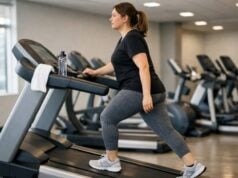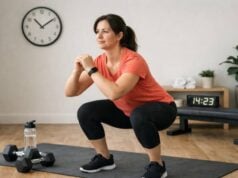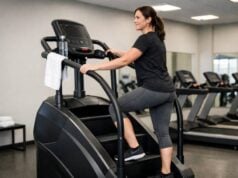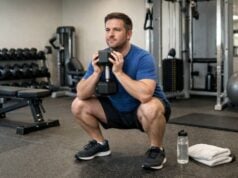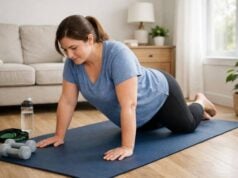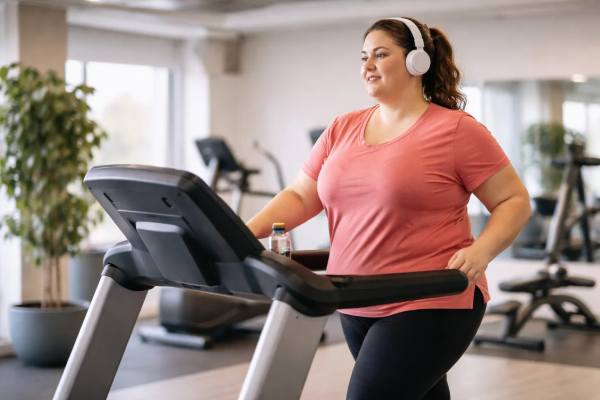
Starting exercise at a higher body weight can feel harder than most generic fitness advice admits. Joints may hurt sooner, breathing may feel tougher, and “beginner” workouts online are often not truly beginner-friendly. The good news is that weight loss does not require punishing workouts, jumping, or long gym sessions. A smart plan starts with low-impact movement you can repeat, recover from, and gradually build on.
The best workout plan for obese beginners is usually one that combines walking or chair-based cardio, simple strength work, short sessions, and a pace that feels manageable rather than miserable. This guide breaks down the best low-impact exercises for weight loss, how hard to work, a realistic 4-week beginner plan, and how to progress safely without burning out.
Table of Contents
- Getting started safely
- Best low-impact exercises at home
- How hard and how often to train
- Four-week beginner workout plan
- Beginner strength routine for home
- How to progress without overdoing it
- Results to expect and how to stick with it
Getting started safely
A good workout plan for obese beginners should solve one main problem: how to make exercise feel doable enough to repeat next week. That means the first goal is not maximum calorie burn. It is consistency, confidence, and joint tolerance.
Low-impact exercise is usually the best place to start because it reduces pounding on the knees, hips, ankles, and lower back. That does not mean it is easy or ineffective. It simply means you can create effort without the repeated shock of running, jumping, or fast direction changes. For many beginners, that is the difference between building momentum and quitting after one sore week.
Before worrying about “the best workout,” focus on these starting rules:
- choose movements you can do with steady breathing and controlled form
- start with short sessions, even 10 to 15 minutes
- leave each workout feeling like you could have done a little more
- build total weekly movement before chasing intensity
- use pain and fatigue as information, not as proof that you are failing
This is especially important if you have knee pain, back pain, shortness of breath with everyday activity, diabetes, heart disease, high blood pressure, sleep apnea, or balance problems. In those cases, it is wise to speak with a clinician before starting a new plan, especially if exercise has been inconsistent for a long time.
A beginner plan also works better when your environment helps instead of fights you. Comfortable shoes, enough floor space, a sturdy chair, and a simple schedule matter more than fancy equipment. Many people do better when they treat exercise like a short appointment rather than a vague intention. That is one reason a broader weight loss routine that fits your life tends to work better than relying on bursts of motivation.
The first few weeks should feel almost too easy compared with what social media calls a “real workout.” That is fine. Your body needs time to adapt to the mechanics of moving more often. Tendons, joints, and muscles often adapt more slowly than motivation does. Pushing too hard too early is one of the fastest ways to create soreness, fear, and inconsistency.
If you are coming from a very low activity level, even these count as real exercise:
- 10 minutes of walking indoors or outdoors
- 8 minutes of chair cardio
- a short resistance-band routine
- two 5-minute movement breaks in one day
- a slow mobility session that gets you moving
That may sound small, but small work done regularly beats ambitious plans abandoned by Friday. If you want a general starting framework beyond this article, a simple beginner weight loss approach usually works best when exercise, eating, and recovery all support each other.
Best low-impact exercises at home
The best low-impact exercise for weight loss is the one you can perform comfortably, recover from, and repeat often enough to build momentum. For obese beginners, that usually means choosing exercises that keep one foot on the floor, reduce impact, and allow easy control of speed and range of motion.
Here are the best home-friendly options.
| Exercise | Why it works | Best for | Starting time |
|---|---|---|---|
| Walking | Simple, scalable, familiar | Almost everyone | 10 to 20 minutes |
| Chair cardio | Very joint-friendly and approachable | Low fitness or balance concerns | 5 to 15 minutes |
| Marching in place | No equipment and easy pacing | Indoor movement breaks | 5 to 10 minutes |
| Step-ups to a low platform | Builds leg strength and fitness | Beginners with decent balance | 5 to 10 minutes |
| Resistance-band circuits | Adds strength with low joint stress | Body-composition support | 15 to 20 minutes |
| Seated boxing or low-impact cardio drills | Raises heart rate without jumping | People who get bored walking | 8 to 15 minutes |
Walking
Walking is often the best first choice because it is familiar, flexible, and easy to adjust. It can be done as a single session or in short bouts. You do not need to hit huge step counts right away. A daily walk, even a short one, is enough to start building capacity. For many people, structured walking for weight loss is the most sustainable form of beginner cardio.
Chair cardio
Chair cardio is ideal if standing workouts feel intimidating, balance is limited, or joints flare easily. Simple seated marches, toe taps, arm reaches, and seated punches can raise your heart rate more than expected. Chair workouts are not a lesser version of exercise. They are often the right version.
Marching in place and indoor walking
These work well on bad-weather days or when leaving the house feels like a barrier. They also fit nicely into short breaks during the day.
Low-impact cardio circuits
Examples include side steps, step-touch, heel digs, knee lifts, slow skaters without jumping, and controlled squat-to-chair patterns. These feel more “workout-like” than walking and can be done in intervals.
Resistance bands and bodyweight basics
Strength work matters for fat loss because it helps preserve muscle while you lose weight. Muscle retention supports function, recovery, and long-term results. A few basics go a long way: sit-to-stands, wall push-ups, band rows, standing presses, and supported hinges.
If your knees are sensitive, low-impact does not just mean “no jumping.” It also means picking exercises that let you control depth, speed, and support. In that case, comparing your options with other joint-friendly low-impact cardio choices can help you find movements you can actually stick with.
The best mix for most people is not one single exercise. It is two or three low-impact options that prevent boredom and spread stress across different joints and muscle groups.
How hard and how often to train
A common beginner mistake is assuming weight loss only happens if every session feels brutal. In reality, obese beginners usually do better with moderate, repeatable effort than with all-out workouts that create too much soreness or fear.
A good starting intensity is the talk test. During most sessions, you should be breathing harder than normal but still able to speak in short sentences. That usually lands around a 4 to 6 out of 10 effort level. Hard enough to count, but not so hard that form falls apart.
For beginners, a smart weekly target often looks like this:
- 3 to 5 days of planned movement
- 2 days of simple strength work
- 10 to 30 minutes per session depending on fitness level
- daily light movement outside workouts when possible
You do not need to begin with long sessions. In fact, shorter sessions are often better because they help you finish feeling successful. Ten minutes done five times per week is usually more useful than trying to force one painful 50-minute workout.
A practical progression looks like this:
- Start with 10 to 15 minutes most days.
- Add 2 to 5 minutes when that feels manageable.
- Increase total weekly time before increasing intensity.
- Add slightly harder intervals only after the habit feels stable.
For weight loss, total weekly movement matters more than whether one workout is magical. Over time, many adults benefit from working toward the general range of moderate-intensity activity recommended in major exercise guidelines. But beginners do not need to hit that number immediately. The first target is simply “more than now, in a way you can recover from.”
This is also where people get confused by heart-rate zones. You do not need to obsess over devices or chase a perfect fat-burning number. For a beginner, steady effort, a consistent schedule, and controlled breathing matter more than precise heart-rate tracking. If you want context, the popular idea of a single ideal fat-burning heart rate zone is less important than total work, consistency, and sustainability.
A helpful weekly structure for many beginners is:
- 3 cardio days with walking, chair cardio, or low-impact intervals
- 2 strength days with simple full-body movements
- 1 to 2 lighter days focused on mobility, easy walking, or recovery
That does not mean you need formal workouts every day. Light activity still counts. Short walks after meals, standing breaks, and gentle stretching can support recovery and increase total movement without making you feel like life revolves around exercise.
As you build confidence, you can also become more intentional about how many days per week you work out for weight loss. But at the beginning, the best frequency is the one you can sustain for a month, not the one that sounds most impressive.
Four-week beginner workout plan
This 4-week plan is designed for obese beginners who want low-impact exercise for weight loss without jumping, long sessions, or advanced movements. It assumes you have a sturdy chair, comfortable shoes, and enough room to move safely.
| Week | Cardio days | Strength days | Session length | Main goal |
|---|---|---|---|---|
| Week 1 | 3 | 2 | 10 to 15 minutes | Learn movements and build the habit |
| Week 2 | 3 to 4 | 2 | 12 to 18 minutes | Add a little time and confidence |
| Week 3 | 4 | 2 | 15 to 22 minutes | Increase weekly volume |
| Week 4 | 4 | 2 | 18 to 25 minutes | Hold consistency and prepare to progress |
Week 1
- Day 1: 10-minute walk or marching in place
- Day 2: Strength routine A
- Day 3: 10-minute chair cardio
- Day 4: Rest or easy 5-minute mobility
- Day 5: 12-minute walk
- Day 6: Strength routine B
- Day 7: Rest or easy household movement
Week 2
- add 2 to 3 minutes to your cardio sessions
- keep the same strength days
- include one day with simple intervals, such as 1 minute easy and 30 seconds slightly harder
Week 3
- aim for 4 cardio sessions
- one session can be a low-impact interval workout
- continue 2 strength sessions
- include one extra walk or movement break on a rest day
Week 4
- keep 4 cardio days
- stretch one or two sessions to 20 to 25 minutes if tolerated
- continue 2 strength sessions
- review what felt easiest to maintain and what caused soreness
A sample cardio session could look like this:
- 3 minutes easy walking or marching
- 6 to 12 minutes steady movement
- 1 to 3 minutes slightly harder
- 2 minutes easy cooldown
A sample low-impact interval session could look like this:
- 3 minutes easy warm-up
- 30 seconds brisk marching or step-touch
- 60 seconds slower recovery
- repeat 6 to 10 times
- 2 to 3 minutes easy cooldown
This kind of structure works because it is progressive without being aggressive. It builds fitness, adds calorie-burning activity, and improves confidence while keeping sessions manageable. If you prefer more schedule examples later on, a broader weekly workout structure for fat loss can help once this beginner phase feels comfortable.
If a week feels too hard, repeat it instead of forcing progression. Repeating a manageable week is not falling behind. It is good programming.
Beginner strength routine for home
Cardio helps create energy expenditure, but strength training is what helps you keep muscle, improve function, and make daily movement feel easier. For obese beginners, strength work should focus on large movement patterns, stable positions, and a range of motion you can control.
You do not need an advanced program. You need a few good basics done consistently.
Strength routine A
Perform 1 to 2 rounds.
- Sit-to-stand from a chair — 6 to 10 reps
- Wall push-up — 6 to 10 reps
- Seated or standing band row — 8 to 12 reps
- Standing heel raise — 8 to 12 reps
- March in place — 30 to 45 seconds
Strength routine B
Perform 1 to 2 rounds.
- Supported hip hinge — 8 to 10 reps
- Overhead press with light dumbbells or bands — 6 to 10 reps
- Step-up to a very low step or platform — 5 to 8 reps each leg
- Standing side leg raise with support — 8 to 12 reps each side
- Dead bug arms-only or seated core brace — 20 to 30 seconds
Rest as needed between exercises. The goal is controlled movement, not racing.
A few strength rules matter:
- stop 2 to 3 reps before form breaks down
- use support freely at first
- choose the easiest version that feels solid
- move slowly enough to stay in control
- progress by adding reps before adding load
Strength training matters for another reason: weight loss can reduce both fat mass and lean mass. Keeping some resistance work in your week improves the odds that more of the weight you lose comes from fat rather than muscle. That is why even a simple beginner strength plan can make a meaningful difference over time.
Do not worry if your early strength sessions feel light. Light is often appropriate at the beginning. The purpose is to teach the pattern, build tolerance, and create a routine you can repeat. Once your body adapts, you can increase reps, add a second round, or use slightly stronger bands or dumbbells.
If getting up and down from the floor is uncomfortable, keep the whole workout standing or chair-based. A beginner program should fit your body today, not the body you hope to have months from now.
How to progress without overdoing it
The best beginner plans get harder slowly. The worst ones feel exciting for five days and then disappear under soreness, exhaustion, or joint pain.
A simple rule is to change only one variable at a time:
- add time
- or add one extra session
- or add a few reps
- or make one part of the workout slightly harder
Avoid changing all four at once.
For cardio, the easiest progression is usually time. Add 2 to 5 minutes to one or two sessions per week. Once that feels manageable, you can include short intervals or a brisker pace.
For strength, progress in this order:
- improve form
- increase reps
- add a second round
- increase resistance slightly
This is more sustainable than jumping straight to harder exercises. It also helps protect the joints.
You should expect some muscle fatigue and mild soreness at first. What you do not want is pain that changes how you walk, sharp joint pain, or soreness that keeps building week after week. Those are signs that the workload, exercise choice, or recovery plan needs adjustment.
Red flags that mean you should back off and reassess include:
- chest pain or pressure
- dizziness or feeling faint
- severe shortness of breath beyond normal effort
- swelling or sharp pain in a joint
- pain that worsens every session
- exhaustion that makes normal daily activity harder
Progress also depends on recovery. Sleep, hydration, and basic nutrition matter more than most beginners realize. A plan that leaves you too tired to move the rest of the day can backfire. This is one reason gradual progression and some attention to warm-up, mobility, and recovery often improve results more than adding “hardcore” workouts.
A very simple warm-up before each session is enough:
- 1 minute easy marching
- shoulder rolls
- ankle circles
- sit-to-stand practice
- a few easy reps of the first exercise
That small routine can make movement feel smoother and reduce the shock of going from sitting still to immediate effort.
The goal is not to prove toughness. The goal is to become the kind of person who can move regularly for months. That only happens when progression respects your current capacity.
Results to expect and how to stick with it
The first results from exercise are usually not dramatic scale drops. They are often better stamina, easier walking, less fear around movement, improved mood, and slightly better recovery from daily tasks. Those changes matter because they make consistency easier.
A realistic timeline often looks like this:
- Weeks 1 to 2: workouts feel new, breathing improves a little, movements become less awkward
- Weeks 3 to 4: sessions feel more manageable, recovery improves, confidence rises
- Weeks 5 to 8: you may notice better endurance, easier stairs, better mood, and some physical changes if eating supports weight loss
- After 2 to 3 months: more noticeable fitness gains and clearer body-composition changes are possible with steady habits
Exercise helps weight loss, but it rarely works best in isolation. A beginner workout plan works better when paired with meals that support a calorie deficit without leaving you constantly hungry. That usually means enough protein, more high-volume foods, and a structure you can maintain. A practical food approach such as what to eat in a calorie deficit often makes exercise feel better and results easier to sustain.
To stay consistent, track more than body weight. Good measures include:
- number of workouts completed
- session length
- walking time
- energy level
- how hard daily activities feel
- how clothing fits
- waist measurement every few weeks
This matters because the scale can move slowly even while fitness improves. If you only use weight as feedback, you may quit during a period when the plan is actually working.
Motivation also becomes less important once the plan is simple enough. The people who stick with exercise usually are not the most motivated every day. They are the ones with easier routines, lower-friction choices, and realistic expectations. That is why long-term success often depends more on consistency than motivation.
If you miss a few days, restart with the last version of the plan that felt manageable. Do not punish yourself with extra exercise. Just return to the routine. For beginners, the ability to restart calmly is one of the most valuable skills you can build.
The best low-impact exercise plan for obese beginners is not the one that looks hardest on paper. It is the one that helps you move more this month, feel better next month, and still be going three months from now.
References
- Aerobic Exercise and Weight Loss in Adults: A Systematic Review and Dose-Response Meta-Analysis 2024 (Systematic Review and Meta-Analysis)
- 2024 Adult Compendium of Physical Activities: A third update of the energy costs of human activities 2024 (Major Review)
- Resistance training effectiveness on body composition and body weight outcomes in individuals with overweight and obesity across the lifespan: A systematic review and meta-analysis 2022 (Systematic Review and Meta-Analysis)
- Exercise training in the management of overweight and obesity in adults: Synthesis of the evidence and recommendations from the European Association for the Study of Obesity Physical Activity Working Group 2021 (Review and Recommendations)
Disclaimer
This article is for general educational purposes only and is not a substitute for medical advice, diagnosis, or treatment. If you have chest pain, severe shortness of breath, major joint pain, balance problems, heart disease, or take medication that affects exercise tolerance or blood sugar, speak with a qualified clinician before starting a new workout plan.
If this article helped, please share it on Facebook, X, or your preferred platform.