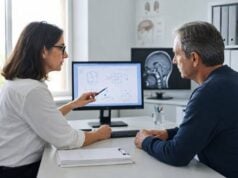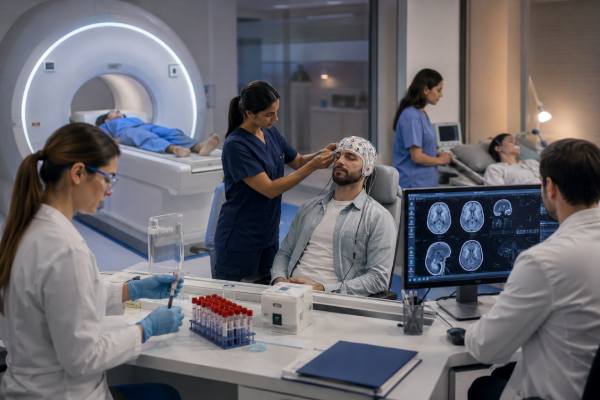
Brain-related symptoms can be unsettling because they may affect memory, mood, speech, sleep, balance, concentration, movement, or awareness. A single test rarely explains everything. Doctors usually start with the symptom pattern, timing, medical history, neurological exam, medication review, and basic health factors, then choose tests that can answer a specific clinical question.
MRI, CT, EEG, PET, sleep studies, and lab work each look at a different part of the picture. Some show brain structure. Some show electrical activity, metabolism, sleep physiology, or body-wide medical problems that can affect the brain. Understanding what each test can and cannot show makes the process less confusing and helps set realistic expectations before results come back.
Table of Contents
- What Brain Tests Can Show
- MRI and CT Brain Scans
- EEG for Brain Electrical Activity
- PET Scans and Specialized Imaging
- Sleep Studies and Brain Symptoms
- Lab Work for Cognitive and Mental Symptoms
- How Doctors Choose the Right Test
- Understanding Results and Next Steps
What Brain Tests Can Show
Brain tests are most useful when they are matched to a specific question, such as whether there is bleeding, a tumor, inflammation, seizure activity, sleep apnea, dementia-related changes, or a medical condition affecting cognition. They are less useful when ordered as a broad search for “something wrong” without a clear symptom pattern.
A brain test may look for structure, function, electrical signals, sleep patterns, or body chemistry. These categories matter because a normal result in one category does not rule out problems in another. For example, a normal MRI does not rule out seizures, sleep apnea, migraine, depression, medication side effects, or early cognitive change. A normal EEG does not rule out every seizure disorder. Normal routine blood work does not mean symptoms are imagined.
The most common brain-related tests fall into several groups:
- Structural imaging: MRI and CT look at the anatomy of the brain and surrounding structures.
- Electrical testing: EEG records electrical activity from the scalp and is often used when seizures are suspected.
- Metabolic or molecular imaging: PET scans can show patterns of brain metabolism or specific disease-related markers.
- Sleep testing: Polysomnography and home sleep apnea testing measure breathing, oxygen levels, sleep stages, movement, and sometimes brain waves during sleep.
- Laboratory testing: Blood and urine tests look for infections, endocrine problems, vitamin deficiencies, metabolic issues, inflammation, toxic exposures, medication effects, or substance-related contributors.
The same symptom can lead to different tests depending on timing and severity. A sudden severe headache, new weakness, or abrupt confusion may call for urgent imaging. Gradual memory decline may start with cognitive screening, labs, and MRI. Episodes of staring, shaking, lost time, or unexplained collapse may lead to EEG. Snoring, daytime sleepiness, morning headaches, or concentration problems may point toward a sleep study.
Testing also has limits. Many mental health conditions are diagnosed through clinical evaluation rather than by a brain scan. A scan may help rule out a tumor, stroke, hydrocephalus, or other neurological cause, but it usually cannot prove depression, anxiety, ADHD, autism, bipolar disorder, or trauma-related symptoms by itself. This is why a careful clinical interview remains central even when advanced tests are used.
MRI and CT Brain Scans
MRI and CT are the two most common brain imaging tests, but they are used for different reasons. CT is fast and especially useful in urgent settings, while MRI gives more detailed soft-tissue views and is often preferred for non-emergency evaluation.
A CT scan uses X-rays and computer processing to create cross-sectional images. It is often used when doctors need speed, such as after head injury, suspected bleeding, sudden neurological symptoms, or acute confusion. CT can quickly identify many urgent problems, including bleeding, skull fracture, large stroke, swelling, mass effect, and some tumors. Because CT is widely available and fast, it is common in emergency departments.
A brain MRI uses a strong magnetic field and radio waves rather than ionizing radiation. MRI is better than CT for many detailed brain questions, including small strokes, multiple sclerosis, inflammation, certain tumors, subtle structural abnormalities, pituitary or inner-ear region problems, and patterns of brain atrophy in memory disorders. A dedicated brain MRI explanation can be helpful when the question is about what the scan can detect and why different MRI sequences are used.
The choice is not always “which test is better.” It is “which test best fits the clinical situation.” For example, CT may be the first test for sudden severe symptoms because it can be done quickly. MRI may follow if CT is normal but symptoms remain concerning, or if the doctor needs more detail. A deeper MRI vs CT comparison can clarify why doctors may order one test first and the other later.
Sometimes contrast dye is used. CT contrast is iodine-based. MRI contrast is usually gadolinium-based. Contrast can help show blood vessels, inflammation, tumor enhancement, infection, or disruption of the blood-brain barrier. It is not needed for every scan, and doctors consider kidney function, allergy history, pregnancy status, and the diagnostic question before using it.
Preparation is usually simple. For CT, the test may take only minutes, although registration and waiting time can be longer. MRI often takes longer and requires lying still in a narrow scanner. People with certain implanted devices, metal fragments, aneurysm clips, cochlear implants, or older pacemakers may need special screening before MRI. Claustrophobia can sometimes be managed with open MRI options, calming strategies, or medication prescribed in advance.
Imaging results can include incidental findings, meaning changes found by chance that may not explain the symptoms. Common examples include mild sinus disease, age-related volume loss, nonspecific white matter changes, or small benign cysts. These findings can be alarming to read, but their significance depends on age, risk factors, exam findings, and the exact imaging pattern. The report should always be interpreted by the ordering clinician, not in isolation.
EEG for Brain Electrical Activity
An EEG is mainly used when doctors need information about the brain’s electrical activity, especially when seizures are possible. It does not create pictures of the brain and does not measure thoughts, intelligence, personality, or mental illness.
During an EEG, small electrodes are placed on the scalp with paste or adhesive. These electrodes record electrical patterns generated by groups of brain cells. The test is painless. A routine EEG often takes about 20 to 60 minutes of recording time, although the full appointment may be longer. Some EEGs include flashing lights, deep breathing, sleep, or sleep deprivation because these can make certain abnormalities easier to detect.
Doctors may order EEG for episodes such as:
- unexplained fainting, staring, shaking, or confusion;
- possible seizures during sleep;
- sudden spells of lost awareness or lost time;
- unusual movements that may or may not be epileptic;
- monitoring after serious brain injury or in intensive care;
- evaluating certain encephalopathies, which are broad disturbances of brain function.
A key point is that EEG is not perfect. A person with epilepsy can have a normal EEG between seizures. Abnormal EEG findings can also appear in people who have never had a seizure. The result must be matched to the event description, witness accounts, medical history, imaging, and sometimes video recording.
Different types of EEG are used for different questions. A routine EEG is a starting point. A sleep-deprived EEG may be ordered when a routine study is unrevealing but suspicion remains. Ambulatory EEG records over a longer period while the person goes about daily life. Inpatient video EEG monitoring can capture both behavior and electrical activity during events, which can help distinguish epileptic seizures from fainting, sleep events, movement disorders, or psychogenic nonepileptic seizures. A focused EEG test overview can help explain what the result language means.
EEG has very few physical risks. Skin irritation from electrodes can happen. The flashing-light portion may provoke abnormal electrical activity in people with photosensitive epilepsy, which is why the test is supervised. People should follow instructions about sleep, caffeine, and medications before testing, but they should not stop seizure medication unless the ordering clinician specifically tells them to do so.
EEG is powerful because it answers a question that MRI and CT cannot: what the brain’s electrical activity is doing. It is not a replacement for imaging, and imaging is not a replacement for EEG. Many neurological workups use both when symptoms suggest more than one possible cause.
PET Scans and Specialized Imaging
PET scans are specialized tests that show patterns of activity, metabolism, or molecular markers rather than ordinary anatomy. They are usually ordered by specialists when the answer is likely to change diagnosis, treatment planning, or eligibility for specific therapies.
A PET scan uses a small amount of radioactive tracer. The tracer travels through the body and is detected by the scanner. Different tracers answer different questions. In brain care, PET may be used to evaluate certain dementia syndromes, seizure surgery planning, brain tumors, inflammation, or other specialized neurological questions.
One common form is FDG-PET, which shows patterns of glucose metabolism. Areas using less glucose may suggest reduced activity. In cognitive disorders, patterns of reduced metabolism can sometimes support one diagnosis over another, such as Alzheimer’s disease, frontotemporal dementia, Lewy body disease, or other neurodegenerative conditions. PET is not usually the first step; it is often considered after history, exam, cognitive testing, labs, and MRI or CT.
Other PET scans look for disease-related proteins. Amyloid PET can show amyloid plaque burden, which is associated with Alzheimer’s disease biology. Tau PET can show patterns of tau deposition in certain settings. These tests can be helpful in selected people with cognitive impairment, especially when the diagnosis remains uncertain or when results would affect treatment decisions. They are not routine screening tests for people who feel well.
A broader PET scan for brain disorders discussion can be useful because “PET scan” is not one single test. The tracer, clinical question, and interpretation method all matter.
PET results can also be misunderstood. A positive amyloid PET scan does not automatically mean that every symptom is caused by Alzheimer’s disease, especially in older adults who may have mixed brain changes. A negative amyloid PET scan can make Alzheimer’s disease less likely as the cause of cognitive symptoms, but it does not rule out every form of dementia or every cause of memory problems.
PET involves radiation exposure, usually more than a standard X-ray but within diagnostic imaging ranges. The risk is considered in relation to the expected benefit. Pregnancy, breastfeeding, kidney function, blood sugar level for FDG-PET, and recent medications or treatments may affect preparation and timing.
Specialized imaging is most valuable when it answers a decision that cannot be answered by a simpler test. For memory loss, that may mean clarifying an uncertain diagnosis after initial evaluation. For epilepsy, it may mean localizing a seizure focus before possible surgery. For tumors, it may help distinguish active tumor from treatment effects. Used well, PET can add important information; used too broadly, it can create confusion and unnecessary worry.
Sleep Studies and Brain Symptoms
Sleep studies are brain-related tests because poor sleep can directly affect attention, mood, memory, reaction time, headaches, and daytime alertness. They are especially important when symptoms could be driven by sleep apnea, restless legs, narcolepsy, parasomnias, circadian rhythm disorders, or severe insomnia.
The most detailed test is polysomnography, often called an overnight sleep study. It records multiple body signals while a person sleeps, including brain waves, eye movements, muscle tone, breathing effort, airflow, oxygen levels, heart rhythm, body position, and limb movements. These signals allow a sleep specialist to identify sleep stages and detect breathing pauses, oxygen drops, abnormal movements, and unusual behaviors during sleep.
A polysomnography sleep study is often used when symptoms are complex, when another sleep disorder is suspected, or when home testing is not appropriate. It may also be used when a home sleep apnea test is negative or unclear despite ongoing symptoms.
Home sleep apnea testing is simpler. It usually measures breathing, oxygen level, heart rate, and sometimes body position or airflow. It can be appropriate for many adults with a high likelihood of uncomplicated obstructive sleep apnea. It is less useful when there may be central sleep apnea, significant heart or lung disease, neuromuscular weakness, severe insomnia, complex sleep behaviors, or other sleep disorders beyond obstructive sleep apnea.
Sleep apnea is a common reason for testing because it can mimic or worsen cognitive and mental health symptoms. People may report brain fog, morning headaches, poor concentration, irritability, low mood, anxiety-like symptoms, or falling asleep unintentionally. Bed partners may notice loud snoring, gasping, choking, pauses in breathing, or restless sleep. Children may show hyperactivity, behavior changes, learning problems, or poor school performance rather than obvious sleepiness.
Sleep studies can also help evaluate excessive daytime sleepiness. If narcolepsy or idiopathic hypersomnia is suspected, doctors may order an overnight sleep study followed by a multiple sleep latency test the next day. That daytime test measures how quickly a person falls asleep during scheduled naps and whether REM sleep appears unusually soon.
Preparation depends on the test. Patients may be asked to avoid caffeine or alcohol, keep a sleep diary, bring usual sleepwear, and follow medication instructions. They should not stop psychiatric, sleep, seizure, or stimulant medications without medical guidance, because medication changes can affect both safety and results.
Sleep testing is often overlooked in brain symptom workups, but it can be decisive. Treating sleep apnea, restless legs, circadian disruption, or severe sleep fragmentation can improve daytime functioning and may reduce the need for more extensive neurological testing in some people.
Lab Work for Cognitive and Mental Symptoms
Lab work looks for body-wide problems that can affect the brain, mood, energy, sleep, memory, and concentration. It rarely gives the whole answer by itself, but it can uncover treatable contributors that imaging would miss.
Common labs in brain and cognitive workups may include a complete blood count, metabolic panel, liver and kidney function, electrolytes, glucose or A1C, thyroid-stimulating hormone, vitamin B12, folate, iron studies, inflammatory markers, infection testing, medication levels, toxicology screening, and urine testing. The exact list depends on symptoms, age, medical history, medications, diet, substance use, pregnancy status, and exam findings.
For example, anemia can worsen fatigue and concentration. Thyroid disease can contribute to anxiety, depression, slowed thinking, tremor, or sleep changes. Low vitamin B12 can affect memory, sensation, balance, and mood. Abnormal sodium, calcium, liver function, kidney function, or glucose can cause confusion or mental slowing. Certain medications, sedatives, anticholinergic drugs, alcohol, cannabis, stimulants, and drug interactions can also affect cognition and behavior.
Lab work is especially important when symptoms are new, worsening, unusual for the person, or accompanied by physical changes. A person with new confusion, hallucinations, severe fatigue, weight change, weakness, fever, tremor, or falls may need medical evaluation rather than assuming the problem is purely psychological. For persistent fogginess or poor concentration, a practical blood tests for brain fog review can help frame why clinicians often start with basic labs.
In memory workups, labs do not diagnose Alzheimer’s disease or most dementias on their own. Instead, they help identify reversible or contributing problems. A person can have both a neurodegenerative condition and a treatable medical issue, so finding a low B12 level or thyroid problem does not always end the evaluation. Doctors interpret whether the abnormality is mild, severe, clinically relevant, and consistent with the symptom pattern.
Newer blood biomarker tests for Alzheimer’s disease are a different category from routine lab work. These tests may measure amyloid- or tau-related markers, such as phosphorylated tau or amyloid ratios. They are developing quickly and may be useful in specialty settings for selected patients with cognitive impairment, but they are not the same as a routine memory blood panel. Results require careful interpretation because pretest probability, age, coexisting conditions, assay performance, and the purpose of testing all matter.
Lab testing is often the least dramatic part of a brain workup, but it is one of the most practical. It can detect problems that are treatable, clarify risk, and help doctors decide whether imaging, EEG, sleep testing, cognitive testing, or referral is needed next.
How Doctors Choose the Right Test
Doctors choose brain tests by matching the test to the symptom pattern, timing, risk level, and most likely causes. The right test for sudden symptoms may be very different from the right test for slowly developing memory or attention problems.
The first decision is often whether the situation is urgent. Sudden weakness, facial droop, trouble speaking, severe new headache, seizure, major head injury, loss of consciousness, or abrupt confusion may require emergency evaluation. In that setting, CT is often used quickly, and MRI, vascular imaging, EEG, or labs may follow depending on findings.
For non-emergency symptoms, the workup is usually more stepwise. A clinician may start with history, exam, medication review, cognitive or mental health screening, and labs. Imaging may be ordered if there are red flags, neurological findings, progressive symptoms, atypical features, or concern for structural disease. Cognitive testing may be added when the main concern is memory, problem-solving, language, or daily functioning.
| Symptom pattern | Tests doctors may consider | What the tests help answer |
|---|---|---|
| Sudden severe headache or acute neurological deficit | CT, MRI, vascular imaging, labs | Bleeding, stroke, swelling, vascular problems, infection, metabolic causes |
| Episodes of shaking, staring, lost time, or confusion | EEG, video EEG, MRI, labs | Seizure activity, seizure mimics, structural causes, metabolic triggers |
| Gradual memory loss or cognitive decline | Cognitive testing, labs, MRI or CT, sometimes PET or CSF testing | Dementia pattern, reversible contributors, structural changes, disease biomarkers |
| Brain fog, fatigue, poor concentration, daytime sleepiness | Labs, sleep study, mental health screening, cognitive testing when needed | Sleep apnea, thyroid or vitamin problems, mood disorders, medication effects |
| New psychiatric symptoms with neurological concerns | Labs, toxicology, MRI or CT when indicated, EEG in selected cases | Medical, substance-related, neurological, or medication-related contributors |
Doctors also consider practical factors: availability, cost, radiation exposure, pregnancy, kidney function, implanted devices, claustrophobia, ability to stay still, and whether the result will change management. A test that sounds advanced is not automatically better. A careful exam and a targeted basic test often provide more useful information than a high-tech test ordered without a clear question.
Age also affects testing decisions. Children with developmental concerns may need hearing, vision, language, learning, autism, or ADHD evaluations before imaging. Adults with concentration problems may need assessment for sleep loss, anxiety, depression, ADHD, thyroid disease, substance use, or medication effects. Older adults with memory changes may need cognitive screening, labs, functional history from someone who knows them well, and brain imaging. For memory-specific imaging decisions, brain imaging for memory loss can help explain when MRI or PET may enter the workup.
The best testing plan is usually not a single dramatic answer. It is a sequence of decisions that narrows the possibilities while avoiding unnecessary tests. When the pattern is unclear, the most useful next step is often a clinician who can integrate symptoms across neurology, sleep, psychiatry, primary care, and general medicine.
Understanding Results and Next Steps
A brain test result is one part of the diagnosis, not the diagnosis by itself. The meaning depends on whether the finding matches the symptoms, exam, timing, and other test results.
Reports often use technical language. MRI reports may mention white matter changes, atrophy, microvascular disease, cysts, old infarcts, or nonspecific findings. CT reports may say no acute intracranial abnormality, which means the scan did not show an urgent problem visible by CT. EEG reports may describe slowing, epileptiform discharges, focal abnormalities, or normal background activity. Sleep reports may include apnea-hypopnea index, oxygen nadir, arousal index, periodic limb movement index, and sleep efficiency. Lab reports may flag values slightly outside the reference range that are not always clinically important.
The most useful questions to ask after results include:
- Does this result explain the symptoms?
- Is the finding urgent, incidental, age-related, or uncertain?
- Are more tests needed, or is monitoring appropriate?
- Should medication, sleep treatment, therapy, rehabilitation, lifestyle change, or referral be considered?
- What symptoms should prompt urgent care before the next appointment?
Abnormal results may lead to referral to neurology, sleep medicine, psychiatry, neuropsychology, endocrinology, infectious disease, or another specialty. For people who receive unexpected imaging or cognitive findings, abnormal brain scan or cognitive test next steps can help clarify why follow-up often depends on severity and clinical fit.
Normal results can also be useful. A normal CT after sudden symptoms may reduce concern for certain emergencies. A normal MRI may make tumor, major stroke, or multiple sclerosis less likely, depending on the clinical question. Normal labs may shift attention toward sleep, mental health, migraine, post-viral syndromes, medication effects, or functional neurological symptoms. Normal testing should not be used to dismiss persistent symptoms; it should help guide the next reasonable step.
Urgent evaluation matters when symptoms suggest stroke, brain bleeding, seizure emergency, infection, dangerous medication reaction, severe metabolic disturbance, or acute psychiatric crisis. Seek emergency care for sudden weakness or numbness on one side, facial droop, trouble speaking, sudden vision loss, new seizure, severe head injury, fainting with neurological symptoms, sudden “worst headache,” stiff neck with fever, severe confusion, or thoughts of self-harm or harming others. A focused ER symptoms guide can help distinguish urgent warning signs from problems that can usually start with an outpatient appointment.
The goal of brain testing is not just to find abnormalities. It is to explain symptoms accurately, rule out dangerous causes, identify treatable contributors, and guide the next step in care. The most reliable answers come from combining test results with a careful clinical evaluation and follow-up plan.
References
- Headache 2022 (Guideline)
- Use of Computed Tomography of the Head in Patients With Acute Atraumatic Altered Mental Status: A Systematic Review and Meta-analysis 2022 (Systematic Review)
- Epilepsies in children, young people and adults 2025 (Guideline)
- Updated appropriate use criteria for amyloid and tau PET 2025 (Guideline)
- Obstructive Sleep Apnea 2025 (Review)
- Alzheimer’s Association clinical practice guideline for the Diagnostic Evaluation, Testing, Counseling, and Disclosure of Suspected Alzheimer’s Disease and Related Disorders (DETeCD-ADRD): Executive summary of recommendations for primary care 2025 (Guideline)
Disclaimer
This article is for general educational purposes only and is not a substitute for professional medical advice, diagnosis, or treatment. Brain, cognitive, sleep, and mental health symptoms should be evaluated by a qualified clinician, especially when symptoms are sudden, severe, progressive, or affecting safety.
Share this article on Facebook, X, or your preferred platform to help others understand common brain tests and what they can show.