UV-C air sanitizers sit in an awkward space between solid building science and aggressive consumer marketing. The basic idea is real: the right kind of ultraviolet light can damage the genetic material of microbes and make them less able to infect people. But that does not mean every glowing gadget sold for a bedroom, nursery, or office will meaningfully reduce germ spread at home.
For most households, the real question is not whether UV-C can work in principle. It is whether a specific device can deliver enough dose, in the right place, for enough time, without creating new safety problems or distracting from simpler tools that often matter more. That is where many products fall short.
This guide explains how UV-C air sanitizers work, which types have the strongest case for home use, what their limits are, how to spot weak claims, and when ventilation and filtration should come first.
Key Facts
- Properly designed UV-C systems can inactivate airborne microbes, but performance depends on dose, airflow, and installation quality.
- Enclosed in-duct and some fan-assisted chamber systems are usually more practical for homes than open UV lamps or novelty gadgets.
- UV-C can complement cleaner indoor air, but it does not remove dust, smoke, allergens, or the particles that carry germs.
- Devices not built specifically for indoor air disinfection can expose eyes and skin to risk or add little real benefit.
- Use UV-C only as a supplement to ventilation and filtration, and focus it on the rooms or HVAC pathways where people spend the most time.
Table of Contents
- What UV-C air sanitizers actually do
- Do they work in real homes?
- Which device types make sense
- Safety issues and marketing red flags
- How to evaluate a device before you buy
- Where UV-C fits in a layered home strategy
What UV-C air sanitizers actually do
A UV-C air sanitizer is not the same thing as a standard air purifier. A purifier mainly works by capturing particles in a filter. A UV-C device works by exposing moving air to germicidal ultraviolet light, usually near the 254 nm range in traditional systems, so that viruses, bacteria, and some molds become less able to reproduce and infect.
That distinction matters. UV-C can inactivate germs, but it does not remove the particles themselves from the air. If someone coughs in a room, the aerosol particles are still physically present until they are diluted by ventilation, captured by filtration, or settle out. UV-C changes infectivity, not particle count. That is one reason it is best understood as an add-on rather than a stand-alone answer.
Performance depends on three things working together:
- enough UV intensity
- enough exposure time
- enough air mixing or controlled airflow through the disinfection zone
In a lab, those variables can be tightly managed. In a home, they are harder to predict. Faster airflow gives microbes less time under the lamp. Poorly placed bulbs may leave much of the air stream underexposed. Lamp output also drops over time, and dust on sleeves or fixtures can reduce effectiveness further.
Another point consumers often miss is that “UV in the HVAC” can mean two very different jobs. One setup aims UV-C at cooling coils and drip pans to limit biological buildup on wet surfaces. That may help maintenance and odor control, but it is not the same as disinfecting passing room air. A separate design is needed for true in-duct air treatment.
The strongest use case for UV-C is airborne risk in enclosed indoor spaces, especially where people gather for long periods or where ventilation is hard to improve. That is why the technology is more established in institutional settings than in average houses. If you are trying to lower exposure to respiratory germs at home, it helps to first understand the basics of cleaner indoor air, because UV-C is only one part of that picture.
The short version is this: UV-C is a real technology with a plausible role in homes, but it only works when the system design matches the air path. A weak lamp in the wrong place is mostly a marketing feature. A properly engineered enclosed system can be something much more useful.
Do they work in real homes?
Yes, UV-C devices can work at home, but the honest answer is narrower than most product pages suggest. The right system can reduce viable germs in moving air. The wrong one may do very little beyond making people feel protected.
What makes home use tricky is that houses are not controlled chambers. Room size, ceiling height, HVAC runtime, occupancy, doors opening and closing, window use, and furniture layout all change how air moves. That means a UV-C device that performs well in a test rig may not deliver the same result in a lived-in room.
For most households, the best-supported home applications are enclosed designs where air is forced through a predictable path. That includes some in-duct HVAC systems and some fan-assisted recirculating units that keep the UV source hidden inside a chamber. These approaches reduce the chance of direct exposure and make it easier to estimate whether enough dose reaches the moving air.
Even then, results are rarely magical. UV-C is most helpful when airborne spread is the main concern, such as during cold, flu, RSV, or COVID surges, or when a household member is ill and must share indoor space. It may also make more sense in homes with limited window ventilation, crowded living arrangements, or long hours spent in one shared room.
What about tiny desktop devices, plug-ins, or silent gadgets with no meaningful fan? That is where skepticism is wise. If air is not actively moving through a treatment zone, only a small fraction of room air may ever get enough exposure. A product can technically contain UV-C and still have little real-world effect on room-level germ reduction.
Another practical issue is that UV-C does not address everything people care about. It will not solve smoke, dust, pet dander, or pollen. It is also not a substitute for mechanical filtration when the goal is to lower the total particle burden. In many homes, a well-sized HEPA unit will provide a clearer and more measurable benefit than a questionable UV gadget, especially if your concern includes both germs and irritants. That is why it helps to compare UV-C with HEPA air purifiers before buying either.
So do UV-C devices work at home? Some do, under the right conditions. But effectiveness depends less on the phrase “UV-C” on the box and more on whether the system has been engineered for real airflow, sufficient dose, and safe continuous use. That is a much higher bar than most consumer marketing admits.
Which device types make sense
Not all UV-C products belong in the same conversation. Some have a reasonable home use case. Others are hard to justify once you look past the sales language.
The most sensible categories for home use are usually these:
- In-duct HVAC air-treatment systems
These are installed inside ductwork so air passes by the lamp during circulation. In theory, this is one of the cleanest ways to apply UV-C because the treatment zone is enclosed and the airflow path is known. In practice, results depend on the lamp output, air speed, lamp placement, and how often the HVAC fan runs. If the fan runs only briefly, the system gets fewer opportunities to treat indoor air. - UV-C coil irradiation systems
These are often sold as HVAC UV upgrades. They can help keep coils and drain pans cleaner, which may support system hygiene and airflow over time. But they are often oversold as whole-home germ solutions. Their main job is surface control inside the unit, not robust inactivation of airborne microbes moving through the house. - Enclosed recirculating room units
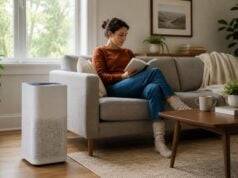
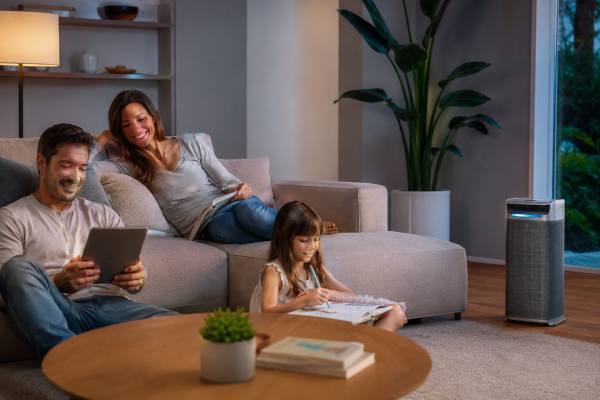
These devices pull room air through a sealed chamber that contains UV-C lamps, and sometimes a filter as well. When designed well, they combine more predictable air handling with lower exposure risk. For many homes without central HVAC upgrades, this may be the most practical UV-C format. - Upper-room UV systems
These are mounted high and aim light into the upper air layer above people’s heads. They can be effective in larger shared spaces with good air mixing, but they are usually a better fit for schools, clinics, waiting areas, or other group settings than for a typical living room or bedroom. Installation quality matters a great deal.
The weakest categories are often the ones marketed most aggressively:
- open-lamp gadgets for occupied rooms
- handheld wands
- tiny USB or plug-in units
- products that mention UV but give no airflow, chamber, or dose details
Some of these may disinfect small surfaces under ideal conditions, but that is different from meaningful room air sanitation. Others are simply too small or too weak to treat enough air to matter.
You should also be cautious with products that bundle UV-C with ionization or other add-ons. In many cases, the simpler solution is better. If a product leans heavily on claims about charged particles, activated clusters, or “mountain fresh” chemistry, it may be worth reading about ionizers before assuming the combination is an upgrade.
A good rule is that the more a product behaves like a real air-handling system, the more credible it tends to be. The more it resembles a novelty gadget, the less likely it is to change household infection risk in a meaningful way.
Safety issues and marketing red flags
UV-C is useful precisely because it can damage biological material. That is also why safety cannot be treated as an afterthought. Direct exposure to conventional germicidal UV-C can injure eyes and skin. A home device should therefore make accidental exposure difficult, not merely unlikely.
The safest consumer designs are enclosed systems that keep the lamp inside a duct, chamber, or shielded fixture. Products that expose a bare lamp into an occupied room deserve far more scrutiny. Safety interlocks, sealed housings, and clear installation instructions are good signs. Vague claims about being “safe around family and pets” without explaining why are not.
Another issue is ozone. Some UV devices can generate ozone depending on wavelength and design. Ozone is not a bonus cleaning feature. Indoors, it is an irritant. If a seller treats ozone as a desirable side effect, that is a reason to walk away. Good product documentation should clearly state whether ozone is produced and under what operating conditions.
Far-UVC products add another layer of complexity. You may see 222 nm systems promoted as the future of safe occupied-space disinfection. The concept is promising, but this is still a more specialized and less settled area than traditional enclosed 254 nm systems. For home buyers, that means caution is sensible. A premium price and futuristic language are not the same thing as mature household evidence.
Watch for these common red flags:
- “Kills 99.9 percent of germs” with no test method, no chamber conditions, and no mention of airflow
- no stated lamp type, wavelength, or maintenance schedule
- no warning language about eye and skin exposure
- no discussion of room size, fan speed, or air circulation
- no indication of whether the unit treats surfaces, coils, or room air
- claims that it replaces ventilation, filters, or other precautions
Maintenance matters too. A UV-C system is not a buy-it-and-forget-it product. Lamps age, sleeves collect dust, fans degrade, and performance can drift long before a unit fully stops working. Some systems need periodic lamp replacement even if the light still appears to be on.
Indoor air comfort still matters alongside germ control. Very dry air can irritate the nose and throat, which is one reason broader home air quality choices still count. In winter especially, the target is not only disinfection but also a room environment that supports easier breathing and less irritation, including attention to indoor humidity.
A safe UV-C system should feel boring in the best possible way: enclosed, well documented, properly installed, and easy to maintain. If a device looks dramatic but explains little, that is usually not a good sign.
How to evaluate a device before you buy
If you are considering a UV-C air sanitizer, shop like you would for a serious appliance, not a wellness accessory. The goal is to figure out whether the device can actually treat enough air, safely, in your real space.
Start with these questions:
- What kind of UV-C system is it?
Ask whether it is in-duct air treatment, coil irradiation, an enclosed room unit, or an upper-room fixture. If the seller cannot explain this clearly, that alone is revealing. - How much air does it treat?
Look for airflow data such as cubic feet per minute, room size guidance tied to real operation, or HVAC compatibility details. A UV lamp without airflow information tells you very little. - Is the UV source enclosed?
For most homes, enclosed is the safer default. Open-lamp products for occupied rooms should be approached carefully. - What maintenance is required?
Check lamp replacement intervals, cleaning instructions, and whether performance drops before visible failure. Ongoing cost matters. - Does the product publish meaningful test information?
Better manufacturers explain what organism or surrogate was tested, under what airflow, at what dose, and in what type of chamber. Weak manufacturers lean on phrases like “lab proven” without details. - Does it create ozone or other byproducts?
This should be answered plainly in the specification sheet, not buried in a FAQ. - Who should install it?
In-duct and upper-room systems usually deserve professional installation. A poor install can shrink the benefit and increase risk at the same time.
You should also match the device to your reason for buying it. If your main concern is seasonal respiratory spread in a shared family room, a fan-driven enclosed unit or a properly designed HVAC solution may be worth considering. If your main concern is pet dander, wildfire smoke, or dust, UV-C is not the first tool to prioritize.
Price is another clue. Extremely cheap UV-C products often cut corners in shielding, airflow, lamp quality, or documentation. Extremely expensive ones can also disappoint if their claims are broad but their specifications are thin. Value comes from transparent engineering, not from dramatic wording.
Finally, be careful not to confuse “used in hospitals” with “effective in my house.” Clinical spaces often have trained installers, monitored maintenance, different ceiling heights, and higher-risk use cases. Home performance needs home-specific realism.
The best buying mindset is simple: demand specifics. Ask what air path is being treated, how long microbes are exposed, how the system stays safe in occupied spaces, and what evidence supports the exact design you are paying for.
Where UV-C fits in a layered home strategy
Even a good UV-C device should sit inside a broader clean-air plan. For most homes, the order of operations matters more than the excitement of any single technology.
Start with the basics that usually give the biggest return:
- improve outdoor air exchange when weather and air quality allow
- run existing HVAC fans appropriately
- use higher-efficiency filtration when your system can handle it
- add a portable HEPA unit in the room where people gather most
- reduce crowding and time spent in poorly ventilated rooms when someone is sick
Only after those steps does UV-C usually become worth serious consideration. That is not because UV-C is ineffective. It is because filtration and ventilation are often easier to size, easier to verify, and more broadly useful. They reduce particles from many sources, not just infectious ones.
Where UV-C can add value is in situations where you want another layer without relying only on open windows or large standalone purifiers. Examples include homes with one central HVAC system serving many rooms, households caring for an ill family member, or spaces that stay occupied for long stretches with limited fresh-air options.
The right way to think about UV-C is not “this will sanitize my home.” It is “this may lower the viability of some airborne microbes as part of a layered indoor air plan.” That framing is more realistic and usually leads to better buying decisions.
It also helps prevent a common mistake: investing in a complex gadget while neglecting the low-tech steps that matter every day. If your room is stuffy, your filter is overdue for replacement, and no one knows whether the HVAC fan is running consistently, adding UV-C first is rarely the best move. In many households, the practical question is still whether ventilation or disinfection deserves priority, and the answer is often ventilation plus filtration first.
During high-risk periods, people may also need layers that do not depend on room engineering alone. In shared indoor settings or while caring for someone contagious, there is still a place for strategies like mask use in respiratory virus season when the situation calls for it.
So, do UV-C devices work at home? Some absolutely can. But the best home outcome comes from using them in the right role: supplemental, enclosed, and matched to a broader plan for cleaner indoor air rather than sold as a stand-alone shield against germs.
References
- The impact of heating, ventilation, and air conditioning design features on the transmission of viruses, including the 2019 novel coronavirus: A systematic review of ultraviolet radiation – PMC 2022 (Systematic Review)
- A Systematic Review on the Application of Ultraviolet Germicidal Irradiation to HVAC Systems 2023 (Systematic Review)
- About Germicidal Ultraviolet (GUV) | Ventilation | CDC 2024 (Guidance)
- What is Upper-Room Ultraviolet Germicidal Irradiation (UVGI)? What is HVAC UVGI? Can either be used to disinfect the air and help protect myself from COVID? | US EPA 2025 (Guidance)
- Germicidal UV Light and Incidence of Acute Respiratory Infection in Long-Term Care for Older Adults: A Randomized Clinical Trial – PMC 2025 (RCT)
Disclaimer
This article is for general educational purposes and is not medical, engineering, or product-safety advice. UV-C systems vary widely in design and risk. If you are choosing a device for a home with infants, older adults, people with lung disease, or anyone who is immunocompromised, it is wise to discuss infection-risk reduction with a clinician and installation safety with a qualified HVAC or indoor-air professional. Do not use exposed UV devices in occupied spaces unless the system is specifically designed and installed for that purpose.
If this guide helped you, please share it on Facebook, X, or another platform you use so more people can make better decisions about cleaner indoor air.