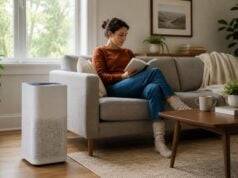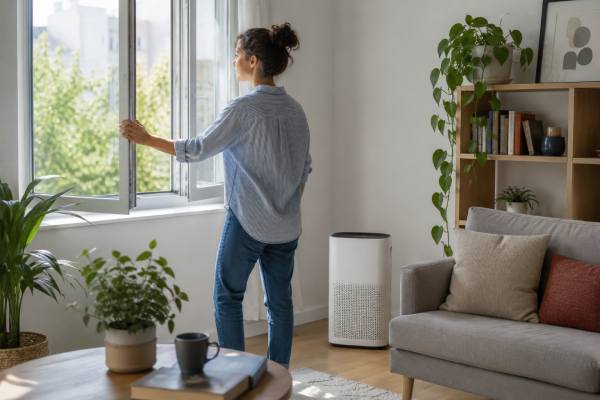
Air ionizers are easy to understand in advertising and much harder to understand in real life. The pitch is attractive: a compact device that charges particles, freshens the air, and may even help reduce germs without the noise or bulk of a traditional filter. For people worried about colds, flu, allergens, wildfire smoke, or stale indoor air, that kind of promise can sound like a smart shortcut. But air ionizers sit in a tricky category. Some are marketed as air purifiers, some as germ fighters, and some as low-maintenance alternatives to HEPA filters. The problem is that the science and the safety questions do not line up neatly with those claims. In some settings, ionization can affect airborne particles. That is not the same as proving meaningful protection from infection in occupied rooms. Some devices may also generate ozone or other reactive byproducts, which changes the risk-benefit picture quickly. The useful question is not whether ionizers sound high-tech. It is whether they actually help in the ways people hope, and whether safer options do the job better.
Essential Insights
- Air ionizers can change how particles behave in the air, but that does not guarantee strong real-world germ control in occupied rooms.
- The biggest concern is not only whether they work, but whether they create ozone or other unwanted byproducts while running.
- Ionizers are generally less dependable than source control, ventilation, and well-sized HEPA filtration for everyday indoor air improvement.
- Devices that intentionally generate ozone should not be used in occupied spaces, even when marketed as purifiers.
- If your goal is cleaner indoor air, prioritize a properly sized HEPA unit with a known CADR and use it continuously in the room that matters most.
Table of Contents
- What Air Ionizers Claim to Do
- How Ionizers Actually Work
- Do They Help With Germs
- The Ozone and Byproduct Problem
- What Works Better at Home
- How to Choose More Safely
What Air Ionizers Claim to Do
Air ionizers are usually sold on a simple idea: charged air is supposed to help clear the room. Some products say they reduce airborne germs. Others focus on smoke, dust, pet dander, odors, or “fresh” feeling air. A few blur all of these together and imply that ionization is a broad indoor-health upgrade. That framing is part of the problem. It mixes several different goals that should be judged separately.
If your goal is fewer airborne particles, the relevant question is whether the device meaningfully lowers particle concentration in a real room. If your goal is fewer infections, the question is even stricter: whether the device reduces exposure in a way that matters for illness risk, not just under controlled lab conditions. If your goal is less odor, that raises yet another issue, because technologies that modify gases or odors can also create secondary chemicals. Air-cleaning claims sound similar on a product page, but they do not all mean the same thing.
Ionizer marketing also benefits from vagueness. Words like “purify,” “sanitize,” “freshen,” and “neutralize” sound scientific without telling you what was actually tested. Was the device studied in a small sealed chamber or in a furnished bedroom with people coming and going? Did it reduce live microorganisms in a test rig, or did it simply make particles settle out faster? Was the result measured at the machine or across the whole room? These details matter, yet they are often missing from consumer-facing claims.
Another complication is that not all ionizer devices are the same. Some are stand-alone ionizers that release charged ions into the air. Some are electrostatic systems that combine ionization with particle collection. Some are built into larger “air purifier” products that also contain filters, carbon media, UV components, or photocatalytic features. When a device performs well, it is not always clear which part of the design deserves the credit. That makes comparisons difficult, especially when one product is mostly an ionizer and another is really a filter-based cleaner with ionization added on top.
This is why consumers often end up asking the wrong question. “Do ionizers help with germs?” sounds straightforward, but it lumps together particle behavior, microbial viability, ozone risk, and real-world exposure reduction. A better framing is more practical: what problem are you trying to solve indoors, and does ionization solve that problem more safely and more reliably than conventional filtration? That shift matters because many people who shop for ionizers would actually be better served by clearer guidance on HEPA air purifiers or by broader indoor-air strategies such as cleaner indoor air through ventilation.
Once the claims are separated from the actual goals, air ionizers become easier to judge. They are not magic, not automatically useless, and not interchangeable with a true filter. They are a narrower technology with narrower strengths and more caution flags than the marketing usually suggests.
How Ionizers Actually Work
Air ionizers work by giving particles in the air an electrical charge. Once particles are charged, a few things can happen. They may clump together, making them heavier. They may be drawn toward oppositely charged collection plates inside certain devices. Or they may stick more readily to nearby surfaces such as walls, floors, furniture, or curtains. This is the key mechanical point that often gets lost in marketing: changing particle behavior is not the same as removing those particles from the indoor environment in a clean, controlled way.
That distinction is important because a HEPA filter physically captures particles as air passes through the filter media. An ionizer may instead encourage particles to leave the breathing zone by settling out or sticking elsewhere. In theory, that can lower airborne concentration. In practice, the effect depends on room size, airflow patterns, particle type, humidity, where the device is placed, whether there is actual collection built into the unit, and how long the device runs. It also means some of the “cleaning” can end up as more residue on surfaces rather than removal into a filter that gets replaced.
This is one reason ionizers can look more impressive in laboratory tests than in ordinary rooms. In a controlled chamber, with fixed air movement and known particle loads, it is easier to show a change in measured concentration. Real homes are messier. Doors open, people move, pets stir up dust, HVAC systems cycle, and outdoor particles keep entering. Performance in that setting can be much less predictable. Even professional guidance on air cleaning now stresses that in-room effectiveness and safety should not be assumed from narrow laboratory testing alone.
Another practical issue is that many consumers use the word ionizer to describe several related technologies that do different things. Stand-alone negative ion generators are not the same as electrostatic precipitators, and neither is identical to a filter device with an optional ionizing feature. Some electrostatic systems can be fairly good at particle capture under the right conditions. But once ionization is marketed as a broad germ or air-quality solution, the complexity gets buried under a simpler story than the technology deserves.
The mechanism also helps explain why claims about germs are tricky. If the device mostly changes how particles move or deposit, that is different from directly inactivating viruses or bacteria. Even if some microorganisms attached to particles are removed from the air more quickly, that does not automatically prove meaningful infection control in occupied settings. It may reduce some airborne load. It may also create a misleading sense that the room is being disinfected. Those are not the same outcome.
This is why ionizers make more sense as a particle-management technology than as a first-choice infection-control strategy. And even then, the question is whether they outperform safer, simpler approaches. For many homes, a device that relies on particle capture through a true filter is easier to understand, easier to evaluate, and less likely to create side effects. The mechanism of ionization is real. The consumer leap from that mechanism to strong germ protection is where things become far less certain.
Do They Help With Germs
The most honest answer is: sometimes under controlled conditions, but not reliably enough to make ionizers the best everyday choice for germ control at home. That may sound cautious, but it matches the actual problem. Air ionizers can reduce some airborne particles or alter how they move. A few studies suggest they may lower airborne concentrations of certain test microorganisms or viral surrogates in chambers or highly controlled environments. That is the strongest part of the case. But the step from “can affect airborne microorganisms in a test setup” to “helps protect families from respiratory infection in real occupied rooms” is much bigger than product pages imply.
This gap matters because infection risk is not determined by particle counts alone. It depends on exposure time, room size, occupancy, speaking volume, ventilation rate, pathogen type, humidity, mask use, and how air actually circulates through the space. A device that reduces airborne material near itself may not change the overall risk very much if the room is poorly ventilated or if air is not moving effectively through the device’s area of influence. That is why public-health and engineering guidance tends to emphasize equivalent clean airflow, ventilation, and proven filtration rather than relying on attractive single-technology claims.
There is also an important difference between inactivation and removal. Some technologies aim to inactivate microbes; others mainly remove particles from circulation. Ionizers often live in a gray zone in consumer messaging, where the device is talked about as if it “kills germs” when its more realistic contribution may be altered deposition or partial concentration reduction. Those are not trivial differences. A device that encourages particle settling may reduce what is floating in the air right now, but settled material is still in the environment and may later be disturbed.
Another reason to be careful is that performance is highly device-specific. One ionizer may show measurable chamber results, another may do very little, and a third may combine several technologies that make the overall effect hard to interpret. This is exactly why some technical reviews conclude that indoor air-cleaning performance should not be assumed from laboratory conditions alone and why international organizations have generally been more comfortable recommending ventilation and HEPA-based cleaning than ionizer-led solutions.
For people worried about respiratory viruses, the practical takeaway is simple. If the goal is lower exposure to infectious aerosols, the most dependable tools are still source control, ventilation, filtration, and, when appropriate, masking. Articles on when masks help most and why ventilation often matters more than surface disinfection are often more useful than shopping by buzzwords like ion, plasma, or active oxygen.
So do air ionizers help with germs? They may in some circumstances help reduce airborne particle burden, and that could have limited relevance to germ exposure. But they are not the clearest, safest, or best-supported option for most people trying to improve infection-related indoor air quality. That is a much narrower answer than the marketing promises, but it is also the answer that fits real-world use better.
The Ozone and Byproduct Problem
The biggest reason air ionizers deserve caution is not that they never do anything. It is that some of them may do things you do not want. Certain ionizers, electrostatic devices, plasma air cleaners, and related technologies can generate ozone or other reactive byproducts. Ozone is a lung irritant. That point is not controversial, and it changes the consumer equation immediately. A device marketed as cleaning the air should not worsen the air you breathe while occupied.
This is where some confusion starts. Not every product called an ionizer is an ozone generator, and not every electronic air cleaner emits problematic amounts of ozone. Some devices are tested to low-ozone standards. But the broader category still deserves caution because ionization-based and electronically active technologies can vary widely in actual emissions, especially over time, with wear, or under different operating conditions. A product being sold as modern or “chemical-free” does not guarantee that it avoids harmful secondary compounds.
Another issue is that ozone is not the only concern. Reactive technologies can also interact with chemicals already present indoors. When ozone reacts with indoor compounds, it can create additional pollutants rather than simply disappearing harmlessly. That makes the safety question broader than a single output number on a specification sheet. Even when a device is not marketed as an ozone generator, the potential for byproducts is part of why technical and public-health guidance tends to treat these technologies more cautiously than simple filtration.
This is also why intentional ozone generators deserve an especially clear warning. Devices designed to produce ozone should not be used in occupied indoor spaces. Claims that ozone at ordinary indoor levels will safely remove germs or odors are not a good basis for home use. If a technology needs harmful concentrations to work as advertised, that is not a consumer solution. It is a red flag.
For people with asthma, allergic airways, chronic cough, COPD, or other breathing sensitivity, this matters even more. An air-cleaning device that might irritate the respiratory tract is already working against the goal. That is one reason discussions of allergy-sensitive airways and indoor triggers often point people away from devices that add reactive substances to room air.
A safer mental model is this: whenever an air-cleaning technology changes air chemistry rather than simply moving air through proven filter media, the burden of proof should go up, not down. You should want stronger safety evidence, more standardized testing, and less reliance on glowing testimonials. If the product claims to “neutralize,” “oxidize,” or “actively destroy” contaminants in the room air itself, that should make you more skeptical, not more impressed.
The best consumer habit is simple. Avoid devices that intentionally produce ozone. Be cautious with ionizers and other electronic air cleaners unless their ozone emissions and safety profile are clearly tested. And remember that “fresh-smelling” air is not the same as safer air. Sometimes it is the opposite.
What Works Better at Home
For most homes, better alternatives are not mysterious. They are source control, ventilation, and filtration. That order matters. The most effective way to improve indoor air is often to reduce the pollutant source first. If smoke is entering from outdoors, limit infiltration and clean the indoor air. If cooking is filling the home with particles, use a vented range hood or improve ventilation. If the issue is a sick person sharing space, reducing close exposure, improving airflow, and cleaning the air continuously matter more than buying the most futuristic-looking device on the shelf.
Ventilation is one of the most underused tools because it feels too ordinary to be impressive. But bringing in cleaner outdoor air when conditions allow, or improving mechanical ventilation with filtration, can lower indoor pollutant and pathogen concentration without relying on questionable chemistry. That is especially relevant for respiratory virus season and crowded shared spaces. It is also why articles on ventilation and airborne viruses are often more valuable than product-specific hype.
When a portable device is needed, well-sized HEPA filtration is usually the clearest option. HEPA cleaners physically capture particles, do not rely on charging room air, and can be compared more transparently using room-size guidance and CADR. They are not perfect. They do not fix moisture problems, eliminate every gas, or replace ventilation. But they are easier to evaluate and are generally more defensible than ionizers for particles, allergens, smoke, and some airborne infection-reduction strategies.
If the concern is germs specifically, that still does not make ionizers the best choice. In most homes, a properly sized HEPA cleaner running long enough in the right room is more predictable than an ionization feature with ambiguous real-world effect. This is why guides on HEPA filters and virus-related claims tend to come back to the same basics: size the device correctly, run it consistently, and do not expect it to solve every air-quality problem by itself.
There are also times when none of these devices is the real answer. If a home has mold from a moisture problem, a purifier will not fix the source. If the room is stuffy because ventilation is poor, a device may help partially but not completely. If indoor irritation is being driven by smoking, vaping, solvents, or combustion, removing the source matters more than adding a gadget. This is the same logic behind why vaping-related air concerns and mold-related problems need source-focused solutions first.
The best alternatives are better not because they are glamorous, but because they are more direct. They reduce exposure through dilution, capture, or removal rather than hoping particles behave differently enough to make the room safer. For most people, that is the standard worth choosing.
How to Choose More Safely
If you are shopping for indoor air cleaning, the smartest move is to decide your main goal first. Are you dealing with allergens, wildfire smoke, shared air during respiratory virus season, pet dander, odors, or general stuffiness? Once the goal is clear, product selection gets easier and the marketing loses some of its power.
A practical buying checklist looks like this:
- Prefer source control and ventilation first.
Fix what is causing the pollution where possible before relying on a machine to clean it after the fact. - For particle removal, choose filtration you can understand.
A portable cleaner with a known CADR and appropriate room-size rating is usually easier to evaluate than a device whose main selling point is ionization. - Avoid products that intentionally generate ozone.
This is not a minor caution. It is one of the clearest no-go categories for occupied rooms. - Be cautious with electronic features that sound impressive but are hard to verify.
Words like plasma, active oxygen, purifier, sanitizer, or ion cloud should make you look for standardized safety and performance data, not less. - Check whether the device has independent ozone-emission testing.
Low-ozone labeling matters more than brand storytelling. - Match the unit to the room.
Even a good air cleaner underperforms when the room is too large or the unit is used only occasionally.
Maintenance matters too. A filter that is never changed, a dirty collection plate, or a device that is placed behind furniture will not perform as intended. Noise also matters more than people think. A machine that is technically effective but too loud to run consistently is functionally less useful than a quieter unit you will actually keep on.
There is also a psychological trap worth avoiding: do not confuse complexity with quality. Some of the safest, most reliable devices have simpler designs. A well-sized filter-based cleaner may look less innovative than an ionizer with glowing language and multiple modes, but the simpler machine may still be the better choice. The more a device depends on vague room-wide chemistry or on proprietary technology that is difficult to compare across brands, the more cautious you should become.
For most households, the safest conclusion is this: if your main concern is germs, allergens, smoke, or particles, start with ventilation and filtration. Use ionizers only cautiously, if at all, and do not assume they are interchangeable with HEPA cleaning. If an ionizing feature is optional on a purifier, turning it off is often the simplest way to lower risk while still using the filter function. That one small decision may do more for peace of mind than any amount of marketing copy ever will.
References
- Guide to Air Cleaners in the Home | US EPA 2026
- Ozone Generators that are Sold as Air Cleaners | US EPA 2025
- Air Cleaning Devices for the Home 2020
- ASHRAE Position Document on Filtration and Air Cleaning 2024
- A Review of Selected Types of Indoor Air Purifiers in Terms of Microbial Air Contamination Reduction 2022 (Review)
Disclaimer
This article is for educational purposes only and is not medical advice, diagnosis, or treatment. Indoor air technologies vary widely in safety and performance, and a product marketed for germs or purification may not be appropriate for every home or health condition. Seek qualified advice if you have severe asthma, significant indoor mold or smoke exposure, serious respiratory disease, or questions about safer air cleaning in a high-risk setting.
If this article helped you, please share it on Facebook, X, or any platform you prefer.