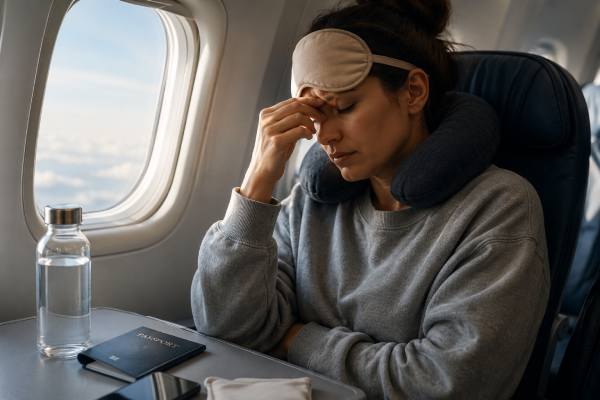
Jet lag can feel like more than simple tiredness. After a long flight across time zones, many people notice poor sleep, brain fog, digestive upset, irritability, and a nagging sense that their body is not coping well. That impression is not imaginary. Jet lag creates a temporary mismatch between your internal clock and the local day, and that mismatch affects more than alertness. It can alter sleep quality, appetite, stress signals, and the timing of immune activity, all at once.
That matters because travel often piles on other strains too: crowded airports, irregular meals, low cabin humidity, limited movement, and close contact with people carrying respiratory viruses. In other words, the problem is rarely jet lag alone. This article explains why travel can leave you feeling more vulnerable, what makes some trips harder than others, and which practical strategies can help you recover faster and protect your defenses while you are away.
Quick Overview
- Jet lag can temporarily disrupt sleep, stress hormones, appetite, and immune timing, which may leave you feeling more run down after travel.
- Eastward trips are often harder because advancing the body clock is usually more difficult than delaying it.
- Travel risk is not only about circadian disruption; crowding, poor sleep, alcohol, dehydration, and missed routines can add to the strain.
- Melatonin, bright light timing, hydration, and earlier schedule shifts can help, but they work best when matched to the direction of travel.
- If symptoms are severe, last well beyond the expected adjustment period, or keep happening after routine trips, a medical review may be worth it.
Table of Contents
- Why Jet Lag Affects Immunity
- Why Eastward Travel Feels Harder
- Travel Stress Adds More Exposure
- What to Do Before Departure
- What Helps After You Land
- When Jet Lag Is Not the Whole Story
Why Jet Lag Affects Immunity
Jet lag is usually described as a sleep problem, but that is only part of the story. Your body runs on a circadian timing system that helps coordinate sleep, alertness, body temperature, digestion, hormone release, and immune activity across the day. When you cross several time zones quickly, your environment changes faster than your internal clock can adapt. The result is temporary circadian misalignment. You may be expected to sleep, eat, and function on the new local schedule while parts of your body are still operating on the old one.
That matters for immunity because immune defenses do not stay flat across the day. Different immune cells, inflammatory signals, and repair processes rise and fall according to timing cues such as light exposure, food intake, activity, and sleep. When that rhythm becomes disorganized, the body can drift into an unhelpful mix of poor-quality sleep, higher stress signaling, and weaker recovery. If you want a broader explanation of how timing affects defense, the connection between circadian rhythm and immunity is a useful starting point.
Sleep loss is one of the most immediate pathways. Many travelers lose sleep the night before a trip, sleep badly in transit, then struggle again after arrival. Even short-term sleep restriction can change inflammatory signaling, reduce how restored you feel, and make ordinary stressors feel heavier. That is one reason people often say they are “getting sick after travel” even before a clear infection appears. The body may be reacting first to sleep debt, circadian strain, and accumulated stress. This is also why the relationship between sleep and immunity matters so much in travel planning.
Jet lag can also disturb appetite, bowel habits, and meal timing. That may sound secondary, but digestive rhythm is part of whole-body recovery. Travelers often go from regular meals to airport snacks, long fasting windows, alcohol, and late-night eating. For some, constipation, bloating, reflux, or low appetite follow. None of those issues alone defines immune weakness, but together they can make a traveler feel less resilient, especially after a long-haul trip.
Stress chemistry adds another layer. Airports, delays, lost sleep, unfamiliar environments, work pressure, and social demands all increase the mental load. In that context, jet lag is not merely tiredness. It is a timing injury layered onto a travel stress response. That does not mean every traveler becomes immunocompromised. It does mean the body has to work harder to re-establish order.
The practical point is simple: jet lag weakens defenses mostly by disturbing the systems that help immunity stay coordinated. You do not need to “boost” anything dramatically. You need to reduce mismatch, protect sleep, and make recovery easier.
Why Eastward Travel Feels Harder
Most people notice that some trips feel much worse than others, even when the flight time is similar. Direction is a big reason. Eastward travel is usually harder than westward travel because it asks the body to advance its clock, meaning you need to fall asleep and wake earlier than your internal rhythm prefers. Westward travel usually asks you to delay the clock, which is often easier.
In everyday terms, staying up later is usually simpler than forcing yourself to fall asleep much earlier than usual. That is why a flight from New York to London often feels rougher than a flight from London to New York, even when both involve a major time shift. Eastward travel is more likely to produce that familiar combination of nighttime insomnia and daytime sleepiness. If you already struggle with irregular schedules, an evening chronotype, or poor baseline sleep, the effect can feel stronger. People with work patterns that already challenge their timing system, such as rotating shifts, often recognize the overlap with immune support for shift workers.
The number of time zones matters too. Crossing two or three can be disruptive, but larger shifts tend to produce more noticeable symptoms and longer recovery. Some people adapt in a couple of days, while others need nearly a day per time zone, especially after eastward trips. Age, previous sleep debt, light exposure, alcohol intake, and trip length all influence how quickly the body resynchronizes.
There is also a useful distinction between jet lag and social schedule disruption. A short-haul work trip with early alarms, late dinners, and heavy meetings may leave you exhausted even without major time-zone change. That pattern resembles the logic behind social jet lag and immunity, where the problem is not distance traveled but the repeated mismatch between biological timing and imposed schedules. In practice, many travelers experience both: true jet lag plus social jet lag layered on top.
Meal timing and light exposure can either help or hurt. If you land in a new time zone and immediately spend the day in dim indoor spaces, nap for hours, eat at odd times, and use bright screens late into the night, adaptation often drags. By contrast, well-timed daylight, earlier or later meals, and a more deliberate sleep schedule can help the body shift faster.
This section matters because direction changes the strategy. A plan that helps on a westbound trip may be wrong for an eastbound one. That is why generic travel advice often feels disappointing. Jet lag recovery works better when it respects the direction of travel, the size of the time change, and the traveler’s usual habits rather than offering one rule for every trip.
Travel Stress Adds More Exposure
Jet lag can weaken how resilient you feel, but travel itself brings additional pressures that raise the chance of getting run down. This is important because many people blame everything on the time change when the true picture is broader. A long trip combines circadian disruption with environmental exposure, decision fatigue, crowding, dry air, disrupted routines, and often less-than-ideal food and sleep.
Respiratory exposure is the most obvious factor. Airports, immigration lines, hotel shuttles, conference venues, and planes put people into close indoor contact for long periods. That does not mean travel guarantees infection, but it does increase the number of opportunities for viruses to spread. For higher-risk situations, practical measures still matter, and they overlap with the logic behind travel immune support and when masks help most.
Then there is the cabin environment. Low humidity on flights commonly causes dry eyes, a dry nose, or throat irritation. That discomfort does not mean your immune system has failed, but it can make your airways feel less comfortable and more irritated, especially on long-haul trips. Add low fluid intake, salty snacks, alcohol, and extra coffee, and many travelers arrive feeling depleted. Even mild dryness and underhydration can make recovery feel slower and sleep feel worse.
Behavior changes matter just as much as exposure. People often eat less protein, fewer plants, and more ultra-processed convenience food while traveling. They move less during transit, then try to compensate with stress and caffeine. Some drink to sleep on the plane, but alcohol can fragment sleep rather than restore it. Others rely on repeated caffeine late in the day, which can make the next local bedtime harder. In other words, travel habits often amplify the biological confusion already created by the time shift.
Psychological load is another underestimated piece. Work travel, family visits, competition, public speaking, and unfamiliar sleeping environments all add strain. The body does not neatly separate emotional stress from physical stress. A traveler who slept poorly, ate erratically, rushed through airports, and arrived anxious for a major event may feel “ill” before any actual infection develops.
This is why smart prevention is usually layered, not magical. It is less about one supplement and more about reducing the pileup. Protect sleep where you can. Reduce unnecessary alcohol. Hydrate steadily. Move during long travel days. Limit close exposure when risk is high. Keep food regular enough to anchor the day. When people do these things consistently, they often feel a clear difference, even if the trip itself is still demanding.
What to Do Before Departure
The best time to manage jet lag is before you board. Once you are already exhausted, overstimulated, and hungry in a different time zone, every good decision becomes harder. A modest amount of preparation can reduce both the symptoms and the recovery time.
Start with sleep. The biggest mistake many travelers make is beginning a long trip already sleep deprived. If possible, protect the two or three nights before departure. That alone will not prevent jet lag, but it reduces the “double hit” of pre-trip sleep loss plus circadian disruption. For people who often arrive drained, the basics in immune support when flying are often more useful than any last-minute remedy.
For trips across several time zones, it can help to shift your schedule gradually. If you are flying east, try moving bedtime and wake time a bit earlier for a few days. If you are flying west, shift them later. Even a modest adjustment can make the new local schedule feel less abrupt. Meal timing can move with sleep timing. Eating slightly earlier or later in the days before departure can reinforce the shift.
Hydration should begin before the airport, not after landing. Travelers often show up underhydrated, then rely on coffee, alcohol, or whatever is easiest to find in the terminal. A better pattern is steady fluid intake through the day before travel and during transit. This does not require obsessing over liters. It means paying attention before thirst becomes obvious and being aware that long travel days often suppress normal cues. The broader link between hydration and immunity is one reason this matters.
Food planning also helps more than people expect. Aim for a normal, satisfying meal before a long journey rather than starting on an empty stomach and improvising later. Pack food that supports steady energy, such as fruit, nuts, yogurt if practical, sandwiches, oats, cheese, high-fiber crackers, or bean-based snacks. This reduces the common pattern of long gaps followed by sugar, alcohol, and poor sleep.
Think carefully about caffeine and alcohol. Caffeine can be useful when timed well, but random heavy intake can worsen anxiety and make nighttime sleep harder. Alcohol may feel relaxing, yet it often fragments sleep and can worsen dehydration. Both are better used intentionally than casually.
Finally, decide in advance whether you will use tools such as melatonin, a sleep mask, earplugs, compression socks, or a timed daylight plan. The smoother strategy is the one you choose before the travel day becomes chaotic. Preparation does not remove jet lag entirely, but it can turn a harsh transition into a manageable one.
What Helps After You Land
Once you arrive, the priority is not to feel perfect right away. It is to give your body clear signals about what time it is now. Recovery usually improves when light, meals, movement, caffeine, and sleep are aligned with the destination rather than the departure city.
Daylight is one of the strongest signals. Getting outside soon after arrival can help shift the body clock, especially if the light exposure matches the direction of travel. Morning light is usually more helpful when you need to advance the clock after eastward travel. Evening light can help when you need to delay the clock after westward travel. The key is timing. Random light is less helpful than deliberate light.
Sleep should be strategic rather than desperate. Very long naps can make nighttime sleep harder, especially on the first day. A short nap can rescue alertness, but it should not become a substitute for the new local bedtime. When possible, stay awake until a reasonable destination bedtime, then create a quiet, dark, cool sleep environment even if you do not feel sleepy yet.
Melatonin can be useful for some travelers, but it is not a blanket solution. Small, well-timed doses are often more sensible than very high doses. It tends to work best as a timing signal rather than a knockout pill. Taken at the wrong time, it can increase misalignment or leave you groggy. Travelers who want to use it should understand the basics of melatonin timing and safety, especially if they are older, pregnant, managing chronic illness, or sensitive to sedating products.
Medication and supplement interactions deserve attention too. People often add melatonin, antihistamines, sleep aids, cold remedies, magnesium, and alcohol all at once during travel. That mix can create next-day sedation, confusion, or poor sleep quality rather than real recovery. If you already take prescription medicines, review the broader issue of supplement and medication interactions before your trip rather than experimenting in the hotel room.
Meals help anchor the clock as well. Eating on local time, choosing simple balanced meals, and avoiding very heavy late-night food can support adjustment. Movement helps too. Gentle exercise, walking outdoors, and normal daytime activity can improve alertness and reduce that stranded feeling many travelers get after landing.
Most of all, resist the urge to solve jet lag with a single dramatic move. The fastest recovery usually comes from several modest steps done together: timed light, sensible caffeine, steady fluids, local mealtimes, limited alcohol, and a realistic first night of sleep.
When Jet Lag Is Not the Whole Story
Most jet lag resolves with time, and most travel-related colds are simply ordinary infections that happened in an exhausting context. Still, there are times when “it is probably just jet lag” is too simple an explanation.
One clue is duration. If sleep disruption, marked fatigue, or mental fog persist well beyond the expected adjustment window, another problem may be involved. That could be a respiratory infection, dehydration, medication effect, migraine, altitude exposure, gastrointestinal illness, or an underlying sleep disorder that travel revealed rather than caused. If you keep getting sick after trips, it may be worth reading about why you keep getting sick instead of assuming travel is the only cause.
A second clue is severity. High fever, chest pain, significant shortness of breath, fainting, severe vomiting, dehydration, calf swelling, confusion, or a rapidly worsening condition are not normal jet lag symptoms. Those need proper medical attention. The same goes for symptoms that look like jet lag at first but are paired with obvious illness, such as a persistent cough, severe sore throat, rash, or diarrhea that does not settle.
A third clue is pattern. If every trip seems to knock you out more than it does other people, or if you have a history of frequent infections, chronic sinus problems, unexplained weight loss, or prolonged recovery from common illnesses, it may be reasonable to think beyond travel habits. In some cases, repeated post-travel illness points to sleep debt and lifestyle strain. In others, it may raise questions about allergy, asthma, iron deficiency, medication effects, or an immune issue that deserves assessment. That is where an article on immune deficiency symptoms can help frame what counts as a genuine red flag.
Certain groups should be especially deliberate with prevention: older adults, pregnant travelers, people with chronic lung disease, those who are immunocompromised, people traveling for intense athletic competition, and anyone with a demanding work schedule immediately after arrival. For them, managing jet lag is not about comfort alone. It can influence recovery, judgment, and the ability to handle additional exposure safely.
The most balanced takeaway is this: jet lag is real, but it is rarely acting alone. When symptoms are mild and time-limited, a careful recovery plan usually works. When symptoms are severe, unusual, or repetitive, the smarter move is to widen the lens and consider whether something else is going on.
References
- Jet Lag Disorder | Yellow Book | CDC 2025 (Guideline)
- Unraveling the Impact of Travel on Circadian Rhythm and Crafting Optimal Management Approaches: A Systematic Review – PMC 2024 (Systematic Review)
- Sleep and Immune System Crosstalk: Implications for Inflammatory Homeostasis and Disease Pathogenesis – PMC 2024 (Review)
- The relationship between sleep and innate immunity – PMC 2024 (Review)
- Circadian Disruption and Consequences on Innate Immunity and Inflammatory Response – PMC 2022 (Review)
Disclaimer
This article is for general education and is not a substitute for medical advice, diagnosis, or treatment. Jet lag is common, but severe fatigue, breathing difficulty, fever, dehydration, chest pain, confusion, or symptoms that last longer than expected may need medical evaluation. If you are pregnant, immunocompromised, managing a chronic condition, or considering melatonin or other sleep aids alongside prescription medicines, seek individualized guidance from a qualified clinician.
If this article helped you, please share it on Facebook, X, or another platform that fits your audience.