Cadmium is a toxic metal that can build up slowly in the body, especially in the kidneys. Unlike a sudden poisoning event, cadmium-related kidney risk usually develops over years from smoking, contaminated food or soil, certain industrial work, battery or metal-processing exposure, or poorly controlled workplace dust and fumes. The kidney pattern can be easy to miss because early damage may affect the proximal tubules before standard kidney markers look clearly abnormal. That is why cadmium results are best read alongside urine cadmium, blood cadmium, eGFR, creatinine, urine albumin, and sometimes tubular injury markers such as beta-2 microglobulin, retinol-binding protein, NAG, KIM-1, or NGAL. A single result rarely tells the whole story. The useful interpretation comes from matching exposure history, test type, kidney marker pattern, and whether results are stable, improving, or worsening over time.
- Urine cadmium usually reflects longer-term body burden, while blood cadmium is more affected by recent exposure.
- Cadmium kidney injury often starts in the proximal tubules, so eGFR and creatinine can look normal early.
- Albumin-creatinine ratio helps assess kidney leakage, but tubular markers can add context when cadmium exposure is suspected.
- Smoking is a major non-occupational cadmium source, because tobacco plants accumulate cadmium from soil.
- Urgent care is needed after high inhalation or ingestion exposure, especially with cough, chest pain, shortness of breath, vomiting, confusion, or reduced urination.
- The main treatment is exposure removal and kidney monitoring; chelation is not a routine fix for chronic cadmium body burden.
Table of Contents
- What Cadmium and Kidney Markers Show
- How Cadmium Injures the Kidneys
- Tests Used to Interpret Cadmium Kidney Risk
- How to Read Common Result Patterns
- Exposure Sources That Raise Kidney Risk
- What to Do After Abnormal Results
- Monitoring, Recovery, and Prevention
What Cadmium and Kidney Markers Show
Cadmium testing answers one question, and kidney markers answer another. Cadmium tests estimate exposure or body burden. Kidney markers estimate whether the kidneys are filtering blood normally, leaking protein, or showing signs of tubular stress. The safest interpretation uses both sides together.
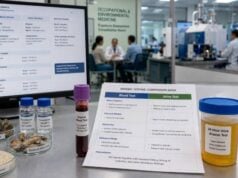
A cadmium blood test is most useful when recent or ongoing exposure is suspected. Blood cadmium can rise after inhaling cadmium fumes, handling cadmium-containing materials, smoking, or having a recent unusual exposure. It does not fully measure how much cadmium has already settled into the kidneys and other tissues.
Urine cadmium is often more useful for chronic exposure because cadmium leaves the body slowly and tends to accumulate in the kidneys. Urine results are commonly reported as micrograms per gram of creatinine, written as mcg/g creatinine or µg/g creatinine, to adjust for urine concentration. A very dilute urine sample can make an uncorrected result look falsely low, while a very concentrated sample can make it look falsely high.
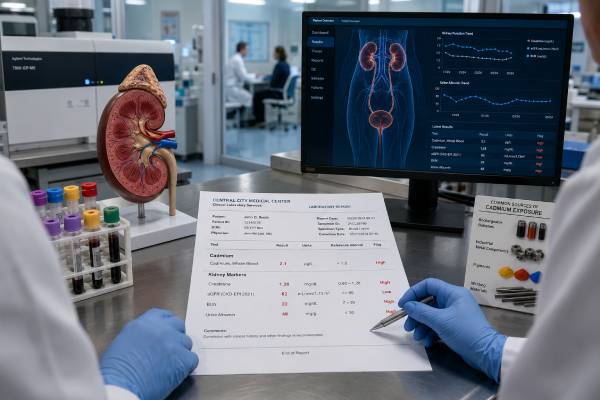
Kidney markers add the health context. Creatinine and eGFR show filtration. Urine albumin-creatinine ratio, or uACR, shows whether albumin is leaking into urine. Tubular markers show whether the kidney tubules are losing proteins or enzymes they normally reclaim.
The distinction matters because cadmium classically affects the proximal tubule. This part of the nephron reabsorbs small proteins, glucose, phosphate, bicarbonate, amino acids, and other filtered substances. When the proximal tubule is injured, urine may show low-molecular-weight proteins before creatinine or eGFR changes.
A person can therefore have a concerning cadmium body burden with normal eGFR. That does not prove kidney damage, but it does mean standard kidney tests may not be enough when exposure has been meaningful. On the other hand, a low eGFR does not prove cadmium caused the kidney problem. Diabetes, high blood pressure, age-related kidney disease, autoimmune disease, dehydration, medications, urinary obstruction, and other toxins can produce abnormal kidney markers.
The most useful clinical question is: do the exposure marker and kidney injury pattern fit each other? A long smoking history, elevated urine cadmium, rising beta-2 microglobulin, and increasing albuminuria tell a different story than a slightly high blood cadmium after a brief exposure with normal repeated urine and kidney results.
How Cadmium Injures the Kidneys
Cadmium harms kidneys mainly through long-term accumulation. After cadmium enters the body, it can bind to proteins such as metallothionein. The liver and kidneys store much of the body burden. Over time, cadmium-containing protein complexes are filtered through the glomerulus and taken up by proximal tubular cells. These cells are metabolically active and handle large amounts of reabsorption, so they are vulnerable to toxic stress.
Inside kidney cells, cadmium can interfere with essential metals such as zinc, calcium, and iron. It can increase oxidative stress, disturb mitochondria, impair repair pathways, and damage transport systems that normally reclaim filtered proteins and nutrients. The result is not always immediate kidney failure. More often, it begins as low-grade tubular dysfunction.
Tubular dysfunction can show up as:
- Increased urine beta-2 microglobulin or retinol-binding protein
- Increased N-acetyl-beta-D-glucosaminidase, often shortened to NAG
- Low-molecular-weight proteinuria
- Mild proteinuria or albuminuria
- Phosphate wasting in more advanced tubular injury
- Glucose in urine despite normal blood glucose, in some proximal tubule disorders
- Gradual decline in eGFR after longer or more severe injury
A helpful way to think about cadmium kidney risk is to separate filtration injury from reabsorption injury. Filtration happens at the glomerulus. Reabsorption happens along the tubules. Standard kidney screening often emphasizes filtration through creatinine and eGFR. Cadmium can affect the tubules before filtration looks clearly reduced.
That does not mean eGFR is unimportant. A persistent eGFR below 60 mL/min/1.73 m² for at least three months suggests chronic kidney disease when confirmed and interpreted clinically. A falling eGFR over time deserves attention regardless of cause. The point is that eGFR alone can miss earlier cadmium-related tubular effects.
Cadmium also interacts with bone and mineral metabolism. Long-term kidney tubular injury can increase urinary losses of minerals and disturb vitamin D, calcium, and phosphate handling. Severe historical cadmium exposure, such as the environmental poisoning that caused itai-itai disease in Japan, produced kidney damage, bone pain, osteomalacia, and fractures. Most modern low-level exposures are far less dramatic, but the same kidney-bone connection explains why chronic cadmium exposure is taken seriously.
The body clears cadmium very slowly. That slow clearance is one reason mild ongoing exposure can matter. Small daily intakes from smoking, contaminated dust, certain foods, or workplace exposure may not cause symptoms at first, yet the total kidney burden can rise over years.
Tests Used to Interpret Cadmium Kidney Risk
No single test can label cadmium kidney risk with certainty. The best panel depends on the exposure scenario, symptoms, medical history, and whether the concern is recent poisoning, chronic body burden, or kidney damage.
Cadmium exposure tests
Blood cadmium is most useful for recent or ongoing exposure. It may rise after inhaling fumes, active smoking, occupational exposure, or a recent ingestion event. Blood levels can fall after exposure stops, even if body stores remain.
Urine cadmium is more useful for cumulative exposure. It is often reported relative to urine creatinine because this corrects for how diluted the urine is. In people with established kidney tubular damage, urine cadmium can sometimes rise because damaged tubules reabsorb cadmium less effectively, so the result must be read carefully.
Hair and nail cadmium tests are less reliable for medical decision-making. External contamination from dust, smoke, pigments, or occupational material can distort results. They may have research or forensic uses, but they are usually not the preferred clinical tests for kidney risk.
A heavy metals blood test panel can be useful when the exposure is unclear or when several metals may be involved, such as in industrial work, contaminated supplements, old paints, pigments, metal recycling, or environmental exposure. Still, each metal has its own best specimen type. Blood is not the ideal long-term test for every heavy metal.
Standard kidney function tests
Creatinine and eGFR estimate filtration. Creatinine is a muscle-derived waste product, and eGFR is calculated from creatinine, age, sex, and sometimes cystatin C. Creatinine can be misleading in people with very low or very high muscle mass, unusual diets, pregnancy, severe illness, or certain medications.
Cystatin C can help when creatinine-based eGFR seems inconsistent with the person’s health or body composition. It is not cadmium-specific, but it can improve the estimate of filtration in selected cases. When creatinine and cystatin C disagree, cystatin C and creatinine together can give a more balanced kidney function estimate.
BUN, electrolytes, bicarbonate, calcium, phosphate, and urinalysis help show the kidney’s broader work. Cadmium tubular injury may eventually affect acid-base balance, phosphate handling, or urine findings, although these changes are not specific to cadmium.
Protein and tubular injury markers
Urine albumin-creatinine ratio, or uACR, is a common kidney damage marker. An ACR below 30 mg/g is usually considered normal to mildly increased. ACR from 30 to 300 mg/g is moderately increased, and above 300 mg/g is severely increased. These categories are used to assess kidney risk, but they do not identify cadmium as the cause.
Beta-2 microglobulin is a small protein that healthy proximal tubules normally reabsorb. When the proximal tubule is injured, beta-2 microglobulin can increase in urine. A beta-2 microglobulin test may be ordered in different contexts, so the specimen type matters. Urine beta-2 microglobulin is the one most relevant to cadmium tubular injury.
Retinol-binding protein is another low-molecular-weight protein used to assess proximal tubular dysfunction. NAG is an enzyme released by tubular cells. KIM-1 and NGAL are newer kidney injury markers, often used in research, specialty evaluation, or acute kidney injury contexts. They can provide useful information, but they are not routine screening tests for everyone with possible cadmium exposure.
Tests that help rule in other causes
A careful clinician may also check blood pressure, fasting glucose or A1c, urine microscopy, urine protein-creatinine ratio, serum phosphate, calcium, uric acid, bicarbonate, and medication history. This is important because cadmium can coexist with more common kidney risks. A person may have both cadmium exposure and diabetic kidney disease, or both smoking-related cadmium burden and high blood pressure.
How to Read Common Result Patterns
Cadmium and kidney results are pattern-based. One abnormal result should usually be repeated or confirmed before drawing strong conclusions, unless the exposure was acute or symptoms are serious.
| Pattern | Possible meaning | Useful next step |
|---|---|---|
| High blood cadmium, normal urine cadmium, normal kidney markers | Recent exposure is possible, with no clear evidence of chronic body burden or kidney injury yet. | Identify and stop exposure, repeat testing, and review smoking or workplace sources. |
| High urine cadmium, normal eGFR and ACR | Chronic body burden may be present before standard kidney markers change. | Consider tubular markers and periodic kidney monitoring. |
| High urine cadmium plus high urine beta-2 microglobulin or retinol-binding protein | Pattern fits proximal tubular stress or injury, especially with compatible exposure history. | Use occupational or environmental medicine input and monitor progression. |
| Low eGFR with normal cadmium tests | Kidney disease is present or possible, but cadmium is less likely to be the main explanation. | Evaluate common kidney causes such as diabetes, hypertension, medications, and urinary disease. |
| High ACR with normal tubular markers | Glomerular or vascular kidney disease may be more likely than classic cadmium tubular injury. | Confirm ACR and assess blood pressure, diabetes risk, and urine sediment. |
A mildly high cadmium result does not automatically mean poisoning. Population background exposure varies by smoking status, diet, occupation, and region. Laboratories also use different reporting units and reference intervals. The unit matters: blood cadmium is often reported as µg/L, while urine cadmium may be reported as µg/L or µg/g creatinine.
Repeated results are often more useful than one isolated value. A falling blood cadmium after exposure stops is reassuring for recent exposure control. A stable or falling urine cadmium over time can suggest reduced ongoing intake, although cadmium body burden may decline slowly. Rising urine cadmium, rising tubular markers, or falling eGFR suggests the need for more careful evaluation.
Context can also change interpretation. Dehydration may temporarily raise creatinine. Heavy exercise can affect some kidney-related markers. Urinary tract infection, fever, recent intense activity, menstruation, and uncontrolled blood pressure can affect urine protein or albumin results. Very acidic urine can degrade beta-2 microglobulin and make the value less reliable. For that reason, clinicians often repeat urine testing under clean, stable conditions.
A good interpretation also asks whether the kidney pattern is proportional to the cadmium result. Very abnormal kidney markers with only borderline cadmium exposure should prompt a broad kidney workup rather than assuming cadmium is the cause. Conversely, elevated urine cadmium with normal routine kidney markers should not be dismissed if the person has a strong exposure history; it may justify monitoring before permanent damage develops.
Exposure Sources That Raise Kidney Risk
Cadmium exposure can come from work, environment, food, smoking, and some consumer or hobby materials. Kidney risk rises when exposure is repeated, inhaled, poorly controlled, or combined with other vulnerabilities such as older age, existing kidney disease, diabetes, high blood pressure, low iron stores, or smoking.
Smoking is one of the most important everyday sources. Tobacco plants absorb cadmium from soil. When tobacco is burned, cadmium in smoke can be absorbed through the lungs. Smokers often have higher blood and urine cadmium than nonsmokers. Secondhand smoke may also contribute, though usually less than active smoking.
Food is another common source. Cadmium occurs naturally in soil and can increase with industrial pollution, phosphate fertilizers, sewage sludge, mining, smelting, and contaminated irrigation. Foods that can contribute include rice, grains, leafy vegetables, root crops, shellfish, organ meats, and some seaweed products. This does not mean these foods are unsafe for everyone. The concern is repeated exposure from higher-cadmium sources, especially in areas with contaminated soil or water.
Workplace exposure can be much higher than dietary exposure. Higher-risk jobs and tasks include battery manufacturing or recycling, metal smelting, welding or cutting cadmium-plated metal, pigment manufacturing, electroplating, soldering, ceramics, plastics stabilization, and some demolition or renovation work. Inhaled cadmium fumes and dust are especially concerning.
Hobbies can matter too. Artists using cadmium pigments, people working with stained glass or ceramics, metal hobbyists, jewelry makers, and people doing home renovation or salvage work can be exposed if dust control and ventilation are poor. The risk depends on the material, particle size, ventilation, respiratory protection, and hygiene practices.
Dietary mineral status may influence absorption. Low iron, low calcium, or low zinc status can increase absorption of some metals, including cadmium. This does not mean people should take high-dose supplements without testing. It means iron deficiency, restrictive diets, malnutrition, and low mineral intake should be considered when evaluating long-term exposure risk.
Children, pregnant people, and people with existing kidney disease deserve extra caution. Cadmium is not quickly cleared, and kidney reserve may be lower in people with chronic kidney disease. In these groups, source control is more important than waiting for symptoms.
What to Do After Abnormal Results
The first step is to decide whether the result suggests an urgent exposure, chronic exposure, or possible kidney injury. Acute cadmium inhalation can happen after welding, cutting, heating, or burning cadmium-containing material. Symptoms may include cough, throat irritation, chest tightness, shortness of breath, fever, chills, weakness, or worsening breathing hours after exposure. Ingestion can cause severe nausea, vomiting, abdominal pain, diarrhea, dizziness, and shock in serious cases. These situations need urgent medical care or poison control guidance.
For non-urgent abnormal results, the next step is exposure control. Stopping the source is more important than trying to “detox” the body. For smokers, quitting smoking can reduce ongoing cadmium input. For workplace exposure, the answer may include industrial hygiene review, ventilation, respirators, protective clothing, separate eating areas, handwashing, and medical can reduce ongoing cadmium input. For workplace exposure, the answer may include industrial hygiene review, ventilation, respirators, protective clothing surveillance. For possible food or soil exposure, local public health or environmental testing may be needed.
A clinician may repeat cadmium testing using the right specimen. If the first result was blood cadmium, urine cadmium may help assess longer-term body burden. If the urine result was not creatinine-corrected, a corrected result may be easier to interpret. If kidney markers were abnormal during illness, dehydration, infection, or heavy exercise, repeating them after recovery can prevent overinterpretation.
Kidney evaluation usually includes a kidney function blood test panel, urinalysis, urine ACR, and blood pressure measurement. Depending on the pattern, a clinician may add cystatin C, urine protein-creatinine ratio, tubular markers, phosphate, bicarbonate, glucose, A1c, kidney ultrasound, or referral to nephrology, occupational medicine, or medical toxicology.
Do not start chelation or aggressive supplement regimens without expert care. Chelation is not routinely used for chronic low-level cadmium accumulation and may cause harm. Some chelating agents can worsen kidney stress or redistribute metals. The safer long-term approach is exposure removal, nutritional adequacy, kidney risk control, and monitoring.
It is also important to review medications and supplements. Nonsteroidal anti-inflammatory drugs, certain antibiotics, contrast dye, some antivirals, lithium, calcineurin inhibitors, and other nephrotoxic agents can worsen kidney risk in susceptible people. Supplements can be contaminated with heavy metals, especially when purchased from poorly regulated sources. A complete list of medications and supplements helps clinicians avoid missing a second kidney stressor.
Monitoring, Recovery, and Prevention
Cadmium monitoring is slow work because cadmium leaves the body slowly. A person may improve exposure control quickly, yet urine cadmium may decline gradually. Kidney markers may stabilize even if they do not fully return to prior levels. Severe cadmium-induced tubular damage can be long-lasting, so early detection and exposure reduction are more realistic than expecting a rapid cure.
Monitoring frequency depends on risk. A person with a one-time mild exposure and normal follow-up tests may need only short-term repeat testing. A worker with ongoing cadmium exposure may need scheduled occupational medical surveillance. A person with elevated urine cadmium and early tubular markers may need periodic kidney monitoring every few months at first, then less often if stable. Those with chronic kidney disease, diabetes, or high blood pressure often need closer follow-up.
Prevention works best when it targets the source. For smoking-related exposure, quitting is the strongest step. For occupational exposure, personal protective equipment should not be the only safeguard. Better ventilation, substitution of safer materials, dust suppression, wet methods, local exhaust, clean changing areas, and no eating or drinking in contaminated workspaces are more protective.
Food-related cadmium reduction is usually about variety rather than fear. A varied diet reduces reliance on one high-cadmium staple. Washing produce, peeling root vegetables when appropriate, and avoiding food grown in contaminated soil can help. People who grow vegetables near old industrial sites, busy roads, treated wood, battery waste, smelters, or mining areas may need soil testing. Gardeners can reduce dust exposure by using clean compost, raised beds with tested soil, mulch, and handwashing after soil contact.
Nutritional adequacy matters. Correcting iron deficiency, maintaining enough calcium and zinc, and getting adequate protein can support general health and may reduce metal absorption risk. This should be done with testing and sensible dosing, not high-dose self-treatment. Excess zinc can cause copper deficiency, and excess minerals can interfere with medications or other nutrients.
Kidney protection also means controlling common risks. Keep blood pressure in a healthy range, manage diabetes if present, avoid unnecessary NSAID use, stay hydrated during illness or heat exposure, and review kidney-impacting medications with a clinician. Cadmium may be the exposure that brings attention to kidney health, but long-term kidney outcomes often depend on the whole risk picture.
A practical follow-up plan might include documenting the exposure source, repeating cadmium testing in the same lab when possible, tracking eGFR and ACR over time, adding tubular markers if exposure is substantial, and involving occupational or environmental health professionals when the source is not obvious. The aim is not to chase every small lab fluctuation. It is to prevent ongoing exposure, catch meaningful kidney changes early, and avoid missing other treatable causes of kidney disease.
References
- Toxicological Profile for Cadmium 2012 (Official Report)
- The Effects of Cadmium Toxicity 2020 (Review)
- KDIGO 2024 Clinical Practice Guideline for the Evaluation and Management of Chronic Kidney Disease 2024 (Guideline)
- uACR Urine Test for Albuminuria: How to Get Tested and Understand Your Results 2023 (Official Page)
- Cadmium in topsoils of the European Union – An analysis based on LUCAS topsoil database 2024 (Research Study)
- Cadmium 2025 (Official Report)
Disclaimer
Cadmium exposure and abnormal kidney markers should be interpreted by a qualified healthcare professional, especially when results are high, symptoms are present, or workplace exposure is possible. Seek urgent medical care or poison control guidance after suspected acute inhalation, ingestion, or severe symptoms such as trouble breathing, chest pain, confusion, persistent vomiting, or reduced urination. This article is educational and does not replace medical diagnosis, treatment, occupational evaluation, or environmental testing.