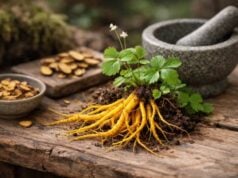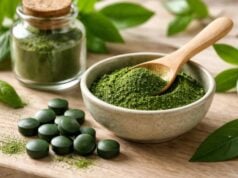
Club moss (Lycopodium clavatum) is an ancient, spore-producing plant that looks deceptively soft and “mossy,” yet behaves more like a living fossil than a modern herb. It has two very different identities in health culture: as a traditional plant used in small amounts in certain folk systems, and as the source of a famous powder made from its spores (often called lycopodium powder). That spore powder has a long history as a drying agent and pill-coating material, and it is now being explored as a natural microcapsule for delivering ingredients in research settings.
Because of this split personality, it’s easy to misunderstand what club moss can and cannot do. The whole plant contains bioactive alkaloids and other compounds that make casual self-dosing a poor idea. The spores, on the other hand, are mostly a tough natural polymer shell and oils—useful topically and industrially, but still not risk-free if inhaled or used carelessly. This guide clarifies what club moss is, how it’s used, realistic benefits, dosing logic, and the safety boundaries that matter most.
Quick Overview for Club Moss
- May help keep damp skin folds dry and reduce friction-related irritation when used topically.
- Typical topical formulation range is about 1–5% lycopodium spore powder in a base, applied in a thin layer.
- Avoid inhaling spore powder and keep it away from flames; the fine dust can irritate airways and is highly flammable.
- Oral use is not well standardized; avoid self-treating chronic digestive, urinary, or neurologic symptoms with club moss.
- People who are pregnant or trying to conceive, or who have chronic lung disease or severe allergies, should avoid medicinal use.
Table of Contents
- What is club moss?
- Key ingredients and active compounds
- What club moss may help with
- Uses in topical and pharmaceutical applications
- How to use club moss
- How much club moss per day?
- Club moss safety and what evidence says
What is club moss?
Club moss (Lycopodium clavatum) is a member of the Lycopodiaceae family, a group of primitive vascular plants sometimes called lycophytes. It grows as a creeping evergreen with upright “clubs” (spore-bearing cones) that release fine yellowish spores. Although it’s often lumped into “moss” in everyday language, it is not a true moss. True mosses are non-vascular plants; club moss has vascular tissue, and it sits on a different branch of plant evolution.
This matters because club moss is frequently misunderstood as a gentle, food-like botanical. In reality, it’s better viewed as a plant with two distinct materials:
- The aerial parts (stems and leaves): These can contain bioactive alkaloids and other secondary metabolites. Traditional systems have used the whole plant in carefully chosen contexts, but modern self-care dosing is not standardized.
- The spores: These are famously water-repellent, and their outer shell is made of sporopollenin, a highly durable natural polymer. Historically, the spores were used as a dusting powder and to coat pills, and they are now used as model “natural microcapsules” in materials research.
A second point of confusion is name overlap. “Club moss” is sometimes confused with Chinese club moss (often Huperzia species), which is discussed for very different reasons. Club moss is also confused with other spore-producing plants that share an “ancient plant” vibe; for example, horsetail’s spore-bearing biology leads to similar mix-ups at the store or online. If you’re buying any product, the label should clearly state Lycopodium clavatum.
Finally, sourcing matters. Club moss grows slowly, and wild harvesting can be ecologically disruptive in some regions. If you choose a product, look for transparent sourcing and identity testing, especially if you are purchasing spore powder in bulk. The goal is simple: correct plant, clean material, and a use-case that matches what club moss can realistically do.
Key ingredients and active compounds
Club moss chemistry is best understood by separating “whole herb chemistry” from “spore chemistry.” They are not interchangeable, and that distinction is central to both benefits and safety.
Whole plant: alkaloids and supporting compounds
The aerial parts of Lycopodium clavatum contain Lycopodiaceae alkaloids, a family of nitrogen-containing compounds that have drawn scientific interest because some members interact with neurotransmitter-related enzymes (especially acetylcholinesterase) and inflammation pathways. These alkaloids are structurally diverse—many are tricyclic or tetracyclic—and they occur across multiple species within the broader lycopod group. In practical terms, this means the whole plant is not “inert,” and it helps explain why oral use is more complicated than people expect.
Alongside alkaloids, club moss contains other plant constituents that commonly shape medicinal properties:
- Triterpenoids and related lipophilic compounds: Often studied for membrane effects and anti-inflammatory signaling in experimental models.
- Phenolics and flavonoids: Contribute to antioxidant potential and may influence inflammatory mediators, though effects in humans depend heavily on dose and bioavailability.
- Organic acids and minerals: Typically supportive rather than “primary actives,” but they can contribute to tolerability and traditional use patterns.
A useful way to think about these compounds is that they are plausibility builders, not guarantees. They can explain why a plant was historically selected, but they do not automatically translate into proven outcomes for modern conditions.
Spores: sporopollenin shell and oils
The spores are a different world. Their outer layer is sporopollenin, one of the most chemically resistant natural biopolymers. This shell is the reason spores can behave like “microcapsules” and why they are water-repellent. Spores also contain lipids (fatty components) that contribute to their flammability and their ability to reduce friction on skin.
From a “medicinal properties” perspective, spores are less about systemic pharmacology and more about physical function:
- Moisture management: The powder can help keep skin dry by creating a hydrophobic barrier and reducing tackiness.
- Friction reduction: A fine powder layer can reduce chafing in high-friction areas.
- Carrier potential: The hollowed spore shell (after processing) can be used as a carrier for other ingredients in experimental delivery systems.
This is the core message: club moss is chemically active as a plant, but physically functional as a spore powder. Most mistakes happen when those two identities are blurred.
What club moss may help with
Most people looking up club moss are trying to answer one of two questions: “Can this help my symptoms?” or “Is this a safe natural alternative?” The most responsible answer depends on whether you mean the spores used topically or the whole plant used internally.
Likely benefits: topical comfort and moisture control
The clearest, most realistic benefit is topical. Lycopodium spore powder has been used historically as a drying agent and anti-friction powder. In modern terms, it may help with:
- Chafing in skin folds (inner thighs, under breasts, waistband friction)
- Moisture-related irritation in warm weather or during exercise
- Comfort under bandages when a clinician has recommended a drying powder approach
This is not the same as “treating a rash.” If you have a fungal infection, eczema, psoriasis, or a persistent rash, a powder may reduce discomfort but also risks masking a condition that needs a different plan.
Traditional internal uses: digestive and urinary themes
Folk traditions have used club moss for digestive sluggishness, bloating patterns, and urinary concerns. Modern evidence for these uses is limited, and self-treatment is not ideal because the whole plant contains alkaloids that can be biologically active. If your primary concern is urinary discomfort or recurrent infections, it is safer to use approaches with clearer modern guidance and medical oversight. For herbal context, some readers compare urinary strategies with uva ursi for urinary health support, but even that herb has strict safety limits and is not meant for long, frequent courses.
“Brain and nerves” claims need careful framing
You may also encounter club moss discussed in the context of memory or cognitive support. This area is easily confused with other lycopod relatives used in different traditions. While some Lycopodiaceae alkaloids are studied for enzyme interactions relevant to neurotransmitters, the leap from “enzyme effects in a lab” to “meaningful cognitive outcomes in people” is large. At this time, it’s best to view any cognitive claim as preclinical and speculative, not as a substitute for evidence-based care.
When it is not a good fit
Club moss is unlikely to be the right tool if you need:
- Fast, reliable symptom control (pain, infection, severe inflammation)
- A long-term daily supplement with a strong safety profile
- Treatment for unexplained weight loss, chronic GI symptoms, or blood in urine or stool
In short: club moss is most defensible as a targeted topical powder. Internal use is a niche practice that should be guided by someone trained to manage dosing, duration, and contraindications.
Uses in topical and pharmaceutical applications
Club moss has an unusual résumé. Its spores are used less like a “herbal active” and more like a natural material with helpful physical properties. Understanding these uses helps you choose safer applications and avoid misguided ones.
Topical dusting powder: why it works
Lycopodium spores are very fine, hydrophobic particles. When applied lightly, they can:
- Reduce skin-to-skin friction
- Decrease the “sticky” feeling in humid conditions
- Create a smoother surface under clothing or supportive garments
This can be helpful for short-term comfort, especially during heat, exercise, or recovery periods where friction is unavoidable. However, the powder is not a cure for underlying causes of rash. If you need a botanical that is more aligned with skin-soothing and barrier support rather than drying, many people explore plantain’s traditional skin applications in topical preparations, which is a different strategy than using a dry dusting powder.
Pill-coating and manufacturing support
Historically, lycopodium powder was used to coat pills to prevent sticking and improve flow in manufacturing. The powder’s water-repellent nature and fine particle behavior make it useful in processes where powders need to move cleanly and not clump.
Modern research: spore shells as microcapsules
In the last decade, processed spores have been explored as “ready-made” microcapsules. The idea is not that the spores treat disease on their own, but that the sporopollenin shell can protect and carry other ingredients. Researchers examine how capsule pore structure, loading methods, and release triggers (such as pH or heat) can be engineered. This work is exciting as materials science, but it does not mean that sprinkling spores into a smoothie is a smart health hack.
Other non-medical uses worth knowing for safety
Because spore powder is extremely fine and contains lipids, it can be highly flammable as a dust cloud. That property has made it useful in demonstrations and special effects, and it also explains why home use should keep it away from open flames and heat sources.
The practical takeaway: club moss spores are best treated like a functional powder—useful, but needing respect. When the goal shifts toward internal “supplement” use, the risk-benefit picture changes quickly.
How to use club moss
How you use club moss should match the form you have and the kind of outcome you are aiming for. In most self-care settings, the safest approach involves topical spore powder, not internal dosing.
Common forms you may see
- Spore powder (lycopodium powder): Fine yellow powder intended for topical or technical use.
- Whole herb (dried aerial parts): Sometimes sold for traditional practice; internal use is not beginner-friendly.
- Extracts or tinctures: Variable potency and quality; not ideal for casual experimentation.
- Homeopathic preparations: These are ultra-diluted products that do not correspond to the dosing logic of the whole plant or spore powder.
Practical topical use (spore powder)
If you are using spore powder as a drying and anti-friction aid:
- Start with clean, dry skin. If the area is actively wet, pat dry first.
- Use a very light dusting. Think “thin veil,” not a thick layer.
- Avoid application near the face. This reduces the chance of inhalation.
- Do not use in deep, open wounds. For broken skin, seek medical advice.
- Stop if irritation develops. Some people react to fine powders or plant materials.
If you want a more soothing, skin-calming approach rather than a drying powder, a classic comparison is topical calendula. You can explore calendula’s skin-healing and inflammation uses as a different style of topical support, especially when dryness and barrier repair (rather than moisture control) are the goal.
Internal use: proceed only with guidance
If a practitioner recommends club moss internally, it should be:
- Short-course, with a clear goal and stop point
- Avoided during pregnancy and generally avoided during breastfeeding without professional oversight
- Monitored for side effects such as GI upset or unusual neurologic symptoms
The most important “how to use” advice is also the simplest: do not treat club moss as a daily wellness herb. Use it only when the form, purpose, and safety boundaries are clear.
How much club moss per day?
With club moss, “dosage” depends more on form and route than on a universal milligram number. For most people, the practical dosing discussion centers on topical spore powder, because oral dosing is not standardized for safe self-care.
Topical spore powder (most common self-care use)
- Frequency: 1–2 times daily as needed for friction-prone areas.
- Amount: A small pinch is usually sufficient for a localized area. As a rough guide, that may be around 0.1–0.3 g per application, but the goal is coverage, not a measured dose.
- Formulation range: If mixing into a base (for example, a simple powder blend or topical base), a common formulation approach is about 1–5% spore powder by weight. This range helps keep the product spreadable and reduces airborne dust compared with loose powder.
Because inhalation is a major avoidable risk, many people do better with a pre-mixed topical base than with loose powder, especially if they are using it regularly.
Oral dosing: why there is no clean “standard”
For internal use, club moss runs into three problems:
- Species and product variability: Alkaloid content varies by plant part, harvest, and extraction method.
- Limited modern human evidence: Traditional use exists, but modern clinical dosing standards are not well established.
- Safety boundaries: People who are pregnant, on multiple medications, or managing chronic conditions should not experiment casually.
If you are using a practitioner-formulated product, follow that plan exactly and keep duration short unless you are being monitored.
Timing and duration (topical and internal)
- Topical: Use only during the period you need moisture and friction control. If the same area needs powder every day for weeks, reassess the underlying cause (heat, clothing, infection risk, hygiene practices, or skin condition).
- Internal: If used at all, treat it as a short-course intervention with a clear “stop if not helping” rule.
A simple checkpoint is this: if your “dose” keeps creeping upward to chase results, it is usually a sign the strategy is mismatched—not a sign you should push harder.
Club moss safety and what evidence says
Club moss deserves a safety-first framing. The spores can be useful, but they are not harmless in every context, and the whole plant has bioactive chemistry that makes casual internal use risky.
Who should avoid club moss
Avoid medicinal use (especially internal use) if you are:
- Pregnant or trying to conceive
- Breastfeeding, unless a qualified clinician specifically recommends it
- Managing asthma, chronic lung disease, or severe environmental allergies (powders can irritate airways)
- Using multiple medications where interactions would be hard to predict
- Planning surgery and using products that could worsen irritation or complicate wound care
Key safety risks people miss
- Inhalation risk: Fine powders can irritate the nose, throat, and lungs. Apply away from the face, avoid shaking the container, and consider a pre-mixed base.
- Flammability: Spore powder can ignite easily when dispersed in air. Keep it away from flames, hot surfaces, and sparks.
- Wound caution: Historically, spores used as dusting powder have been linked to foreign-body reactions if they enter surgical wounds. This is one reason modern wound care is very specific about what powders can be used and where.
- Skin sensitivity: Even if a powder is “inert” mechanically, individuals can still develop irritation or allergy.
Medication interactions
There is not a clean, widely established interaction list for Lycopodium clavatum in modern clinical practice, largely because standardized oral products and large trials are limited. That uncertainty is itself a safety signal. If you take prescription medications—especially those affecting the nervous system, blood pressure, or liver metabolism—do not combine them with internal club moss products without professional oversight.
What the evidence actually supports
- Strongest support: Physical, topical use of spores for moisture and friction control, and non-medical industrial applications.
- Moderate scientific interest: Alkaloid chemistry and preclinical exploration of anti-inflammatory or enzyme-related activity across Lycopodiaceae plants, plus materials science work using sporopollenin shells.
- Weakest support: Claims that oral club moss reliably treats digestive, urinary, or cognitive conditions in humans.
A balanced conclusion is that club moss is best used as a specialty topical tool, not a daily supplement. If you choose to explore internal use, treat it like a therapeutic agent—rare, targeted, and guided—rather than a casual wellness product.
References
- The Chemistry and Biology of Lycopodium Alkaloids – PubMed 2024 (Review)
- Amaryllidaceae, Lycopodiaceae Alkaloids and Coumarins—A Comparative Assessment of Safety and Pharmacological Activity – PMC 2022 (In Vivo Study)
- Optimization of Pressurized Liquid Extraction of Lycopodiaceae Alkaloids Obtained from Two Lycopodium Species – PMC 2021 (Methods and Phytochemistry)
- Stimulus triggered release of actives from composite microcapsules based on sporopollenin from Lycopodium clavatum – PMC 2024 (Materials and Drug Delivery)
- Lycopodium granuloma – PubMed 1988 (Case Report)
Disclaimer
This article is for educational purposes and does not replace medical advice, diagnosis, or treatment. Club moss (Lycopodium clavatum) can be confused with other “club moss” species and with different plant parts that have very different safety profiles. Spore powder is intended for careful topical use and may irritate the airways if inhaled; it can also be highly flammable as a fine dust. Internal use of club moss is not well standardized and may be inappropriate for many people, including those who are pregnant, trying to conceive, breastfeeding, or managing chronic conditions or medications. Seek professional guidance for persistent rashes, chronic digestive or urinary symptoms, unusual bleeding, severe pain, or any reaction such as shortness of breath, swelling, or widespread irritation.
If you found this article helpful, please consider sharing it on Facebook, X (formerly Twitter), or your preferred platform so others can make informed, safety-first decisions.