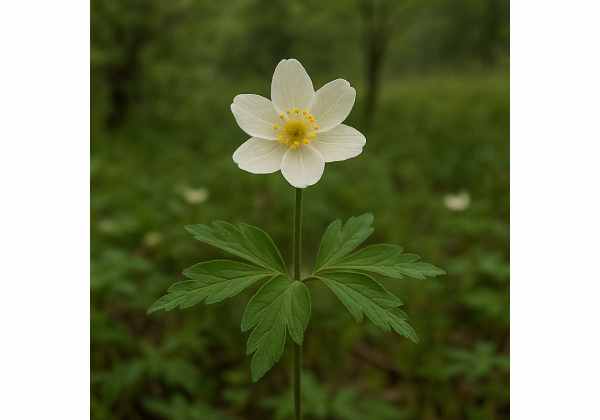
Windflower, better known botanically as Anemone nemorosa and often called wood anemone, is one of those plants that looks gentler than it is. It carpets woodland floors with delicate white spring flowers, yet behind that quiet appearance sits a chemically active herb with a long folk-medicine history and a real toxicity profile. Traditional sources describe windflower for headaches, rheumatic pain, skin complaints, sluggish states, and even stubborn ulcers, while modern laboratory work has identified compounds such as ranunculin, protoanemonin, anemonin, flavonoids, tannins, and other volatile constituents that may help explain antimicrobial, antioxidant, spasm-relieving, and anti-inflammatory effects. At the same time, fresh windflower is irritating and potentially poisonous, especially when used carelessly. That means it should not be approached like a gentle tea herb or a casual backyard remedy. The most useful modern view of windflower is balanced: it is historically important, pharmacologically interesting, and still worth studying, but the evidence for routine self-care use is thin, and safety matters more here than with many better-known herbs.
Top Highlights
- Traditional use centers on pain, spasms, and certain inflammatory complaints, but modern human evidence remains limited.
- Laboratory studies suggest antioxidant, antimicrobial, and possible diuretic or nephroprotective potential.
- Fresh plant by mouth: 0 g; no evidence-based home medicinal dose has been established.
- Pregnant or breastfeeding people, children, and anyone new to wild-herb medicine should avoid self-use.
Table of Contents
- What windflower is and why it needs caution
- Key ingredients and medicinal properties
- Windflower health benefits and what the evidence really shows
- Traditional uses, preparation, and where the old remedies came from
- Windflower dosage and why routine self-care is not established
- Safety, toxicity, and common mistakes
- Who should avoid it and the bottom line
What windflower is and why it needs caution
Windflower, or wood anemone, is a low-growing perennial in the buttercup family, Ranunculaceae. It spreads through slender rhizomes and often forms large colonies in deciduous woodland, hedgerows, shaded banks, and other cool spring habitats. In many parts of Europe it is considered an indicator of old woodland because it spreads slowly and tends to persist where the habitat has been stable for a long time. The plant’s white star-like flowers and finely divided leaves make it attractive, and that beauty has contributed to a long history of symbolic, ornamental, and medicinal interest.
Yet windflower is not a straightforward medicinal herb. Fresh plant material contains ranunculin, which breaks down into the far more irritating compound protoanemonin when the tissue is crushed, bruised, or chewed. Protoanemonin can then dimerize into anemonin, a less reactive compound that is still pharmacologically active but generally less harsh than the fresh-plant chemistry. That simple transformation explains why traditional herb writers often drew a sharp distinction between the fresh plant, which they treated with caution, and dried or processed material, which they viewed as more manageable.
This is where many modern misunderstandings begin. A reader may see that windflower was “used medicinally” and assume that means it is appropriate for home tinctures, fresh poultices, or a casual tea. Historically, the herb was better known as a powerful or even heroic plant, not as an everyday kitchen remedy. Its reputation belonged to a world of stronger folk practices in which riskier plants were sometimes used in very small amounts or after drying. That is very different from saying the herb is safe for unsupervised modern self-treatment.
It also helps to separate windflower from broader “anemone” claims. The genus contains many species with overlapping chemistry, and popular herb summaries sometimes blur them together. Some species are studied more for triterpenoid saponins, others for different medicinal fractions, and still others mainly for toxicity. Anemone nemorosa has genuine ethnomedical relevance, but it is not among the most clinically established members of the group.
So the caution around windflower is not a footnote. It is part of the identity of the herb. The plant is historically medicinal, chemically active, and undeniably interesting, but it is also poisonous enough that modern readers should start with restraint rather than enthusiasm.
Key ingredients and medicinal properties
Windflower’s medicinal profile begins with the chemistry that makes the plant both promising and hazardous. The best-known compounds are ranunculin, protoanemonin, and anemonin. Together they form the central toxicological and pharmacological story of many Ranunculaceae plants. When fresh tissues are damaged, ranunculin is enzymatically converted into protoanemonin, a volatile and irritant compound. Protoanemonin can later dimerize into anemonin, which has been studied for a range of biological effects and is often treated as the more practical molecule for research.
This chemistry matters because it explains why the plant behaves differently depending on preparation. Fresh windflower is far harsher than dried or processed material. That is not a small technical detail. It affects everything from folk use to modern safety advice. A plant that may look harmless in bloom can become blistering or strongly irritating when cut or crushed, which is exactly why traditional use never meant carefree use.
Beyond the ranunculin system, windflower contains other compounds that help explain its broader medicinal reputation. A 2017 analytical review described alkaloids, saponins, tannins, resins, coumarins, organic acids, flavonoids, vitamin C, and gamma-linolenic acid among the reported constituents. More recent work on dried herb and rhizomes has also identified a wide range of volatile compounds, including aldehydes, monoterpenoids, organic acids, sesquiterpenoids, diterpenoids, aromatic compounds, alcohols, and ketones. A 2022 study of polar extracts further highlighted caffeic acid esters and quercetin glycosides as major polyphenols in dried aerial-part extracts.
Taken together, these compounds suggest a plant with several plausible medicinal properties:
- mild to moderate antimicrobial and antifungal activity
- possible antioxidant effects from polyphenols and flavonoids
- possible antispasmodic or tension-relieving effects
- traditional diaphoretic and diuretic actions
- broader anti-inflammatory interest, though not consistently confirmed
The difficulty is that these properties do not line up neatly in the same preparation. The compounds linked to strong biological action are also tied to irritation and toxicity. That is why windflower is not easily standardized as a calm, single-purpose herb. Its chemistry is layered and form-dependent.
For practical comparison, someone looking for a much clearer digestive and spasm-relieving herb would usually do better with peppermint for digestive comfort and spasms. Windflower is pharmacologically interesting, but it is not nearly as forgiving. In modern herbal thinking, its medicinal properties are best understood as real but constrained by the fact that the plant’s active chemistry comes with genuine risks.
Windflower health benefits and what the evidence really shows
The strongest way to discuss windflower’s health benefits is to keep three layers separate: traditional use, laboratory evidence, and proven human outcomes. Traditional use is broad. Laboratory evidence is promising in places. Proven human benefit is still limited.
Traditional use gives the herb its reputation. Historical records describe Anemone nemorosa for headaches, tertian agues, rheumatic gout, lethargy, inflammatory eye complaints, ulcers, and other stubborn external or internal problems. Some accounts also describe it as antimicrobial, antifungal, sedative, antispasmodic, expectorant, diaphoretic, and diuretic. This old list is one reason the plant still appears in herb histories and homeopathic products. It clearly earned respect in older medicine.
Modern evidence, however, is much narrower. A 2024 rat study on alcoholic extracts found no acute toxicity at the tested oral dose of 200 mg/kg body weight and did not demonstrate significant anti-inflammatory effects in the carrageenan model. What it did find was stronger hypoazotemic and diuretic activity, suggesting that kidney-related or diuretic applications may deserve more attention than the usual “anti-inflammatory herb” label. This is a useful correction because it shows that traditional expectations do not always match the results of modern extract testing.
Other laboratory studies point in different directions. A 2022 extract study reported strong antioxidant activity in dried aerial-part extracts and suggested moderate inhibitory activity of anemonin and protoanemonin in docking work linked to inflammatory and cell-signaling targets. A 2019 cell study found that an aqueous extract of A. nemorosa inhibited proliferation in HeLa cells and induced apoptosis, which makes the plant interesting for anticancer research. But that kind of result should not be confused with evidence that the herb treats cancer in people. The authors themselves noted that there had been no reported traditional use of A. nemorosa specifically for cancer treatment.
So what benefits can be described honestly?
- Possible mild diuretic and renal-support potential in preclinical work
- Antioxidant activity in dried extract studies
- Traditional antispasmodic and pain-relief use, with incomplete modern confirmation
- Antimicrobial and antifungal potential, largely from older experimental and review literature
- Research-level antiproliferative activity, which is interesting but not clinically actionable on its own
The evidence is therefore strongest for “possible benefit with important limitations.” Windflower is not a proven self-care herb in the modern clinical sense. People seeking a more straightforward spasm herb are often better served by cramp bark for muscle and uterine spasms, which fits the practical need more cleanly. Windflower remains relevant, but mainly as a traditional and experimental medicinal plant rather than a well-established over-the-counter botanical.
Traditional uses, preparation, and where the old remedies came from
Windflower’s older uses came from a very different medical culture than today’s supplement world. It was not presented as a broad lifestyle herb to be added to daily routines. Instead, it belonged to the category of stronger plants that were used for difficult symptoms, often in small amounts or with specific preparation methods. That context matters because many of the old uses only make sense when paired with the assumption that the fresh herb was too harsh for careless handling.
Older review literature lists windflower as antitumor, anti-inflammatory, antispasmodic, sedative, diaphoretic, bactericidal, antimicrobial, antifungal, expectorant, and diuretic. Historical folk use also linked it to headaches, rheumatic states, ulcers, eye inflammation, and sluggish or lethargic conditions. These broad claims tell us more about the role of the herb than about its modern reliability. Windflower was treated as a plant for stubborn, uncomfortable, or lingering complaints rather than as a culinary herb or tonic food.
Preparation is where the old practice becomes especially important. Fresh plant tissue was recognized as irritating, while drying altered the chemistry and reduced some of the caustic quality by shifting protoanemonin toward anemonin. That does not mean dried windflower became fully harmless. It means it became less immediately blistering and therefore more workable in certain preparations. This is one reason historical use of the dried plant cannot be used to justify topical experiments with fresh flowers, leaves, or rhizomes.
The plant’s role in homeopathy has also added to the confusion. Homeopathic “Anemone nemorosa” products exist, but they operate under a different logic of extreme dilution and do not tell us how to use the crude herb safely. In practical herbal medicine, crude windflower and homeopathic windflower are not the same question.
A sensible modern reading of the traditional uses looks like this:
- the herb had real historical importance
- stronger folk herbs were often used in ways that modern readers should not copy directly
- preparation changed safety
- some traditional uses remain pharmacologically plausible, but that does not make them current best practice
For modern readers seeking a gentler general diuretic or digestive bitter, herbs with clearer traditions and safer margins make more sense than windflower. A simple example is dandelion for mild bitter and fluid-balance support, which offers a far more approachable starting point. Windflower’s real value today lies more in careful historical and pharmacological understanding than in casual imitation of old folk remedies.
Windflower dosage and why routine self-care is not established
This is the section where readers often expect a simple answer in grams, drops, or capsules. With windflower, a responsible answer has to begin by saying that there is no evidence-based modern self-care dose for the crude herb that can be recommended with confidence. No standard tea range, tincture schedule, capsule amount, or safe fresh-plant serving has been established for general public use.
That does not mean the plant has no dosing history at all. It means its real historical use came from traditions that treated it as a stronger medicinal and often worked with dried or specially prepared material rather than fresh herb. Modern studies, meanwhile, tend to use extracts in laboratory or animal settings. A 2024 rat study found no acute oral toxicity up to 200 mg/kg for the tested alcoholic extracts, but that number is not a public home-use dose. It belongs to a controlled experiment, not to everyday self-medication.
The safest practical guidance for unsupervised readers is therefore blunt:
- Fresh herb by mouth: 0 g
- Fresh herb on broken or irritated skin: 0 g
- Fresh-plant tincture or homemade extract: 0 mL
- Routine self-use of crude windflower as a household remedy: avoid
This may seem unusually strict for an herb article, but it reflects the actual evidence and risk. With windflower, the main issue is not whether some biological activity exists. It clearly does. The issue is that the gap between “biologically active” and “safe for unsupervised dosing” is too large.
There is also a common misunderstanding around dried preparations. Because drying reduces some of the fresh plant’s harsher chemistry, some readers assume dried windflower must therefore be safe to self-dose. That is not a reliable conclusion. Reduced irritancy is not the same as well-defined safety. Dried windflower still lacks the kind of clinical dose framework that would let a responsible writer recommend it the way one might recommend chamomile or peppermint.
This is why dosage for windflower is better understood as a boundary rather than a recipe. It marks the point where traditional herb history gives way to modern caution. Someone looking for an herb to calm tension, support digestion, or encourage rest is usually better served by chamomile for gentle calming and digestive support, which has a much clearer margin of everyday use. Windflower simply is not that kind of herb.
Safety, toxicity, and common mistakes
Safety is the most important section in any serious discussion of windflower. Fresh Anemone nemorosa contains ranunculin-derived chemistry that can irritate skin, mucous membranes, and the gastrointestinal tract. The plant is widely recognized as poisonous to humans, and its acrid taste is part of the warning system built into the species itself. This is not a case where a minor side effect sits beside a long list of comfortable uses. Toxicity is part of the plant’s identity.
The most important toxic compound in fresh material is protoanemonin, produced when plant tissues are damaged. This is why crushing, bruising, chewing, or making fresh poultices can be far more hazardous than simply seeing the plant in the woods. Protoanemonin is unstable and can convert to anemonin, which helps explain why dried material was historically considered somewhat less dangerous. But fresh-plant irritation remains the core concern.
Possible adverse effects include:
- skin irritation or blistering after handling
- burning of the mouth or throat if chewed
- stomach irritation, nausea, vomiting, or diarrhea if ingested
- worsening symptoms if used on already damaged skin
- more serious toxicity if larger amounts are swallowed
Several common mistakes raise the risk substantially. The first is assuming that a pretty woodland flower cannot be strongly active. The second is confusing “used in folk medicine” with “safe to use at home.” The third is working with the fresh herb rather than recognizing that historical use often depended on drying or other processing. The fourth is copying homeopathic product names and assuming they justify crude-herb experimentation. They do not.
A fifth mistake is turning experimental findings into clinical hope too quickly. Cell studies and animal studies are not permission slips for self-treatment. Windflower’s preclinical research is interesting, but it does not cancel the fact that the fresh plant is irritating and poisonous.
For people looking for a plant to soothe skin or minor irritation, windflower is especially the wrong instinct. A safer topical herb such as calendula for minor skin support makes far more sense than experimenting with a fresh Ranunculaceae plant known for caustic chemistry.
The simplest rule is this: if a plant’s most famous modern lesson is “beautiful, but poisonous,” safety has to come first. With windflower, that is not alarmism. It is accuracy.
Who should avoid it and the bottom line
Because windflower lacks a well-established modern home-use dose and because fresh material is clearly irritating and poisonous, the avoid list is broad. This is one of those herbs where the absence of good routine dosing data matters almost as much as the presence of toxic compounds.
People who should avoid self-directed medicinal use include:
- children
- pregnant people
- breastfeeding people
- anyone with sensitive skin or a history of contact reactions
- people with digestive disorders that make them vulnerable to irritant herbs
- anyone taking prescription medicines without professional guidance
- beginners in foraging or herbalism
- people tempted to experiment with the fresh plant
Pregnancy deserves special attention. Historical sources include abortive and uterine-active associations for A. nemorosa, which is reason enough to treat it as inappropriate during pregnancy, even aside from the broader toxicity issue. Breastfeeding is also a no-go for self-treatment because there is no reliable safety framework.
It is also worth noting that some people are drawn to windflower precisely because it seems unusual or potent. That can create a false sense that a difficult herb must be a more effective herb. In reality, plants with narrower safety margins are often poorer choices for routine care, not better ones. A strong traditional reputation does not automatically mean the plant is the best tool for modern use.
So what is the bottom line? Windflower is a real medicinal plant in the historical sense. It contains interesting compounds, has a documented folk record, and continues to attract laboratory research for antioxidant, antimicrobial, diuretic, and antiproliferative questions. But it is not a beginner herb, not a casual tea herb, and not a plant that deserves routine self-dosing recommendations.
The most sensible conclusion is straightforward. Windflower is best approached as a poisonous but pharmacologically interesting woodland herb whose traditional uses deserve study, not imitation. Respect the history, respect the chemistry, and let the safety profile shape your judgment. For most readers, the practical lesson is not “how do I use windflower?” but “why do some traditional herbs require more distance than admiration alone suggests?”
References
- Ranunculin, Protoanemonin, and Anemonin: Pharmacological and Chemical Perspectives 2025 (Review)
- Research in component composition of the volatile fractions from the genus Anemone plants 2025 (Phytochemical Study)
- Acute toxicity, anti-inflammatory and hypoazotemic activity study of Anemone nemorosa extracts in rats 2024 (Animal Study)
- In Vitro Anti-proliferative Activity and Mechanism of Action of Anemone nemorosa 2019 (Cell Study)
- Wood anemone. Anemone Nemorosa L. Analytical review 2017 (Analytical Review)
Disclaimer
This article is for educational purposes only and is not medical advice, diagnosis, or treatment. Windflower is a poisonous plant with irritating fresh-plant chemistry, and no evidence-based self-care dose has been established for routine medicinal use. Do not ingest, apply, or prepare this herb without qualified professional guidance and correct botanical identification. Seek medical help promptly if plant exposure causes mouth burning, vomiting, severe stomach upset, skin irritation, or blistering.
If this article was useful, please share it on Facebook, X, or your preferred platform.