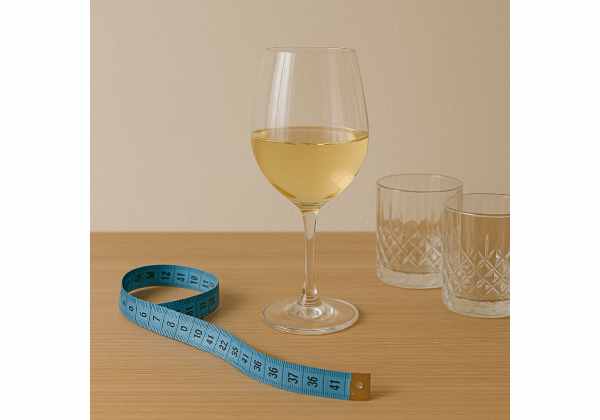
If your weight loss has slowed or stopped, alcohol is one of the first places worth looking. Not because it is uniquely “fattening,” but because it can quietly erase a calorie deficit, loosen food decisions, disrupt sleep, and turn one off-plan evening into a whole weekend of maintenance calories or more.
The good news is that you usually do not need a complicated fix. Most alcohol-related stalls improve when you tighten a few high-impact habits: how often you drink, how much you pour, what you pair with it, and how you track the next 24 hours. Here is how to tell whether alcohol is really part of your plateau and what to change first.
Table of Contents
- Why alcohol can freeze progress
- Where the hidden calories come from
- How to spot an alcohol-related stall
- The most effective changes to make first
- A 14-day reset that tests the problem
- When the stall is not just about alcohol
Why alcohol can freeze progress
Alcohol stalls weight loss less by magic and more by math and momentum.
The math is straightforward. Alcohol provides energy on its own, about 7 calories per gram, which makes it more calorie-dense than protein or carbohydrate and close to fat. That matters because drinks are easy to undercount. People tend to remember “two glasses of wine” or “a couple beers,” but not the actual pour size, alcohol percentage, or the calories from mixers, syrups, juice, tonic, soda, or the late-night food that follows.
The momentum problem is just as important. Alcohol often changes what happens after the drink, not just during it. A modest calorie deficit can disappear when drinking leads to restaurant extras, larger portions, skipped logging, grazing, dessert, or a next-day “cheat breakfast.” For many people, the real issue is not Thursday night itself. It is Thursday night plus Friday cravings, low energy, missed training, and a less structured weekend.
There is also a metabolic piece. Your body prioritizes processing alcohol before other fuels, which can temporarily reduce fat oxidation. That does not mean one drink “stops fat burning” in a dramatic way, but it does mean alcohol can make fat loss less efficient when it is layered on top of already tight calorie targets.
Sleep is another overlooked link. Even when alcohol helps you fall asleep faster, it often worsens sleep quality later in the night. Poor sleep can raise hunger, lower restraint, and make it harder to hit steps, training, and meal structure the next day. If you are already pushing through a plateau, that is a bad trade.
This is why alcohol can be a plateau multiplier. It affects the calorie deficit directly, and it can also disrupt appetite, routine, and recovery enough to flatten your weekly trend.
The key point is simple: if your progress has stalled, alcohol is not automatically the villain, but it is one of the highest-yield places to audit before cutting food further.
Where the hidden calories come from
Most people do not plateau because of one dramatic binge. They plateau because alcohol calories are repeated, underestimated, and bundled with other calories.
A few common examples show how quickly this adds up:
- A standard 175 mL glass of 12% wine can be around 158 calories.
- A pint of 5% beer can be around 222 calories.
- A double spirit may seem light, but mixers can turn it into a much larger drink.
- Cocktails are often the biggest calorie trap because they combine alcohol with sugar, juice, cream, or syrups.
Now zoom out to a week. Two nights out with 3 drinks each can easily add 500 to 1,000 calories before food. Add shared appetizers, fries, pizza, dessert, or the “I’ll start over Monday” effect, and the weekly deficit that looked solid on paper may be gone.
Serving size is another reason the total gets missed. What feels like one generous home pour may actually equal more than one standard drink. Craft beer, stronger wine, and larger glasses make this especially easy to misjudge. People often track by container or occasion instead of by alcohol content.
Then there is compensation that never happens. Many people assume they will “eat less during the day” to make room for drinks. Sometimes that works. Often it backfires. Arriving too hungry makes drinking and snacking harder to control, and alcohol tends to weaken portion judgment. That is one reason alcohol-heavy social meals can look moderate in memory but high in reality.
The stall is even more likely if drinking clusters on Friday and Saturday. A disciplined weekday routine can be quietly undone by weekend overeating, restaurant portions, and social drinking. This is why someone can feel “good all week” and still see no scale movement.
If you suspect this is happening, stop thinking only in terms of drinks. Think in layers:
- Drink calories
- Mixer calories
- Food that happens during drinking
- Food that happens after drinking
- Lower activity and looser eating the next day
That is the full exposure. Once you see it clearly, it becomes easier to fix with better drink choice, portion control, and a plan for the hours around drinking, not just the drink itself.
How to spot an alcohol-related stall
Before you blame alcohol, make sure you are looking at the right pattern.
First, do not judge a stall from one weigh-in. Alcohol can create short-term water retention through changes in sleep, food choices, sodium intake, and dehydration patterns. That can make the scale look worse for a few days even if fat gain is small. What matters is your trend over at least 2 to 4 weeks, not a single heavy morning after a night out.
Second, look for timing clues. Alcohol is more likely part of the problem if your progress follows a predictable cycle such as:
- Weight drops Monday through Thursday, then rebounds after the weekend
- You feel “on plan” most weekdays but flat across the month
- Restaurant meals and drinks happen together
- You stop logging or estimating intake accurately on social nights
- You are hungrier, more snack-prone, or less active the next day
Third, compare your planned intake with your real weekly intake. A stall often shows up when weekday discipline hides weekend drift. Someone aiming for a moderate deficit may only need a few hundred extra calories on two or three nights per week to wipe out progress.
Fourth, ask whether alcohol changes your behavior more than your calories. Some people can fit a drink or two into a plan with no problem. Others do fine until the second drink, then shift into fast eating, nibbling, or “treat mode.” If that sounds familiar, alcohol may not be the whole issue, but it is likely the trigger.
A useful self-check is to run a brief audit:
- How many drinking occasions happen each week?
- How many standard drinks does each occasion actually include?
- What foods show up only on drinking days?
- Do your steps, gym performance, or sleep worsen the next day?
- Is the scale pattern better during weeks with fewer drinks?
If you are unsure whether your slowdown counts as a real stall, compare your recent data with the signs of a true plateau. And if your weigh-ins are erratic, a structured daily weigh-in protocol can help you separate water swings from an actual loss of momentum.
The goal is not to prove that alcohol is “bad.” It is to identify whether it is the hidden variable keeping your weekly energy balance closer to maintenance than you realized.
The most effective changes to make first
When alcohol is slowing progress, the best fix is usually not total perfection. It is targeted control.
Start with frequency before anything else. Cutting from four drinking occasions a week to one or two often works better than obsessing over tiny food cuts. Frequency matters because it reduces both direct calories and the number of disrupted evenings and next days.
Then cap the amount. Decide your limit before the event starts. For many people, the line between “fits my plan” and “derails my plan” is not the first drink. It is the second, third, or uncounted refill. Pre-deciding removes a lot of in-the-moment guesswork.
Next, simplify what you drink. Lower-calorie choices are not magic, but they help. Dry wine, light beer, or spirits with calorie-free mixers are usually easier to fit into a deficit than creamy cocktails, frozen drinks, or sugary mixed drinks. Just remember that stronger pours still count. If you want an easier framework without meticulous logging, try tracking without counting calories by setting a drink limit and keeping meals simple on those days.
Food pairing matters too. The most reliable strategy is to protect protein and structure:
- Eat a normal high-protein meal before drinking instead of “saving calories” by undereating all day.
- Do not arrive starving.
- Choose one planned indulgence, not drinks plus appetizers plus dessert plus late-night takeout.
- Put a nonalcoholic drink between alcoholic drinks.
- Keep water visible and easy, especially if you want better hydration strategies and less next-day drag.
Another strong move is to change the setting, not just the drink. Drinking at home from large glasses or open bottles makes portions fuzzy. Pre-portioning, using smaller glasses, or buying single servings can tighten intake without much mental effort.
Finally, protect the next morning. Decide in advance what happens after you drink: breakfast, steps, fluids, gym, and bedtime the next evening. Plateaus last longer when one night becomes a sloppy 36-hour window.
What works best is usually boring but powerful: fewer occasions, fewer drinks, simpler drinks, planned food, and a better morning-after routine.
A 14-day reset that tests the problem
If you think alcohol may be stalling progress but you do not want to guess, run a 14-day test.
Two weeks is long enough to clean up the pattern, reduce noise, and show whether alcohol was masking progress. The point is not to prove you can be ultra-disciplined forever. The point is to collect better data.
For 14 days, do the following:
- Remove alcohol completely, or reduce it to one pre-planned low-calorie occasion per week
- Keep calories, protein, and meal timing otherwise steady
- Hit a consistent step minimum
- Keep sodium and restaurant meals reasonably consistent
- Weigh daily under the same conditions and review the trend, not each day in isolation
- Record sleep quality, hunger, cravings, and next-day energy
A good reset also closes the loopholes around alcohol. That means no “reward” dessert because you skipped drinks, no extra snacks because you feel virtuous, and no compensatory crash dieting after a social meal. You are trying to test one variable cleanly.
What might you notice by day 7 to 14?
- Less scale volatility
- Better sleep continuity
- More predictable hunger
- Better adherence on weekends
- Lower average intake without feeling heavily restricted
- Easier consistency with steps and training
If weight starts trending down again, you have your answer: alcohol was likely contributing enough to matter. That does not mean you can never drink. It means your old pattern was too expensive for your current calorie budget.
At that point, reintroduce alcohol carefully. Add back one planned occasion and keep the rest of the system stable. If progress holds, you have found a workable level. If the trend stalls again, your margin is smaller than you thought.
If nothing changes after the 14-day reset, that is useful too. It suggests alcohol may not be the main bottleneck, and you may need to adjust calories and macros, review food accuracy, or improve meal timing habits so your appetite stays easier to manage.
A brief controlled reset beats months of vague frustration.
When the stall is not just about alcohol
Alcohol is common, but it is rarely the only reason progress stops.
Sometimes it is simply the easiest thing to blame because it stands out. The deeper problem may be that your maintenance calories have dropped as you lost weight, your food logging is drifting, your portions have grown, or your step count fell without you noticing. In other cases, the scale is flat because of water retention, not because fat loss fully stopped.
That is why context matters. A plateau can also come from:
- Lower daily movement outside workouts
- Weekend eating that exceeds what you estimate
- Poor sleep even without alcohol
- Stress-related snacking
- More restaurant meals and fewer home-cooked meals
- Cycle-related fluid retention
- New medications or health issues
- Overly aggressive dieting that leads to rebound eating
This matters because the solution changes depending on the cause. If alcohol is only part of the picture, cutting it alone may help but not fully restart progress. You may need a broader reset of calories, meal structure, steps, sleep, and consistency.
There is also a point where the issue stops being “plateau troubleshooting” and becomes a health conversation. If your drinking feels hard to control, regularly leads to blackouts or binges, is affecting sleep, mood, relationships, or training, or you drink heavily most days, the priority is no longer just fat loss. It is getting proper support. The same applies if you have a medical reason weight loss feels unusually resistant.
The practical takeaway is this: do not respond to a stall by slashing food first. Start with the highest-noise variables. Alcohol is one of them, which is why it deserves an honest audit. But if the trend still does not move after you clean it up, zoom out. Look at your full weekly pattern, not the most obvious habit.
Most stalled progress is solvable once you identify the real bottleneck. Sometimes alcohol is the answer. Sometimes it is only the clue that leads you to the answer.
References
- The effect of alcohol on subsequent sleep in healthy adults: A systematic review and meta-analysis – PubMed 2025 (Systematic Review and Meta-Analysis)
- Weight Change Related to Alcohol Intake – Review of Evidence on Alcohol and Health – NCBI Bookshelf 2025 (Review)
- What Is A Standard Drink? | National Institute on Alcohol Abuse and Alcoholism (NIAAA) 2025 (Official Guidance)
- Alcohol’s Effects on the Body | National Institute on Alcohol Abuse and Alcoholism (NIAAA) 2025 (Official Review)
- Calories in alcohol – NHS 2023 (Official Guidance)
Disclaimer
This article is for general educational purposes only and is not medical advice. If you drink heavily, have trouble cutting back, take medications that interact with alcohol, or have ongoing trouble losing weight despite consistent habits, speak with a qualified clinician for personalized advice, diagnosis, or treatment.
If this helped, please share it on Facebook, X, or any platform your friends or clients use.