An anti-inflammatory diet can support weight loss, but not because it is a magic fat-burning plan. It works best when it improves food quality, makes meals more filling, and helps you maintain a calorie deficit with less hunger and less reliance on ultra-processed foods. That matters because many people do not struggle with knowing they should eat less. They struggle with staying consistent when their diet leaves them tired, snacky, and unsatisfied.
The most useful version of an anti-inflammatory diet is practical. It emphasizes vegetables, fruit, beans, whole grains, nuts, seeds, olive oil, seafood, and other minimally processed foods while cutting back on the foods that tend to drive overeating and poor diet quality. This guide explains what the diet actually means, which foods matter most, how it may help with weight loss, and how to build meals that are realistic enough to repeat.
Table of Contents
- What an anti-inflammatory diet really means
- How it can support weight loss
- Best foods to eat more often
- Foods that often work against your goals
- How to build anti-inflammatory meals
- Sample meal ideas for real life
- Common mistakes and important cautions
What an anti-inflammatory diet really means
An anti-inflammatory diet is not one rigid menu or branded plan. It is a pattern of eating built around foods associated with better overall diet quality and lower chronic disease risk. In practice, that usually means a plate with more plants, more fiber, more unsaturated fats, and fewer heavily refined, highly palatable foods that are easy to overeat.
The name can be misleading. Many people hear “anti-inflammatory” and assume the diet is mainly for pain, autoimmune disease, or gut issues. Those areas get a lot of attention, but from a weight loss perspective, the real value is simpler: this way of eating tends to improve satiety, reduce calorie density, and shift your food choices toward meals that are harder to overeat by accident.
The overall pattern often looks similar to a Mediterranean-style diet. You eat plenty of vegetables, fruit, legumes, whole grains, nuts, seeds, olive oil, herbs, spices, and fish or other lean proteins. You do not have to eliminate every processed food, but the center of the diet is made up of foods that bring more nutrients, fiber, and structure to the day.
That is important because chronic low-grade inflammation and excess body fat often interact. More body fat can contribute to inflammatory signaling, and a poor-quality diet can make it harder to manage appetite, blood sugar swings, energy levels, and long-term adherence. The anti-inflammatory diet does not solve all of that by itself, but it gives you a more favorable food environment to work with.
A useful way to think about it is this: an anti-inflammatory diet is less about special ingredients and more about food patterns. Berries are great, but not because they are a miracle food. Olive oil is useful, but not because a spoonful offsets a low-quality diet. The benefits usually come from the combined effect of eating more whole foods and fewer foods built around refined flour, added sugar, industrial snacking, and frequent excess calories.
For weight loss, that combination matters more than any single nutrient. It overlaps naturally with the ideas behind the best foods to eat in a calorie deficit and the broader question of whether inflammation can slow weight loss. The key is to treat anti-inflammatory eating as a useful structure, not a strict ideology.
How it can support weight loss
An anti-inflammatory diet helps weight loss most when it makes a calorie deficit easier to sustain. That may sound less exciting than bold promises about “healing inflammation,” but it is the more useful truth.
First, these foods are often more filling per calorie. Vegetables, fruit, beans, lentils, potatoes, broth-based soups, whole grains, and lean proteins take up more space on the plate and in the stomach than calorie-dense snack foods, pastries, fried takeout, or sugary drinks. When food volume goes up and calorie density comes down, hunger usually becomes more manageable.
Second, anti-inflammatory eating tends to improve meal quality. A breakfast of Greek yogurt, berries, oats, and walnuts behaves very differently from a coffee and pastry. A lunch built around salmon, quinoa, and roasted vegetables behaves differently from chips and a sandwich made mostly of refined bread and sauce. The better meal is not morally superior. It simply gives you more protein, more fiber, slower digestion, and often better appetite control a few hours later.
Third, this diet pattern often reduces the most common sources of “invisible” calorie creep. These include sugary drinks, frequent desserts, fast food sides, refined snack foods, and heavily processed convenience meals that are easy to eat quickly and hard to stop eating once you start. Cutting back on those foods can lower total intake without forcing tiny portions at every meal.
Fourth, there may be indirect benefits through energy, routine, and food quality. People often find that when they eat more nutrient-dense meals, they feel steadier, less crash-prone, and less pulled toward random snacking. That does not mean the diet erases cravings. It means it can reduce the situations that create them.
None of this means anti-inflammatory eating beats every other diet in every study. Weight loss still depends heavily on adherence and total intake. A Mediterranean-style pattern can fail if portions stay too large, restaurant meals pile up, or healthy fats get added without attention to calories. Olive oil, nuts, seeds, avocado, and salmon are nutritious, but they are not low-calorie.
The most realistic view is that an anti-inflammatory diet improves the odds of consistency. It can help you stay full, eat better food, and build meals that feel more sustainable. That is why it often pairs well with a balanced deficit rather than a rigid elimination plan. If you need the broader framework underneath any eating pattern, it still helps to understand how a calorie deficit actually works and to watch for the diet mistakes that stall weight loss.
Best foods to eat more often
The best anti-inflammatory foods for weight loss are not just “healthy.” They also make daily eating easier to control. That usually means foods that offer fiber, protein, healthy fats, or high food volume without pushing calories up too fast.
Vegetables and fruit
These are foundational because they raise food volume and bring fiber, water, and a wide range of plant compounds. Focus especially on:
- Leafy greens
- Cruciferous vegetables like broccoli, cauliflower, and Brussels sprouts
- Tomatoes
- Peppers
- Berries
- Citrus
- Cherries
- Apples
- Avocados
Berries and leafy greens get a lot of attention, but consistency matters more than chasing a handful of trendy “superfoods.” Frozen vegetables and frozen berries count just fine, which is why they are often useful pantry staples. For people who want more detail, there is a strong overlap with the best vegetables for weight loss and the best fruits for weight loss.
Beans, lentils, and whole grains
These foods do a lot of heavy lifting because they help with fullness and make meals feel substantial.
Useful options include:
- Lentils
- Chickpeas
- Black beans
- Kidney beans
- Oats
- Barley
- Quinoa
- Brown rice
- Farro
- Whole grain bread or pasta
Beans and lentils are especially useful because they combine fiber with some protein. That makes them one of the strongest tools for building satisfying lunches and dinners without relying only on meat.
Healthy fats and protein sources
Anti-inflammatory eating is not low-fat. The goal is better fat quality, not zero fat.
Good choices include:
- Extra-virgin olive oil
- Nuts
- Seeds
- Natural nut butters
- Fatty fish like salmon, sardines, and trout
- Plain yogurt or Greek yogurt
- Tofu, tempeh, and edamame
- Eggs
- Lean poultry
These foods help meals last longer and improve taste, which matters more than many diet plans admit. When food is too bland or too lean, people often rebound later. The best approach is controlled portions of satisfying foods, especially the kinds highlighted in healthy fats for weight loss.
Herbs, spices, and minimally processed extras
Flavor matters. Spices, garlic, onions, lemon, vinegar, ginger, turmeric, cinnamon, parsley, and fresh herbs can make simple meals far easier to repeat. They help you keep food interesting without constantly leaning on butter-heavy sauces, sugary condiments, or takeout.
The pattern here is simple: most meals should contain plants, a quality protein, and a carbohydrate source that still resembles real food. When that becomes your baseline, the anti-inflammatory side and the weight loss side start to reinforce each other.
Foods that often work against your goals
An anti-inflammatory diet is not built around a dramatic forbidden-food list, but some foods do tend to work against both appetite control and overall diet quality. The main issue is usually not that one ingredient is toxic. It is that certain foods are easy to eat in large amounts while doing very little to keep you satisfied.
The most common troublemakers include:
- Sugar-sweetened drinks
- Highly refined baked goods
- Candy and frequent desserts
- Chips, crackers, and snack mixes
- Fast food meals eaten often
- Deep-fried foods
- Processed meats
- Large amounts of refined grains with little fiber
- Ultra-processed foods designed for constant snacking
These foods tend to combine low fiber, low satiety, and high reward value. They are often soft, fast to eat, and calorie dense. That makes them easy to overconsume before fullness has time to catch up.
This does not mean you need total abstinence. A diet becomes fragile when every meal is expected to be perfect. The more durable strategy is to make these foods occasional rather than automatic. A burger on a weekend is different from a pattern of drive-thru lunches three times a week. Dessert after a celebration is different from mindless sweets every night because dinner was not filling enough.
It is also helpful to recognize that “healthy-looking” foods can still be unhelpful if they are ultra-processed and easy to overeat. Granola, smoothie bowls loaded with nut butter, bottled juices, plant-based snack bars, and restaurant grain bowls can all drift far above the calories people assume. That is why anti-inflammatory eating works best when it stays close to recognizable ingredients and reasonable portions.
A useful rule is to ask whether a food helps you stay satisfied and in control, or whether it mainly invites more eating. That question is often more practical than asking whether the food is allowed. If you need a clearer list of the usual problem foods in a fat-loss phase, it helps to review foods that make a calorie deficit harder and the role of sugar and sweeteners in weight loss.
The goal is not perfection. It is to make your default meals calm, filling, and easier to repeat.
How to build anti-inflammatory meals
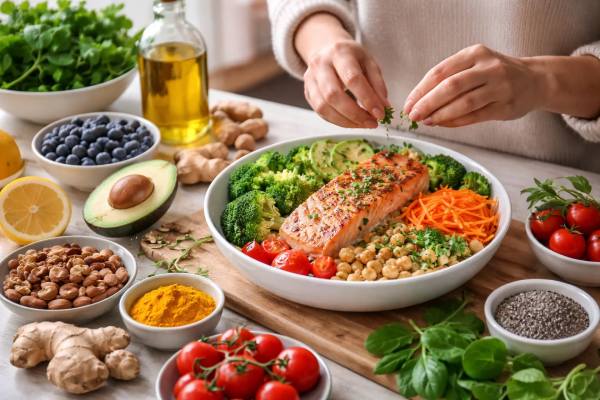
Most people do better with a meal formula than with a long list of approved foods. A good anti-inflammatory meal for weight loss usually has four parts: a protein source, plenty of produce, a smart carbohydrate, and a controlled amount of healthy fat.
| Meal part | What it does | Examples |
|---|---|---|
| Protein | Supports fullness and muscle retention | Fish, chicken, Greek yogurt, eggs, tofu, beans, lentils |
| Produce | Adds volume, fiber, and nutrients | Leafy greens, broccoli, peppers, tomatoes, berries, apples |
| High-quality carbs | Provides energy and helps meals feel complete | Oats, quinoa, potatoes, beans, fruit, brown rice, barley |
| Healthy fats | Improves taste and satisfaction | Olive oil, avocado, nuts, seeds, tahini |
A few examples make the formula easier to use:
- Breakfast: Greek yogurt, berries, oats, chia seeds, and walnuts
- Lunch: Lentil soup with a side salad and olive-oil vinaigrette
- Dinner: Salmon, roasted Brussels sprouts, and quinoa
- Snack: Apple slices with peanut butter or plain yogurt with berries
This structure also helps with portion control. Instead of building meals around bread, pasta, or takeout as the main event, you build around protein and produce first, then add the carbohydrate and fat that make the meal satisfying. That small shift changes both calorie intake and fullness.
For weight loss, meal balance usually matters more than chasing one nutrient. A giant salad with barely any protein often leaves people searching for snacks an hour later. A high-protein meal with no fiber can do the same. The sweet spot is the combination.
If you enjoy Mediterranean-style eating, the transition is often easy because the two patterns overlap so much. That makes a high-protein Mediterranean approach a useful reference point. If you want the bigger meal-building principle, it also lines up well with how to build a high-protein plate for weight loss.
How often should you eat?
There is no single anti-inflammatory meal timing schedule that melts fat faster. Three meals per day works well for many people. Others do better with three meals and one planned snack. The useful pattern is the one that prevents energy crashes, keeps hunger manageable, and reduces random grazing.
Sample meal ideas for real life
An anti-inflammatory diet only helps if you can turn it into meals you would actually cook, pack, or order. The easiest way to make the diet sustainable is to keep a short list of repeatable meals for mornings, workdays, and busy evenings.
Breakfast ideas
- Oatmeal with blueberries, ground flax, cinnamon, and Greek yogurt
- Eggs with sautéed spinach, tomatoes, and whole grain toast
- Smoothie with kefir or yogurt, frozen berries, spinach, chia, and oats
- Cottage cheese with cherries, walnuts, and a side of fruit
Lunch ideas
- Lentil and vegetable soup with a side salad
- Salmon grain bowl with greens, cucumber, tomatoes, quinoa, and olive oil
- Chickpea salad with tuna, herbs, lemon, and chopped vegetables
- Leftover roasted chicken with brown rice and broccoli
Dinner ideas
- Baked salmon with sweet potato and roasted Brussels sprouts
- Turkey and bean chili with avocado
- Tofu stir-fry with broccoli, peppers, edamame, and brown rice
- Whole wheat pasta with white beans, spinach, marinara, and a side salad
Snack ideas
- Apple and almond butter
- Plain yogurt with berries
- Carrots and hummus
- Roasted chickpeas
- A small handful of nuts with fruit
These ideas are simple on purpose. Weight loss plans fail when every meal feels like a project. Good anti-inflammatory eating is often repetitive in the best sense. It uses foods you can keep on hand, prepare quickly, and mix into multiple meals.
It also helps to keep one or two “rescue meals” ready for chaotic days, such as frozen vegetables with cooked rice and rotisserie chicken, or canned soup upgraded with extra beans and spinach. Healthy eating becomes easier when your backup options are solid.
If you want a more structured version, a dedicated 7-day anti-inflammatory meal plan can turn these ideas into a full week. If cost is the main barrier, many of the same staples fit well into budget meal planning for weight loss.
Common mistakes and important cautions
The biggest mistake is expecting the anti-inflammatory diet to work by label alone. A meal plan does not become effective just because it includes salmon, turmeric, or berries. It still has to fit your calorie needs, your appetite, and your actual lifestyle.
Common mistakes include:
- Adding large amounts of olive oil, nuts, seeds, and avocado without noticing calories
- Buying expensive “wellness” products instead of basic whole foods
- Eating too little protein and wondering why hunger stays high
- Relying on smoothies and snack plates that do not feel like real meals
- Treating one restaurant meal as anti-inflammatory because it contains quinoa
- Trying to eliminate too many foods at once and burning out
Another mistake is making the diet more restrictive than necessary. Not every food has to be organic, dairy-free, gluten-free, or perfectly unprocessed. For many people, that mindset creates stress and inconsistency instead of better results. A good diet should be clear enough to follow without becoming socially or mentally exhausting.
There are also situations where a gentler or more individualized approach makes sense. If you have inflammatory bowel disease, irritable bowel syndrome, major food intolerances, chronic digestive symptoms, or a medical condition affecting appetite and digestion, some commonly recommended foods may not feel good right away. Large salads, beans, cruciferous vegetables, or high-fiber grains can be helpful for one person and aggravating for another.
If you are taking weight loss medications or have a condition that affects digestion, it can also make sense to adjust meal size, fat intake, and fiber gradually rather than jumping into bulky meals overnight. The same is true if you are recovering from disordered eating or have a history of rigid dieting. In those cases, the best plan is often the one that improves food quality without turning every meal into a moral decision.
The safest mindset is practical rather than ideological. Use the anti-inflammatory framework to improve meal quality, fullness, and consistency. Keep the foods that help. Adjust the foods that do not sit well. If symptoms, weight changes, or medical concerns are significant, get individualized advice instead of assuming the internet’s “best foods” list applies perfectly to you.
References
- Overview of anti-inflammatory diets and their promising effects on human health 2024 (Review)
- Obesity-associated inflammation countered by a Mediterranean diet: the role of gut-derived metabolites 2024 (Review)
- Mediterranean Diet Reduces Inflammation in Adults: A Systematic Review and Meta-analysis of Randomized Controlled Trials 2025 (Systematic Review)
- Carbohydrate intake for adults and children: WHO guideline 2023 (Guideline)
- Anti-Inflammatory Diets 2023 (Review)
Disclaimer
This article is for general educational purposes only and is not a substitute for medical advice, diagnosis, or treatment. If you have a digestive disorder, a chronic inflammatory condition, or trouble losing weight despite consistent habits, talk with a qualified clinician or registered dietitian for individualized guidance.
If this article helped, please share it on Facebook, X, or your preferred platform so more people can build a weight loss approach that is practical, satisfying, and easier to stick with.