An antidiuretic hormone blood test measures arginine vasopressin, the hormone that helps the kidneys conserve water. ADH and vasopressin are two names for the same hormone. The number is meaningful only in relation to serum sodium, plasma osmolality, urine osmolality, urine volume, thirst, and the conditions present when the sample was taken. A concentration that looks “normal” may be inappropriately low during dehydration or inappropriately high when the blood is dilute.
Direct ADH testing is difficult because vasopressin is unstable, circulates in very low concentrations, binds to platelets, and requires careful specimen handling. Many endocrine centers now use copeptin, a more stable peptide released in equal amounts with vasopressin, especially during stimulated testing for polyuria-polydipsia disorders. Direct ADH can still contribute in selected cases, but it rarely serves as a standalone test for diabetes insipidus, syndrome of inappropriate antidiuretic hormone secretion, or pituitary disease. Results should be interpreted by a clinician familiar with water-balance testing.
- ADH must be interpreted against plasma osmolality or sodium: dehydration should raise ADH, while excess water intake should suppress it.
- Low ADH during high plasma osmolality supports arginine vasopressin deficiency: this condition was traditionally called central diabetes insipidus.
- High ADH with dilute urine can indicate kidney resistance: arginine vasopressin resistance was traditionally called nephrogenic diabetes insipidus.
- A random ADH value is often inconclusive: poor sample handling, stress, nausea, pain, medicines, and changing hydration can alter the result.
- Copeptin is generally more stable than direct ADH: stimulated copeptin testing can distinguish vasopressin deficiency from primary polydipsia more accurately.
- Confusion, seizures, profound weakness, inability to drink, or rapidly changing sodium requires urgent care: severe hypernatremia or hyponatremia can be life-threatening.
Table of Contents
- How ADH Controls Water Balance
- Why an ADH Test Is Ordered
- Preparation and Blood Collection
- How ADH Results Are Interpreted
- What Low ADH Can Mean
- What High ADH Can Mean
- Related Water-Balance Tests
- Next Steps and Safety
How ADH Controls Water Balance
Arginine vasopressin is made in nerve cells in the hypothalamus. It travels down nerve fibers and is stored in the posterior pituitary, which releases it into the bloodstream. The hormone’s main water-balance effect occurs in the kidney collecting ducts.
When the blood becomes more concentrated, specialized hypothalamic osmoreceptors stimulate thirst and vasopressin release. Vasopressin binds to V2 receptors in the kidneys and moves aquaporin-2 water channels into collecting-duct cell membranes. Water then moves back into the circulation instead of leaving the body in urine. Urine volume falls and urine becomes more concentrated.
When a person drinks more water than needed, plasma osmolality falls. Vasopressin secretion is suppressed, aquaporin channels are removed from the membrane, and the kidneys excrete a larger volume of dilute urine. This rapid adjustment keeps serum sodium within a narrow range.
Blood volume and pressure also influence vasopressin. Significant blood loss, dehydration, or low effective circulating volume can strongly stimulate release even when plasma osmolality is low. Nausea, pain, surgery, hypoglycemia, certain medicines, and stress can also increase secretion.
The relationship between vasopressin and osmolality is therefore more informative than either value alone. Consider two examples:
- ADH of 1 pg/mL may be appropriate after heavy water intake when plasma osmolality is low.
- The same ADH of 1 pg/mL may be abnormally low when serum sodium is 151 mmol/L and plasma osmolality is high.
This “appropriateness” principle also applies to high results. Elevated ADH during dehydration is expected, while elevated ADH in a person with low serum sodium and concentrated urine can reflect nonosmotic secretion or impaired suppression.
The newer terms arginine vasopressin deficiency and arginine vasopressin resistance are increasingly used for central and nephrogenic diabetes insipidus. The older names remain common on laboratory reports and in clinical conversations.
Why an ADH Test Is Ordered
Direct ADH measurement is most often considered when a clinician is investigating unusual thirst, excessive urine output, unexplained sodium abnormalities, or a suspected defect in vasopressin production or action. It may also be included in specialist evaluation after pituitary or hypothalamic surgery.
Excessive thirst and urination
True polyuria means an abnormally large total urine volume, not simply frequent trips to the bathroom. In adults and older children, more than about 50 mL/kg over 24 hours supports polyuria; many adult evaluations use 3–4 L per day as a practical threshold. A 24-hour urine measurement or careful intake-output diary helps confirm it.
Causes of large urine volume include:
- Arginine vasopressin deficiency
- Arginine vasopressin resistance
- Primary polydipsia, in which excessive drinking suppresses vasopressin
- High blood glucose causing glucose-related osmotic diuresis
- Diuretics or sodium-glucose cotransporter-2 medicines
- High calcium or low potassium
- Kidney disease or recovery from urinary obstruction
- High solute intake, including urea or sodium loads
An ADH value without confirming hypotonic polyuria can send the evaluation in the wrong direction. Urinary urgency, bladder irritation, prostate enlargement, and nocturia may increase frequency without increasing total volume.
High serum sodium or plasma osmolality
Hypernatremia usually reflects too little water relative to body sodium. If the kidneys are producing inappropriately dilute urine, vasopressin deficiency or resistance becomes likely. Direct ADH can sometimes help distinguish them: secretion should be low in deficiency and high in resistance. In practice, copeptin often performs better.
A person who can feel thirst and drink freely may maintain normal sodium despite severe polyuria. Hypernatremia is more likely in infants, unconscious or cognitively impaired patients, older adults with limited access to water, or people with an impaired thirst mechanism.
Low serum sodium
Direct ADH has limited value in routine hyponatremia. Many patients with syndrome of inappropriate antidiuresis have detectable or elevated vasopressin, but levels vary and can be low in some subtypes. The diagnosis is usually based on hypotonic hyponatremia, inappropriately concentrated urine, urine sodium, volume assessment, thyroid and adrenal evaluation, kidney function, and medication review.
Vasopressin may be appropriately elevated in heart failure, cirrhosis, severe dehydration, vomiting, or other low-volume states even when serum sodium is low. Calling every high value “SIADH” ignores the hormone’s normal response to circulatory stress.
Pituitary and postoperative evaluation
After pituitary surgery, urine output and sodium can change rapidly. Early vasopressin deficiency may be temporary or permanent. Some patients develop a triphasic response: an initial polyuric phase, a later antidiuretic phase from release of stored hormone, and then recurrent deficiency if neurons are damaged. Frequent urine volume, sodium, and osmolality monitoring is usually more useful than one ADH sample.
Preparation and Blood Collection
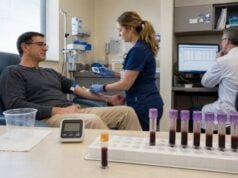
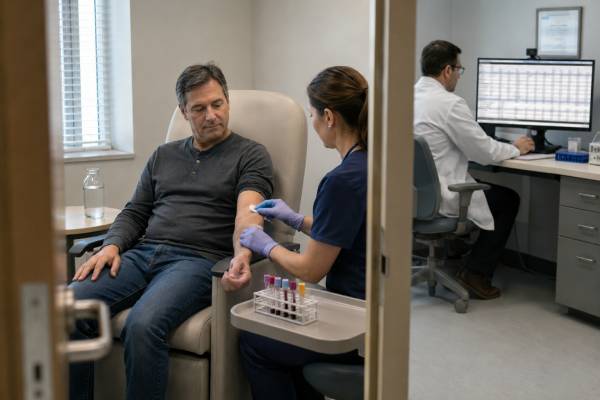
Direct vasopressin measurement is technically demanding. The laboratory’s collection instructions should be followed precisely. Requirements may include a prechilled EDTA tube, immediate placement on ice, rapid plasma separation, freezing, and transport at a controlled temperature. Delayed processing can lower the measured concentration.
Vasopressin binds to platelets, so incomplete separation or differences in platelet count can affect results. The hormone’s short half-life and low circulating concentration add further uncertainty. These practical problems help explain why copeptin testing has become preferable in many centers.
Preparation depends on the purpose of testing. A random paired sample may require no fasting, but the clinician may specify fluid intake, posture, collection time, or simultaneous urine collection. Never intentionally restrict water before an ADH test unless the test is being performed under a supervised protocol. Unmonitored water deprivation can cause dangerous dehydration and hypernatremia.
Tell the clinician about:
- Desmopressin or vasopressin
- Diuretics and SGLT-2 inhibitors
- Lithium
- Carbamazepine, oxcarbazepine, chlorpropamide, or clofibrate
- Antidepressants, antipsychotics, antiseizure medicines, and opioids
- Nonsteroidal anti-inflammatory drugs
- Glucocorticoids
- Alcohol use
- Recent intravenous fluids
- Nausea, pain, infection, surgery, or intense exercise
Some medicines increase vasopressin release, increase kidney sensitivity, or cause resistance. Others change urine output independently. Do not stop a prescribed medicine without instructions, particularly desmopressin, lithium, glucocorticoids, or antiseizure treatment.
A useful paired collection often includes serum sodium, plasma osmolality, urine osmolality, and urine sodium or specific gravity. The blood and urine should be collected close enough together to represent the same physiologic state. A 24-hour urine volume may be measured separately to establish whether polyuria is present.
Reference intervals are method-specific and may be reported in pg/mL or pmol/L. Some laboratories provide an osmolality-dependent interpretation rather than a simple range. The numerical result should not be compared with a value from a different assay or stimulation protocol.
If an outside laboratory performs the analysis, ask whether the sample was frozen and transported according to its requirements. A technically valid result should also identify the collection conditions. Missing sodium, osmolality, fluid status, or collection timing can make even a perfectly measured hormone concentration clinically unusable, and repeating a coordinated blood-and-urine set may be more informative than debating an isolated value.
How ADH Results Are Interpreted
The central question is whether vasopressin secretion matches the concentration of the blood and whether the kidneys respond by concentrating urine.
| Blood pattern | Urine pattern | ADH pattern | Possible explanation |
|---|---|---|---|
| High sodium or high plasma osmolality | Dilute, high-volume urine | Inappropriately low | Arginine vasopressin deficiency |
| High sodium or high plasma osmolality | Dilute, high-volume urine | High or appropriately increased | Arginine vasopressin resistance |
| Low plasma osmolality | Dilute urine | Suppressed | Normal response to excess water or primary polydipsia |
| Low sodium and low plasma osmolality | Inappropriately concentrated urine | Detectable or high | Nonosmotic vasopressin release, including SIADH or low effective blood volume |
| Normal sodium and osmolality | Variable | Variable | Random result may be nondiagnostic |
Plasma and urine osmolality
Plasma osmolality estimates how concentrated the blood is. A commonly used calculated value includes sodium, glucose, and blood urea nitrogen, although measured osmolality is preferable in some situations. Urine osmolality reflects the kidney’s final concentrating response.
Urine osmolality above about 800 mOsm/kg generally shows that vasopressin release and kidney response are intact, making diabetes insipidus unlikely. Urine osmolality below 300 mOsm/kg is dilute. Values from 300 to 800 mOsm/kg overlap among partial deficiency, partial resistance, and primary polydipsia.
Sodium level
High-normal or high sodium during hypotonic polyuria favors vasopressin deficiency or resistance. Low-normal or low sodium favors primary polydipsia, though many patients remain within the normal range. Recent drinking, intravenous fluids, desmopressin, kidney function, and other illnesses can shift the result.
Response to desmopressin
Desmopressin is a synthetic V2-receptor agonist. A substantial rise in urine osmolality after administration supports vasopressin deficiency because the kidneys can respond when the missing signal is replaced. Little response supports renal resistance. Partial disorders and chronic polydipsia create overlap, so fixed percentage rules must be applied cautiously.
Why a direct ADH result may disagree with the rest of the panel
An apparent contradiction does not always represent unusual biology. Vasopressin begins changing within minutes as a person drinks, becomes nauseated, stands up, receives intravenous fluid, or loses water in urine. A blood sample and urine sample collected too far apart may therefore describe different moments. Laboratory delay can lower measured ADH even though secretion was appropriate in the body.
Assays also differ in extraction method, antibody specificity, detection limit, and reference data. At the very low concentrations common in normally hydrated people, analytical variation may be large relative to the number being measured. A result near the detection limit should not be treated as a precise dividing line between normal and deficient secretion.
Kidney response adds another layer. Chronic high water intake can wash out the medullary concentration gradient, so urine remains relatively dilute even when vasopressin begins to rise. Chronic kidney disease can blunt concentration despite adequate hormone. Conversely, a person who recently used desmopressin may have concentrated urine even when endogenous ADH is low.
For these reasons, clinicians may repeat paired testing under defined conditions or move to a validated dynamic protocol. The aim is not to force every value into a simple high-or-low category. It is to determine whether the hypothalamus, posterior pituitary, thirst system, and kidneys respond appropriately as osmolality changes.
What Low ADH Can Mean
Low vasopressin is expected when plasma is dilute. It becomes abnormal when plasma osmolality or serum sodium is high enough that secretion should be strong.
Arginine vasopressin deficiency
Vasopressin deficiency can result from damage to the hypothalamus, pituitary stalk, or posterior pituitary pathways. Causes include:
- Pituitary or brain surgery
- Head injury
- Craniopharyngioma, germinoma, metastasis, or other tumors
- Autoimmune or inflammatory hypophysitis
- Langerhans cell histiocytosis or sarcoidosis
- Infection or vascular injury
- Genetic vasopressin disorders
- Idiopathic disease when no cause is found
Symptoms often include abrupt or gradual passage of large amounts of pale urine, intense thirst, frequent nighttime urination, and preference for cold drinks. The kidneys are usually capable of responding to desmopressin.
Partial deficiency is more difficult to diagnose because some vasopressin remains. Sodium may be normal, and urine may concentrate modestly during dehydration. Direct ADH measurement may overlap with primary polydipsia, which is why stimulated copeptin testing is often preferred.
Primary polydipsia
Excessive water intake appropriately suppresses vasopressin. Long-standing polydipsia can reduce the kidney’s medullary concentration gradient and create a partial diabetes-insipidus-like pattern during water deprivation. Psychiatric illness, medication-related dry mouth, hypothalamic thirst disorders, and habitual drinking can contribute.
Desmopressin can be dangerous if primary polydipsia is mistaken for vasopressin deficiency. Continued high water intake while the kidneys are forced to retain water can cause severe hyponatremia.
Other low results
Alcohol acutely suppresses vasopressin and can increase urine output. Low results may also reflect poor specimen handling or collection after heavy fluid intake. A low random number without high osmolality or hypotonic polyuria does not establish a hormone deficiency.
What High ADH Can Mean
High vasopressin may be a normal response to concentrated blood, low blood volume, nausea, pain, or physiologic stress. It is abnormal only when secretion is excessive for the situation or when the kidneys fail to respond.
Arginine vasopressin resistance
In vasopressin resistance, the kidneys cannot respond adequately despite an appropriate or high hormone signal. Acquired causes include lithium, high calcium, low potassium, chronic kidney disease, urinary obstruction, and certain medicines. Inherited forms involve V2 receptor or aquaporin-2 pathways and often present early in life.
Urine remains dilute despite high plasma osmolality and increased vasopressin. Desmopressin produces little or no concentration in complete resistance. Partial resistance may show a modest response.
A high unstimulated copeptin value can be particularly helpful for diagnosing complete vasopressin resistance. The dedicated copeptin blood test avoids many of the stability problems of direct ADH.
Nonosmotic vasopressin release and hyponatremia
Nausea, severe pain, lung disease, central nervous system disease, surgery, medicines, and some cancers can drive vasopressin despite low osmolality. SIADH is diagnosed only after excluding adrenal insufficiency, severe hypothyroidism, kidney failure, diuretic effects, and low circulating-volume states.
Heart failure, cirrhosis, and true volume depletion also produce high vasopressin. The body senses inadequate effective circulation and prioritizes blood pressure over osmolality, retaining water even as sodium falls. This is physiologically appropriate secretion, not SIADH.
Stress-related elevation
Exercise, hypoglycemia, vomiting, and acute illness can produce high values. An isolated elevation obtained during a stressful blood draw has poor specificity. Repeat testing or a structured evaluation is more informative when the clinical question remains.
Related Water-Balance Tests
Direct ADH measurement is only one component of a water-balance evaluation. A complete diabetes insipidus hormone test panel may include several of the following:
- Serum sodium: shows the balance between body water and sodium.
- Measured plasma osmolality: defines the osmotic stimulus for vasopressin release.
- Urine osmolality: shows whether the kidneys are concentrating urine.
- Urine specific gravity: provides a rapid but less precise estimate of dilution.
- 24-hour urine volume: confirms true polyuria.
- Glucose, calcium, potassium, urea, and creatinine: identify common alternative causes.
- Copeptin: provides a stable surrogate for vasopressin release.
- Pituitary MRI: investigates hypothalamic, stalk, or pituitary causes after biochemical classification.
Water deprivation test
During supervised water deprivation, clinicians monitor weight, urine volume, urine osmolality, plasma osmolality, and sodium. Desmopressin is given at the end in many protocols. The test should stop if safety thresholds are reached, such as excessive weight loss, rising sodium, orthostatic symptoms, or marked dehydration.
Traditional testing can be difficult to interpret in partial disorders and chronic primary polydipsia. It must never be attempted at home.
Copeptin stimulation tests
Hypertonic saline raises sodium and stimulates vasopressin and copeptin. A stimulated copeptin concentration can distinguish vasopressin deficiency from primary polydipsia with high accuracy when the protocol and sodium target are followed. Because hypertonic saline can change sodium quickly, continuous supervision and frequent measurement are required.
Arginine provides a nonosmotic stimulus and is generally simpler, though diagnostic performance and cutoffs differ. Test availability varies. Baseline copeptin can identify many cases of vasopressin resistance without stimulation when it is clearly high.
Next Steps and Safety
A result suggesting vasopressin deficiency is followed by investigation of the cause. Pituitary MRI usually evaluates the posterior pituitary bright spot, stalk, hypothalamus, and nearby structures. Other pituitary hormones may be checked. Children and young adults with stalk thickening may need repeat imaging and targeted testing because some causes evolve over time.
Treatment of vasopressin deficiency commonly uses desmopressin. The dose must allow symptom control without continuous water retention. Many patients are advised to drink according to thirst and to permit an occasional period of increased urine output before the next dose, depending on the treatment plan. Overreplacement plus excess fluid intake can cause hyponatremia.
Vasopressin resistance is treated by correcting the cause when possible, such as addressing high calcium or low potassium and reviewing lithium. Reduced sodium and protein solute load, thiazide diuretics, and other therapies may reduce urine output under specialist guidance.
Seek urgent care for:
- Confusion, seizure, severe drowsiness, or loss of consciousness
- Inability to access or drink water while producing large volumes of urine
- Repeated vomiting or severe dehydration
- Rapid postoperative urine output with rising sodium
- Severe headache or neurologic symptoms after pituitary surgery
- Symptoms of hyponatremia while using desmopressin, including worsening headache, nausea, confusion, or seizure
Useful questions include whether the sample was handled correctly, what the simultaneous sodium and osmolality showed, whether true hypotonic polyuria was confirmed, and whether copeptin-based testing would be more reliable. The interpretation should identify the entire physiologic pattern rather than label a single ADH number as simply high or low.
References
- Diagnostic Tests for Diabetes Insipidus 2025 (Review)
- Diagnosis and Management of Central Diabetes Insipidus in Adults 2022 (Review)
- Approach to the Patient: “Utility of the Copeptin Assay” 2022 (Review)
- Central and nephrogenic diabetes insipidus 2025 (Review)
- Arginine Vasopressin Disorder (Diabetes Insipidus) 2024 (Review)
- Diagnosis and management of diabetes insipidus for the internist: an update 2021 (Review)
Disclaimer
This article is for general education and does not diagnose a water-balance disorder. ADH results require simultaneous sodium, plasma and urine osmolality, urine volume, medication review, and assay-specific interpretation. Never perform water deprivation or change desmopressin without medical supervision, and seek urgent care for severe neurologic symptoms or dehydration.