An adrenocorticotropic hormone, or ACTH, blood test measures the pituitary signal that tells the adrenal glands to make cortisol. The result is most useful when ACTH and cortisol are collected at the same time, usually in the morning. A high or low ACTH value by itself rarely identifies the problem because the body adjusts ACTH in response to cortisol, stress, illness, sleep, medicines, and time of day.
The paired pattern helps locate dysfunction. High ACTH with low cortisol points toward primary adrenal insufficiency, in which the adrenal glands cannot respond normally. Low or inappropriately normal ACTH with low cortisol raises concern for pituitary or hypothalamic disease, recent glucocorticoid use, or suppression after treatment for cortisol excess. When cortisol is confirmed to be excessive, ACTH helps divide the causes into ACTH-dependent and ACTH-independent groups. Dynamic tests and imaging may then be needed. Because ACTH is unstable in collected blood, proper sample handling is also essential.
- ACTH should usually be interpreted with a same-time cortisol result: either number alone can be misleading.
- High ACTH plus low cortisol suggests primary adrenal insufficiency: the pituitary is signaling strongly, but the adrenal glands are not producing enough cortisol.
- Low or normal ACTH plus low cortisol suggests central adrenal insufficiency: pituitary, hypothalamic, or glucocorticoid-related suppression becomes more likely.
- High or nonsuppressed ACTH with confirmed high cortisol indicates ACTH-dependent Cushing syndrome: the source may be pituitary or ectopic.
- Low ACTH with confirmed high cortisol indicates ACTH-independent cortisol excess: an adrenal source or glucocorticoid exposure is more likely.
- Severe weakness, vomiting, abdominal pain, fainting, confusion, or low blood pressure can signal adrenal crisis and requires emergency care.
Table of Contents
- What ACTH Does
- Why an ACTH Blood Test Is Ordered
- Preparation, Timing, and Sample Handling
- ACTH and Cortisol Result Patterns
- What High ACTH Can Mean
- What Low ACTH Can Mean
- Follow-Up Tests and Imaging
- Urgent Symptoms and Questions to Ask
What ACTH Does
ACTH is a peptide hormone made by corticotroph cells in the anterior pituitary gland. Its full name is adrenocorticotropic hormone, and it is also called corticotropin. ACTH travels through the bloodstream to the adrenal cortex, where it stimulates cortisol production and supports adrenal androgen production.
The system operates as a feedback loop:
- The hypothalamus releases corticotropin-releasing hormone and vasopressin.
- These signals prompt the pituitary to release ACTH.
- ACTH stimulates the adrenal glands to produce cortisol.
- Cortisol feeds back to the hypothalamus and pituitary, reducing further ACTH release.
This hypothalamic-pituitary-adrenal axis follows a daily rhythm. In people who sleep at night, ACTH begins rising in the early morning and helps produce the morning cortisol peak. Concentrations fall later in the day and are usually lowest around the early part of nighttime sleep. Both ACTH and cortisol are also released in pulses, so two samples collected at different moments can differ even when no disease is present.
Physical stress such as infection, surgery, pain, low blood sugar, and serious illness can increase ACTH and cortisol. Psychological stress can also affect the system, but an abnormal result should not automatically be dismissed as “stress.” The magnitude, paired cortisol result, clinical setting, and repeatability determine whether further investigation is needed.
ACTH has trophic effects on the adrenal cortex. Persistently high ACTH can enlarge the adrenal glands and increase skin pigmentation through related melanocortin pathways. Persistently low ACTH can cause the cortisol-producing layers of the adrenal cortex to shrink over time. This is why recovery after prolonged glucocorticoid use may take months even after the medicine is reduced or stopped under medical supervision.
An ACTH result is one part of a broader pituitary hormone evaluation. It does not measure cortisol production directly, and it does not show whether a pituitary lesion is present. It reveals how strongly the pituitary is signaling at the time of collection.
Why an ACTH Blood Test Is Ordered
Clinicians order ACTH when symptoms or another laboratory result suggest too little or too much cortisol. The test is also used after pituitary or adrenal surgery, during evaluation of a pituitary mass, and in selected patients receiving medicines that affect the cortisol axis.
Suspected adrenal insufficiency
Symptoms may include persistent fatigue, muscle weakness, unintended weight loss, nausea, abdominal discomfort, dizziness on standing, low blood pressure, low sodium, or recurrent low blood sugar. Primary adrenal insufficiency may also cause salt craving, high potassium, and darkening of skin creases, scars, gums, or other pressure areas. Central adrenal insufficiency usually does not cause marked hyperpigmentation or high potassium because ACTH and aldosterone regulation differ.
A morning cortisol is often obtained first or with ACTH. Very low morning cortisol can strongly support adrenal insufficiency, while a clearly robust value may make it unlikely. Intermediate results usually require stimulation testing. ACTH then helps distinguish primary adrenal failure from deficient pituitary or hypothalamic signaling.
Suspected cortisol excess
ACTH is not normally the first screening test for Cushing syndrome. Cortisol excess must first be demonstrated with validated tests such as late-night salivary cortisol, 24-hour urinary free cortisol, or an overnight dexamethasone suppression test. Once endogenous hypercortisolism is established, ACTH helps identify whether the process is ACTH-dependent.
Features that may prompt a cortisol evaluation include easy bruising, wide purple striae, facial redness, proximal muscle weakness, osteoporosis or fractures, difficult-to-control hypertension or diabetes, menstrual changes, reduced libido, recurrent infections, or rapid development of several findings together. Weight gain alone is not specific.
Pituitary disease or treatment follow-up
A pituitary tumor, surgery, radiation, head injury, postpartum pituitary injury, inflammation, or infiltrative disease can reduce ACTH production. Because cortisol is essential during illness, central ACTH deficiency may be the most immediately dangerous component of hypopituitarism.
After surgery for Cushing disease, very low cortisol and ACTH may indicate that the ACTH-producing tumor has been removed and the normal axis is temporarily suppressed. Patients commonly need prescribed glucocorticoid replacement until the axis recovers. Testing schedules and thresholds are individualized by the treating endocrine team.
Ectopic or adrenal causes
When cortisol excess is ACTH-dependent, the source may be an ACTH-secreting pituitary tumor, called Cushing disease, or a nonpituitary tumor producing ACTH, called ectopic ACTH syndrome. When ACTH is suppressed, an adrenal adenoma, adrenal carcinoma, bilateral adrenal disorder, or glucocorticoid exposure may be responsible.
Preparation, Timing, and Sample Handling
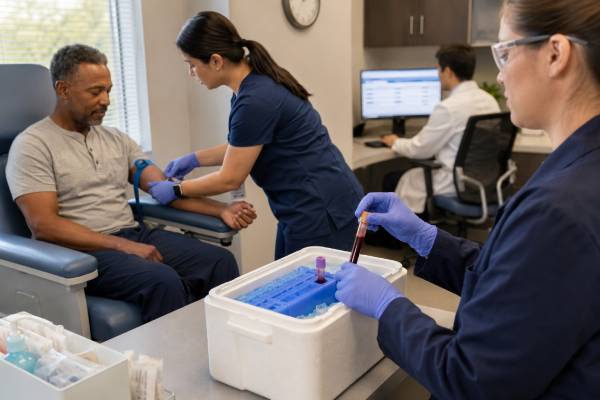
ACTH testing requires more attention to timing and handling than many routine blood tests. ACTH breaks down quickly after collection. A specimen that remains warm or is processed late may produce a falsely low result.
The laboratory commonly collects blood into a chilled EDTA tube, places it on ice, separates plasma promptly, and freezes or analyzes it according to the assay protocol. Procedures differ by laboratory, so collection staff should follow the local instructions exactly. If the clinical picture strongly conflicts with a low result, preanalytical error should be considered.
Morning collection is common because reference intervals are usually designed for samples drawn around 7–10 a.m. The exact time should be recorded. Shift workers, people with unusual sleep schedules, hospitalized patients, and those taking glucocorticoids may not follow the standard rhythm.
Before the test, tell the clinician about all medicines and supplements, especially:
- Hydrocortisone, prednisone, prednisolone, dexamethasone, methylprednisolone, and other glucocorticoids
- Steroid injections, inhalers, nasal sprays, skin creams, eye drops, and rectal products
- Opioids
- Certain antifungal, antiseizure, and hormone medicines
- Estrogen-containing oral medicines
- Biotin supplements
- Medicines used to block or replace cortisol
Glucocorticoids can suppress ACTH, and some can interfere directly with cortisol assays. Even topical, inhaled, injected, or “adrenal support” products may matter. Do not stop steroids abruptly. Sudden withdrawal after prolonged use can cause adrenal insufficiency.
Fasting is not always required for ACTH alone, but it may be requested because cortisol, glucose, renin, aldosterone, or other tests are collected at the same visit. Strenuous exercise, acute pain, sleep deprivation, and illness can alter the result. A calm resting period before collection may improve consistency, but medically necessary testing should not be delayed simply to create ideal conditions.
Reference ranges vary by assay. A typical morning interval may be roughly 7–63 pg/mL, but some laboratories use substantially different limits. ACTH may also be reported in pmol/L. The report’s range, collection time, and cortisol result are more important than a generic internet range.
Hospitalized and critically ill patients need especially cautious interpretation. Their usual daily rhythm may disappear, binding proteins may fall, and medications or organ failure may alter both cortisol measurement and ACTH secretion. In that setting, clinicians make treatment decisions from the whole physiologic picture and may give emergency glucocorticoids before definitive test results return when adrenal crisis is a serious possibility. Drawing ACTH and cortisol before treatment is helpful when it can be done without delaying lifesaving care.
ACTH and Cortisol Result Patterns
ACTH gains meaning through its relationship with cortisol. “Normal” ACTH can be abnormal when cortisol is low because the pituitary should be responding with a strong increase. This is called an inappropriately normal result.
| ACTH | Cortisol | Pattern suggests | Common next step |
|---|---|---|---|
| High | Low | Primary adrenal insufficiency | Confirm adrenal failure, check electrolytes and renin-aldosterone system, investigate cause |
| Low or inappropriately normal | Low | Central adrenal insufficiency or glucocorticoid suppression | Review steroid exposure, assess other pituitary hormones, perform dynamic testing when safe |
| High or nonsuppressed | Confirmed high | ACTH-dependent Cushing syndrome | Differentiate pituitary from ectopic ACTH production |
| Low or suppressed | Confirmed high | ACTH-independent cortisol excess | Evaluate adrenal causes and glucocorticoid exposure |
| Normal | Normal | May be physiologic, depending on time and reason for testing | No further testing or targeted follow-up based on symptoms |
A single paired sample cannot always settle the diagnosis. Cortisol-binding proteins, estrogen, critical illness, low albumin, assay method, sleep pattern, and medications can change measured total cortisol. Dynamic testing evaluates how the axis responds to stimulation or suppression and may be more informative than a static value.
ACTH should be measured after hypercortisolism has been confirmed when evaluating Cushing syndrome. Otherwise, a mildly high ACTH during stress or a random cortisol pulse can lead to unnecessary imaging. Conversely, a low ACTH result obtained after taking dexamethasone is expected and should not be mistaken for pituitary failure.
Relative rather than absolute interpretation
Many laboratories flag only values outside the reference interval, but endocrine interpretation asks whether the hormone response is appropriate. Examples include:
- ACTH of 25 pg/mL may sit inside the stated range, yet be too low if cortisol is profoundly deficient.
- ACTH of 55 pg/mL may sit near the upper limit, yet be inadequately suppressed if cortisol is clearly excessive.
- ACTH of 80 pg/mL may reflect a morning pulse, acute illness, primary adrenal insufficiency, Cushing disease, or ectopic secretion depending on cortisol and context.
This relative interpretation is why the report should never be read as “ACTH high equals pituitary tumor” or “ACTH low equals pituitary failure.”
What High ACTH Can Mean
High ACTH means the pituitary is releasing more corticotropin than the laboratory expects for the collection time. The cortisol result determines which causes rise to the top.
Primary adrenal insufficiency
Primary adrenal insufficiency damages the adrenal cortex. Cortisol falls, negative feedback weakens, and ACTH rises. Autoimmune adrenalitis is a common cause in adults in many regions. Other causes include infection, adrenal hemorrhage, cancer infiltration, genetic disorders, bilateral adrenal surgery, and some medicines.
ACTH can become markedly elevated, sometimes several times the upper limit. The increased melanocortin activity may produce hyperpigmentation. Aldosterone deficiency can cause low sodium, high potassium, dehydration, salt craving, and low blood pressure. These features distinguish primary disease from many central causes.
ACTH-dependent Cushing syndrome
If excess cortisol has already been confirmed and ACTH is not suppressed, the disorder is ACTH-dependent. The two major categories are:
- Cushing disease: a pituitary corticotroph tumor secretes ACTH.
- Ectopic ACTH syndrome: a tumor outside the pituitary, often neuroendocrine in origin, secretes ACTH.
The ACTH concentration alone cannot reliably separate them because values overlap. Pituitary MRI, corticotropin-releasing hormone or desmopressin testing in selected centers, and bilateral inferior petrosal sinus sampling may be needed. Very rapid onset, severe low potassium, markedly high cortisol, and certain imaging findings may suggest ectopic secretion, but none replaces a complete evaluation.
Congenital adrenal hyperplasia and other causes
Some forms of congenital adrenal hyperplasia reduce cortisol synthesis. ACTH rises in response and drives adrenal enlargement and excess production of steroid precursors or androgens. Newborn screening and steroid-specific tests are used rather than ACTH alone.
ACTH may also rise transiently with severe illness, hypoglycemia, intense exercise, pain, or circadian variation. Primary glucocorticoid resistance is rare and can produce high cortisol and ACTH without typical Cushing features because tissues respond poorly to cortisol.
After both adrenal glands are removed for Cushing disease, very high ACTH with growth of a residual pituitary corticotroph tumor can occur, historically called Nelson syndrome. Patients need long-term specialist monitoring.
What Low ACTH Can Mean
Low ACTH indicates reduced pituitary signaling or normal feedback suppression from high cortisol or a glucocorticoid medicine. The accompanying cortisol level separates these possibilities.
Central adrenal insufficiency
Low cortisol with low or inappropriately normal ACTH suggests secondary adrenal insufficiency from pituitary disease or tertiary adrenal insufficiency from hypothalamic dysfunction. Common causes include pituitary surgery, radiation, tumors, apoplexy, traumatic brain injury, infiltrative disease, and prolonged glucocorticoid exposure.
Central adrenal insufficiency often preserves aldosterone because aldosterone is controlled mainly by the renin-angiotensin system and potassium. High potassium and salt craving are therefore less typical than in primary adrenal failure. Low sodium can still occur because cortisol deficiency promotes water retention.
A normal ACTH flag does not exclude central disease. When cortisol is low, a healthy pituitary should increase ACTH. A value that remains mid-range may represent a deficient response.
Glucocorticoid suppression
Exogenous steroids are a frequent cause of low ACTH and low endogenous cortisol. Suppression depends on dose, potency, timing, route, and duration. Repeated injections or high-dose inhaled, topical, or oral treatment can be enough. Recovery varies from weeks to more than a year.
Steroid tapering must be individualized. Symptoms during a taper may reflect adrenal insufficiency, glucocorticoid withdrawal, recurrence of the treated disease, or a combination. Laboratory testing is timed around the specific medicine because residual drug can alter both the physiology and the assay.
ACTH-independent cortisol excess
Low ACTH with confirmed high cortisol suggests that cortisol is being produced without pituitary stimulation. Causes include a cortisol-producing adrenal adenoma, adrenal carcinoma, bilateral adrenal nodular disease, or exogenous glucocorticoids. Adrenal imaging is usually performed only after biochemical testing demonstrates the pattern.
Normal physiologic suppression
ACTH can be low later in the day, after dexamethasone, during treatment with cortisol-lowering or replacement regimens, or shortly after a cortisol pulse. A low isolated afternoon result in a well person is not a diagnosis.
Follow-Up Tests and Imaging
The next test depends on whether the concern is cortisol deficiency or excess.
When cortisol is low or uncertain
A cosyntropin stimulation test measures cortisol before and after synthetic ACTH. It evaluates whether the adrenal glands can respond. A standard 250 mcg dose is common; some centers use a 1 mcg low-dose protocol in selected situations. Assay-specific cortisol cutoffs are essential because newer methods often produce lower values than older immunoassays.
A normal cosyntropin response can occasionally occur in recent central adrenal insufficiency because the adrenal glands have not yet atrophied. When suspicion remains high, an insulin tolerance test, metyrapone test, glucagon stimulation test, or repeated morning assessment may be considered in specialist settings. The insulin tolerance test has important contraindications and requires close supervision.
Additional tests may include electrolytes, glucose, renin, aldosterone, adrenal antibodies, 21-hydroxylase antibodies, and other pituitary hormones. Pituitary MRI is appropriate when central disease is suspected, particularly when headaches, visual symptoms, multiple hormone deficiencies, or a known lesion is present.
When cortisol is high
Endogenous Cushing syndrome is usually confirmed with at least two appropriate abnormal screening results, unless the presentation is severe and unequivocal. ACTH then guides source testing. The pituitary tumor hormone panel may be expanded to assess other axes, but a normal prolactin, TSH, or growth hormone result does not exclude a tiny ACTH-secreting tumor.
For ACTH-dependent disease, pituitary MRI is performed. Small incidental pituitary lesions are common, so imaging must align with biochemistry. Bilateral inferior petrosal sinus sampling compares ACTH in veins draining the pituitary with peripheral blood and remains the most accurate test for distinguishing pituitary from ectopic secretion when noninvasive results are equivocal.
For suppressed ACTH, adrenal computed tomography or MRI may follow. Imaging findings must be interpreted carefully because nonfunctioning adrenal nodules are common, especially with age.
Repeat testing
Repeat ACTH should use the same collection time and proper handling when possible. Cyclic Cushing syndrome can produce alternating normal and abnormal periods, so testing during active symptoms may be necessary. In recovering central adrenal insufficiency, periodic morning cortisol or stimulation testing helps determine whether prescribed replacement can be reduced or stopped safely.
Urgent Symptoms and Questions to Ask
Adrenal crisis is a medical emergency. Seek emergency care for severe weakness, repeated vomiting or diarrhea, intense abdominal or back pain, fainting, confusion, very low blood pressure, dehydration, fever with rapid deterioration, or inability to keep steroid medicine down. People with known adrenal insufficiency should follow their emergency injection and sick-day plan and carry medical identification.
Sudden severe headache, visual loss, double vision, eye-movement problems, vomiting, or reduced consciousness can indicate pituitary apoplexy. This also requires urgent assessment because ACTH deficiency may develop abruptly.
Questions that help clarify an ACTH result include:
- What time was the sample collected, and was cortisol drawn at the same time?
- Was the specimen chilled and processed using the laboratory’s ACTH protocol?
- Is my ACTH response appropriate for the cortisol concentration, even if both are within their printed ranges?
- Could any oral, injected, inhaled, topical, nasal, eye, or rectal steroid affect the result?
- Do I need a cosyntropin stimulation test or another dynamic test?
- Has cortisol excess been confirmed before using ACTH to look for the source?
- Should other pituitary hormones be measured?
- Is pituitary or adrenal imaging justified by the biochemical results?
- Do I need an emergency steroid plan while the evaluation is underway?
Keep the exact ACTH and cortisol numbers, units, reference intervals, collection times, and medication timing. Endocrine results often become clearer when compared as a series rather than as isolated high or low flags.
References
- Endocrine Testing Protocols: Hypothalamic Pituitary Adrenal Axis 2023 (Review)
- Consensus on diagnosis and management of Cushing’s disease: a guideline update 2021 (Guideline)
- Cushing’s Syndrome 2024 (Review)
- Adrenocorticotropic Hormone (ACTH): MedlinePlus Medical Test 2023 (Official Medical Test)
- Physiology, Adrenocorticotropic Hormone (ACTH) 2025 (Review)
- Adrenal Insufficiency 2026 (Review)
Disclaimer
This article provides general education and does not diagnose adrenal or pituitary disease. ACTH must be interpreted with cortisol, collection time, assay method, sample handling, medicines, and clinical findings. Seek emergency care for symptoms of adrenal crisis or sudden severe headache with visual or neurologic changes.