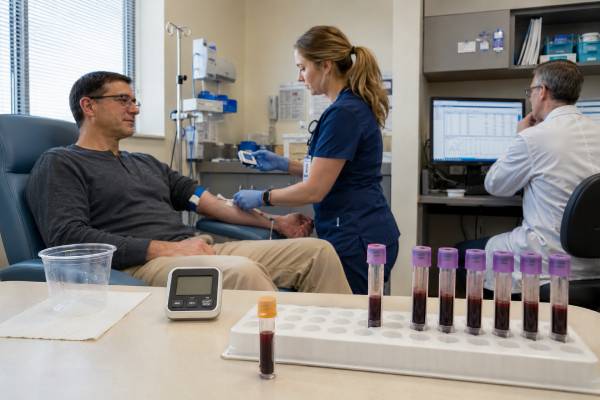
Acromegaly blood testing looks for persistent overactivity of the growth hormone system. The usual first test is insulin-like growth factor 1, or IGF-1, because it reflects average growth hormone exposure more reliably than a single growth hormone measurement. When the IGF-1 result is clearly elevated for age and the person has typical clinical features, that may establish the biochemical diagnosis. Borderline, unexpected, or conflicting results often require repeat testing and sometimes an oral glucose growth hormone suppression test.
The tests must be interpreted together with age, symptoms, medications, nutrition, liver and kidney function, diabetes control, pregnancy status, and the laboratory method. A “normal range” printed on a report is not interchangeable across laboratories. After biochemical evidence is confirmed, pituitary magnetic resonance imaging and assessment of other pituitary hormones usually follow. Testing also continues after treatment because IGF-1 and growth hormone help show whether the disease is controlled.
- IGF-1 is the preferred screening test: a value above the age-adjusted upper limit raises concern for acromegaly, especially when physical changes are present.
- A random growth hormone result cannot reliably rule acromegaly in or out: secretion is pulsatile and may change markedly within minutes.
- Current consensus supports a clear diagnosis when typical features accompany IGF-1 above 1.3 times the age-adjusted upper limit of normal.
- Oral glucose normally suppresses growth hormone: failure to reach the laboratory’s validated nadir supports autonomous growth hormone secretion.
- Borderline results should be repeated with the same validated assay: illness, poor diabetes control, pregnancy, estrogen exposure, liver disease, kidney disease, and undernutrition can distort interpretation.
- New visual loss, double vision, severe sudden headache, vomiting, or reduced consciousness needs urgent medical assessment: these symptoms can signal pituitary compression or hemorrhage.
Table of Contents
- What the Acromegaly Blood Test Panel Measures
- When Acromegaly Testing Is Needed
- Preparation and Test Procedure
- Understanding IGF-1 Results
- Understanding Growth Hormone and Glucose Suppression Results
- Discordant, Borderline, and Misleading Results
- Next Tests and Follow-Up
- Questions to Ask About the Results
What the Acromegaly Blood Test Panel Measures
Acromegaly develops when the body is exposed to too much growth hormone after the growth plates have closed. In most cases, a benign growth hormone-producing pituitary adenoma is responsible. Growth hormone stimulates the liver and other tissues to make IGF-1, which drives many of the tissue-growth and metabolic effects associated with the condition.
An acromegaly blood test panel is not one universal laboratory package. It usually combines tests selected to answer three separate questions:
- Is long-term growth hormone action excessive? IGF-1 provides the strongest first answer.
- Is growth hormone secretion autonomous? Growth hormone measurements, especially during an oral glucose test, can show whether normal suppression is lost.
- Has the pituitary disorder affected other hormone systems? Prolactin, cortisol-axis tests, free T4, TSH, LH, FSH, testosterone, or estradiol may be added after acromegaly becomes likely.
| Test | What it reflects | Main use | Important limitation |
|---|---|---|---|
| IGF-1 | Integrated growth hormone action over time | Initial screening, diagnosis, and treatment monitoring | Must be compared with an age-adjusted range and can be altered by systemic illness |
| Random growth hormone | Growth hormone concentration at one moment | Supportive information and follow-up in selected settings | Pulsatile secretion causes wide minute-to-minute variation |
| Growth hormone during oral glucose tolerance testing | Ability of glucose to suppress growth hormone secretion | Clarifying equivocal or discordant cases | Cutoffs depend on assay sensitivity, protocol, body mass, sex, and estrogen status |
| Other pituitary hormones | Function of the remaining pituitary axes | Finding co-secretion or hormone deficiencies | Each axis requires paired tests and clinical context |
The IGF-1 test is more stable than growth hormone because IGF-1 does not rise and fall in short pulses. Even so, the result is not a direct measurement of tumor size. A small adenoma can produce clinically important hormone excess, while a larger pituitary mass may produce little or no growth hormone.
The panel also does not replace clinical examination. Enlarging rings or shoes, widening hands or feet, coarser facial features, increased spacing between teeth, jaw growth, excessive sweating, oily skin, joint pain, carpal tunnel symptoms, headaches, sleep apnea, hypertension, and new glucose intolerance can make an elevated IGF-1 much more meaningful.
When Acromegaly Testing Is Needed
Testing is appropriate when physical changes, associated conditions, or an incidental pituitary mass raise suspicion. Because changes often develop over years, comparing current photographs with older photographs may reveal gradual enlargement that was difficult to notice day to day.
Common reasons to order IGF-1 include:
- Progressive enlargement of the hands, feet, jaw, nose, lips, or tongue
- Increasing ring, glove, hat, or shoe size in adulthood
- New dental spacing or bite changes
- Excessive sweating, oily skin, skin tags, or deepening voice
- Persistent headaches or visual-field symptoms
- Carpal tunnel syndrome, joint enlargement, or unexplained degenerative joint symptoms
- Obstructive sleep apnea with other suggestive features
- Hypertension, cardiomyopathy, or diabetes accompanied by acral or facial changes
- A pituitary tumor found on imaging
- Several acromegaly-associated conditions occurring in the same person
Routine population screening is not generally performed because acromegaly is uncommon and mild IGF-1 elevations can have other explanations. Testing becomes more useful when there is a recognizable pattern rather than one nonspecific symptom.
Children and adolescents with growth hormone excess usually present differently. Before growth plates close, excess hormone can cause unusually rapid linear growth and gigantism. Evaluation may include growth velocity, bone age, IGF-1, growth hormone suppression testing, and broader testing for hereditary pituitary syndromes. Adults do not grow taller from acromegaly because their growth plates have fused.
A clinician may also test someone who has already received pituitary surgery, medication, or radiotherapy. In that setting, the purpose is not initial diagnosis but biochemical monitoring. The timing of blood collection depends on the treatment. For example, testing may be scheduled near the end of a long-acting medication interval, and IGF-1 may be repeated months after surgery because it can take time to stabilize.
Preparation and Test Procedure
A routine IGF-1 blood draw usually requires little preparation, although the ordering clinician or laboratory may request morning collection or fasting when other tests are drawn at the same time. The oral glucose suppression test requires more structured preparation.
Before testing, provide a complete list of prescription drugs, over-the-counter medicines, hormone products, and supplements. Biotin can interfere with some immunoassays. Oral estrogen can lower IGF-1 and change growth hormone responses, while pregnancy creates major physiologic changes in the growth hormone–IGF-1 system. Do not stop a prescribed medicine unless the clinician managing the test gives specific instructions.
For a standard oral glucose growth hormone suppression test, the person commonly:
- Fasts overnight, usually for at least eight hours, following the laboratory’s instructions.
- Has a baseline blood sample collected for growth hormone and often glucose.
- Drinks a measured glucose solution, frequently containing 75 g of glucose for an adult protocol.
- Has repeat blood samples collected at specified times, often over two hours.
- Remains seated or resting and avoids food, smoking, strenuous activity, and unapproved drinks during the test.
Sampling schedules vary. Some protocols collect at 30, 60, 90, and 120 minutes; others use fewer time points. The clinically important value is usually the lowest growth hormone concentration, called the nadir, together with the glucose response and the laboratory’s assay-specific cutoff.
The glucose drink is very sweet. Nausea, bloating, dizziness, sweating, or headache can occur. Vomiting may invalidate the test. People with significant hyperglycemia or diabetes need an individualized plan because glucose may not suppress growth hormone normally when diabetes is poorly controlled, and the glucose load may be inappropriate in some circumstances.
A single growth hormone blood draw is simple, but its apparent precision can be misleading. Stress, sleep, exercise, fasting, hypoglycemia, and normal pulsatile secretion can move the number substantially. For that reason, a standalone random result should not be treated like a stable “growth hormone level.” The broader growth hormone test interpretation depends on why it was ordered and whether dynamic testing was performed.
Understanding IGF-1 Results
IGF-1 results are interpreted against a reference interval matched to age. Concentrations are highest during puberty and early adulthood, then decline with age. A number that would be normal for a teenager could be abnormally high for an older adult. Laboratories may report the raw concentration, the upper limit of normal, a ratio to the upper limit, or a standard deviation score.
Clearly elevated IGF-1
In a person with typical acromegaly features, current consensus supports the diagnosis when IGF-1 is more than 1.3 times the upper limit of normal for age. For example, if the age-adjusted upper limit is 250 ng/mL, 1.3 times that limit is 325 ng/mL. A result above that threshold is more persuasive than a value just a few percent above the cutoff.
An elevated result still deserves technical and clinical review. The clinician should confirm that the correct age range was used, the assay is validated, and no major confounder makes the value unreliable. Once biochemical acromegaly is established, imaging is used to locate the source rather than to prove hormone excess.
Borderline elevation
A mild elevation may be real, temporary, or analytical. The usual next step is to repeat IGF-1, preferably using the same laboratory and method, after addressing reversible factors such as uncontrolled diabetes or acute illness. Repeating with a different assay can help in selected cases, but different methods also create a new comparison problem.
A borderline result carries more weight when progressive physical changes are documented. It carries less weight when the person has no compatible features and a repeat value is normal. Oral glucose suppression testing may help when the repeat result remains equivocal.
Normal or low IGF-1
A convincingly normal age-adjusted IGF-1 usually makes active acromegaly unlikely. Exceptions require clinical judgment. Severe uncontrolled diabetes, malnutrition, liver disease, kidney disease, hypothyroidism, acute illness, and oral estrogen can lower IGF-1 despite growth hormone activity. Very early disease and assay problems are less common considerations.
Low IGF-1 is not evidence of acromegaly. Depending on age and circumstances, it may reflect poor nutrition, chronic illness, impaired liver production, growth hormone deficiency, or normal age-related decline. The result should not be interpreted without the rest of the clinical picture.
Monitoring after treatment
After successful treatment, the aim is generally to return IGF-1 to the normal age-adjusted range. Trends are most reliable when the same assay is used. A small postoperative elevation may normalize over the next three to six months, so clinicians often repeat testing rather than making an immediate long-term treatment decision from one early value.
During treatment with the growth hormone receptor blocker pegvisomant, IGF-1—not growth hormone—is used to adjust therapy. The drug blocks growth hormone action, so measured growth hormone may remain elevated and does not indicate failure in the usual way.
Understanding Growth Hormone and Glucose Suppression Results
Growth hormone is released in bursts, with low or undetectable concentrations between pulses. A healthy person can therefore have a high result during a normal pulse or a very low result at another time. Acromegaly changes the overall secretion pattern, but overlap with healthy values remains possible.
Random growth hormone
A random fasting growth hormone value may provide prognostic or monitoring information, but it is no longer required to diagnose a patient who has typical features and a clearly diagnostic IGF-1 elevation. A very low random value does not automatically exclude mild acromegaly, and a high isolated value does not establish it.
Assay differences matter. Growth hormone may be reported as ng/mL or μg/L; these units are numerically equivalent. Older studies used less sensitive assays and higher cutoffs. Modern methods can measure much lower concentrations, so a historical cutoff should not be applied blindly to a current report.
Oral glucose suppression
Glucose normally reduces pituitary growth hormone release. During the oral glucose growth hormone suppression test, the laboratory identifies the lowest value reached after the drink.
Historically, failure to suppress below 1.0 ng/mL supported acromegaly. With sensitive modern assays, some centers use lower cutoffs such as 0.4 ng/mL. There is no single universal number that fits every assay and patient. The report should state or reference the laboratory’s validated decision limit.
A nadir above the validated cutoff supports autonomous secretion, particularly when IGF-1 is elevated. Adequate suppression argues against acromegaly but does not override a clearly abnormal IGF-1 and convincing phenotype without further review. Mild or early disease can produce overlapping results.
Several factors alter the nadir. Higher body mass tends to reduce growth hormone concentrations. Women may show higher values than men, and oral estrogen can raise growth hormone while lowering IGF-1. Age, glucose tolerance, the exact sampling schedule, and assay sensitivity also influence interpretation.
Diagnostic patterns
| Pattern | Usual interpretation | Typical response |
|---|---|---|
| Clearly high IGF-1 with typical features | Acromegaly is strongly supported; OGTT may not be required | Confirm assay validity, evaluate pituitary anatomy and other hormones |
| Mildly high IGF-1 with failed GH suppression | Biochemical acromegaly becomes more likely | Review confounders and proceed with specialist evaluation |
| Mildly high IGF-1 with adequate GH suppression | Discordant result | Repeat IGF-1, review assay and clinical features, consider observation |
| Normal IGF-1 with high random GH | Often a normal pulse, stress effect, or confounded IGF-1 | Do not diagnose from random GH alone; investigate only if clinical suspicion remains |
| Normal IGF-1 with adequate GH suppression | Active acromegaly is unlikely | Consider other explanations for symptoms |
Discordant, Borderline, and Misleading Results
Results are discordant when IGF-1 and growth hormone do not point in the same direction. This is not rare enough to ignore, especially in mild disease and during follow-up. The safest response is usually careful reassessment rather than choosing whichever result appears more alarming.
Common explanations include:
- Assay variation: IGF-1 and growth hormone methods use different antibodies, calibrators, and reference populations.
- Incorrect reference data: Age entry errors or an inappropriate reference interval can misclassify IGF-1.
- Oral estrogen: It can reduce hepatic IGF-1 production and increase growth hormone concentrations.
- Poorly controlled diabetes: It can lower IGF-1 and disrupt glucose-mediated growth hormone suppression.
- Liver disease or malnutrition: Both can reduce IGF-1 production despite normal or increased growth hormone.
- Kidney disease: Altered clearance and binding proteins can complicate the growth hormone–IGF-1 relationship.
- Pregnancy: Placental growth hormone and physiologic IGF-1 changes make standard interpretation unreliable.
- Recovery after surgery: IGF-1 may lag behind changes in growth hormone and may continue to fall for months.
- Biotin or other assay interference: The direction of error depends on the laboratory platform.
When a mild IGF-1 elevation conflicts with normal suppression, clinicians commonly repeat IGF-1 under stable conditions, verify the method and reference interval, and review photographs, measurements, and symptoms. Persistent progression over time is more concerning than a single stable borderline result.
When IGF-1 is normal but the clinical picture is highly suggestive, conditions that falsely lower IGF-1 should be corrected where possible. Testing may then be repeated. Imaging alone should not be used to settle the issue because incidental pituitary lesions are relatively common and many do not secrete growth hormone.
Pseudoacromegaly describes acromegaly-like physical features without biochemical growth hormone excess. Severe insulin resistance, some genetic conditions, pachydermoperiostosis, hypothyroidism, and certain medications can mimic parts of the appearance. Normal repeat biochemical testing should prompt consideration of these alternatives rather than repeated glucose testing without a clear rationale.
Next Tests and Follow-Up
Biochemical confirmation is followed by pituitary-focused imaging, usually contrast-enhanced magnetic resonance imaging unless contrast is contraindicated. Imaging identifies an adenoma, shows whether it extends toward the optic nerves or cavernous sinuses, and helps plan treatment. A normal pituitary MRI does not erase convincing biochemical evidence; rare ectopic growth hormone-releasing hormone production or very small lesions may require further evaluation.
A complete pituitary assessment often includes the pituitary hormone test panel tailored to the patient. Prolactin may be elevated from co-secretion or stalk compression. Free T4 and TSH evaluate the thyroid axis. Morning cortisol, ACTH-related testing, LH, FSH, testosterone, estradiol, and menstrual history help identify pituitary deficiencies.
Visual-field testing is needed when a tumor approaches or compresses the optic chiasm or when the person reports peripheral vision loss. Other evaluations may address complications present at diagnosis, including:
- Blood pressure, glucose, and hemoglobin A1c
- Sleep apnea testing
- Echocardiography or other cardiac assessment when indicated
- Colon screening based on age, findings, and specialist guidance
- Thyroid examination and ultrasound for a palpable nodule
- Joint, nerve, and spinal symptoms
- Bone and vertebral health in patients at risk
Treatment commonly begins with transsphenoidal pituitary surgery when a resectable adenoma is present. Medicines such as somatostatin receptor ligands, pegvisomant, or cabergoline may be used when surgery does not fully control disease, is not appropriate, or needs support. Radiation is reserved for selected cases because its hormonal effect can take years and it may cause additional pituitary deficiencies.
Follow-up timing depends on treatment. After surgery, growth hormone can fall quickly, while IGF-1 may take weeks to months to reach a stable level. After medication changes, testing is scheduled around the drug’s pharmacology. Long-term monitoring is necessary even after apparent remission because recurrence can occur and some complications persist despite biochemical control.
Urgent assessment is warranted for sudden severe headache, vomiting, eye-movement problems, double vision, abrupt visual loss, fainting, or reduced consciousness. These may indicate pituitary apoplexy, an uncommon emergency caused by bleeding or infarction in a pituitary tumor.
Questions to Ask About the Results
A laboratory number becomes more useful when the patient understands how it was generated and what will happen next. Helpful questions include:
- Was my IGF-1 compared with the correct age-adjusted reference interval?
- How far above or below the upper limit is the result?
- Should the IGF-1 test be repeated using the same assay?
- Could diabetes, liver or kidney disease, nutrition, pregnancy, estrogen, biotin, or another medicine affect my result?
- Is an oral glucose suppression test needed, and what cutoff does this laboratory use?
- Were glucose levels adequate during the suppression test to interpret it?
- Do I need pituitary MRI or visual-field testing?
- Which other pituitary hormones should be checked?
- If I have already had treatment, when should IGF-1 and growth hormone be repeated?
- Which symptoms require same-day or emergency care?
Keep copies of laboratory reports rather than recording only “high” or “normal.” The numerical result, units, reference interval, date, treatment status, and assay location help an endocrinologist compare trends. When testing moves between laboratories, an apparent change may reflect a method difference rather than a true change in disease activity.
Acromegaly diagnosis is strongest when clinical features, validated IGF-1 testing, and—when needed—growth hormone suppression findings align. Borderline cases often become clearer through repeat measurement and careful attention to confounding factors, not through a single isolated growth hormone value.
References
- Consensus on criteria for acromegaly diagnosis and remission 2024 (Consensus)
- The Biochemical Diagnosis of Acromegaly 2021 (Review)
- Acromegaly: pathogenesis, diagnosis, and management 2022 (Review)
- Insulin-Like Growth Factor 1 as a Pillar in Acromegaly 2024 (Review)
- A Pituitary Society update to acromegaly management guidelines 2021 (Guideline)
- Acromegaly 2022 (Review)
Disclaimer
This information is educational and cannot diagnose acromegaly or replace care from an endocrinologist. Growth hormone and IGF-1 results require assay-specific interpretation alongside symptoms, medical conditions, medicines, and treatment status. Seek urgent care for sudden severe headache, new visual loss, double vision, vomiting, fainting, or reduced consciousness.