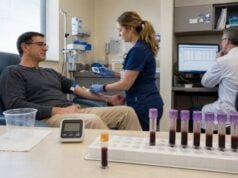
An insulin-like growth factor 1 test measures IGF-1, a hormone produced mainly in response to growth hormone from the pituitary gland. IGF-1 stays relatively stable during the day, so it is more useful than a random growth hormone level for screening many growth hormone disorders. In children, the result helps evaluate slow growth, unusual rapid growth, and possible growth hormone deficiency or excess. In adults, it is central to testing for acromegaly and may support an assessment for growth hormone deficiency. The value must be compared with an age-specific laboratory range because IGF-1 rises through childhood, peaks around puberty, and then gradually falls throughout adulthood. Nutrition, liver and kidney disease, pregnancy, diabetes, thyroid function, estrogen treatment, and assay differences can also affect the result. A high or low IGF-1 value is therefore a signal to interpret, not a diagnosis by itself.
- IGF-1 is the main blood marker used to screen for growth hormone excess and acromegaly.
- Low IGF-1 can occur with GH deficiency, undernutrition, liver disease, hypothyroidism, or chronic illness.
- Normal ranges change greatly with age and puberty; the laboratory’s own interval or Z-score must be used.
- A normal IGF-1 does not always exclude adult or partial growth hormone deficiency.
- Fasting is often unnecessary, but preparation depends on the other tests ordered with it.
Table of Contents
- What an IGF-1 Test Shows
- Reasons for IGF-1 Testing
- How to Prepare and What Happens
- Normal Range, Age, and Z-Score
- Low IGF-1 Results
- High IGF-1 Results
- Interpreting IGF-1 With Other Tests
- Follow-Up, Treatment Monitoring, and Urgent Signs
What an IGF-1 Test Shows
IGF-1, also called somatomedin C, is a small protein hormone that promotes growth and helps regulate bone, muscle, cartilage, and metabolism. Growth hormone released by the pituitary stimulates the liver and many other tissues to make IGF-1. Much of growth hormone’s long-term effect is carried out through IGF-1.
Growth hormone secretion is pulsatile. Levels can be nearly undetectable between bursts and then rise sharply during sleep, exercise, fasting, stress, or low blood glucose. For that reason, one random GH measurement can look low in a healthy person or high during a normal pulse. IGF-1 changes much more slowly and provides an integrated picture of GH action over time.
Most circulating IGF-1 is attached to binding proteins, especially IGF-binding protein 3 and acid-labile subunit. These proteins extend its half-life and regulate delivery to tissues. A standard IGF-1 assay measures total circulating IGF-1 rather than the small free fraction.
The test is not a direct measure of height potential, muscle-building ability, “biological age,” or general wellness. It is a clinical marker used in a specific context. A value near the upper end of normal is not automatically healthier than a value near the lower end. In healthy people, the expected concentration depends strongly on age and maturation.
IGF-1 can be reported in nanograms per milliliter, micrograms per liter, or another equivalent unit. Laboratories may also report a standard deviation score, Z-score, or upper-limit-of-normal ratio. Results from different assays are not always interchangeable, even when the same units appear on the report.
Reasons for IGF-1 Testing
Clinicians order IGF-1 when symptoms or growth patterns suggest too little or too much growth hormone. The test may be used for initial screening, to help select a dynamic test, or to monitor a known condition.
Children with poor growth
In a child, IGF-1 may be ordered when height is well below the expected range, growth velocity slows, or the child crosses downward through height percentiles. Other reasons include delayed bone age, a history of a brain tumor or radiation, a congenital pituitary abnormality, low blood glucose in infancy, or deficiencies of other pituitary hormones.
The result is interpreted with accurate serial height measurements, weight, parental heights, puberty, nutrition, chronic symptoms, and thyroid function. Growth hormone deficiency is only one of many causes of short stature. Familial short stature, constitutional delay, celiac disease, inflammatory disease, kidney disease, genetic syndromes, skeletal disorders, and inadequate nutrition may produce a similar presentation.
A low IGF-1 can support further evaluation, but it cannot establish GH deficiency alone. Some children need an growth hormone stimulation test, while others have a clear nonpituitary explanation that should be addressed first.
Rapid growth or suspected GH excess
A high IGF-1 may be investigated when a child grows unusually rapidly or develops enlarged hands and feet, coarse facial features, headaches, sweating, or other signs of pituitary gigantism. In adults, the test is the preferred biochemical screen for acromegaly.
Acromegaly develops gradually, and symptoms can be mistaken for ordinary aging or common health problems. Clues include increasing shoe or ring size, jaw or facial change, thickened skin, excessive sweating, headaches, joint pain, sleep apnea, carpal tunnel symptoms, hypertension, and diabetes. A high age-adjusted IGF-1 result may lead to repeat measurement and an oral glucose growth hormone suppression test.
Adult growth hormone deficiency
Adults may be evaluated after pituitary surgery, radiation, traumatic brain injury, a pituitary tumor, or known multiple pituitary hormone deficiencies. Symptoms such as low energy, reduced muscle mass, increased abdominal fat, impaired exercise capacity, or low bone density are nonspecific and cannot identify GH deficiency by themselves.
A clearly low IGF-1 result is more persuasive when a person has documented structural pituitary disease and several other pituitary deficiencies. Many adults with GH deficiency still have an IGF-1 result within the age-adjusted range, particularly older adults or those with milder disease. A validated stimulation test is often required.
Monitoring treatment
IGF-1 is used to monitor growth hormone replacement and treatment for acromegaly. The clinician considers the value together with symptoms, growth or body-composition response, medication timing, side effects, and the specific treatment. The aim is not to push IGF-1 as high or low as possible, but to achieve safe disease control within an individualized target.
How to Prepare and What Happens
An IGF-1 test requires a standard blood draw from a vein. Only one sample is usually needed. The sample can often be collected at any time because IGF-1 does not fluctuate as sharply as GH.
Many laboratories do not require fasting for IGF-1 alone. Fasting may still be requested when glucose, insulin, lipids, or another fasting test is drawn at the same visit. Follow the instructions from the ordering clinician or laboratory.
Before testing, provide a complete medication and supplement list. Relevant items include:
- Daily or long-acting growth hormone
- Pegvisomant, somatostatin receptor ligands, or dopamine agonists
- Oral estrogen, birth control pills, or gender-affirming hormone therapy
- Testosterone or puberty-inducing treatment
- Glucocorticoids
- Thyroid hormone
- Insulin and diabetes medicines
- High-dose biotin supplements
Do not stop a prescription on your own. Oral estrogen can reduce liver production of IGF-1 more than transdermal estrogen, so route of administration may matter. During GH treatment, the day of sampling relative to a long-acting injection may also affect interpretation. The endocrine clinic may specify a consistent schedule.
Pregnancy changes the GH–IGF system. Placental growth hormone increasingly replaces pituitary GH during pregnancy, and assay-specific patterns can be difficult to interpret. Standard nonpregnant reference intervals should not be applied blindly. Testing for acromegaly during pregnancy requires specialist judgment.
Acute illness, substantial calorie restriction, recent surgery, or poorly controlled diabetes can lower IGF-1 temporarily. If the value conflicts with the clinical picture, the clinician may repeat it when the person is medically stable. Repeating the test with the same validated assay reduces variation.
The blood draw itself has few risks beyond brief pain, bruising, or lightheadedness. Unlike dynamic GH testing, an IGF-1 test does not intentionally alter blood glucose or require several hours of monitoring.
Normal Range, Age, and Z-Score
IGF-1 has one of the most age-dependent reference patterns in routine hormone testing. Concentrations are low in infancy, increase through childhood, rise sharply during puberty, and commonly reach their lifetime peak in adolescence or early adulthood. Levels then decline gradually with age.
Because of this curve, a single universal “normal range” would be misleading. A concentration appropriate for a 10-year-old may be abnormal for a 16-year-old or a 70-year-old. Pediatric ranges may be divided by age and sex, and some systems also consider pubertal stage.
A laboratory may report:
- A raw concentration
- A reference interval for age and sex
- An IGF-1 Z-score or SDS
- A value expressed as a multiple of the upper limit of normal
A Z-score describes how far the result lies from the average for the reference population. A score of 0 is near the mean. Values below roughly −2 or above +2 often lie outside the central 95% of the reference population, although the assay’s limits and clinical protocol take priority.
For acromegaly, clinicians commonly compare the result with the assay’s upper limit of normal for age. Current consensus guidance emphasizes a validated assay with robust age-based reference intervals. A clearly elevated value in a person with typical features is highly informative. Borderline elevation often needs repeat confirmation and review for confounding factors.
For GH deficiency, the lower reference boundary is less decisive. Low IGF-1 supports deficiency, but normal IGF-1 cannot reliably exclude it in every adult or child. Age, body mass index, liver health, nutrition, thyroid status, estrogen exposure, and glycemic control influence the result.
Assay differences are a major source of confusion. IGF-1 circulates tightly bound to proteins, so laboratories use preparation steps to separate it before measurement. Calibration materials, antibodies, reference populations, and statistical methods differ. A person can test above range on one platform and within range on another without a true biologic change.
Use these rules when reviewing a result:
- Confirm the unit and age-specific interval printed on the same report.
- Check whether the result was repeated on the same assay.
- Review pregnancy, puberty, nutrition, liver and kidney function, diabetes, and medicines.
- Focus on the pattern and clinical context rather than a number found online.
- Treat small changes within range cautiously because analytic and biologic variation can explain them.
There is no evidence-based “optimal” IGF-1 target for healthy people seeking anti-aging or athletic effects. Using GH to increase a normal IGF-1 level carries real risks and is not the same as replacing a proven hormone deficiency.
Low IGF-1 Results
A low IGF-1 result means the concentration falls below the laboratory’s expected range for the person’s age and often sex. It may reflect reduced GH secretion, reduced response to GH, decreased production, or a temporary effect of illness or nutrition.
Growth hormone deficiency
In children, concern rises when low IGF-1 accompanies slow growth velocity, delayed bone age, low IGFBP-3, or a history of pituitary disease. Severe congenital deficiency may also cause newborn hypoglycemia, prolonged jaundice, or other pituitary deficits.
In adults, low IGF-1 is most meaningful when there is a known hypothalamic-pituitary lesion, surgery, radiation, or several additional hormone deficiencies. Without this context, an isolated low result has limited specificity. Adult GH deficiency usually requires a dynamic test unless the clinical and pituitary evidence is exceptionally strong.
Inadequate nutrition and systemic disease
Low calorie or protein intake can suppress IGF-1 even when GH secretion is normal or high. This pattern can occur with restrictive eating, malabsorption, celiac disease, inflammatory bowel disease, or severe chronic illness. Treating the underlying nutrition or inflammatory problem may restore the value.
Liver disease is a major cause because the liver produces much of circulating IGF-1. Kidney disease can alter the GH–IGF axis and binding proteins. Uncontrolled diabetes, particularly with insulin deficiency, may reduce hepatic IGF-1 production. Hypothyroidism can also lower IGF-1 and slow growth.
Other contributors include prolonged glucocorticoid exposure, oral estrogen, severe obesity in some contexts, and acute physiologic stress. The direction and degree of change vary, so the medication and medical history are essential.
GH resistance and rare genetic disorders
A person can produce GH but respond poorly to it. In GH receptor defects, GH may be normal or high while IGF-1 remains very low. Genetic conditions affecting STAT5B, IGF1, acid-labile subunit, or proteins that regulate IGF availability can create distinctive patterns of growth, immune function, head size, birth size, and laboratory results.
These disorders are rare. Pediatric endocrinology assessment may include GH stimulation or generation testing, genetic studies, imaging, and measurement of related proteins. A low IGF-1 value by itself cannot identify the specific disorder.
A low result should usually be confirmed or explained before treatment. Starting GH solely because the IGF-1 number is low can miss liver disease, undernutrition, thyroid disease, or another cause that requires different care.
High IGF-1 Results
A high IGF-1 result is most concerning for growth hormone excess when it is clearly above an accurate age-adjusted range and fits the person’s symptoms. It can also occur because of normal puberty, pregnancy-related physiology, GH treatment, assay variation, or certain medical conditions.
Acromegaly and pituitary gigantism
Most acromegaly is caused by a pituitary adenoma that secretes excess GH. In children whose growth plates remain open, GH excess can cause excessive linear growth, called pituitary gigantism. Adults do not become taller, but bones and soft tissues enlarge over time.
A high IGF-1 is the main screening result. When clinical features are typical and IGF-1 is substantially elevated on a valid assay, the evidence can be strong. When the result is borderline, clinicians may repeat it and review age, pregnancy, diabetes, liver or kidney disease, nutritional state, and assay issues. GH suppression after an oral glucose load may provide additional confirmation.
An elevated IGF-1 does not show the tumor’s size or location. Pituitary MRI is generally obtained after biochemical evidence supports GH excess. Other pituitary hormones and visual function may also need assessment.
Growth hormone treatment
IGF-1 commonly rises during GH replacement. Clinicians use the age-adjusted result to help avoid excessive dosing, but they also consider clinical response and treatment timing. In children, growth velocity and pubertal development matter. In adults, symptoms, body composition, glucose, swelling, joint discomfort, and other adverse effects matter.
Persistently high IGF-1 during treatment may lead to dose reduction or timing adjustment. The target can differ by age, diagnosis, medication formulation, pregnancy potential, and comorbidities. A patient should not alter the dose without the prescribing team.
Other explanations and false elevation
Puberty is a normal period of high IGF-1. An age-only comparison can be misleading when maturation is early or late. Pregnancy can change IGF-related measurements and requires pregnancy-specific interpretation.
Poorly controlled diabetes more often lowers IGF-1, but values can behave unpredictably during metabolic instability or after rapid improvement. Kidney disease and liver disease can affect assays and binding proteins. Rare analytical interference, sample problems, or an unsuitable reference range can produce an unexpected result.
If a high value does not fit the person’s appearance or health, repetition is reasonable. Using the same laboratory helps determine whether the result persists. A clinician may also compare the value with previous measurements and use an alternate assay if interference is suspected.
Interpreting IGF-1 With Other Tests
IGF-1 interpretation becomes more reliable when paired with the right clinical and laboratory information. The same value can lead to different conclusions in a growing child, an older adult, a pregnant person, or someone receiving GH.
| IGF-1 pattern | Related findings | Common interpretation |
|---|---|---|
| Low | Slow growth, delayed bone age, low IGFBP-3 | GH deficiency is possible, but nutrition, thyroid, liver, and chronic disease causes must be excluded. |
| Low | Normal or high GH, underweight or chronic illness | GH resistance, undernutrition, inflammation, or liver dysfunction may be more likely than pituitary deficiency. |
| Normal | Known pituitary disease and compatible adult symptoms | Adult GH deficiency remains possible; a stimulation test may be needed. |
| High | Acromegaly features and failure of GH suppression | GH excess is strongly supported and pituitary imaging is usually indicated. |
| High | Pubertal growth spurt without concerning features | May be physiologic if appropriate for pubertal stage and the assay range. |
| High during GH therapy | Excess dose symptoms or value above target | Treatment dose and sampling timing should be reviewed. |
For poor growth, the growth failure hormone test panel may include IGF-1, IGFBP-3, thyroid testing, and selected screening for chronic disease. A stimulation test is not automatically required for every short child. Auxology—the pattern of measured growth over time—remains fundamental.
For suspected acromegaly, a random GH result is not enough because GH pulses. IGF-1 is the primary screen. If results and clinical findings disagree, repeat testing, assay review, and specialist assessment are preferable to forcing the result into a simple positive or negative category.
After acromegaly treatment, IGF-1 can take time to stabilize. The timing of testing after surgery, radiation, or medication changes matters. Some people have discordant GH and IGF-1 results. Clinicians may repeat measurements, assess symptoms and comorbidities, and consider treatment-specific effects before declaring remission or active disease.
For adult GH replacement, IGF-1 is a dose-monitoring tool, not a stand-alone measure of benefit. Improvement in quality of life, body composition, bone health, and exercise capacity develops over time and must be balanced against edema, joint pain, carpal tunnel symptoms, sleep apnea, and glucose intolerance.
Follow-Up, Treatment Monitoring, and Urgent Signs
A mildly abnormal IGF-1 result often leads to a structured review rather than immediate imaging or treatment. The next steps may include repeating the test, confirming the correct age range, checking for assay changes, and evaluating thyroid, liver, kidney, glucose, nutrition, and medication factors.
For a child with slow growth, the clinician may:
- Verify serial height measurements and calculate annual growth velocity.
- Compare height with genetic expectations from parental stature.
- Assess puberty and obtain bone age when helpful.
- Test for thyroid disease, celiac disease, inflammation, anemia, kidney or liver problems, and other causes suggested by symptoms.
- Measure IGFBP-3 or other pituitary hormones.
- Refer for pediatric endocrine assessment when growth failure is persistent or severe.
- Use stimulation testing, MRI, or genetic testing when the combined evidence supports it.
For a high value and possible acromegaly, the clinician may repeat IGF-1 under stable conditions, obtain GH suppression testing, review the full acromegaly blood test panel, and order pituitary MRI after biochemical confirmation. Blood pressure, glucose, sleep apnea, heart disease, joint disease, and colon health may also need evaluation because acromegaly affects more than appearance.
Seek prompt medical care for severe or sudden headache, new loss of vision, double vision, vomiting, fainting, confusion, or symptoms of adrenal crisis. These are not typical effects of an isolated IGF-1 abnormality, but they may signal acute pituitary enlargement, bleeding into a pituitary tumor, or another emergency.
During GH treatment, report severe headache with visual symptoms, persistent swelling, breathing problems during sleep, significant joint or hip pain, a limp in a child, or marked changes in glucose. During acromegaly treatment, new severe abdominal symptoms, gallbladder symptoms, worsening glucose control, slow heart rate, or injection-related reactions should be discussed according to the medication used.
The most useful interpretation answers three questions: Does the result fit the person’s age and physiologic state? Does it match the symptoms and growth pattern? Do related tests point in the same direction? When those answers conflict, repeating and investigating is safer than relying on one number.
References
- IGF-1 (Insulin-like Growth Factor 1) Test 2024 (Official Health Resource)
- Consensus on criteria for acromegaly diagnosis and remission 2024 (Consensus Statement)
- A 2024 Update on Growth Hormone Deficiency Syndrome in Adults: From Guidelines to Real Life 2024 (Review)
- Insulin-Like Growth Factor 1 as a Pillar in Acromegaly: From Diagnosis to Long-Term Management 2024 (Review)
- Acromegaly: Diagnostic Challenges and Individualized Treatment 2025 (Review)
Disclaimer
IGF-1 results must be interpreted with the laboratory’s age-specific reference range and the person’s medical context. This article provides general education and cannot diagnose growth hormone deficiency, acromegaly, or another endocrine condition. Discuss abnormal values and any treatment changes with a qualified clinician or endocrinologist.