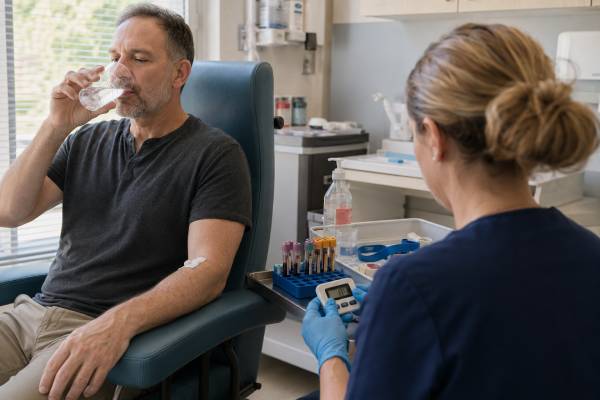
An oral glucose growth hormone suppression test checks whether growth hormone falls after a measured glucose drink. In most people, rising blood glucose suppresses pituitary growth hormone secretion. In acromegaly or pituitary gigantism, growth hormone may fail to suppress adequately and can sometimes rise paradoxically. The test is usually used when symptoms, examination, and IGF-1 results leave uncertainty; IGF-1 is the preferred first biochemical screen. After an overnight fast, a baseline blood sample is taken, 75 grams of glucose is consumed, and growth hormone is measured repeatedly for about two hours. Glucose is also checked to document the metabolic response. There is no universal GH cutoff that fits every assay and patient. Modern interpretation considers the laboratory method, body mass index, age, sex, estrogen exposure, diabetes, pregnancy, and the accompanying age-adjusted IGF-1 result.
- IGF-1 is usually tested first; the oral glucose suppression test helps resolve equivocal acromegaly results.
- The usual adult protocol uses 75 g of oral glucose after an overnight fast with timed GH samples.
- Normal suppression depends on the GH assay and local protocol; common modern cutoffs are below 0.4 or 0.2 µg/L.
- Failure to suppress supports GH excess but must agree with IGF-1 and the clinical picture.
- Diabetes, puberty, pregnancy, liver or kidney disease, and assay differences can complicate interpretation.
Table of Contents
- Purpose of the Oral Glucose GH Suppression Test
- Who May Need the Test
- Preparation and Safety
- Step-by-Step Test Procedure
- How Results Are Interpreted
- Borderline, Conflicting, and Misleading Results
- Use After Acromegaly Treatment
- Next Steps After the Test
Purpose of the Oral Glucose GH Suppression Test
Growth hormone is released by the pituitary gland in pulses. A random blood level may be very low between pulses or temporarily high because of sleep, exercise, fasting, stress, or low blood glucose. This makes a single GH measurement unreliable for screening most people for acromegaly.
IGF-1 provides a steadier marker of GH action and is usually the initial biochemical test. When IGF-1 is clearly elevated for age and the person has typical acromegaly features, current consensus criteria may provide strong diagnostic evidence without requiring an oral glucose test in every case. The suppression test remains valuable when the IGF-1 elevation is mild, the physical features are uncertain, or GH and IGF-1 findings do not agree.
The test uses a normal physiologic response. A glucose load raises blood glucose and insulin, which normally suppresses pituitary GH secretion. The laboratory measures the lowest GH concentration reached during the sampling period, called the nadir. In acromegaly, autonomous GH secretion from a pituitary adenoma may not switch off normally.
This is different from the oral glucose tolerance test used to diagnose diabetes, even though the glucose drink and some sampling steps overlap. A diabetes OGTT focuses on glucose values. A GH suppression test focuses on the pattern and nadir of GH, while glucose measurement confirms that the person absorbed and responded to the drink.
The test may also be called:
- Oral glucose tolerance test for acromegaly
- Glucose suppression test for growth hormone
- GH suppression test
- Acromegaly OGTT
- Oral glucose GH test
The purpose should be clearly stated on the order so the correct timed GH samples are collected. A standard two-hour glucose sample without serial GH measurements cannot answer the same question.
Who May Need the Test
The test is considered when clinical findings suggest excess GH and the biochemical diagnosis remains uncertain. Acromegaly develops slowly, often over years, so early features may be subtle.
Possible signs and related conditions include:
- Increasing shoe, ring, glove, or hat size
- Wider spacing of teeth or enlargement of the jaw
- Coarser facial features, enlarged nose, lips, or tongue
- Thick or oily skin and excessive sweating
- Headaches or visual symptoms
- Joint pain, carpal tunnel syndrome, or spinal changes
- Sleep apnea
- High blood pressure, heart enlargement, or rhythm problems
- Prediabetes or diabetes
- Menstrual changes, reduced libido, or erectile dysfunction
- Skin tags or changes noticed in older photographs
In a child or adolescent whose growth plates remain open, excess GH can cause unusually rapid linear growth and pituitary gigantism. Pediatric protocols may use glucose based on body weight up to the adult maximum and require specialist interpretation.
The test is not a general screening test for tall stature, fatigue, weight change, or nonspecific headaches. It is most informative when IGF-1 is elevated or the phenotype is convincing.
A clinician may order the test when:
- IGF-1 is mildly or repeatedly above the upper limit for age
- A pituitary mass is present and GH secretion needs classification
- Acromegaly symptoms are present but IGF-1 is borderline
- Postoperative or post-treatment biochemical control is uncertain
- GH and IGF-1 results are discordant
- A laboratory or assay issue needs clarification through repeated sampling
A normal IGF-1 measured with a reliable age-adjusted assay usually makes active acromegaly unlikely, particularly when clinical suspicion is low. Repeating IGF-1 under stable conditions may be more appropriate than proceeding immediately to dynamic testing.
Preparation and Safety
The test is generally performed in the morning after an overnight fast, commonly eight to twelve hours. Only water is usually allowed. Smoking, vigorous exercise, alcohol, and food should be avoided according to the testing center’s instructions because they may affect glucose or GH.
Normal carbohydrate intake should generally be maintained in the days before the test unless the clinician gives other instructions. Severe carbohydrate restriction can change glucose tolerance. Acute illness, recent surgery, or major physiologic stress may also distort results and may justify postponement.
Tell the testing team about:
- Diabetes and all glucose-lowering medicines
- Pregnancy or possible pregnancy
- Growth hormone treatment
- Oral estrogen, birth control pills, or hormone therapy
- Somatostatin analogs, pegvisomant, or cabergoline
- Glucocorticoids
- Recent pituitary surgery or radiation
- Severe nausea, swallowing difficulty, or prior gastric surgery
- Kidney or liver disease
Do not change prescription medicines unless instructed. Diabetes medications may need a specific plan because the person will be fasting and then receive a glucose load. People with poorly controlled diabetes may have an uninterpretable or unsafe test, and an alternative strategy may be chosen.
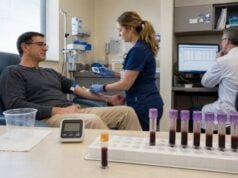
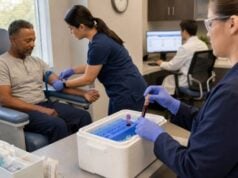
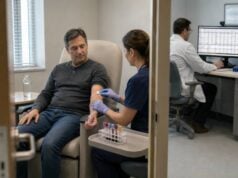
An intravenous cannula is often placed so repeated samples can be drawn without several needle sticks. Resting quietly before and during the test can reduce stress-related GH release. The person should remain seated or lying down and avoid eating until sampling ends.
Common temporary effects include nausea, thirst, sweating, lightheadedness, headache, or feeling unwell after the sweet drink. Some people vomit. If vomiting occurs before enough glucose is absorbed, the test may need to stop and be repeated another day.
Serious complications are uncommon. A person with diabetes can develop marked hyperglycemia, while reactive low glucose can occur later in susceptible people. Testing centers monitor symptoms and glucose and have a plan for treatment. The test should be performed under clinical supervision rather than recreated at home.
Step-by-Step Test Procedure
Protocols differ slightly, but a common adult sequence is:
- Arrive after the required overnight fast.
- Rest while an intravenous line is placed.
- Have baseline blood drawn for GH and glucose; IGF-1 may also be checked.
- Drink a solution containing 75 g of anhydrous glucose within the instructed time, often about five minutes.
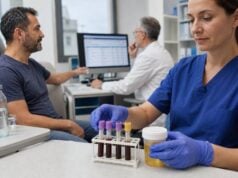
- Have blood samples collected at timed intervals, commonly 30, 60, 90, and 120 minutes.
- Remain fasting and at rest until the final sample is complete.
- Eat and resume usual activities when the clinical team says it is safe.
Some centers collect at baseline, 60, and 120 minutes, while others add more samples. More frequent sampling improves the chance of capturing the true GH nadir. The report should identify each time point.
Children may receive approximately 1.75 g of glucose per kilogram of body weight up to 75 g, depending on the center. Pediatric testing should follow a dedicated protocol because age, puberty, body composition, and assay sensitivity affect GH values.
The glucose curve is not incidental. A sufficient rise shows that the stimulus occurred. If glucose barely changes, incomplete ingestion, vomiting, delayed absorption, or sample problems may undermine the test. If glucose is already very high, normal GH physiology may be altered.
The GH concentration may decline progressively, reach a nadir at one time point, and then begin to recover. Interpretation uses the lowest valid result rather than only the two-hour value. A person can have adequate suppression at 60 or 90 minutes even if the 120-minute value has risen slightly.
Sample handling matters because low GH concentrations approach the sensitivity limits of some assays. Tubes, processing time, storage, calibration, and platform can affect the result. The laboratory’s own validated protocol and cutoff should accompany the report.
The test takes about two to three hours including preparation and recovery. Results may take longer because all samples are analyzed together and reviewed with IGF-1.
How Results Are Interpreted
A normal response is suppression of GH to a low nadir after glucose. Failure to suppress below the laboratory’s validated cutoff supports autonomous GH secretion, especially when IGF-1 is elevated and the person has compatible features.
Older criteria often used a nadir below 1.0 µg/L, which is the same mass concentration as 1.0 ng/mL. More sensitive modern assays commonly use lower cutoffs. Some recent guidance considers nadir GH below 0.4 µg/L for people with body mass index under 25 kg/m² and below 0.2 µg/L for those with BMI of 25 kg/m² or higher. These are not universal rules. The assay and local protocol take priority.
Body mass affects normal GH secretion. People with higher BMI often have lower spontaneous and stimulated GH, so a lower suppression threshold may reduce false reassurance or misclassification. Age, sex, and oral estrogen also influence GH physiology.
A simplified interpretation looks like this:
| GH pattern after glucose | IGF-1 | Possible interpretation |
|---|---|---|
| Suppresses below assay cutoff | Normal | Active acromegaly is unlikely in most clinical settings. |
| Fails to suppress | Clearly elevated | Acromegaly or gigantism is strongly supported. |
| Suppresses normally | Repeatedly elevated | Review IGF-1 assay, age range, confounders, and clinical progression. |
| Fails to suppress mildly | Normal | A false-positive GH pattern or early/treated disease may be considered; repeat specialist review is needed. |
| Paradoxical GH rise | Elevated | Can occur in acromegaly but is not required for diagnosis. |
The upper limit of normal for IGF-1 must be age-adjusted and assay-specific. Current consensus statements emphasize repeat measurement on the same validated assay when results are equivocal. An IGF-1 value more than about 1.3 times the age-adjusted upper limit in a person with typical features can be highly persuasive, but clinical practice still accounts for assay quality and confounding illness.
GH should not be interpreted from the baseline alone. A baseline value may be low because of pulsatility, and a normal person can have a temporary pulse. The suppression curve and nadir are the useful components.
Borderline, Conflicting, and Misleading Results
Discordance between IGF-1 and GH suppression is not rare enough to ignore. The correct response is usually to verify methods and context, not to choose whichever result fits a preferred diagnosis.
Elevated IGF-1 with normal GH suppression
Possible explanations include an inaccurate reference interval, normal biologic variation, puberty, pregnancy, recovery from undernutrition, thyroid changes, assay interference, or very mild disease. Some people with early acromegaly have low GH concentrations on modern assays despite elevated IGF-1.
The clinician may repeat IGF-1 on the same assay, examine prior photographs and symptoms, and repeat dynamic testing if the elevation persists. Pituitary MRI alone cannot settle the issue because small incidental pituitary lesions occur in healthy people.
Normal IGF-1 with abnormal GH suppression
This pattern may reflect stress, poorly controlled diabetes, liver or kidney disease, malnutrition, adolescence, oral estrogen, or a GH assay cutoff that is too strict for the setting. Active acromegaly is uncommon with repeatedly normal reliable IGF-1 unless special circumstances are present.
Diabetes and glucose intolerance
Hyperglycemia can blunt or alter GH responses. In uncontrolled diabetes, IGF-1 may also be low despite GH excess because hepatic GH signaling is impaired. The test may be deferred until glucose is better controlled. A person can have acromegaly and diabetes, so abnormal glucose does not exclude the disease.
Pregnancy and estrogen
Pregnancy introduces placental GH and major IGF-1 changes. Routine oral glucose GH suppression criteria are not validated in the same way, and specialist assessment is required. Oral estrogen raises GH while reducing hepatic IGF-1 production, which can create discordance. Transdermal estrogen has less hepatic effect.
Puberty, age, and body composition
Adolescents normally have higher GH secretion and IGF-1, making adult cutoffs unsuitable. Older age and obesity reduce GH secretion. Sex-specific and BMI-related physiology may influence the nadir even when reference policies do not formally adjust for all variables.
Assay problems
Modern GH assays detect low concentrations more accurately than older methods, but platforms differ in antibodies, calibration, isoform detection, and functional sensitivity. A cutoff validated for one assay cannot simply be transferred to another. Biotin or heterophile antibodies can occasionally interfere.
When uncertainty persists, an endocrinologist may repeat IGF-1, repeat the suppression test under standardized conditions, use another validated assay, review MRI only after biochemical context, and monitor for progression over time.
Why glucose and GH timing both matter
The test is interpretable only when the laboratory can show what happened to both glucose and GH over time. If glucose did not rise as expected, the physiologic suppression challenge may have been inadequate. If GH samples were missed or drawn too far apart, the true nadir may not have been captured. A report that lists only the fasting and final GH values can therefore be less useful than one that shows every time point.
The nadir is the lowest measured GH concentration after the drink, not necessarily the last result. Some people reach their lowest value at 60 minutes, while others do so later. The laboratory and clinician should use the validated protocol associated with the assay’s diagnostic cutoff. Applying a 75-minute cutoff to a 120-minute protocol, or using an older threshold with a newer ultrasensitive assay, can produce false classifications.
Glucose tolerance also affects safety and interpretation. People with diabetes may begin with high glucose and experience a larger rise; severe hyperglycemia can weaken normal GH suppression even without acromegaly. In such cases, an endocrinologist may rely more heavily on repeated age-adjusted IGF-1, clinical features, imaging, and alternative evidence. Pregnancy is another setting in which routine suppression testing is generally avoided because placental GH and normal gestational physiology change the expected pattern.
Use After Acromegaly Treatment
The oral glucose suppression test may be used after pituitary surgery or other treatment, but its role depends on timing and the therapy used. IGF-1 remains a major marker of disease control.
After surgery, GH can fall quickly, while IGF-1 may take weeks to stabilize. Testing too early can create discordant results. The endocrine team chooses a follow-up interval based on the operation, preoperative levels, pathology, and symptoms.
Suppressed GH after an OGTT can support remission and may have prognostic value. A failure to suppress can suggest residual disease, but it should be interpreted with IGF-1 and the specific assay. A mildly abnormal nadir with normal IGF-1 does not always mean immediate retreatment is required.
Medication changes complicate the test:
- Somatostatin receptor ligands lower GH secretion and IGF-1 and can affect the curve.
- Cabergoline may reduce both values in responsive tumors.
- Pegvisomant blocks the GH receptor and lowers IGF-1, but serum GH rises and is not a useful treatment marker.
- Radiation can lower GH gradually over years and may cause other pituitary deficiencies.
Because GH is uninterpretable during pegvisomant therapy, an oral glucose GH suppression test should not be used to judge control on that medication. IGF-1 is the principal biochemical marker.
Long-term surveillance matters even after apparent remission. Recurrence can occur, and radiation effects evolve slowly. Follow-up may include yearly or individualized IGF-1, clinical review, pituitary hormone testing, and MRI when indicated.
A separate growth hormone suppression test overview may address broader monitoring contexts, while the current oral glucose protocol focuses on the practical acromegaly procedure.
Next Steps After the Test
When GH fails to suppress and IGF-1 is elevated, the next step is usually pituitary MRI with contrast, provided there is no contraindication. Imaging identifies tumor size, extension, and proximity to the optic nerves. Visual-field testing is needed when a lesion approaches the optic chiasm or vision symptoms are present.
A full acromegaly blood test panel also evaluates other pituitary functions. Prolactin may be elevated from mixed hormone secretion or stalk effect. ACTH-cortisol, TSH-free T4, LH-FSH-sex hormones, and sometimes water-balance testing help identify deficiencies or co-secretion.
If biochemical results are borderline, common next steps are:
- Confirm that the correct age-adjusted IGF-1 range was used.
- Repeat IGF-1 with the same assay under stable health conditions.
- Review diabetes control, pregnancy, estrogen route, nutrition, liver and kidney function, and medicines.
- Confirm that all timed GH samples and glucose results were valid.
- Discuss assay-specific cutoff and BMI adjustment with the laboratory.
- Repeat testing or monitor over time when immediate diagnosis is not justified.
When acromegaly is confirmed, treatment may include transsphenoidal pituitary surgery, medication, radiation, or a combination. Choice depends on tumor anatomy, hormone levels, symptoms, comorbidities, surgical expertise, and patient preferences.
Seek urgent care for sudden severe headache, new vision loss, double vision, vomiting, confusion, fainting, or weakness. These can indicate pituitary apoplexy. During the glucose test, immediately report severe dizziness, chest symptoms, altered awareness, persistent vomiting, or symptoms of marked high or low glucose.
The suppression result should answer a focused question: did GH fall appropriately for this person, this assay, and this physiologic setting? It should never be interpreted from an isolated cutoff without the IGF-1 result and clinical context.
For a future comparison, keep the glucose dose, fasting duration, sampling times, and GH assay consistent. Even a technically normal result should be reconsidered when age-adjusted IGF-1 remains repeatedly high and characteristic clinical changes continue to progress.
References
- Consensus on criteria for acromegaly diagnosis and remission 2024 (Consensus Statement)
- Acromegaly: Diagnostic Challenges and Individualized Treatment 2025 (Review)
- Diagnosis and Management of Acromegaly: A Consensus Statement of the Pituitary Study Group of the Portuguese Society of Endocrinology, Diabetes and Metabolism 2024 (Consensus Statement)
- Insulin-Like Growth Factor 1 as a Pillar in Acromegaly: From Diagnosis to Long-Term Management 2024 (Review)
- The Biochemical Diagnosis of Acromegaly 2021 (Review)
Disclaimer
Oral glucose GH suppression cutoffs vary by assay, laboratory protocol, body mass index, age, and clinical setting. This article is educational and cannot diagnose or exclude acromegaly for an individual. Testing and result interpretation should be supervised by an endocrinology team, especially in diabetes, pregnancy, childhood, or after treatment.