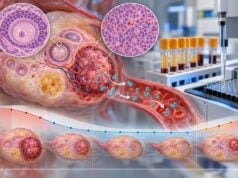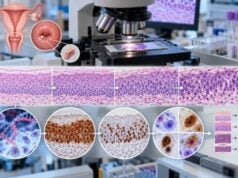
A BRIP1 test looks for inherited variants in a DNA-repair gene that can raise the risk of ovarian, fallopian tube, and primary peritoneal cancer. BRIP1 is considered a moderate-penetrance ovarian cancer susceptibility gene: a harmful variant increases risk meaningfully, but the risk is lower than with BRCA1 and is strongly influenced by age, family history, and other factors. Current evidence places average lifetime ovarian cancer risk for BRIP1 pathogenic-variant carriers at roughly 6% by age 80, with some estimates higher and much of the excess risk occurring after age 50. BRIP1 testing is usually performed as part of a multigene hereditary cancer panel rather than as a stand-alone test. The exact classification matters. A pathogenic or likely pathogenic variant can change risk-reduction planning and justify family testing, while a variant of uncertain significance should not be treated as a positive result. Genetic counseling helps turn the laboratory report into an individualized plan.
- BRIP1 is a DNA-repair gene associated with moderate inherited tubo-ovarian cancer risk when one copy carries a pathogenic or likely pathogenic variant.
- Average ovarian cancer risk is often estimated around 5.8% by age 80, but personal risk can be higher or lower depending on family history and other modifiers.
- Risk appears to rise mainly after age 50, so preventive surgery timing differs from the earlier timing often used for BRCA1.
- A BRIP1 VUS is not a positive test. Risk-reducing surgery and predictive testing of relatives should not be based on a variant of uncertain significance alone.
- BRIP1 is not currently considered an established breast cancer predisposition gene by itself, so breast screening should be based on the person’s overall risk rather than the BRIP1 result alone.
Table of Contents
- What BRIP1 Does
- Who Should Have BRIP1 Testing
- Understanding Pathogenic, Negative, and VUS Results
- BRIP1 and Ovarian Cancer Risk
- Risk Reduction and Screening
- What BRIP1 Means for Tumor Testing and Treatment
- Family Testing and Next Steps
What BRIP1 Does
BRIP1 stands for BRCA1 interacting protein C-terminal helicase 1. The protein is also known as FANCJ because having pathogenic variants in both copies of the gene can cause a rare Fanconi anemia subtype. That recessive childhood disorder is different from the adult hereditary cancer risk associated with carrying one pathogenic BRIP1 variant.
BRIP1 helps cells respond to DNA damage. It interacts with BRCA1 and participates in pathways that repair DNA crosslinks and double-strand breaks. When a person inherits one nonfunctioning copy, certain cells can later lose the remaining working copy and become more genomically unstable. This mechanism helps explain why BRIP1 is linked to ovarian cancer susceptibility.
BRIP1 belongs to a group of moderate-risk ovarian cancer genes involved in homologous recombination and related DNA-repair processes. Other important genes include RAD51C and RAD51D. They are not interchangeable: each gene has its own risk estimates, age pattern, and evidence base.
BRIP1 also differs from BRCA1 and BRCA2. BRCA1 and BRCA2 confer higher ovarian and breast cancer risks and have more established treatment implications. BRIP1 is clinically important, but interpreting it as “another BRCA gene” can lead to overestimating risk and applying the wrong screening or surgery timetable.
Who Should Have BRIP1 Testing
BRIP1 is commonly included on hereditary breast and ovarian cancer panels and broader gynecologic cancer panels. Testing may be offered after an ovarian cancer diagnosis, when a family history suggests hereditary cancer, or when a known familial BRIP1 variant has already been identified.
For epithelial ovarian cancer, contemporary practice generally favors broad germline genetic testing rather than limiting evaluation to people with a dramatic family history. A gynecologic cancer gene panel can assess BRIP1 alongside BRCA1, BRCA2, RAD51C, RAD51D, mismatch-repair genes, and other selected susceptibility genes.
The usual germline sample is blood or saliva. High-quality laboratory testing generally includes sequencing plus methods capable of detecting larger deletions or duplications when clinically relevant. If a familial BRIP1 pathogenic variant is known, relatives usually need targeted testing for that exact variant rather than an entirely new broad panel.
Testing quality matters because not all panels cover the same variant types or genes. A report should identify the laboratory, specimen source, transcript used for variant naming, classification, and testing limitations. Direct-to-consumer raw data should not be used to make ovarian surgery decisions without confirmation in a clinical laboratory. False-positive calls and incomplete coverage can occur when consumer tests are used outside their intended purpose.
A genetics visit is also a chance to clarify whether the family pattern suggests more than one inherited condition. For example, ovarian cancer on one side of the family and early colon or endometrial cancer on the other may justify a panel that includes mismatch-repair genes rather than BRIP1-focused testing alone.
Testing can also be considered in someone without cancer whose family has multiple ovarian cancers or a known BRIP1 finding, especially when the result could change prevention planning for several relatives. A genetics professional may first build a three-generation pedigree to determine whether another family member with cancer would be more informative to test.
Before testing, it helps to understand what the possible results can and cannot answer. A panel may return a clearly pathogenic variant, a negative result, or one or more uncertain variants. Broader panels find more clinically useful variants, but they also increase the chance of uncertain findings that require careful interpretation.
Understanding Pathogenic, Negative, and VUS Results
Genetic laboratories classify BRIP1 variants according to the strength of evidence that they impair gene function. The clinically important distinction is between pathogenic/likely pathogenic variants and variants of uncertain significance.
| Result | What it means | Typical clinical use |
|---|---|---|
| Pathogenic or likely pathogenic | Strong evidence that the variant disrupts BRIP1 function | Use in personalized ovarian risk assessment, prevention planning, and family cascade testing. |
| Variant of uncertain significance | Evidence is insufficient to call the variant harmful or harmless | Do not use as the sole reason for preventive surgery or predictive family testing. |
| Likely benign or benign | Evidence indicates the variant does not meaningfully disrupt gene function | Not treated as a hereditary cancer mutation. |
| No pathogenic variant found | The test did not identify a clinically actionable BRIP1 change | Overall risk still depends on other genes, family history, and test scope. |
A pathogenic germline variant means the person was born with the change and can pass it to children. It does not mean ovarian cancer is inevitable. Penetrance is incomplete, so many carriers never develop ovarian cancer.
A VUS is a laboratory uncertainty, not a medical diagnosis. It can be frustrating because the report names a DNA change without giving a definitive answer. Management should be based on personal and family risk factors while the variant is periodically re-evaluated. Testing unaffected relatives solely to “track” a VUS generally does not provide the same actionable information as cascade testing for a known pathogenic variant.
A negative result also needs context. If the person was tested specifically for a known family BRIP1 variant and does not carry it, that is reassuring for that familial risk. If there is no known family variant, a negative BRIP1 result does not rule out hereditary ovarian cancer because other genes or unexplained familial factors may be involved.
BRIP1 and Ovarian Cancer Risk
The best current estimates place BRIP1 in a moderate-risk category for epithelial ovarian, fallopian tube, and primary peritoneal cancer. A major international dataset estimated cumulative ovarian cancer risk to age 80 at about 5.8%, with a confidence interval of approximately 3.6%–9.1%. Other clinical resources cite ranges around 7%–10%, reflecting differences in study design and family-history adjustment.
The age pattern matters as much as the lifetime percentage. BRIP1-associated ovarian cancer risk appears concentrated later in adulthood, with a substantial increase after age 50. That is different from BRCA1, where meaningful risk begins earlier and risk-reducing surgery is usually discussed at younger ages.
Family history can modify the average. A person whose mother and sister both developed ovarian cancer at relatively young ages may have a higher personalized risk than a BRIP1 carrier with no ovarian cancer in the family. Risk models increasingly incorporate gene, age, family history, and other information rather than treating every carrier identically.
The association appears strongest for high-grade epithelial ovarian cancers, particularly high-grade serous disease. BRIP1 is not currently considered a well-established stand-alone breast cancer susceptibility gene in the same way as BRCA1, BRCA2, PALB2, or some other genes. If a BRIP1 carrier has a strong family history of breast cancer, breast surveillance should be based on the combined personal and family risk rather than assuming BRIP1 explains the entire pattern.
A useful perspective is that general-population ovarian cancer risk is relatively low. A several-fold increase can therefore produce a lifetime risk that is clinically significant without approaching the very high percentages seen with BRCA1.
Risk Reduction and Screening
Because there is no proven ovarian screening strategy that reliably detects early cancer and reduces mortality in BRIP1 carriers, prevention discussions focus on risk-reducing salpingo-oophorectomy, which removes both fallopian tubes and ovaries.
Timing should be individualized. Current guidance generally places BRIP1 risk-reducing surgery closer to natural menopause, often around the mid-to-late 40s or later depending on the guideline, personalized lifetime risk, family history, and reproductive plans. Some guidance uses a threshold of at least 5% lifetime ovarian cancer risk when considering surgery and recommends not operating earlier than about 45 solely for moderate-risk genes. The 2025 ACMG resource emphasizes shared decision-making near menopause rather than a one-size-fits-all age.
The tradeoffs are substantial. Before natural menopause, removing both ovaries causes immediate infertility and surgical menopause, which can affect vasomotor symptoms, sexual function, bone health, cardiovascular health, sleep, and quality of life. These consequences should be discussed before surgery, including whether menopausal hormone therapy is appropriate for the individual.
CA-125 and transvaginal ultrasound may sometimes be used when surgery is deferred, but they have not been shown to replace risk-reducing surgery in genetically high-risk patients. A CA-125 test is especially limited as a screening tool because benign conditions can raise it and early cancers may not produce a large increase.
Risk management also includes general health, awareness of persistent ovarian-cancer symptoms, and prompt evaluation of concerning changes. Symptoms such as persistent bloating, early satiety, pelvic or abdominal pain, or urinary urgency are common and usually benign, but sustained new symptoms deserve assessment.
What BRIP1 Means for Tumor Testing and Treatment
BRIP1 participates in DNA repair, so it is biologically connected to homologous recombination. That connection can create confusion about whether a BRIP1 germline variant automatically predicts the same response to PARP inhibitors as a BRCA1 or BRCA2 mutation. It does not. The evidence for treatment prediction is much stronger for BRCA1/2 and for validated tumor HRD contexts than for inherited BRIP1 status alone.
A patient with ovarian cancer and a germline BRIP1 pathogenic variant may still undergo tumor profiling and HRD testing. The tumor can acquire additional changes that influence treatment, and the cancer’s genomic state cannot be inferred perfectly from the inherited result.
Conversely, a BRIP1 alteration found on tumor-only sequencing is not automatically hereditary. If the laboratory identifies a variant that could be germline, confirmatory blood or saliva testing may be recommended so the patient and family receive the correct risk interpretation.
This distinction is important for relatives. A somatic BRIP1 mutation confined to tumor cells does not give children or siblings a 50% inheritance risk. Only a confirmed germline pathogenic variant does that.
Family Testing and Next Steps
A person with a germline BRIP1 pathogenic or likely pathogenic variant should receive a copy of the exact laboratory report. First-degree relatives each have a 50% chance of carrying the same variant because BRIP1 cancer susceptibility is inherited in an autosomal dominant pattern.
Cascade testing can identify relatives who need personalized ovarian risk counseling and those who did not inherit the family variant. Testing is generally offered to adults because ovarian risk management applies in adulthood. Reproductive counseling may also be relevant because two pathogenic BRIP1 variants, one inherited from each parent, can cause Fanconi anemia in a child; this situation is rare but important in families where both partners are carriers.
After a positive result, useful next steps include:
- meet with a genetics professional to review the exact variant and family history;
- estimate personalized tubo-ovarian cancer risk rather than relying only on a population average;
- discuss the timing, benefits, and harms of risk-reducing salpingo-oophorectomy;
- decide whether any interim surveillance is appropriate while surgery is deferred;
- share the laboratory report with relatives who may want cascade testing; and
- revisit the plan as age, family history, reproductive goals, or guidelines change.
For a VUS, the next step is usually much simpler: do not treat it as pathogenic. Keep the report, make sure the testing laboratory or genetics clinic can provide reclassification updates, and base care on established risk factors.
A negative BRIP1 result also needs the right interpretation. If the family has a known BRIP1 pathogenic variant and the tested relative does not carry it, that is a true negative for that familial variant. If no familial cause has been identified, however, a negative BRIP1 test does not rule out hereditary ovarian cancer from BRCA1, BRCA2, RAD51C, RAD51D, Lynch syndrome genes, or another predisposition gene. The breadth of the original panel and the family history determine whether additional testing is useful.
Because BRIP1-associated ovarian cancer risk rises mainly in later adulthood, counseling should address the tradeoff between cancer prevention and premature surgical menopause. The appropriate timing of salpingo-oophorectomy is a shared decision that considers age-specific risk, cancer history in close relatives, fertility goals, menopausal symptoms, bone and cardiovascular health, and the possibility of menopausal hormone therapy. These details are why a pathogenic result should lead to genetics and gynecology counseling rather than an automatic operation date.
BRIP1 testing is most useful when it is interpreted at the right scale. It identifies a real hereditary ovarian cancer risk, but not the very high risk of BRCA1; it can justify prevention planning, but not a reflex decision based on one age or one percentage; and it can guide relatives, but only when the finding is a confirmed germline pathogenic or likely pathogenic variant. That precision prevents both missed prevention opportunities and unnecessary interventions.
The exact laboratory classification should always be preserved in the medical record because two changes in the same gene can have completely different meanings. A clearly pathogenic loss-of-function variant and an uncertain missense change should never be grouped together as simply “BRIP1 positive.” That distinction determines whether relatives should receive targeted testing and whether gene-specific prevention guidance applies.
References
- Management of individuals with heterozygous germline pathogenic variants in RAD51C, RAD51D, and BRIP1: A clinical practice resource of the American College of Medical Genetics and Genomics (ACMG) 2025 (Guideline)
- UK consensus recommendations for clinical management of cancer risk for women with germline pathogenic variants in cancer predisposition genes: RAD51C, RAD51D, BRIP1 and PALB2 2022 (Position Statement)
- What About the Others? Clinical Management of Gynecologic Cancer Risk in Patients With Moderate-Risk Hereditary Cancer Genes ( ATM , BRIP1 , RAD51C , RAD51D , and PALB2 ) 2024 (Review)
- Moderate-Risk Genes for Hereditary Ovarian Cancers Involved in the Homologous Recombination Repair Pathway 2022 (Review)
- Genetic Predisposition for Gynecologic Cancers 2024 (Review)
Disclaimer
This article provides general information about BRIP1 genetic testing and hereditary ovarian cancer risk. Individual risk estimates and preventive-surgery timing depend on the exact variant, age, family history, reproductive plans, other genetic findings, and current clinical guidance. A variant of uncertain significance should not be used as the sole basis for risk-reducing surgery or predictive testing of relatives.