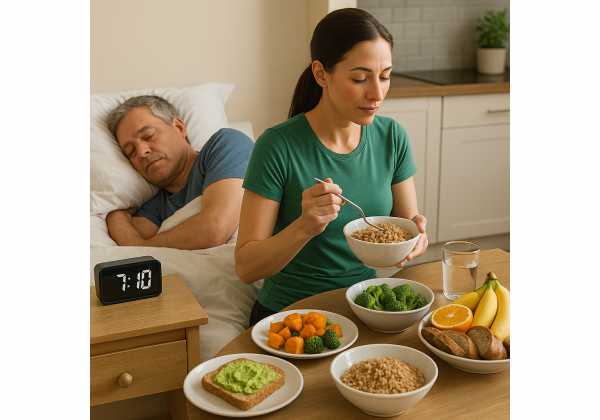
Carbohydrates work best when they match the body’s demand for fuel. A bowl of oats before a long hike, lentils at lunch before an active afternoon, or potatoes after a strength session supports movement, recovery, and stable energy. The same large carb load eaten late at night, while sitting and heading to bed, often gives a very different result: higher overnight glucose, reflux, poorer sleep, or next-morning sluggishness.
Longevity-focused carb timing is not strict dieting. It means placing most starches and sugars when muscles are most ready to use them: earlier in the day, around training, and after meals that include movement. Carb quality still comes first. Beans, intact grains, fruit, yogurt, and starchy vegetables behave differently from sweets, juice, and refined snacks. Once quality is in place, timing adds another layer: better glucose control, better training output, and calmer nights.
Table of Contents
- Carb Timing in Plain Terms
- Carb Quality Still Comes First
- Fuel Carbs Around Activity
- Evening Carbs and Sleep
- Daily Patterns That Support Longevity
- Special Situations and Adjustments
- Sample Carb Timing Days
- Common Mistakes
Carb Timing in Plain Terms
Carb timing means choosing when to eat carbohydrate-rich foods based on activity, sleep, and blood sugar response. It does not mean eating carbs only at one perfect hour. It means matching carbohydrate intake to the times when your body handles glucose best.
Carbohydrates break down into glucose, which enters the blood and fuels the brain, muscles, red blood cells, and other tissues. After a meal, insulin helps move glucose out of the bloodstream and into cells. Exercise makes this process easier because working muscle pulls glucose from the blood and stores it as glycogen, the storage form of carbohydrate found in muscle and liver.
The same meal creates different effects depending on context. Rice and beans after a brisk walk or gym session often produce a smaller and shorter glucose rise than the same meal eaten late at night while inactive. A banana before a bike ride fuels the ride. A banana plus cookies eaten after dinner in front of a screen often adds calories when the body has little immediate need for them.
Carb timing supports healthy aging through three main pathways:
- Metabolic health: Earlier meals and activity-linked carbs help reduce long, repeated glucose elevations.
- Muscle and performance: Carbs before or after harder activity support training quality and recovery.
- Sleep and circadian rhythm: Smaller, earlier dinners usually fit the body’s nighttime biology better than heavy late meals.
This does not make carbohydrates “good” in the morning and “bad” at night. A person who trains after work, walks after dinner, or has a physically demanding evening job uses carbohydrates differently than someone who sits all evening. Timing works through demand. Muscles that worked recently refill glycogen more readily. A body preparing for sleep usually handles a heavy mixed meal less efficiently.
The simplest rule is this: place more starch near movement and less starch near bedtime. For a deeper food-quality framework, smart carbs include intact grains, legumes, fruit, and starchy vegetables rather than refined snacks and sweet drinks.
Carb Quality Still Comes First
Timing improves a solid diet, but it does not rescue poor carb quality. A late bowl of lentil soup and a late bowl of sugary cereal are not equal. A pre-workout sweet drink and a pre-workout apple with yogurt are not equal either, unless the workout is long or intense enough to justify fast fuel.
High-quality carbohydrate foods bring fiber, minerals, polyphenols, water, and slower digestion. These features matter for longevity because they support gut health, lipid levels, blood pressure, glucose control, and appetite regulation.
Better daily carbohydrate choices include:
- Beans, lentils, chickpeas, peas, and soy foods
- Oats, barley, rye, buckwheat, quinoa, and brown rice
- Potatoes, sweet potatoes, corn, winter squash, and beets
- Whole fruit, especially berries, apples, citrus, kiwi, and pears
- Plain yogurt or kefir with fruit
- High-fiber breads made from intact or minimally processed grains
Lower-value carbohydrate choices include:
- Sweet drinks, fruit juice used as a daily beverage, and energy drinks
- Candy, pastries, doughnuts, cookies, and frosted cereals
- Large portions of white bread, white rice, or refined pasta without protein, fiber, or vegetables
- Late-night snack foods such as chips, crackers, and ice cream eaten from the package
Glycemic load gives a useful lens. Glycemic load reflects both the type of carbohydrate and the amount eaten. A small serving of potatoes with salmon, olive oil, and vegetables has a different effect from a huge plate of fries. A bowl of oats with berries and nuts differs from instant sweetened oatmeal with added sugar and no protein. For more detail, glycemic load explains why portion size and food pairing matter as much as the food’s glycemic index.
Fiber deserves special attention. Adults often benefit from moving toward 25–38 g of fiber per day, depending on calorie intake, digestion, and tolerance. Fiber slows digestion, supports gut microbes, and helps make carb meals more filling. Increase fiber gradually over several weeks and drink enough fluid, especially when adding beans, bran, or large salads. A practical fiber goal turns carb quality into something measurable.
Pairing also changes the response. A carb-only meal digests faster than a mixed meal. Add protein, healthy fat, and plants, and the same carbohydrate usually enters the bloodstream more slowly.
| Common meal | Longevity-focused upgrade | Why it works |
|---|---|---|
| Toast with jam | Whole-grain toast with eggs or Greek yogurt and berries | Adds protein and fiber, reduces the speed of digestion |
| Large pasta dinner | Smaller pasta serving with lentils, vegetables, olive oil, and fish or tofu | Improves protein, fiber, and satiety |
| Sweet snack at night | Kiwi, plain yogurt, or cottage cheese with cinnamon | Supplies a calmer mix of carbs and protein |
| White rice bowl | Rice plus beans, vegetables, avocado, and chicken or tempeh | Turns a fast starch into a complete meal |
Fuel Carbs Around Activity
Carbs earn their place around activity because muscles use glucose during harder work and store it afterward. Strength training, intervals, hills, rucking, long walks, cycling, swimming, and active sports all raise carbohydrate demand. The harder or longer the session, the more useful targeted carbs become.
For short, easy activity, most adults do not need special fueling. A 20-minute walk, gentle mobility session, or light household work does not require a sports drink or extra snack. Normal meals cover it.
For moderate or hard activity, carbs improve the quality of the session. Training quality matters for longevity because strength, power, aerobic fitness, balance, and muscle mass all respond to repeated high-quality work.
Before activity
Pre-activity carbs work best when the session lasts longer than 45–60 minutes, includes intervals, or feels demanding. The meal or snack should digest comfortably and match the session.
A useful range is:
- 1–4 hours before activity: 1–3 g of carbohydrate per kg of body weight, adjusted to appetite and session length.
- 30–60 minutes before activity: 15–30 g of easy-to-digest carbohydrate if the last meal was small or distant.
- Very early morning activity: A small banana, date, slice of toast, or yogurt works better than forcing a full breakfast.
For a 70 kg adult, 1 g/kg equals about 70 g of carbohydrate. That could be oats with fruit, rice with eggs, or yogurt with granola. Most recreational exercisers do not need the high end unless the session is long or intense.
Good pre-activity options include oats with berries, a banana with yogurt, rice with eggs, sourdough with nut butter, or a potato with cottage cheese. Keep fat and fiber moderate before intense exercise if digestion is sensitive.
During activity
During-exercise carbs matter most when activity lasts longer than 75–90 minutes or includes sustained high intensity. For shorter sessions, water usually works.
For long sessions, common ranges are:
- 30–60 g carbohydrate per hour for endurance work lasting 1–2.5 hours
- Up to 90 g per hour for longer endurance events, usually from mixed carbohydrate sources
- Lower amounts for easy hiking or walking, especially when a meal is coming soon
This is performance nutrition, not daily snacking. Long bike rides, races, mountain hikes, and multi-hour sports justify fast carbs in a way that desk work does not.
After activity
After hard exercise, carbohydrates refill glycogen. Protein repairs and builds muscle. Together, they support recovery better than either alone.
When the next hard session is less than 24 hours away, refuel sooner. A useful target after glycogen-depleting training is about 1–1.2 g carbohydrate per kg per hour for the first few hours, especially for endurance athletes or people training twice in one day. Most adults training for health do not need that level. They do well with a mixed meal within 1–2 hours: protein, starch, vegetables, and fluid.
Examples:
- Salmon, potatoes, and salad
- Tofu stir-fry with rice and vegetables
- Lentil soup with whole-grain bread
- Greek yogurt with oats, berries, and nuts
- Turkey or bean chili with corn or sweet potato
Protein still matters. Aim to include a meaningful protein serving at the recovery meal, especially after lifting or interval training. The usual target is 25–40 g protein per meal for many midlife and older adults, with adjustments for body size and total daily needs. A full guide to protein targets helps align carb timing with muscle maintenance.
A short walk after a carb-containing meal also helps. Even 10–20 minutes of easy walking improves glucose disposal because working muscles use glucose without requiring a hard workout. This makes post-meal walking one of the simplest carb-timing tools.
Evening Carbs and Sleep
Evening carbs work best when they are modest, high quality, and not too close to bed. The body’s glucose tolerance tends to be better earlier in the day and worse late at night. Melatonin rises before sleep, and insulin secretion often becomes less responsive during that window. This is one reason a large late dinner produces higher glucose in some people than the same meal eaten earlier.
A good dinner pattern is simple: finish the main meal 2–4 hours before bed, include protein and vegetables, and choose a starch portion that fits the day’s activity. A person who lifted weights at 6 p.m. or walked several miles after work has a different carbohydrate need than someone who sat most of the day.
Dinner starch portions often work well in these ranges:
- Light activity day: ½ cup cooked grains or beans, or ½–1 medium potato
- Moderate activity day: 1 cup cooked grains, beans, or starchy vegetables
- Hard training day: 1–2 cups cooked starch, adjusted to hunger and recovery needs
The best evening carbs are slow and steady: lentils, beans, barley, oats, potatoes, sweet potatoes, squash, fruit, and plain yogurt with berries. These foods give the body useful carbohydrate without the fast hit of sweets or refined snacks.
Sleep adds nuance. A very low-carb dinner leaves some people hungry, restless, or prone to waking at 3 a.m. A huge high-carb dinner leaves others hot, refluxed, or glucose-elevated overnight. The better option sits in the middle: enough carbohydrate to feel settled, not so much that digestion competes with sleep.
A small snack makes sense when hunger interferes with sleep. Keep it small and mixed:
- Plain Greek yogurt with berries
- Cottage cheese with kiwi
- A small bowl of oats
- A banana with a spoon of peanut butter
- Warm milk or kefir with cinnamon
These choices fit better than cookies, cereal, ice cream, or alcohol. For a food-based sleep approach, evening foods that support sleep focuses on calmer options such as yogurt, cottage cheese, and kiwi.
Late meals become more important when they happen most nights. An occasional late dinner after travel, a family event, or a long workday does not define metabolic health. A nightly pattern of large late meals, desserts, and little movement creates a stronger signal.
Use these dinner timing rules:
- Finish the largest meal at least 2 hours before bed, and 3–4 hours when reflux or high overnight glucose is a problem.
- Keep dessert small and eat it with the meal rather than as a separate late snack.
- Walk for 10 minutes after dinner when the meal contains a larger starch portion.
- Avoid combining late starch, high fat, alcohol, and screen snacking.
- Shift more carbohydrate to breakfast, lunch, or the post-workout meal when sleep or glucose worsens.
Daily Patterns That Support Longevity
A strong carb rhythm usually places more energy earlier and around movement, with a lighter evening finish. This pattern fits the body’s circadian rhythm and supports training.
A useful daily structure looks like this:
- Breakfast: Protein plus fiber-rich carbs when hungry or active in the morning.
- Lunch: The most reliable place for a larger smart-carb meal.
- Pre-activity snack: Small, targeted carbs when training demands it.
- Post-activity meal: Carbs plus protein to support recovery.
- Dinner: Protein, plants, healthy fat, and a starch portion matched to activity.
- Evening snack: Optional and small, mainly when hunger disturbs sleep.
Breakfast does not need to be huge. It does need to be intentional. Skipping breakfast and saving most calories for night often worsens cravings and leads to less controlled eating. A protein-rich breakfast with high-fiber carbs gives many adults better appetite control.
Good examples:
- Eggs, oats, berries, and nuts
- Greek yogurt, chia, fruit, and oats
- Tofu scramble with potatoes and vegetables
- Cottage cheese with berries and whole-grain toast
- Bean-and-egg breakfast bowl with salsa and avocado
Lunch deserves more attention than it gets. A solid lunch prevents the late-day hunger crash that drives sweet snacks and oversized dinners. Make lunch the main carb meal when evenings tend to go off track. A bowl with beans, grains, vegetables, olive oil, and protein gives long-lasting energy.
Carb timing also pairs well with meal consistency. Eating at wildly different times every day makes appetite and glucose harder to read. The body likes repeated cues. A consistent first meal, lunch, and dinner window helps align food intake with the body clock. For a broader explanation, meal timing and the body clock shows how regular eating patterns support metabolic health.
The weekly rhythm matters more than any single meal. A person who trains Monday, Wednesday, and Saturday does not need the same carbohydrate plan every day. Higher-carb meals fit training days. Lower-carb dinners often fit rest days. This flexible approach avoids both extremes: constant high-carb grazing and unnecessary carb restriction.
| Day type | Best carb placement | Example |
|---|---|---|
| Rest day | Breakfast and lunch, lighter dinner | Oats at breakfast, bean salad at lunch, fish and vegetables with a small potato at dinner |
| Strength day | Meal before training and meal after training | Rice bowl before lifting, chili with sweet potato afterward |
| Long endurance day | Before, during, and after activity | Oats before, fruit during, rice and protein after |
| Late workout day | Carbs at dinner, but avoid overeating close to bed | Tofu, vegetables, and rice 2 hours before sleep, with a short walk if needed |
Special Situations and Adjustments
Carb timing changes with health status, medications, training load, sleep, and personal glucose response. The same schedule does not fit everyone.
Insulin resistance or prediabetes
People with insulin resistance often do better with earlier carb intake, smaller dinner starch portions, and movement after meals. This does not require eliminating carbs. It requires choosing better carbs and placing them where the body handles them best.
Useful steps include:
- Put the largest starch serving at lunch or after exercise.
- Choose legumes and intact grains more often than refined grains.
- Add protein at every meal.
- Walk after the two highest-carb meals.
- Avoid eating most daily calories after dinner.
- Track waist size, fasting glucose, A1c, triglycerides, and HDL with a clinician.
For day-to-day food habits, post-meal glucose habits focuses on flattening spikes without turning meals into math problems.
Endurance training
Endurance training raises carbohydrate needs. Long runs, bike rides, rowing, swimming, and mountain hikes use glycogen heavily. Under-fueling these sessions leads to poor performance, high stress, cravings, and slower recovery.
On longer endurance days, eat more carbohydrate before and after the session. During multi-hour activity, use easy-to-digest carbs. This is one place where refined carbohydrate has a purpose. Sports drinks, gels, chews, and dried fruit belong in long activity, not as routine desk snacks.
Strength training
Strength training does not always need large carb loads, but carbs improve output during demanding sessions. This matters for older adults because maintaining muscle and power takes effort. A small pre-workout carb snack helps when training feels flat, especially if lunch was light.
After lifting, include protein and enough carbohydrate to support recovery. A low-carb dinner after evening lifting works poorly for some people because they wake hungry or feel under-recovered the next day.
Low-carb eating
Lower-carb diets help some adults control appetite and glucose, especially when they replace refined carbs with protein, vegetables, healthy fats, and high-fiber plants. Problems start when low-carb turns into low-fiber, low-plant, and low-training-fuel.
A longevity-minded lower-carb plan still includes vegetables, nuts, seeds, berries, yogurt or kefir if tolerated, and often beans or lentils in modest portions. Carb timing becomes even more important: save starch for after activity or for the meal that improves sleep and adherence.
Shift work and late schedules
Shift work disrupts circadian rhythm. Late-night eating during biological night often worsens glucose handling, but long shifts also require fuel. The aim is damage control, not perfection.
Useful steps include:
- Eat a balanced main meal before the shift.
- Use smaller meals overnight, not one heavy meal at 2 a.m.
- Choose protein, soup, yogurt, fruit, nuts, and high-fiber carbs.
- Avoid sweet drinks and large refined-carb meals during the lowest-alertness hours.
- Eat a light meal after the shift if needed, then sleep.
Using glucose data carefully
Some adults use a continuous glucose monitor to learn which meals produce long glucose rises. This helps when the data leads to calm experiments: smaller portions, different carb types, more protein, earlier dinner, or walking after meals. It becomes unhelpful when every normal glucose rise causes anxiety. A practical CGM setup focuses on patterns rather than single readings.
Sample Carb Timing Days
Sample days turn the idea into real food. Use them as templates, not rules. Portions depend on body size, appetite, training, and health goals.
Moderately active day with morning walking
Breakfast: Greek yogurt with oats, berries, chia, and walnuts.
Lunch: Lentil and quinoa bowl with roasted vegetables, olive oil, herbs, and chicken or tofu.
Snack: Apple with peanut butter or cottage cheese.
Dinner: Salmon, greens, and a small roasted potato.
Evening: Herbal tea. If hungry, kiwi or plain yogurt.
This pattern places most starch earlier, keeps dinner satisfying, and avoids a late glucose-heavy snack.
Strength training after work
Breakfast: Eggs with whole-grain toast and fruit.
Lunch: Rice-and-bean bowl with vegetables, avocado, and salsa.
Pre-workout: Banana or dates 30–60 minutes before lifting.
Dinner after training: Turkey chili or bean chili with sweet potato and salad.
Evening: No snack unless hunger interferes with sleep.
This day uses carbs to support training and recovery. Dinner includes starch because the evening workout created demand.
Long hike or endurance day
Breakfast: Oats with banana, yogurt, and nuts.
During activity: Fruit, trail mix, sandwich halves, or sports fuel depending on intensity and duration.
After activity: Rice, potatoes, pasta, or grain bowl with protein and vegetables.
Dinner: Lighter meal if recovery meal was large, such as soup with beans and greens.
This day needs more carbohydrate. Restricting carbs during long activity often backfires later through fatigue and overeating.
Rest day with glucose control focus
Breakfast: Cottage cheese or tofu scramble with berries and nuts.
Lunch: Bean soup, salad, olive oil, and whole-grain bread.
Snack: Carrots, hummus, or plain kefir.
Dinner: Chicken, tempeh, or fish with non-starchy vegetables and a small serving of squash or lentils.
Evening: Kitchen closed 2–3 hours before bed.
This pattern does not remove carbs. It lowers the evening starch load and leans on fiber-rich foods.
Common Mistakes
Carb timing works best when it feels steady and repeatable. Most problems come from extremes.
Mistake 1: Saving most carbs for night
Skipping balanced meals early and eating most starch and sweets after dinner often leads to higher glucose, cravings, and poorer sleep. Move more carbohydrate to breakfast, lunch, or the meal after exercise.
Mistake 2: Treating all evening carbs as harmful
A modest serving of beans, potatoes, fruit, or yogurt at dinner works well for many active adults. The issue is usually amount, timing, and food type. A balanced dinner 3 hours before bed differs from a late dessert-heavy meal.
Mistake 3: Under-fueling exercise
Training hard with too little carbohydrate raises perceived effort and lowers performance. Long-term fitness supports longevity, so fuel the sessions that build it. Place carbs before and after demanding workouts instead of grazing on refined carbs all day.
Mistake 4: Using sports fuel without sports demand
Sports drinks, gels, and chews are tools for long or intense exercise. They are not daily longevity foods. Use them on long rides, races, hikes, or hard sessions lasting long enough to need fast fuel.
Mistake 5: Ignoring protein and fiber
Carb timing without protein and fiber misses the point. Protein supports muscle. Fiber supports gut health and steadier glucose. Build meals around protein, plants, and smart carbs rather than isolated starch.
Mistake 6: Chasing perfect glucose lines
A healthy body shows a glucose rise after eating carbohydrate. The concern is repeated large spikes, long elevations, and poor recovery to baseline. Watch patterns. Adjust meals calmly. Do not turn normal eating into a fear-based tracking project.
Mistake 7: Changing too many things at once
Test one change for one to two weeks. Move dinner earlier. Add a walk after lunch. Shift starch to post-workout. Replace refined breakfast carbs with oats and protein. One clear change teaches more than a complete overhaul.
A simple starting plan works well:
- Eat most refined or starchy carbs before 6 p.m., unless training later.
- Put the largest starch serving at lunch or after exercise.
- Finish dinner 2–4 hours before bed.
- Walk 10 minutes after the highest-carb meal.
- Choose high-fiber carbs most of the time.
- Keep late snacks small, protein-paired, and planned.
That rhythm supports the main promise of carb timing: better fuel when the body needs it, less metabolic load when it does not, and more stable energy across the day.
References
- Carbohydrate intake for adults and children: WHO guideline 2023 (Guideline)
- Chrononutrition and Cardiometabolic Health: An Overview of Epidemiological Evidence and Key Future Research Directions 2024 (Review)
- Interplay of Dinner Timing and MTNR1B Type 2 Diabetes Risk Variant on Glucose Tolerance and Insulin Secretion: A Randomized Crossover Trial 2022 (RCT)
- Nutritional Strategies to Improve Post-exercise Recovery and Subsequent Exercise Performance: A Narrative Review 2025 (Review)
- Delaying post-exercise carbohydrate intake impairs next-day exercise capacity but not muscle glycogen or molecular responses 2024 (RCT)
- Delayed dinnertime impairs glucose tolerance in healthy young adults 2024 (RCT)
Disclaimer
This article is educational and does not replace care from a qualified clinician, registered dietitian, or diabetes educator. People using insulin, sulfonylureas, GLP-1 medicines, SGLT2 inhibitors, or other glucose-lowering treatments should get personalized guidance before changing carbohydrate intake or meal timing. Seek professional advice for unexplained weight loss, recurrent low blood sugar, disordered eating patterns, pregnancy, kidney disease, or persistent sleep disruption.