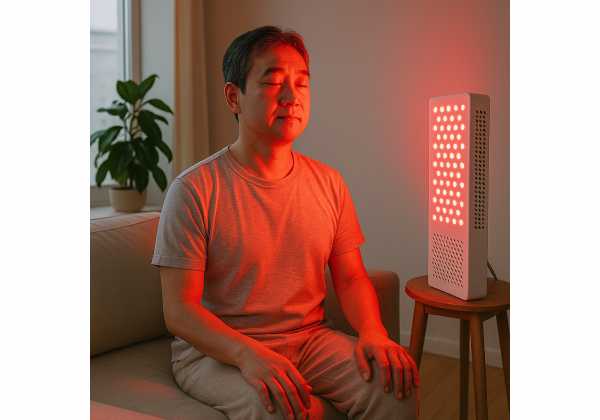
Photobiomodulation uses red and near-infrared light to influence how cells handle energy, repair, inflammation, and stress signals. It is often sold as “red light therapy,” but the useful idea is more specific: the right wavelengths, at the right dose, applied to the right tissue, produce a biological response without heating or damaging the skin. Interest in photobiomodulation has grown because mitochondria, blood flow, collagen turnover, muscle recovery, and brain energy metabolism all change with age. Light will not replace strength training, sleep, protein, blood pressure control, or medical care. It fits best as a gentle cellular nudge: low effort, noninvasive, and easy to overdo when enthusiasm outruns dosing. Healthy aging use should focus on realistic outcomes, careful timing, eye protection, and repeatable routines rather than dramatic claims.
Table of Contents
- How Photobiomodulation Works
- Red Light vs Near-Infrared Light
- Healthy Aging Benefits and Limits
- Dose, Timing, and Session Design
- How to Stack Light with Longevity Habits
- Safety, Risks, and When to Get Guidance
- Choosing a Device and Using It Well
- Tracking Results Without Fooling Yourself
How Photobiomodulation Works
Photobiomodulation, often shortened to PBM, uses low-intensity red or near-infrared light to trigger cell signaling. It is different from tanning beds, heat lamps, ablative lasers, and intense pulsed light. PBM does not rely on ultraviolet radiation, tissue burning, or visible skin injury. The intended effect is photochemical, meaning light is absorbed by molecules in cells and changes their behavior.
The main cellular target discussed in PBM research is cytochrome c oxidase, an enzyme in complex IV of the mitochondrial electron transport chain. Mitochondria use this chain to move electrons, maintain membrane potential, and produce ATP, the energy currency cells use for repair, movement, transport, and signaling. When cells absorb red or near-infrared light, several responses are plausible:
- ATP production shifts upward in stressed or underperforming cells.
- Nitric oxide signaling changes, which supports local blood flow and oxygen delivery.
- Reactive oxygen species rise briefly as signaling molecules, rather than only acting as damaging waste.
- Inflammatory pathways shift toward resolution in some tissues.
- Growth factors and repair signals increase in skin, muscle, nerve, or connective tissue depending on the target.
This pattern resembles hormesis: a mild stimulus pushes the cell to adapt. That is why PBM belongs near topics such as mitohormesis, heat, cold, exercise, and fasting. The dose is the signal. Too little light does nothing. A useful amount nudges repair. Too much light blunts the response or irritates tissue.
PBM is also local. A red light panel aimed at the knee does not “rejuvenate the whole body” in a direct, measurable way. It mainly affects the tissues reached by the light. Systemic effects still matter because local changes in inflammation, circulation, muscle function, pain, or sleep comfort influence the whole person. But the starting point is tissue exposure, not a vague whole-body reset.
Red Light vs Near-Infrared Light
Red and near-infrared light overlap in popular products, but they behave differently in tissue. Red light is visible and usually falls around 620–700 nm. Near-infrared light is mostly invisible and often falls around 700–1100 nm in PBM devices, with common wavelengths near 810, 830, 850, and 1064 nm.
Red light works best for surface and near-surface targets. Skin, scalp, superficial wounds, and facial aging studies often use red LEDs around 630–670 nm. Near-infrared light penetrates deeper because longer wavelengths scatter less in tissue. It is better suited for joints, muscles, tendons, nerves, and transcranial brain protocols, though skull, hair, skin color, device power, and contact distance all change how much light reaches the target.
| Light type | Common PBM wavelengths | Main use areas | Practical notes |
|---|---|---|---|
| Red light | 620–700 nm | Skin, scalp, superficial tissue, facial aging, surface wounds | Easier to see; less deep penetration |
| Near-infrared light | 700–1100 nm | Muscle, joints, tendons, deeper soft tissue, brain-focused research | Often invisible; eye protection matters |
| Combined red + near-infrared | Often 660 nm + 810/830/850 nm | General panels and recovery routines | Useful for broad exposure, less precise |
| Higher NIR ranges | Around 1064 nm in some research and devices | Deeper tissue and brain protocols | Requires more care with power and heat |
The numbers on a device do not guarantee good results. Wavelength matters, but so do irradiance, energy density, distance from skin, session duration, beam angle, pulse settings, treatment area, and repetition. A high-powered panel used far away delivers a different dose than a small laser placed in contact with the skin.
Device marketing often turns PBM into a contest of “more power.” Biology does not reward that mindset. Mitochondrial signaling follows a biphasic dose response, sometimes called an Arndt-Schulz curve. Low and moderate doses stimulate; high doses lose benefit or produce fatigue, headache, irritation, or warmth. The same principle applies across hormesis dose-response planning: the minimum effective dose beats the maximum tolerable dose.
Healthy Aging Benefits and Limits
PBM has the strongest healthy-aging appeal in tissues where energy metabolism, repair, blood flow, and inflammation overlap. It is most defensible as an adjunct, not a stand-alone intervention. A sedentary person using a red light panel will not get the mitochondrial benefits of walking, lifting, and eating enough protein. A poor sleeper will not fix recovery by adding 20 minutes of light before bed. PBM works best when it supports habits that already point in the right direction.
Skin and collagen support
Skin has the most visible response to red light because the target is easy to reach. Clinical studies often focus on wrinkles, skin texture, dermal density, wound healing, acne, inflammation, and hair growth. Red light around 630–660 nm appears especially relevant for collagen-producing fibroblasts and inflammatory signaling in the skin.
For healthy aging, skin benefits are usually gradual. Expect changes over 8–12 weeks, not overnight. Useful signs include smoother texture, reduced post-inflammatory redness, better healing of small blemishes, and modest wrinkle or firmness changes. PBM does not replace sunscreen, protein, vitamin C intake, sleep, or not smoking. It also does not remove deep folds like a procedural cosmetic treatment.
Muscle function and recovery
Muscle aging involves reduced mitochondrial function, lower capillary density, slower recovery, and anabolic resistance. PBM has been studied as an add-on to resistance training, especially for fatigue, soreness, torque, and performance. Research in older adults suggests promise, but protocols vary and the evidence remains less mature than exercise science.
The most practical use is targeted: apply PBM to a muscle group before training to support performance or after training to support recovery. Quadriceps, calves, hamstrings, shoulders, and forearms are common targets. PBM does not build strength without loading. It pairs naturally with mechanical signals from resistance training, where light supports the tissue that training challenges.
Joints, tendons, and pain-limited movement
PBM is widely used in clinics for musculoskeletal pain and inflammation. For healthy aging, the real value is not pain relief alone; it is preserving movement. A knee, shoulder, Achilles tendon, or low back flare that prevents walking and lifting harms long-term healthspan. If PBM reduces discomfort enough to keep someone training safely, the indirect benefit becomes meaningful.
Pain relief should not hide red flags. Sudden weakness, unexplained swelling, night pain, fever, trauma, cancer history, or neurological symptoms need medical evaluation. PBM is not a diagnostic tool.
Brain and cognition
Transcranial PBM is one of the most intriguing areas because brain aging is strongly tied to mitochondrial energy, blood flow, inflammation, and network efficiency. Studies use near-infrared wavelengths because they penetrate better than red light. Early research in aging, mild cognitive impairment, and neurodegenerative conditions is promising, but home brain protocols deserve caution.
The skull and scalp block much of the delivered light. Device placement, dose, pulse settings, heat, hair, skin tone, and treatment schedule matter. Reports of better working memory, attention, or mood should be viewed as early signals, not proof of broad cognitive rejuvenation. People focused on brain health should prioritize blood pressure, sleep apnea screening, hearing, exercise, and metabolic health before investing heavily in head devices.
Glucose and metabolic signals
A small human study reported that 670 nm red light before an oral glucose challenge reduced the post-glucose blood sugar rise. That finding is interesting because mitochondria and glucose handling are closely connected. It does not mean red light replaces nutrition, walking, weight loss, or medication when needed.
PBM belongs near metabolic basics, not above them. Post-meal walking, adequate muscle mass, sleep regularity, and insulin sensitivity still carry the larger practical effect. For readers already working on mTOR and AMPK balance, PBM is best viewed as a possible supportive signal rather than a primary metabolic therapy.
Dose, Timing, and Session Design
PBM dosing uses several terms that sound technical but translate into simple questions.
Irradiance means power delivered to each square centimeter of skin, usually listed as mW/cm². Fluence means total energy delivered per square centimeter, usually listed as J/cm². Time connects the two. A device with higher irradiance needs less time to deliver the same energy, assuming the manufacturer’s numbers are accurate at the distance you use.
A useful home routine starts conservatively. Most people do better with short, repeated sessions than occasional marathon exposure. For panels and consumer LEDs, a common starting pattern is 5–10 minutes per target area, 3–5 days per week, with the device placed at the manufacturer’s recommended distance. Smaller devices used in contact with the skin often require shorter and more specific protocols.
| Use case | Reasonable starting schedule | When to reassess |
|---|---|---|
| Facial skin texture | 5–10 minutes, 3–5 days per week | After 8–12 weeks |
| Local joint or tendon discomfort | 5–10 minutes per target, 3–5 days per week | After 3–6 weeks |
| Muscle recovery | 5–15 minutes on trained muscle groups, before or after sessions | After 4–8 workouts |
| General panel routine | 10–15 minutes total, 3–4 days per week | After 4 weeks |
| Brain-focused use | Use clinician-guided protocols when possible | Reassess symptoms closely |
PBM sessions should feel boring. Mild warmth from a panel is common, but heat is not the treatment. Strong heat, skin redness that persists, headache, eye discomfort, dizziness, agitation, or unusual fatigue are signs to reduce exposure or stop.
Timing depends on the purpose:
- Use before training when the aim is muscle output or reduced fatigue.
- Use after training when the aim is soreness control or recovery.
- Use earlier in the day when bright red light feels stimulating.
- Avoid intense evening sessions if they make sleep feel lighter or delay bedtime.
- Keep routines consistent for several weeks before judging results.
Do not treat every body part every day. PBM is a signal, and signals need recovery time. This is the same logic behind recovery after hormetic stress: adaptation happens between exposures, not only during them.
How to Stack Light with Longevity Habits
PBM stacks best with habits that improve the same tissue without overwhelming the body. Think in terms of support, not substitution.
For muscle, pair PBM with resistance training. Use light on the main muscles you plan to train, then lift with good technique and progressive loading. For example, apply near-infrared light to the quadriceps before lower-body training, then perform squats, step-ups, or leg presses. The training gives the mechanical signal; light supports energy and recovery.
For skin, pair red light with sun protection, protein, vitamin C-rich foods, and gentle skincare. Avoid using PBM immediately after irritating products if your skin is reactive. Retinoids, exfoliating acids, and recent procedures increase sensitivity in some people, so spacing them away from PBM sessions is sensible.
For joints, pair PBM with mobility and strength work. A light session on the knee followed by a slow warm-up, isometric holds, and pain-free range-of-motion work often makes more sense than passive light alone.
For metabolic health, place PBM below the basics. A 10-minute walk after meals, strength training, and regular sleep have broader evidence than red light for glucose control. PBM fits as a supportive experiment after those foundations are in motion.
For cellular repair, do not stack too many stressors in one day. A heavy lift, sauna, cold plunge, fasting window, intense intervals, and PBM all send signals. Some combine well, but the body reads the total load. If you are using PBM as part of a broader cellular resilience plan, connect it with redox balance rather than chasing every possible stimulus.
One simple weekly rhythm:
- Use PBM on lifting days for the muscles or joints that need support.
- Use facial red light on separate low-stress days.
- Skip PBM on days with poor sleep, illness, migraine, skin irritation, or unusual fatigue.
- Reassess after 4–8 weeks using symptoms and function, not excitement.
PBM also pairs with circadian light habits, but it does not replace daylight. Outdoor morning light gives the brain a strong timing signal through the eyes. Red and near-infrared therapy aimed at the skin is a different input. Both involve light, but they serve different biological jobs.
Safety, Risks, and When to Get Guidance
PBM is generally considered low risk when used correctly, but “low risk” does not mean risk-free. Home devices vary widely, and invisible near-infrared light creates a special problem: the eye does not blink or turn away from what it cannot see.
Eye protection is the first rule. Use goggles rated for the device’s wavelengths, especially with near-infrared LEDs or lasers. Do not stare into panels. Do not aim lasers near the eyes unless a qualified professional is using a protocol designed for that purpose.
Avoid or get professional guidance before PBM if any of these apply:
- Active cancer or a suspicious skin lesion in the treatment area
- Pregnancy, especially over the abdomen or pelvis
- Photosensitive epilepsy or light-triggered neurological symptoms
- Eye disease, retinal disease, recent eye surgery, or light sensitivity
- Use of photosensitizing drugs or herbs
- Recent burns, severe dermatitis, or unexplained rash
- Implanted electronic devices near the treatment area
- Fever, acute infection, or a rapidly worsening injury
- Bipolar disorder or a history of light-triggered mania
Photosensitizing medications include some antibiotics, acne drugs, chemotherapy agents, diuretics, antipsychotics, and herbal products such as St. John’s wort. The risk depends on the drug, dose, wavelength, skin exposure, and individual sensitivity. A pharmacist or clinician gives better guidance than a device manual.
Do not use PBM to “treat” a mole, tumor, infected wound, blood clot, or unexplained pain. PBM changes cell signaling and blood flow; those effects are not automatically desirable in every condition.
Skin tone also matters. Darker skin contains more melanin, which absorbs light and changes penetration and heat response. This does not exclude PBM, but it supports cautious dosing and attention to warmth or irritation.
Children, frail older adults, people with neuropathy, and people who cannot clearly report discomfort need extra caution because they may not notice overheating, eye exposure, or irritation quickly.
Choosing a Device and Using It Well
A good PBM device should make dosing easier, not more confusing. Before buying, look for clear specifications rather than dramatic claims.
Useful specifications include:
- Wavelengths listed in nanometers, such as 660 nm and 850 nm
- Irradiance listed at a specific distance, such as mW/cm² at 15 cm
- Treatment area size
- Session time recommendations
- Eye protection guidance
- Safety certifications
- Return policy and warranty
- Heat output and cooling design
- Whether the device uses LEDs, lasers, or both
Large panels suit general exposure of the back, legs, torso, or face. They are convenient but less precise. Small handheld LEDs suit joints, tendons, scars, and local skin areas. Laser devices penetrate more intensely and often require professional-level dosing knowledge. Intranasal and transcranial devices should be treated as specialized tools, not casual wellness gadgets.
Distance matters. If a panel’s irradiance is measured at 6 inches, using it at 18 inches sharply lowers the delivered energy. If you press a device directly on the skin, you alter the dose and heat pattern. Follow manufacturer instructions unless you have a clear reason and enough data to adjust.
Pulsing is often marketed as advanced, but frequency claims outrun evidence in many consumer products. Continuous light is easier to understand and repeat. Pulsing may have uses in specific protocols, especially brain-focused research, but it should not distract from the basics: wavelength, dose, target, time, and consistency.
A practical starter protocol for a healthy adult using a panel:
- Choose one purpose first: skin, knee comfort, muscle recovery, or general exposure.
- Use the device 3 days per week for the first 2 weeks.
- Start with 5 minutes per target area.
- Keep the same distance each time.
- Use eye protection every session.
- Increase to 8–10 minutes only if there is no irritation, headache, sleep disruption, or fatigue.
- Review results after 4 weeks before adding more targets.
This approach fits the spirit of safe self-experimentation: change one variable, track a few outcomes, and stop when the signal turns negative.
Tracking Results Without Fooling Yourself
PBM is easy to overrate because the ritual feels high-tech and hopeful. Tracking protects you from placebo-driven buying, overuse, and vague impressions.
Choose outcomes that match the target. Facial PBM should not be judged by general energy. Knee PBM should not be judged by mood. Brain PBM should not be judged by one unusually good workday.
Use a simple 0–10 score or a measurable task:
| Target | Useful tracking measure | Minimum trial length |
|---|---|---|
| Facial skin | Same-light photos, texture score, irritation score | 8–12 weeks |
| Knee or shoulder | Pain during stairs, range of motion, training tolerance | 4–6 weeks |
| Muscle recovery | Soreness next day, reps completed, perceived fatigue | 4–8 workouts |
| Sleep comfort | Sleep latency, awakenings, morning alertness | 3–4 weeks |
| Cognitive use | Reaction time app, working memory task, headache/fatigue log | 4–8 weeks |
Take photos under the same lighting, angle, distance, facial expression, and time of day. Skin changes are especially vulnerable to lighting tricks. For pain, track function: stairs, walking distance, grip, getting off the floor, or returning to a movement. Feeling “better” matters, but function shows whether better translates into healthspan.
Common mistakes include:
- Treating too many areas at once
- Changing dose every few sessions
- Assuming tingling or warmth means effectiveness
- Using PBM while ignoring sleep debt
- Buying stronger devices instead of using a moderate one consistently
- Judging results after only a few days
- Continuing despite headaches, eye strain, or skin irritation
- Treating pain without understanding the cause
Stop a trial when there is no meaningful change after a fair period. “Fair” means consistent use at a reasonable dose for the intended tissue. For skin, that usually means 8–12 weeks. For soreness or local discomfort, 3–6 weeks is often enough to know whether the device helps. For performance, compare similar workouts, not random good and bad days.
PBM also deserves humility. Healthy aging is not one pathway. Mitochondria, autophagy, proteostasis, senescence, vascular health, immune function, and brain resilience interact. Light touches several of those systems, but it does not control them. A well-run PBM habit should leave you with better recovery, calmer tissue, or modest skin and function gains. It should not become another stressor, expense, or source of constant optimization.
References
- Photobiomodulation CME part I: Overview and mechanism of action 2024 (Review)
- Unlocking the Power of Light on the Skin: A Comprehensive Review on Photobiomodulation 2024 (Review)
- Photobiomodulation in the aging brain: a systematic review from animal models to humans 2024 (Systematic Review)
- Photobiomodulation therapy as an adjunct to resistance exercises on muscle metrics, functional balance, functional capacity, and physical performance among older adults: A systematic scoping review 2024 (Scoping Review)
- Light stimulation of mitochondria reduces blood glucose levels 2024 (Clinical Study)
- Photobiomodulation: The Clinical Applications of Low-Level Light Therapy 2021 (Review)
Disclaimer
This article is educational and does not replace care from a qualified clinician. Photobiomodulation protocols should be adjusted for medical history, medications, eye health, skin sensitivity, and the device being used. Seek professional guidance before using PBM for neurological conditions, cancer-related concerns, pregnancy, unexplained pain, or any condition that is worsening.