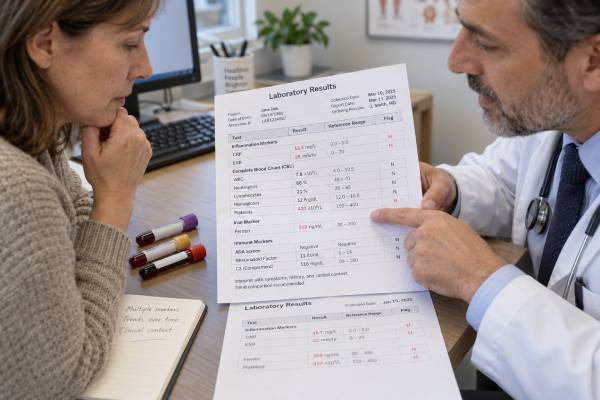
Ceruloplasmin is a liver-made blood protein that carries most circulating copper and helps regulate iron metabolism. The test is best known for its role in evaluating Wilson disease, but the result can be affected by much more than copper balance. Ceruloplasmin is also a positive acute-phase protein, so infection, autoimmune activity, tissue injury, pregnancy, and estrogen exposure may raise it. Liver disease can produce either direction: inflammation may increase production, while advanced loss of liver function may lower it. For that reason, a high or low ceruloplasmin value cannot be interpreted alone. Clinicians usually compare it with serum copper, 24-hour urine copper, liver tests, blood counts, symptoms, medication history, and sometimes genetic or eye examinations. This guide explains normal ranges, high and low patterns, the relationship between ceruloplasmin and copper, and why a complete copper assessment matters when Wilson disease or deficiency is being considered.
- Copper carrier: Ceruloplasmin transports most copper measured in serum and also functions as a ferroxidase enzyme.
- Acute-phase protein: Inflammation can raise ceruloplasmin and may mask an underlying low-copper state.
- Wilson disease clue: Low ceruloplasmin can support the diagnosis, but normal values do not exclude it.
- Ranges vary: Age, sex, pregnancy, estrogen use, laboratory method, and units affect interpretation.
- Panel thinking: Serum copper, urine copper, liver findings, and clinical features are usually needed.
Table of Contents
- What Ceruloplasmin Does
- Normal Range, Units, and Test Method
- Why Ceruloplasmin Is High
- Low Ceruloplasmin and Wilson Disease
- Copper Results and Liver Disease Patterns
- Pregnancy, Estrogen, and Other Confounders
- Testing, Follow-Up, and Next Steps
What Ceruloplasmin Does
Ceruloplasmin is synthesized in the liver. Copper is incorporated into the protein before it is released into blood, creating the copper-containing form known as holoceruloplasmin. Most serum copper is attached to ceruloplasmin, while a smaller fraction circulates bound to albumin and other molecules.
The protein does more than transport copper. Ceruloplasmin acts as a ferroxidase, converting iron from the ferrous form to the ferric form so it can bind transferrin and move safely through blood. This function links copper biology with iron handling. Severe ceruloplasmin deficiency can therefore disturb both metals and contribute to iron accumulation in tissues.
Ceruloplasmin is also a positive acute-phase reactant. When cytokines signal infection, tissue injury, or inflammatory disease, the liver may produce more of it. This response resembles increases in CRP, fibrinogen, haptoglobin, and other acute-phase proteins, although each marker has different timing and functions.
The laboratory test usually measures immunoreactive ceruloplasmin—the amount of protein recognized by antibodies. It does not necessarily measure how much functional ferroxidase activity is present or how much copper is correctly incorporated. This distinction matters in Wilson disease. Some assays can detect apoceruloplasmin, the protein without its normal copper load, although apoceruloplasmin has a shorter half-life and is often reduced.
A ceruloplasmin result is therefore a composite signal. It reflects liver synthesis, copper incorporation, protein loss, acute-phase stimulation, hormones, and the assay itself. The number should be interpreted as part of a physiological system rather than as a direct measure of total body copper.
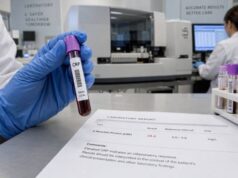
The C-reactive protein test can help show whether inflammation may be pushing ceruloplasmin upward. A high ceruloplasmin with a high CRP has a different context from a high ceruloplasmin in a well person with normal inflammatory markers.
Normal Range, Units, and Test Method
Ceruloplasmin is commonly reported in milligrams per deciliter, milligrams per liter, or grams per liter. The conversions are straightforward:
- 20 mg/dL equals 200 mg/L.
- 20 mg/dL equals 0.20 g/L.
- 1 mg/dL equals 10 mg/L.
Reference intervals differ considerably. One major laboratory lists adult ranges of 19–31 mg/dL for males and 20–51 mg/dL for females. Other laboratories use broader adult intervals such as roughly 20–40 or 20–50 mg/dL. Infants, children, adolescents, pregnant people, and people taking estrogen-containing medication may have different ranges.
| Result pattern | Possible interpretation | Why it is not conclusive |
|---|---|---|
| Within range | Expected protein concentration for that assay | Does not exclude Wilson disease or a mixed inflammatory and synthetic problem |
| High | Acute-phase response, estrogen effect, pregnancy, or selected diseases | Does not prove copper overload |
| Mildly low | Possible Wilson disease, copper deficiency, protein loss, liver dysfunction, or normal variation | Overlap occurs with healthy people and heterozygous carriers |
| Markedly low | Raises stronger concern for impaired copper incorporation, severe deficiency, protein loss, or rare genetic disease | Still requires confirmatory evaluation |
A commonly cited Wilson disease threshold is below 20 mg/dL, but this value is not a stand-alone diagnostic cutoff. Some affected people have values above it, especially during inflammation, pregnancy, or estrogen exposure. Some people without Wilson disease have values below it. Very low results, such as below approximately 10 mg/dL, may be more suggestive in the right clinical setting but remain insufficient alone.
Laboratory methods can add variation. Immunologic assays measure protein concentration, while enzymatic methods assess oxidase activity. Samples with severe lipemia, hemolysis, or other interference may be problematic. Use the exact range on the report and compare repeat results on the same platform when possible.
Why Ceruloplasmin Is High
High ceruloplasmin usually reflects increased liver production rather than copper toxicity. Because ceruloplasmin is an acute-phase protein, many inflammatory states can raise it.
Common settings include:
- Acute or chronic infection: Cytokine signaling stimulates hepatic production.
- Autoimmune and inflammatory disease: Rheumatoid arthritis, inflammatory bowel disease, vasculitis, and other active conditions may increase the level.
- Tissue injury: Surgery, trauma, burns, and other major stress can activate the acute-phase response.
- Pregnancy or estrogen exposure: Estrogen increases ceruloplasmin synthesis, sometimes substantially.
- Some cancers: Tumor-related inflammation, tissue injury, and treatment effects can contribute.
- Inflammatory liver disease: Hepatitis or steatohepatitis may raise ceruloplasmin while liver synthetic function remains adequate.
A high value does not mean that free copper is high or that copper is depositing in organs. In fact, serum copper often rises along with ceruloplasmin because most measured serum copper is carried by the protein. This is a transport-protein effect, not necessarily excess body copper.
Inflammation can also conceal copper deficiency. If copper intake or absorption is low, the acute-phase response may keep ceruloplasmin in the laboratory range or raise it. A patient with high CRP, anemia, neutropenia, malabsorption, or a history of bariatric surgery may need a broader nutritional assessment even when ceruloplasmin is not low.
High ceruloplasmin is rarely treated directly. The appropriate response is to identify and manage the underlying inflammatory, hormonal, or medical cause. If estrogen medication is the likely explanation and the patient is otherwise well, no intervention may be needed. Medication changes should be made only for a valid clinical reason, not simply to normalize this protein.
Other acute-phase markers can help frame the result. A high ferritin blood test, elevated CRP, or increased fibrinogen may support systemic inflammation. Normal companion markers do not eliminate all causes, but they make a strong acute-phase response less likely.
Low Ceruloplasmin and Wilson Disease
Wilson disease is an inherited disorder caused by pathogenic variants in ATP7B. The liver cannot handle copper normally, leading to reduced incorporation of copper into ceruloplasmin and impaired biliary copper excretion. Copper accumulates first in the liver and may later affect the brain, eyes, red blood cells, kidneys, and other tissues.
Low ceruloplasmin is a classic clue, but diagnosis requires multiple findings. Current liver-society guidance recommends evaluating ceruloplasmin alongside basal 24-hour urinary copper, liver biochemistry, clinical features, eye examination for Kayser–Fleischer rings, and genetic testing when appropriate. Liver copper measurement may be used in selected cases.
Symptoms can vary widely. Liver presentations include unexplained elevated enzymes, fatty liver, hepatitis, cirrhosis, or acute liver failure. Neurologic or psychiatric presentations may include tremor, dystonia, difficulty speaking, poor coordination, personality change, depression, or cognitive symptoms. Hemolytic anemia can occur when copper is suddenly released from injured liver cells.
A normal ceruloplasmin does not exclude Wilson disease. Acute inflammation can raise it. Pregnancy and estrogen can also obscure a low baseline. Some pathogenic variants allow more measurable protein. Conversely, low ceruloplasmin is not specific. It may occur in severe copper deficiency, advanced liver disease, nephrotic syndrome, protein-losing enteropathy, malnutrition, or rare genetic conditions.
The serum copper pattern can be confusing. Because ceruloplasmin-bound copper makes up most serum copper, total serum copper may be low in stable Wilson disease even though toxic non-ceruloplasmin-bound copper and tissue copper are excessive. During acute liver failure, total serum copper can become high because damaged hepatocytes release copper into blood.
This apparent contradiction is why self-diagnosis from a ceruloplasmin and serum copper pair is unsafe. The direction of each test changes with disease stage, inflammation, liver injury, and treatment.
Copper Results and Liver Disease Patterns
Interpreting ceruloplasmin requires separating three related questions: How much transport protein is present? How much copper is circulating? Is excess copper being excreted or stored abnormally?
| Pattern | Possible explanation | Useful follow-up |
|---|---|---|
| Low ceruloplasmin and low serum copper | Wilson disease, copper deficiency, severe protein loss, or reduced liver synthesis | Urine copper, nutrition history, blood count, liver assessment, and clinical features |
| Low ceruloplasmin with high urine copper | Supports Wilson disease in the correct setting | Specialist evaluation, eye examination, genetics, and sometimes liver copper |
| High ceruloplasmin and high serum copper | Inflammation, pregnancy, or estrogen effect | CRP, history, medication review, and repeat testing when appropriate |
| Low ceruloplasmin with advanced liver disease | Reduced synthesis may mimic Wilson disease | Full liver workup and Wilson-specific testing if clinically indicated |
Liver disease can move ceruloplasmin in either direction. Inflammation stimulates production, but severe loss of functioning liver tissue reduces protein synthesis. A person with active autoimmune hepatitis and preserved synthesis may have a high result. Someone with decompensated cirrhosis may have a low result regardless of the original cause.
Albumin and clotting measurements help assess liver synthetic function. Bilirubin, alkaline phosphatase, ALT, AST, platelet count, imaging, and fibrosis assessment provide additional context. The albumin blood test may fall because of liver failure, inflammation, protein loss, or poor nutritional status, so it also requires context.
Copper deficiency deserves attention in people with malabsorption, excessive zinc intake, long-term parenteral nutrition without adequate copper, or surgery that bypasses the stomach or upper intestine. It can cause anemia, neutropenia, numbness, walking difficulty, and spinal-cord dysfunction. Ceruloplasmin is often low, but inflammation may complicate interpretation.
Rare aceruloplasminemia is different from Wilson disease. It results from variants in the ceruloplasmin gene and causes absent or very low functional ceruloplasmin with abnormal iron accumulation, diabetes, retinal disease, and neurologic symptoms. Copper overload is not the central problem.
Pregnancy, Estrogen, and Other Confounders
Pregnancy can raise ceruloplasmin well above nonpregnant reference intervals. Estrogen-containing oral contraceptives and hormone therapy can do the same. The laboratory needs accurate information about pregnancy and medication use so it can apply the right range or interpretive comment.
Age also matters. Newborns and young infants have different concentrations from older children and adults. Pediatric results should use age-specific intervals. Sex differences may appear in adulthood, partly because of hormonal influences and reference-population design.
Other factors that may alter interpretation include:
- Current infection or recent inflammatory flare
- Acute liver injury or chronic advanced liver disease
- Kidney disease with urinary protein loss
- Protein-losing gastrointestinal disease
- Severe malnutrition or malabsorption
- Zinc supplements, which can reduce copper absorption
- Copper-containing supplements or occupational exposure
- Treatment for Wilson disease
Direct-to-consumer “free copper” calculations should be viewed cautiously. Some formulas estimate non-ceruloplasmin-bound copper by subtracting an assumed amount of ceruloplasmin-bound copper from total serum copper. The result can become negative or inaccurate because assays measure ceruloplasmin differently and assumptions about copper occupancy are imperfect. Specialized exchangeable copper assays are being studied and used in some regions, but availability is limited.
A seemingly reassuring ceruloplasmin during inflammation can also be misleading. If Wilson disease is strongly suspected, clinicians should not abandon the workup because the value is normal. Likewise, a low result found during a broad wellness panel should not trigger panic. Confirmation and clinical correlation are essential.
Testing, Follow-Up, and Next Steps
The test requires a venous blood sample. Fasting is usually not necessary, although other copper or liver investigations may have specific instructions. Tell the clinician about pregnancy, estrogen medication, supplements, zinc use, recent illness, and family history of liver or neurologic disease.
After an abnormal result, the next step depends on the question:
- For suspected Wilson disease: A hepatologist, neurologist, or metabolic specialist may order 24-hour urine copper, slit-lamp eye examination, ATP7B genetic testing, and additional liver assessment.
- For possible copper deficiency: Review diet, gastrointestinal surgery, malabsorption, zinc exposure, blood counts, neurologic symptoms, serum copper, and other nutrient levels.
- For high ceruloplasmin: Look for inflammation, pregnancy, estrogen use, and active medical conditions rather than assuming copper excess.
- For liver disease: Assess synthetic function, injury pattern, fibrosis, imaging, viral and autoimmune causes, and alcohol or medication exposure.
Do not begin copper or zinc supplements solely from one result. Excess zinc can cause copper deficiency, while copper supplementation can be harmful in Wilson disease. Chelating medicines used for Wilson disease require specialist monitoring and should never be started or adjusted without supervision.
Urgent assessment is needed for jaundice with confusion, rapidly worsening weakness, severe abdominal swelling, vomiting blood, new neurologic symptoms, or signs of acute hemolysis such as dark urine and sudden pallor. In a young person with unexplained acute liver failure, Wilson disease is a medical emergency even before all tests are complete.
The most useful interpretation treats ceruloplasmin as both a copper-related protein and an inflammation marker. A high result often reflects acute-phase or hormonal stimulation. A low result raises a broader differential that includes Wilson disease, deficiency, protein loss, and liver failure. The answer comes from the pattern, not the protein alone.
Family history can guide the workup but is not always present. Wilson disease is autosomal recessive, so parents usually carry one altered ATP7B copy without having the disease. Siblings of an affected person have a significant chance of also being affected and should receive formal screening rather than relying on symptoms. A person may be diagnosed before symptoms develop, when treatment can prevent organ damage. Genetic results also need careful interpretation because some variants are clearly disease-causing while others remain uncertain.
For monitoring known Wilson disease, ceruloplasmin is usually not the main treatment target. Clinicians follow liver tests, symptoms, urine copper, blood counts, kidney function, medication adherence, and signs of overtreatment or copper deficiency. Values may remain low despite good control because the underlying protein defect persists. During chelation or zinc therapy, an isolated change in serum copper can also be misleading. Monitoring plans differ according to treatment, disease stage, age, pregnancy, and organ involvement. This reinforces a broader principle: ceruloplasmin is most valuable for forming and testing a diagnostic hypothesis, not for judging success from one repeated number. When uncertainty remains, specialist review can prevent both missed disease and harmful treatment based on an incomplete copper profile, particularly in children, young adults, and people with otherwise unexplained liver or neurologic findings in routine clinical practice.
References
– Ceruloplasmin Test 2023 – CERS – Overview: Ceruloplasmin, Serum 2026 – Wilson Disease: A Summary of the Updated AASLD Practice Guidance 2023 – EASL-ERN Clinical Practice Guidelines on Wilson’s Disease 2025 – Biochemistry, Ceruloplasmin 2023 – Serum Copper and Ceruloplasmin Levels as Biomarkers Reflecting Liver Fibrosis in Children with Autoimmune Hepatitis 2025
Disclaimer
This article is for general education and cannot diagnose Wilson disease, copper deficiency, or liver disease from a ceruloplasmin result. Reference intervals and assay characteristics vary, and inflammation, pregnancy, estrogen, and liver function can substantially change the value. Copper or zinc treatment should be guided by a qualified healthcare professional after a complete evaluation.