An albumin blood test measures the concentration of albumin, the most abundant protein in blood plasma. The liver makes albumin, but the result reflects much more than liver production alone. Inflammation can move albumin out of the bloodstream and speed its breakdown; kidney or intestinal disease can cause protein loss; excess body fluid can dilute it; and poor intake may contribute over time. That is why a low albumin result is a clue, not a diagnosis of malnutrition or liver failure by itself.
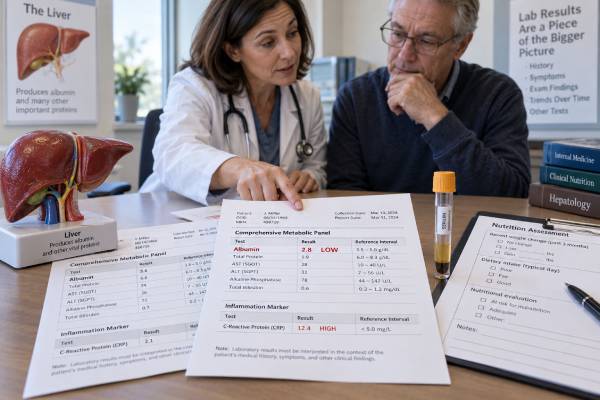
Most laboratories report albumin as part of a comprehensive metabolic panel or liver panel. A result below the laboratory range deserves interpretation alongside symptoms, recent illness, weight changes, C-reactive protein, liver tests, kidney tests, urine protein, and fluid status. The direction and speed of change also matter: a rapid fall during infection or hospitalization often has a different meaning from a stable, mildly low value found during routine care.
- A common adult reference range is about 3.5–5.0 g/dL, but the exact limits vary by laboratory and testing method.
- Low albumin most often reflects inflammation, fluid dilution, reduced liver synthesis, or protein loss, sometimes in combination.
- Albumin alone cannot diagnose malnutrition; intake, weight loss, muscle loss, function, and a nutrition-focused examination are more informative.
- Fasting is usually not required for albumin alone, although another test ordered with it may require preparation.
- Prompt medical review matters when low albumin occurs with swelling, shortness of breath, jaundice, reduced urine, confusion, bleeding, or severe illness.
Table of Contents
- What the albumin test measures
- Normal ranges and what a low result means
- Why inflammation lowers albumin
- Major causes of hypoalbuminemia
- What albumin can and cannot say about nutrition
- How clinicians investigate a low result
- Treatment, monitoring, and when to seek care
What the albumin test measures
The test measures albumin concentration in the liquid portion of blood, not the body’s total albumin supply. Albumin is made by liver cells and released continuously into circulation. It helps maintain oncotic pressure—the force that keeps fluid inside blood vessels—and carries substances such as fatty acids, bilirubin, calcium, hormones, and many medicines.
A blood concentration is the net result of several processes:
- how much albumin the liver makes;
- how much remains inside blood vessels versus moving into tissues;
- how quickly the body breaks it down;
- whether albumin is being lost in urine, stool, wounds, burns, or body-cavity fluid; and
- how concentrated or diluted the blood is.
This explains why albumin is sometimes described as a liver synthetic marker, an inflammation-related marker, a nutrition-risk marker, and a prognostic marker. Each description is partly true, but none is complete on its own.
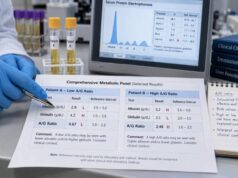
Albumin is commonly included in a comprehensive metabolic panel, a liver function panel, or a total protein test. Total protein combines albumin with globulins, a broad group that includes many immune proteins. When both values are available, the laboratory may calculate the albumin-to-globulin ratio. A low albumin result may lower that ratio even when globulin is normal.
Unlike C-reactive protein, albumin does not rise and fall within hours in a simple on-off pattern. It has a long biological lifespan, yet acute inflammation can still lower the measured concentration quickly through capillary leakage, fluid shifts, and altered metabolism. For this reason, a single value should be interpreted in the setting in which it was drawn.
Normal ranges and what a low result means
For many adults, a typical serum albumin range is approximately 3.5–5.0 g/dL, or 35–50 g/L. Laboratories set their own limits, and results may differ slightly with age, pregnancy, hydration, assay method, and clinical setting. Always use the reference interval printed beside the result.
| Example result | General interpretation | What often matters next |
|---|---|---|
| 3.5–5.0 g/dL | Common reference range | Interpret with the laboratory range and clinical context |
| 3.0–3.4 g/dL | Mildly low in many laboratories | Review trend, inflammation, hydration, liver and kidney findings |
| 2.5–2.9 g/dL | Moderately low | Look for active illness, protein loss, organ disease, edema, or poor intake |
| Below 2.5 g/dL | Markedly low | Clinical assessment is important; drug binding and fluid balance may be affected |
These bands are not diagnostic thresholds. A person with 3.3 g/dL after major surgery may have an expected inflammation-related decrease, while the same value in an otherwise well outpatient may prompt a different workup. Similarly, a value of 3.6 g/dL can be meaningful if it has fallen steadily from 4.5 g/dL over several months.
A high albumin result is far less common and usually reflects dehydration or hemoconcentration rather than excessive production. After hydration is corrected, the value often returns to the normal range.
Low albumin is called hypoalbuminemia. It does not create a specific set of symptoms at mild levels. Symptoms usually come from the underlying cause. With more substantial decreases, reduced oncotic pressure may contribute to ankle swelling, generalized edema, abdominal fluid accumulation, or fluid around the lungs. Albumin is not the only factor controlling fluid movement, so edema severity does not always match the number.
Why inflammation lowers albumin
Inflammation can lower albumin even when calorie and protein intake are adequate. This is one of the most important points in interpreting the test.
During infection, trauma, surgery, autoimmune activity, cancer, or another inflammatory stress, signaling molecules change how blood vessels and the liver behave. Capillaries become more permeable, allowing albumin to move from circulation into the interstitial space around cells. The body also increases albumin breakdown and shifts liver production toward acute-phase proteins that support the immediate immune response. Intravenous fluids may further dilute the measured concentration.
Albumin is therefore considered a negative acute-phase reactant: its blood concentration tends to fall as the acute-phase response becomes stronger. In contrast, markers such as C-reactive protein, fibrinogen, and serum amyloid A usually rise.
The timing differs between markers. CRP can rise quickly and may fall within days when the trigger resolves. Albumin often recovers more slowly because inflammation, tissue repair, fluid balance, and protein turnover take time to normalize. A patient may feel better and have a falling CRP while albumin remains low for weeks.
This difference makes trends useful. A persistently falling albumin level during severe illness can indicate ongoing physiologic stress, fluid overload, continuing losses, or worsening organ function. A gradual rise often accompanies recovery, but it should not be used as the only treatment target.
Chronic low-grade inflammation may also contribute to a modest long-term reduction. Examples include active rheumatoid arthritis, inflammatory bowel disease, chronic infection, advanced cancer, heart failure, and chronic kidney disease. An inflammatory marker panel may help show whether albumin is changing alongside other measures, although no panel can identify the cause without clinical evaluation.
Major causes of hypoalbuminemia
Low albumin usually comes from reduced production, increased loss, redistribution, dilution, or increased breakdown. More than one mechanism is common, especially in hospitalized or chronically ill people.
Inflammation, infection, and critical illness
Acute infection, sepsis, major surgery, burns, trauma, and widespread inflammation can produce a rapid decline. In these settings, the value often reflects illness severity and fluid shifts more than food intake. Large burns and open wounds may also cause direct protein loss.
Liver disease and reduced synthesis
Because the liver makes albumin, advanced liver dysfunction can reduce production. Cirrhosis is a classic cause, particularly when accompanied by ascites, portal hypertension, or impaired clotting-factor production. Albumin can remain normal in early or compensated liver disease because the liver has substantial reserve and albumin turns over slowly. A normal result therefore does not rule out fatty liver, hepatitis, fibrosis, or even early cirrhosis.
Clinicians interpret albumin with bilirubin, alkaline phosphatase, AST, ALT, platelet count, prothrombin time or INR, imaging, and symptoms. Albumin is more a measure of synthetic capacity and overall disease burden than a marker of active liver-cell injury.
Kidney loss
Healthy kidneys keep most albumin in the bloodstream. Damage to the glomeruli—the kidney’s filtering units—can allow albumin to leak into urine. Nephrotic syndrome may cause heavy proteinuria, low blood albumin, swelling, and high cholesterol. Diabetes, autoimmune kidney disease, and several primary glomerular disorders can produce this pattern.
A normal serum creatinine does not exclude albumin loss. Urine albumin-to-creatinine ratio, urine protein-to-creatinine ratio, or a timed urine collection may be needed.
Digestive loss or poor absorption
Protein-losing enteropathy occurs when excessive protein escapes through the gastrointestinal tract. Causes include severe intestinal inflammation, lymphatic obstruction, some infections, celiac disease, and certain heart conditions. Chronic diarrhea, abdominal pain, weight loss, or edema may provide clues. Stool alpha-1 antitrypsin clearance is one specialized test used in selected cases.
Active inflammatory bowel disease can combine reduced intake, intestinal loss, inflammation, and medication effects. In that setting, tests such as fecal calprotectin may help evaluate intestinal inflammation but do not replace the broader assessment.
Fluid dilution and redistribution
Heart failure, kidney failure, cirrhosis with ascites, pregnancy, and large volumes of intravenous fluid can expand plasma water and lower the measured albumin concentration without an equivalent loss of total body albumin. This is called dilutional hypoalbuminemia. Checking weight change, edema, blood pressure, sodium, fluid intake and output, and recent IV therapy helps identify it.
Inadequate intake and malnutrition
Severe or prolonged inadequate intake can contribute, especially when paired with illness, malabsorption, or increased needs. However, albumin often stays normal during uncomplicated calorie restriction and may fall rapidly during inflammation before a true nutrition deficit develops. That is why the result cannot distinguish malnutrition from inflammatory stress.
Rare causes include congenital analbuminemia, in which inherited variants lead to extremely low albumin, and significant losses through repeated drainage, extensive skin disease, or persistent body-cavity leaks.
What albumin can and cannot say about nutrition
Albumin can identify nutrition risk, but it should not be used alone to diagnose protein-calorie malnutrition. Modern nutrition assessment focuses on what a person has eaten, whether weight and muscle have been lost, how the body is functioning, and whether inflammation or disease is driving the changes.
A low result may coexist with malnutrition, but it does not prove that insufficient protein caused it. Conversely, a normal albumin result does not guarantee good nutrition. A person can lose substantial weight and muscle while albumin remains within range, especially when inflammation is absent.
A useful nutrition evaluation may include:
- recent and usual food intake;
- unintentional weight loss and the period over which it occurred;
- body mass index, while recognizing that obesity can hide muscle loss;
- physical signs of reduced muscle or subcutaneous fat;
- grip strength, mobility, and ability to perform daily activities;
- swallowing problems, nausea, diarrhea, dental issues, or food insecurity; and
- disease-related inflammation and increased metabolic needs.
The practical lesson is not to ignore nutrition when albumin is low, but to assess it correctly. Someone with pneumonia, a low albumin level, poor appetite, and 8% unintentional weight loss may have both acute inflammation and clinically important malnutrition. Treating the infection alone may not restore intake or muscle. In contrast, giving high-protein supplements to a well-nourished person with sepsis will not immediately normalize albumin while the inflammatory response remains active.
Prealbumin, also called transthyretin, changes faster than albumin but is also strongly influenced by inflammation, kidney function, and illness. It is not a stand-alone nutrition diagnosis either. Trends can sometimes support a broader clinical picture, but neither value should replace a dietitian’s assessment.
How clinicians investigate a low result
The next step is to confirm the context and look for the mechanism, not to treat the number in isolation. A mildly low result found during an acute illness may simply be repeated after recovery. A persistent or unexplained decrease usually leads to a focused evaluation.
A clinician may review:
- The trend and timing. Was the result previously normal? Did it fall after surgery, infection, IV fluids, pregnancy, or a new illness?
- Symptoms and examination. Swelling, ascites, jaundice, diarrhea, weight loss, muscle loss, rash, fever, breathing difficulty, or reduced urine can direct the workup.
- Inflammation markers. CRP, ESR, ferritin, fibrinogen, and the white blood cell count may show an inflammatory pattern. The ferritin result requires care because it can rise with inflammation even when iron availability is low.
- Liver assessment. AST, ALT, alkaline phosphatase, bilirubin, INR, platelet count, hepatitis testing, and ultrasound or elastography may be appropriate.
- Kidney and urine testing. Creatinine, estimated glomerular filtration rate, urinalysis, and quantitative urine albumin or protein help identify renal loss.
- Total protein and globulins. The globulin level can reveal whether the protein pattern is broad or mainly albumin-related. Serum protein electrophoresis may be used when an abnormal immunoglobulin pattern is suspected.
- Nutrition and gastrointestinal testing. A diet history, weight records, examination for muscle loss, celiac testing, stool studies, or evaluation for protein-losing enteropathy may be selected based on symptoms.
Albumin results can also affect interpretation of other laboratory values. Total calcium may appear low because a large portion circulates bound to albumin, even when biologically active ionized calcium is normal. Correction formulas are imperfect, especially in critical illness, so direct ionized calcium testing may be preferred when accuracy matters.
Many drugs bind to albumin. Marked hypoalbuminemia can increase the unbound fraction of highly protein-bound medicines and alter distribution or clearance. This is particularly relevant for drugs with narrow safety margins, such as phenytoin, valproate, and warfarin, and for some antibiotics in critical illness. Clinicians may use free drug levels or therapeutic drug monitoring rather than changing a dose from the albumin result alone.
Treatment, monitoring, and when to seek care
Treatment focuses on the cause of low albumin and the person’s overall condition. Simply raising the laboratory number does not correct infection, liver failure, kidney protein loss, intestinal disease, fluid overload, or malnutrition.
Examples of cause-directed care include treating an infection, controlling autoimmune inflammation, optimizing heart-failure therapy, reducing urinary protein loss, managing cirrhosis complications, treating intestinal disease, and providing individualized nutrition support. When intake is inadequate, a dietitian may recommend energy- and protein-dense foods, oral supplements, or enteral feeding based on medical needs and kidney or liver function.
Intravenous albumin is not a routine treatment for every low result. It has specific uses, especially in selected complications of cirrhosis, such as after large-volume paracentesis, spontaneous bacterial peritonitis, or hepatorenal syndrome under established protocols. It may also be used in selected critical-care situations. The benefit depends on the indication; an infusion can raise the blood concentration temporarily without fixing ongoing leakage, loss, or inflammation.
Monitoring frequency depends on severity and setting. In stable outpatient care, repeating the test after the suspected cause is addressed may be enough. In the hospital, albumin may be checked as part of broader metabolic panels, but daily testing is not always necessary. Trends should be paired with clinical changes rather than pursued as an isolated target.
Contact a healthcare professional promptly for a new low result when there is substantial swelling, rapid weight gain from fluid, persistent diarrhea, marked weight loss, jaundice, foamy urine, reduced urine output, or worsening fatigue. Seek urgent care for shortness of breath, chest pain, confusion, fainting, vomiting blood, black stools, severe abdominal swelling or pain, or signs of sepsis such as high fever with rapid breathing and altered alertness.
A low albumin result is most useful as a signal to ask the right questions: Is inflammation active? Is the liver synthesizing proteins effectively? Is albumin being lost through the kidneys or gut? Is fluid diluting the blood? Is nutrition or muscle mass declining? Answering those questions gives the number clinical meaning.
References
- Physiology, Albumin 2026 (Review)
- The clinical significance of hypoalbuminaemia 2024 (Review)
- Serum Albumin Levels: A Biomarker to Be Repurposed in Different Disease Settings in Clinical Practice 2023 (Review)
- Effect of hypoalbuminemia on drug pharmacokinetics 2025 (Review)
- Interpretations of the Role of Plasma Albumin in Prognostic Indices: A Literature Review 2023 (Review)
- Hypoalbuminemia: Pathogenesis and Clinical Significance 2019 (Review)
Disclaimer
This article provides general education about albumin testing and cannot diagnose the cause of an individual result. Reference ranges and clinical decisions vary, so review abnormal or changing values with a qualified healthcare professional, especially when symptoms or serious illness are present.