Chia seeds can be a useful part of a cholesterol-lowering diet, but they are not a stand-alone treatment for high LDL. Their strongest nutritional advantages are fiber, alpha-linolenic acid (ALA), plant protein, and a gel-forming texture that can make meals more filling. Human trials suggest chia may modestly improve some lipid markers, especially triglycerides in certain groups, while the effect on LDL is inconsistent and appears smaller than the effect of proven strategies such as soluble fiber from oats or psyllium, replacing saturated fat, and cholesterol-lowering medication when needed.
A practical serving is usually 1 to 2 tablespoons per day, added gradually and taken with enough fluid. Whole chia works well because the tiny seeds hydrate readily, unlike flaxseed, which is often best ground. Chia can fit into oatmeal, yogurt, smoothies, soups, and puddings without much preparation. The key is using it as part of a broader eating pattern rather than expecting a spoonful of seeds to erase the effect of a diet high in saturated fat.
Table of Contents
- Does Chia Lower Cholesterol?
- Why Chia May Help Cholesterol
- Best Serving Size and How to Start
- Best Ways to Eat Chia Seeds
- Whole, Ground, or Soaked?
- Safety, Side Effects, and Medication Considerations
- How to Use Chia in a Cholesterol-Lowering Plan
Does Chia Lower Cholesterol?
Chia may help some cholesterol and triglyceride measures, but the average effect is modest and research is mixed. A 2024 systematic review and meta-regression of 14 randomized trials found that chia lowered triglycerides and, at higher doses, produced a small average reduction in LDL cholesterol. Another 2024 meta-analysis focused on people with overweight found no significant overall change in LDL, total cholesterol, HDL, or triglycerides, although it reported improvements in some other cardiometabolic markers.
Those apparently conflicting findings are not unusual in nutrition research. Trials differ in who participates, how much chia is used, whether it is whole or milled, what the control diet contains, how long the trial lasts, and what other foods change at the same time. A small study in people with elevated cardiometabolic risk is not directly comparable with a study in healthy adults.
The useful conclusion is not “chia definitely lowers LDL” or “chia does nothing.” It is that chia has a favorable nutrient profile and may provide a small benefit, but it is less predictable than established LDL-lowering tools such as viscous soluble fiber, plant sterols, and replacing saturated fat with unsaturated fat.
If LDL is your main concern, it helps to understand the broader hierarchy. Soluble fiber for lowering LDL has more consistent evidence, while chia can contribute to total fiber and improve the quality of meals around that core strategy.
Why Chia May Help Cholesterol
Chia seeds are unusually rich in fiber for their size. When mixed with liquid, their outer layer forms a mucilaginous gel. That gel-forming property helps explain why chia can slow digestion and increase fullness, although chia is not identical to highly viscous fibers such as psyllium or oat beta-glucan.
A typical 2-tablespoon serving provides roughly 10 g of fiber, although exact values vary by brand. Much of the carbohydrate in chia is fiber rather than digestible starch or sugar. Higher-fiber diets tend to support healthier lipid patterns and can also make it easier to replace refined snacks with more filling foods.
Chia is also rich in alpha-linolenic acid, or ALA, a plant omega-3 fatty acid. The body can convert some ALA to EPA and DHA, but conversion is limited, so chia is not nutritionally interchangeable with oily fish or prescription omega-3 products. Still, ALA is a useful unsaturated fat when it replaces saturated fat.
Another advantage is what chia can replace. A breakfast of chia, oats, berries, and unsweetened yogurt or soy milk is very different from a breakfast centered on pastries, butter, or processed meat. The cholesterol benefit comes from the whole substitution pattern, not only from the chia.
Chia also contains plant protein, minerals, and polyphenols. Reviews describe calcium, magnesium, phosphorus, potassium, and antioxidant compounds among its nutrients. These features support overall diet quality, but they should not be translated into exaggerated claims that chia “cleans arteries” or directly removes plaque.
It is also useful to compare chia with other seeds. Ground flaxseed has more specific evidence for some cardiovascular outcomes, while chia is often easier to use whole and has a neutral flavor. Hemp seeds provide more protein but much less fiber. Pumpkin and sunflower seeds contribute unsaturated fat, minerals, and plant sterols but do not form a viscous gel. There is no need to choose one “best” seed; rotating several types can make the diet more varied and easier to sustain.
The main mechanism people often overstate is omega-3 content. Chia is indeed rich in ALA, but ALA does not behave exactly like EPA and DHA from fish. The body converts only a fraction of ALA into these longer-chain omega-3 fats. That means chia is a good plant source of unsaturated fat, but it should not be presented as equivalent to salmon, sardines, or a prescription EPA product used for specific triglyceride indications.
For a broader food strategy, cholesterol-lowering foods that actually work are most effective when fiber-rich foods, unsaturated fats, and plant proteins are combined rather than used one at a time.
Best Serving Size and How to Start
For most adults, 1 to 2 tablespoons of chia seeds per day is a practical food amount. That is roughly 12 to 28 g, depending on how level or heaped the spoon is. You do not need the very high doses used in some research trials to make chia useful as a food.
If your current diet is low in fiber, start with 1 teaspoon to 1 tablespoon daily for several days, then increase. A sudden jump in fiber can cause bloating, gas, cramping, or looser stools.
A sensible progression is:
- Start with 1 tablespoon daily.
- Add it to a moist food or mix it with liquid.
- Drink adequate fluid throughout the day.
- After several days, increase toward 2 tablespoons if comfortable.
- Keep the rest of your fiber intake balanced rather than trying to get all fiber from chia.
More is not automatically better. Very large amounts add calories and may worsen gastrointestinal symptoms without providing extra cholesterol benefit. Chia is energy-dense because it contains substantial fat, even though the fat is mostly unsaturated.
Measure the portion at least a few times when you first start. A heaped spoon can be much larger than a standard tablespoon, and “a handful” is hard to reproduce from day to day. Consistency matters more than precision to the gram, but a repeatable amount makes it easier to judge tolerance and to understand what changed when you repeat your cholesterol test.
If you already eat a high-fiber diet, chia is optional rather than essential. Beans, lentils, oats, barley, vegetables, fruit, nuts, and whole grains can provide excellent fiber without chia. Conversely, if chia is one of the few fiber-rich foods you enjoy, it can be a useful bridge toward a higher-fiber pattern. The goal is not to meet a chia quota; it is to create a diet you can keep eating.
If you are using chia specifically to improve cholesterol, give the overall diet enough time to work. Lipid levels often respond over several weeks. Rechecking a lipid panel after about 6 to 12 weeks of consistent changes is common, although your clinician may recommend a different interval based on your risk and treatment plan.
Best Ways to Eat Chia Seeds
Chia works best in foods that already support heart health. The easiest approach is to add it where its texture is helpful rather than forcing it into every meal.
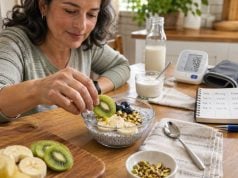
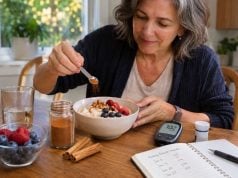
Oatmeal: Stir 1 tablespoon into cooked oats, then add berries and nuts. This pairs chia fiber with oat beta-glucan, one of the better-studied dietary fibers for LDL. If oatmeal is a regular breakfast, see how oats help lower LDL.
Plain yogurt or unsweetened soy yogurt: Mix in chia and let it sit for 10 to 20 minutes. Add fruit for sweetness instead of relying on heavily sweetened flavored yogurt.
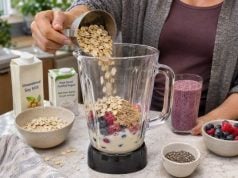
Smoothies: Use 1 tablespoon with berries, unsweetened milk or soy milk, oats, and perhaps nut butter. Avoid turning the smoothie into a high-sugar dessert with juice, syrups, sweetened yogurt, and multiple sweeteners. A cholesterol-lowering smoothie should emphasize fiber and whole-food ingredients rather than sugar.
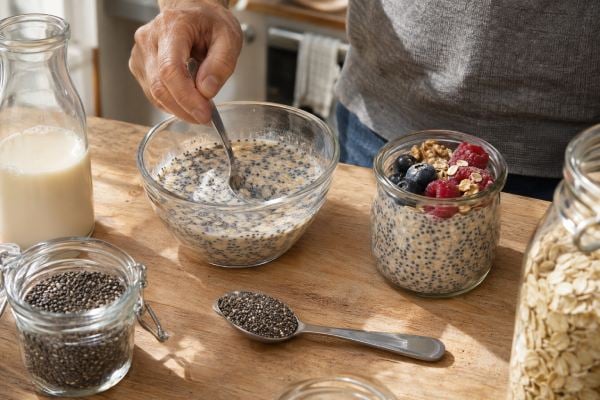
Chia pudding: Combine chia with unsweetened milk or fortified plant milk and let it hydrate for several hours or overnight. Flavor with cinnamon, berries, cocoa, vanilla, or chopped nuts. Keep added sugar modest.
Soups and stews: A teaspoon or tablespoon can thicken soups slightly. This is an easy option if you dislike the texture of chia pudding.
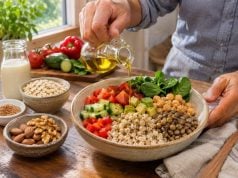
Over salads or grain bowls: Dry chia can be sprinkled over food, but it is easier to consume when there is enough moisture in the meal.
Homemade jam-style fruit spread: Mashed berries plus chia will thicken as it sits. This can reduce the amount of added sugar needed compared with traditional jam.
A useful principle is to combine chia with foods that solve another cholesterol problem. Pair it with oats for viscous fiber, nuts for unsaturated fat, berries for whole-fruit fiber, or soy foods for plant protein.
Whole, Ground, or Soaked?
Whole chia seeds are usually fine. Unlike flaxseed, chia does not have to be ground for you to get useful fiber, and research suggests whole chia can still affect blood levels of ALA and other markers.
Freshness matters too. Store chia in a sealed container in a cool, dry place and discard it if it develops an unpleasant rancid odor. Because the seeds contain a high proportion of unsaturated fat, protecting them from heat, moisture, and prolonged light helps preserve quality.
Soaking changes texture more than nutritional value. Hydrated chia forms a gel that is easier to eat in pudding, oatmeal, or yogurt. It may also feel gentler for people who struggle with dry, high-fiber foods.
Grinding chia can make it easier to mix into baked goods or smoothies and may improve access to some of the seed’s fat, but it is not mandatory. If you buy ground chia, store it tightly sealed and away from heat and light because unsaturated fats are vulnerable to oxidation.
Dry chia can be used in small amounts on moist foods, but swallowing a large spoonful dry is not a good idea. Chia absorbs many times its weight in liquid and can swell. People with swallowing disorders or esophageal narrowing should be especially cautious and should ask a clinician before using dry chia.
In practical terms, choose the form you will use consistently. Whole seeds are convenient and shelf-stable; soaked seeds are easier for puddings; ground chia disappears more easily into foods. The cholesterol difference among these forms is not well established enough to justify a strict rule.
Safety, Side Effects, and Medication Considerations
Chia is safe as a food for most people, but its high fiber content means it can cause gastrointestinal symptoms if you increase the amount too quickly.
Common issues include:
- Gas or bloating.
- Abdominal fullness or cramping.
- Loose stools or constipation if fluid intake is inadequate.
- Difficulty swallowing if large amounts of dry chia are taken without enough liquid.
People with swallowing problems should use hydrated chia rather than taking dry spoonfuls. If you have a history of food allergy, stop and seek medical advice for hives, swelling, wheezing, or other allergic symptoms.
Because chia may modestly affect blood pressure or blood sugar in some studies, people taking antihypertensive or glucose-lowering medication should monitor their usual measurements when making major dietary changes. Food amounts of chia are unlikely to cause a dramatic medication interaction by themselves, but the broader diet may improve blood pressure or glucose enough to change treatment needs over time.
If you take warfarin or another anticoagulant, do not assume that a food rich in omega-3 fat is automatically dangerous, but discuss major changes in diet or supplements with the clinician who manages the medication. Chia is not a replacement for prescription omega-3 therapy, statins, or other cardiovascular treatment.
Pregnancy, gastrointestinal disease, kidney disease, and complex medication regimens are also good reasons to individualize fiber and seed intake rather than following generic “more is better” advice.
How to Use Chia in a Cholesterol-Lowering Plan
The best use of chia is as one piece of a larger LDL-lowering pattern. Think in terms of four daily jobs: increase viscous fiber, replace saturated fat, include plant protein, and make high-fiber foods convenient.
A simple day might look like this:
- Breakfast: oats, 1 tablespoon chia, berries, and walnuts.
- Lunch: lentil soup with whole-grain bread and a vegetable salad dressed with olive oil.
- Snack: fruit with plain yogurt or a small handful of nuts.
- Dinner: tofu, beans, or fish with vegetables and a whole grain.
- Optional second chia serving: another tablespoon in yogurt or pudding if your digestion tolerates it.
This matters because chia cannot offset a consistently high intake of saturated fat. If LDL is high, pay attention to butter, fatty red and processed meats, high-fat dairy, coconut oil, and many packaged baked foods. Replace rather than merely add.
Also distinguish LDL from triglycerides. Chia’s trial data sometimes look more favorable for triglycerides than LDL, but triglycerides respond strongly to other factors too, including alcohol, added sugar, refined carbohydrates, excess calories, and weight. If triglycerides are elevated, diet changes that lower triglycerides may deserve as much attention as chia.
Finally, know when diet is not enough. Very high LDL, known cardiovascular disease, diabetes with elevated risk, or suspected familial hypercholesterolemia may require medication even with an excellent diet. A small improvement from chia is still useful, but it should not delay effective treatment.
If you want to know whether chia is helping, do not judge by how you feel. Cholesterol usually causes no symptoms. Keep the rest of your plan reasonably stable, use chia consistently for several weeks, and compare laboratory results at the follow-up interval your clinician recommends. A useful check includes LDL cholesterol and often non-HDL cholesterol; ApoB may be appropriate in some people. Triglycerides can vary more from recent food intake, alcohol, weight change, and blood-sugar control, so interpret them in context.
Also consider the calories being displaced. Two tablespoons of chia added to a bowl that already contains large amounts of nut butter, granola, coconut, and sweetened yogurt may turn a heart-healthy idea into a very calorie-dense meal. The better move is often to use chia to replace part of a sugary topping or refined snack. In other words, the nutritional value of chia is real, but its effect depends on the meal around it.
Chia seeds earn their place because they are easy, fiber-rich, and nutritionally dense—not because they produce dramatic cholesterol changes on their own. One to two tablespoons a day, used in meals that are already rich in oats, beans, nuts, vegetables, whole fruit, and unsaturated fats, is a realistic way to get the benefit without turning a simple food into a cure-all.
References
- The impact of chia seeds on diabetes, blood pressure, lipid profile, and obesity indicators: Systematic review and meta-regression analysis of 14 randomized controlled trials 2024 (Systematic Review)
- Effects of chia (Salvia hispanica. L) on anthropometric measures and other cardiometabolic risk factors: A systematic review and dose-response meta-analysis 2024 (Systematic Review)
- Effects of chia seed (Salvia hispanica L.) supplementation on cardiometabolic health in overweight subjects: a systematic review and meta-analysis of RCTs 2024 (Systematic Review)
- The nutritional profile of chia seeds and sprouts: tailoring germination practices for enhancing health benefits-a comprehensive review 2024 (Review)
- The Current State of Knowledge on Salvia hispanica and Salviae hispanicae semen (Chia Seeds) 2022 (Review)
Disclaimer
This article provides general nutrition information and is not a substitute for personal medical advice. If you have very high cholesterol, cardiovascular disease, swallowing problems, gastrointestinal disease, or take medications that affect blood pressure, blood sugar, or clotting, discuss major diet or supplement changes with your clinician. Chia seeds should not replace prescribed cholesterol-lowering treatment.