Food can meaningfully improve cholesterol, especially LDL cholesterol, but the biggest gains come from choosing the right foods consistently rather than chasing one “superfood.” The strongest options share a few features: they provide soluble or viscous fiber, replace saturated fat with unsaturated fat, supply plant proteins, or add plant sterols that reduce cholesterol absorption. Oats, barley, beans, lentils, nuts, seeds, soy foods, avocado, and olive oil all fit into that picture. Some have direct LDL-lowering evidence; others work mainly because they replace foods that tend to raise LDL.
Diet usually lowers cholesterol by a modest but worthwhile amount, and combining several proven strategies can produce a larger effect than relying on one food alone. The right plan also depends on your starting LDL level, overall heart risk, medications, and what you can realistically eat long term. Here are the foods with the strongest practical case, how much to aim for, and how to build them into everyday meals.
Table of Contents
- How Food Lowers Cholesterol
- The Best Cholesterol-Lowering Foods
- Foods That Work by Replacing Saturated Fat
- How Much Can Diet Lower LDL?
- How to Build a Cholesterol-Lowering Day
- Common Mistakes That Limit Results
- When Food Is Not Enough
How Food Lowers Cholesterol
The most useful target for most people with high cholesterol is LDL cholesterol, the particle-associated cholesterol that contributes to atherosclerotic plaque. Diet can lower LDL through several different mechanisms, and the effects can add up when you use more than one approach.
Soluble and viscous fiber forms a gel-like material in the digestive tract. This can trap bile acids and increase their loss in stool. Because the liver uses cholesterol to make more bile acids, circulating LDL can fall. Oats, barley, beans, lentils, psyllium, chia, and some fruits are useful sources. A large 2023 meta-analysis found that each additional 5 g per day of soluble fiber was associated with an average LDL reduction of about 5.6 mg/dL. That does not mean every person gets the same response, but it shows why fiber is one of the most dependable food-based tools.
Replacing saturated fat with unsaturated fat is another high-impact strategy. Saturated fat tends to raise LDL in many people. Swapping butter, fatty processed meat, coconut oil, or high-fat dairy for olive oil, nuts, seeds, avocado, fish, or other unsaturated-fat sources usually matters more than simply “adding healthy fat” on top of an unchanged diet. If you want a broader framework, a food-first approach to lowering cholesterol is most effective when replacement is deliberate.
Plant sterols and stanols resemble cholesterol and compete with it for absorption in the intestine. Fortified foods can deliver amounts much higher than a typical unfortified diet and may lower LDL by roughly 7% to 12% in many studies, depending on dose and baseline cholesterol.
Finally, plant-forward eating patterns bring several mechanisms together: more viscous fiber, nuts and seeds, plant protein, and unsaturated fat, with less saturated fat. This is why the total pattern often matters more than any one ingredient.
The Best Cholesterol-Lowering Foods
The top picks are foods that have a clear mechanism, human trial evidence, and a realistic way to eat them regularly.
1. Oats and barley
Oats and barley are rich in beta-glucan, a viscous soluble fiber with direct LDL-lowering evidence. Studies of oat beta-glucan commonly use around 3 g per day or more. Depending on the product, that may require more than one serving of oats.
A practical routine is oatmeal at breakfast, oat bran stirred into yogurt, or barley used in soups and grain bowls. Steel-cut, rolled, and quick oats can all contribute beta-glucan; what matters is the actual amount and how often you eat them. If oats are your main strategy, the guide to oat beta-glucan for LDL can help you translate grams of fiber into realistic portions.
2. Beans, lentils, chickpeas, and peas
Legumes combine soluble fiber, plant protein, resistant starch, and very little saturated fat. Their advantage is partly direct and partly substitution: a lentil chili or bean bowl can replace a meal centered on fatty red or processed meat.
Aim for about 1/2 to 1 cup cooked at a time, several times per week, and build up gradually if you are not used to high-fiber foods. Canned beans are nutritionally useful; rinsing them can reduce sodium. Lentils cook quickly and are especially easy to add to soups, sauces, or grain dishes.
3. Nuts
Nuts supply unsaturated fats, fiber, plant sterols, and other bioactive compounds. A 2024 meta-analysis of randomized trials found that nut intake produced modest average reductions in total cholesterol, LDL, triglycerides, and apolipoprotein B.
A common practical portion is about 1 ounce, or 28 g, per day. Walnuts, almonds, pistachios, pecans, peanuts, and mixed nuts can all fit. Choose mostly unsalted or lightly salted versions and remember that nuts are energy-dense. They work best when they replace chips, pastries, processed meat, or other less favorable foods rather than simply adding calories. See nuts for heart health for portion and selection tips.
4. Soy foods
Tofu, tempeh, edamame, soy milk, and other minimally processed soy foods provide plant protein and can lower LDL modestly, especially when they replace animal foods high in saturated fat. The direct effect of soy protein is smaller than early claims suggested, but it remains useful as part of a broader cholesterol-lowering pattern.
Try tofu in stir-fries, edamame as a snack or salad topping, tempeh in sandwiches, or unsweetened soy milk in oatmeal and smoothies. Choose products with little added sugar and check sodium on highly seasoned options.
5. Psyllium
Psyllium is technically a concentrated fiber supplement rather than a whole food, but it is one of the most effective practical ways to increase viscous fiber. Many cholesterol studies use several grams per day, often split into two doses.
If you use it, mix it with plenty of water and start low to reduce bloating. It can also affect absorption of some medicines, so separate it from medications according to your pharmacist or clinician’s guidance. For a focused explanation, see psyllium husk for cholesterol.
6. Foods fortified with plant sterols or stanols
Some spreads, yogurts, dairy-style drinks, and other specialty products are fortified with plant sterols or stanols. Research often uses around 1.5 to 2 g per day or more. A 2023 systematic review of fortified foods found a meaningful LDL reduction across a large number of trials, with dose influencing the size of the effect.
These products are most useful for people specifically trying to lower LDL, not as a universal requirement. They do not replace statins or other medication when medication is indicated. They also should not distract from the basics: fiber-rich foods, unsaturated fats, vegetables, and overall diet quality. Learn more about plant sterols and stanols if you are considering fortified products.
7. Ground flaxseed and chia seeds
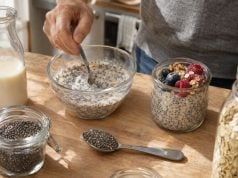
Seeds provide fiber and unsaturated fats. Ground flaxseed has the advantage of making its nutrients more accessible, while chia naturally forms a fiber-rich gel when hydrated. The LDL effect from chia alone appears modest and inconsistent across trials, but it can still improve the overall quality of a cholesterol-lowering diet.
A practical amount is 1 to 2 tablespoons per day, stirred into oatmeal, yogurt, soups, or smoothies. If you use chia, hydrate it well and increase intake gradually if your usual diet is low in fiber.
Foods That Work by Replacing Saturated Fat
Some foods are valuable not because they contain a special cholesterol-lowering compound, but because they make it easier to reduce saturated fat without making meals feel restrictive.
Extra-virgin olive oil is a useful replacement for butter, ghee, coconut oil, and fatty sauces. Use it for salad dressings, roasting, sautéing, or drizzling over vegetables and beans. The important point is substitution. Pouring olive oil over a diet already high in saturated fat will not have the same effect as replacing the saturated-fat source.
Avocado provides mostly monounsaturated fat plus fiber. It can replace cheese, mayonnaise, creamy sauces, or processed meat in sandwiches and bowls. Its effect on LDL is usually modest, but the swap can be meaningful. If avocados are a regular part of your diet, avocado and LDL explains where the evidence is strongest.
Fish, especially oily fish such as salmon, sardines, trout, or mackerel, is valuable mainly because it can replace red or processed meat and provides marine omega-3 fats. Omega-3 fats are more reliable for lowering triglycerides than LDL, so fish should not be marketed as a direct LDL-lowering cure. It still fits well in a heart-healthy pattern.
Vegetables, fruits, and whole grains also help by changing the overall plate. They increase fiber and displace refined carbohydrates, processed meats, and foods high in saturated fat. Whole fruit is generally a better default than juice because it keeps the fiber and is more filling.
A useful rule is to ask, “What is this food replacing?” A handful of walnuts instead of cookies is a cholesterol-friendly change. The same walnuts added after a high-saturated-fat meal are still nutritious, but the net effect is smaller.
How Much Can Diet Lower LDL?
Diet can produce a meaningful LDL reduction, but the range is wide. A single change may lower LDL only a few percent. A coordinated plan that combines several proven strategies can do much more.
For example, a person might combine:
- 3 g or more of oat or barley beta-glucan daily
- beans or lentils most days
- about 1 ounce of nuts daily
- plant sterols or stanols when appropriate
- olive oil, avocado, seeds, and fish in place of major saturated-fat sources
- more vegetables and whole fruit
- less butter, fatty processed meat, full-fat dairy, coconut oil, and ultra-processed food
The “Portfolio” style of eating is built around several cholesterol-lowering components at once: viscous fiber, nuts, plant protein, plant sterols, and unsaturated fat. Long-term cohort data published in 2023 linked greater adherence to this pattern with lower cardiovascular disease risk, although observational studies cannot prove that the diet alone caused the lower risk.
Your response also depends on genetics. Someone with mild diet-related LDL elevation may see a substantial change, while a person with familial hypercholesterolemia may eat very well and still have markedly high LDL because the underlying problem is impaired LDL clearance. That is why food should be viewed as a treatment tool, not a test of willpower.
For most people making a serious diet change, repeating a lipid panel after roughly 6 to 12 weeks is reasonable unless a clinician recommends a different schedule. The page on how long it takes to lower cholesterol can help set expectations for follow-up testing.
When you compare before-and-after results, focus on the same main markers each time. LDL is usually the headline number, but non-HDL cholesterol and ApoB can add context because they reflect the burden of atherogenic particles. Triglycerides may also change when you reduce added sugar, refined carbohydrates, excess alcohol, or overall calorie intake. Small laboratory fluctuations are normal, so one isolated result should not outweigh the broader trend.
It is also helpful to separate a food effect from a weight-loss effect. Losing excess weight can improve several metabolic markers on its own, while viscous fiber, plant sterols, and replacing saturated fat can lower LDL even without major weight loss. That means a person who is already at a stable, healthy weight can still benefit from changing food quality, and a person working on weight loss does not need to wait for the scale to move before improving the composition of meals.
How to Build a Cholesterol-Lowering Day
You do not need a complicated meal plan. The goal is to place several evidence-based foods into meals you already recognize.
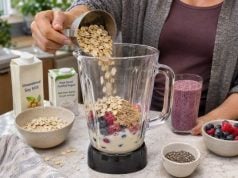
Breakfast: oatmeal made with unsweetened soy milk, topped with berries, 1 tablespoon ground flaxseed or chia, and a small handful of walnuts. This combines beta-glucan, plant protein, seeds, nuts, and whole fruit.
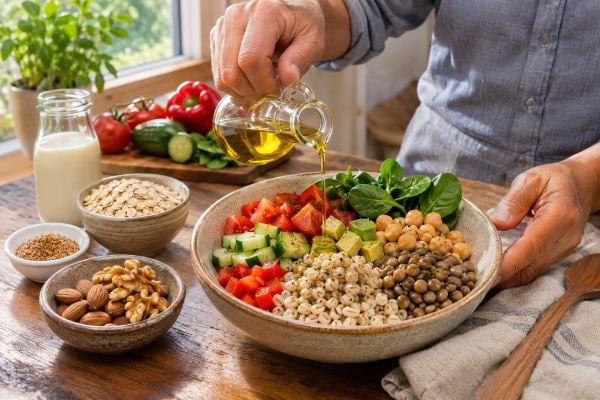
Lunch: lentil or chickpea bowl with barley or another whole grain, vegetables, olive-oil vinaigrette, and herbs. Add avocado if it helps you replace cheese or a creamy dressing.
Snack: fruit with a small handful of nuts, or plain yogurt with oats and seeds. If you use a plant-sterol-fortified food, this is an easy place to include it without changing the rest of the day.
Dinner: fish, tofu, or beans with roasted vegetables and a whole grain. Use olive oil instead of butter and keep processed meat occasional rather than routine.
This pattern naturally increases fiber. If your current intake is low, increase it over one to two weeks and drink enough fluid. Jumping from very little fiber to a large amount overnight can cause gas, cramping, and bloating.
It is also worth watching added sugar and refined starch. These foods may not raise LDL as predictably as saturated fat, but high intakes can worsen triglycerides, calorie balance, and overall cardiometabolic health. A cholesterol-lowering plan should improve the whole risk profile, not just one lab value.
Common Mistakes That Limit Results
The most common mistake is adding cholesterol-friendly foods without removing the foods that raise LDL. Oatmeal at breakfast cannot fully cancel out a diet that remains high in butter, fatty meats, cheese, coconut oil, or pastries.
Another mistake is assuming all plant foods are automatically LDL-lowering. Coconut oil is plant-derived but rich in saturated fat. Refined crackers, sugary cereal, and many vegan desserts can also be low in fiber and high in calories or saturated fat.
Watch out for these traps:
- Choosing granola that is mostly added sugar and coconut oil instead of plain oats.
- Using large amounts of coconut milk because it is “plant based.”
- Drinking fruit juice instead of eating whole fruit.
- Eating nuts in unlimited portions while trying to lose weight.
- Adding fiber too quickly and then abandoning it because of digestive discomfort.
- Treating supplements as a substitute for an overall dietary pattern.
- Assuming a “normal” total cholesterol means LDL, non-HDL cholesterol, ApoB, and triglycerides are all fine.
If you are unsure what your numbers mean, LDL, HDL, and triglycerides are best interpreted together rather than in isolation.
When Food Is Not Enough
Diet is important at every cholesterol level, but it is not always sufficient treatment by itself. Medication may be appropriate when LDL is very high, when a person already has cardiovascular disease, when diabetes or other risk factors raise overall risk, or when genetic conditions such as familial hypercholesterolemia are likely.
Do not delay medical evaluation if your LDL is severely elevated or if close relatives had premature heart attacks or strokes. A clinician may consider additional testing such as ApoB, lipoprotein(a), or assessment for inherited lipid disorders. Lifestyle and medication are not competing strategies; they often work best together.
If you start a cholesterol-lowering diet, make it measurable. Keep the main changes consistent for several weeks, then repeat the lab work at the interval your clinician recommends. If LDL barely moves despite strong adherence, that is useful information and may point toward genetics, medication needs, or another cause of high cholesterol.
The best cholesterol-lowering foods are therefore not exotic. They are oats and barley, legumes, nuts, seeds, soy foods, high-fiber plants, unsaturated fats, and—when appropriate—plant-sterol-fortified foods. The real advantage comes from using them together, in place of foods high in saturated fat, often enough for the pattern to become your normal way of eating.
References
- 2021 Dietary Guidance to Improve Cardiovascular Health: A Scientific Statement From the American Heart Association 2021 (Scientific Statement)
- Soluble Fiber Supplementation and Serum Lipid Profile: A Systematic Review and Dose-Response Meta-Analysis of Randomized Controlled Trials 2023 (Systematic Review)
- Effect of nut consumption on blood lipids: An updated systematic review and meta-analysis of randomized controlled trials 2024 (Systematic Review)
- Efficacy of oats in dyslipidemia: a systematic review and meta-analysis 2024 (Systematic Review)
- Portfolio Diet Score and Risk of Cardiovascular Disease: Findings From 3 Prospective Cohort Studies 2023 (Cohort Study)
Disclaimer
This article provides general nutrition information and is not a substitute for individualized medical care. If your LDL is very high, you have known cardiovascular disease, or you take cholesterol-lowering medication, discuss major diet or supplement changes with your clinician. Seek urgent medical care for symptoms such as new chest pressure, severe shortness of breath, or signs of stroke.