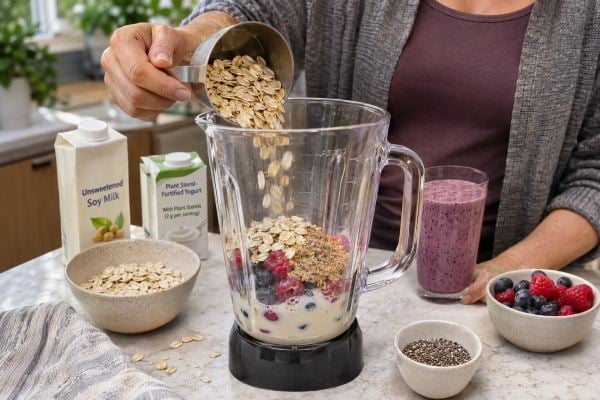
A smoothie can support lower LDL cholesterol when it is built around soluble fiber, unsaturated fats, whole plant foods, and—when appropriate—plant sterols. It can also work against that goal if it is mostly fruit juice, sweetened yogurt, coconut cream, added sugar, or an oversized portion. The difference is the ingredient pattern, not the fact that the food is blended.
The most useful additions are oats or oat bran, berries, chia or ground flax, nuts or nut butter, soy foods, and unsweetened milk or fortified plant milk. These foods can help replace saturated fat and refined carbohydrate while adding fiber and other heart-supportive nutrients. Plant sterol-fortified foods can lower LDL further for some people, but they are optional and should be used according to the product serving size rather than added casually as concentrated powders. A cholesterol-lowering smoothie works best as part of an overall eating pattern—not as a daily “detox” drink or a substitute for needed medication.
Table of Contents
- What Makes a Smoothie Cholesterol-Lowering?
- Best Soluble-Fiber Ingredients
- How to Use Plant Sterols in Smoothies
- Healthy Fats and Protein That Improve the Mix
- Cholesterol-Friendly Smoothie Ideas
- Ingredients to Limit
- How to Use Smoothies in a Lower-LDL Plan
What Makes a Smoothie Cholesterol-Lowering?
A smoothie lowers cholesterol only indirectly, through the foods it helps you eat more of and the foods it replaces. The main target is usually LDL cholesterol, because higher LDL contributes to plaque buildup in arteries. The strongest nutrition strategies reduce saturated fat, increase viscous soluble fiber, emphasize unsaturated fats, and build meals around minimally processed plant foods.
A well-designed smoothie can do several of those things at once. For example, oats provide beta-glucan, berries and chia add fiber, walnuts contribute unsaturated fats, and unsweetened soy milk adds protein without the saturated-fat load of cream. If that smoothie replaces a breakfast made from pastries, processed meat, butter, or a sugary coffee drink, the overall change matters more than any single “superfood.”
The key components are:
- Soluble fiber: Oats, oat bran, chia, ground flax, certain fruits, and psyllium can increase the amount of viscous fiber in the diet. Soluble fiber can reduce cholesterol absorption and increase bile acid losses, which encourages the liver to use more circulating cholesterol.
- Unsaturated fat: Nuts, seeds, avocado, and some nut butters can replace saturated fats from butter, cream, and high-fat dairy.
- Whole-food carbohydrates: Whole fruit is generally a better base than juice because it retains fiber and is easier to portion sensibly.
- Adequate protein: Soy milk, plain yogurt, kefir, or an appropriate unsweetened protein source can make the smoothie more filling and reduce the chance that it becomes a carbohydrate-heavy drink.
- Optional plant sterols: Fortified products can lower LDL by reducing intestinal cholesterol absorption.
A large meta-analysis of randomized trials found that increasing soluble fiber lowered LDL cholesterol, with greater intake generally producing a greater effect. That is why a smoothie built around soluble fiber for LDL lowering has a stronger evidence base than one marketed around vague antioxidant or cleansing claims.
Blending does not remove fiber the way juicing does. The fiber remains in the drink, although the physical structure of the food changes. Some people also drink calories faster than they would eat the same ingredients with a spoon, so portion size still matters.
Best Soluble-Fiber Ingredients
The most dependable cholesterol-friendly smoothie ingredient is often oats. Oats contain beta-glucan, a viscous soluble fiber with consistent evidence for reducing total and LDL cholesterol. Whole oats, oat bran, and foods made with meaningful amounts of oat beta-glucan can all contribute.
For a smoothie, start with about 1/4 to 1/2 cup of rolled oats or a smaller portion of oat bran, depending on your calorie needs and how thick you want the drink. Blend them dry first if you prefer a smoother texture, or soak them in the liquid for 10 to 20 minutes. If oats are a central part of your plan, the guide to oats for lowering LDL cholesterol explains how beta-glucan intake adds up across the day.
Other useful fiber additions include:
- Chia seeds: About 1 to 2 tablespoons can thicken a smoothie and contribute fiber and alpha-linolenic acid, a plant omega-3 fat. Chia absorbs liquid, so increase fluid if the texture becomes too thick.
- Ground flaxseed: One to 2 tablespoons adds fiber and unsaturated fat. Ground flax is generally more useful than whole flax because the intact seed may pass through the digestive tract.
- Berries: Raspberries and blackberries are especially fiber-rich, while strawberries and blueberries add flavor and polyphenols with relatively modest calorie density.
- Apples or pears: Use the edible peel when practical. Half a fruit can add body and sweetness without relying on juice.
- Psyllium: Psyllium is a concentrated viscous fiber with strong LDL-lowering evidence. If you use it, start small, add enough liquid, drink the smoothie promptly before it gels, and separate it from certain medications as directed. More is not automatically better. See psyllium for lowering LDL cholesterol for dosing and safety details.
Fiber works best when intake increases gradually. Jumping from a low-fiber diet to several tablespoons of seeds, oats, fruit, and psyllium at once can cause gas, bloating, cramping, or loose stools. Add one change at a time and drink enough fluid.
It is also useful to distinguish total fiber from viscous soluble fiber. Wheat bran and leafy vegetables are nutritious, but they do not have the same LDL-lowering effect per gram as beta-glucan or psyllium. A good smoothie can include a range of plants while still giving special attention to the fibers with the strongest cholesterol evidence.
How to Use Plant Sterols in Smoothies
Plant sterols and plant stanols are compounds naturally present in small amounts in plant foods. In larger, standardized amounts, they reduce absorption of cholesterol in the intestine and can lower LDL cholesterol. Recent meta-analyses of randomized trials and sterol-fortified foods continue to support this effect.
The practical challenge is that ordinary fruits, vegetables, nuts, and seeds do not usually provide the amount of plant sterols used for a meaningful LDL-lowering effect. People who intentionally use sterols often get them from fortified spreads, dairy-style products, drinks, or supplements. Many evidence-based recommendations have traditionally centered on roughly 1.5 to 2 grams per day, although the appropriate amount should follow the specific product label and your clinician’s advice.
For smoothies, the easiest approach is to use a commercially fortified food or drink that clearly states the plant sterol or stanol amount per serving. Examples may include certain fortified yogurt-style products or milk-type beverages. Product availability varies by country, so read the nutrition and ingredient labels rather than assuming a product contains sterols because it is marketed as “heart healthy.”
Do not add an unmeasured spoonful of a concentrated phytosterol powder. A standardized serving is preferable because research doses are specific, and higher intake is not automatically more useful. Plant sterols can also modestly reduce absorption of some carotenoids, so a diet rich in colorful fruits and vegetables remains important.
Plant sterols are an add-on, not the foundation. If your daily smoothie contains sterols but the rest of your diet is high in butter, fatty processed meats, coconut oil, and refined foods, the overall effect will be limited. For a fuller explanation of evidence and dosing, see plant sterols and stanols for cholesterol.
People with sitosterolemia, a rare inherited disorder that causes excessive absorption of plant sterols, should avoid phytosterol supplements and fortified products unless managed by a specialist. If you are unsure whether a sterol-fortified product is appropriate, especially for a child or during pregnancy, ask a clinician or dietitian.
Healthy Fats and Protein That Improve the Mix
A cholesterol-friendly smoothie should not be fat-free. The goal is to replace saturated fat with unsaturated fat, not to eliminate fat entirely.
Useful additions include walnuts, almonds, natural peanut butter, almond butter, chia, ground flax, and small amounts of avocado. Nuts and seeds provide unsaturated fats, fiber, plant protein, and minerals. Recent randomized-trial meta-analyses continue to support modest improvements in blood lipids when nuts are included in the diet.
Portion size matters because these foods are calorie-dense. One tablespoon of nut butter, a small handful of nuts, or 1 to 2 tablespoons of seeds is often enough for a single smoothie. Adding nut butter, chia, flax, avocado, and a large amount of nuts all at once can turn a reasonable breakfast into a very high-calorie meal.
For protein, consider:
- Unsweetened soy milk or a soy beverage fortified with calcium and vitamin D
- Plain low-fat or nonfat Greek yogurt if dairy fits your diet
- Plain kefir
- Silken tofu
- An unsweetened protein powder with a simple ingredient list, if needed for your protein target
Soy is particularly useful because replacing higher-saturated-fat animal foods with soy foods can improve the overall fat profile of the diet. Protein also improves satiety, which matters if the smoothie replaces a meal.
Choose the liquid base carefully. Unsweetened soy milk, low-fat dairy milk, or an unsweetened lower-calorie plant beverage can work. Coconut milk beverages and canned coconut milk can contain substantial saturated fat. Although coconut products are plant-based, their saturated fat can raise LDL in some people and should not be treated as automatically heart-protective.
If you enjoy avocado, use a modest portion. Its unsaturated fat profile fits a heart-healthy pattern, and the evidence on avocado and LDL cholesterol is more relevant than claims that avocado “burns fat” or cleans arteries.
Cholesterol-Friendly Smoothie Ideas
These formulas are designed as flexible templates rather than medical prescriptions. Adjust portions for your energy needs, diabetes plan, kidney health, allergies, and preferred texture. Use ice or water to thin as needed.
Berry-oat beta-glucan smoothie
- 1 cup unsweetened soy milk
- 1/2 cup mixed berries
- 1/3 to 1/2 cup rolled oats
- 1 tablespoon ground flaxseed
- Cinnamon and ice
This is a simple high-fiber breakfast base. If the texture is too thick, reduce the oats or add water rather than sweetened juice.
Apple-cinnamon walnut smoothie
- 1 small apple or 1/2 large apple, chopped with peel
- 3/4 to 1 cup unsweetened milk or soy milk
- 1/4 cup oats
- 1 tablespoon walnuts
- Cinnamon, nutmeg, and ice
The fruit and spices add sweetness without syrup. A spoonful of plain yogurt can add protein if needed.
Berry-chia yogurt smoothie
- 3/4 cup plain low-fat Greek yogurt
- 1/2 cup berries
- 1 tablespoon chia seeds
- 1/2 cup water or unsweetened milk
- Vanilla or cinnamon
Use unsweetened yogurt. Flavored versions can contain enough added sugar to change the nutritional profile substantially. If you use chia often, chia seeds for cholesterol covers serving size and the limits of the evidence.
Cocoa-peanut oat smoothie
- 1 cup unsweetened soy milk
- 1/3 cup oats
- 1 tablespoon natural peanut butter
- 1 tablespoon unsweetened cocoa powder
- 1/2 small banana
- Ice
This tastes dessert-like without requiring chocolate syrup. Keep the peanut butter measured rather than pouring freely.
Plant-sterol smoothie
- One labeled serving of a plant-sterol-fortified milk-type or yogurt-style product
- 1/2 cup berries
- 1/4 cup oats
- Water or ice as needed
- 1 tablespoon ground flaxseed
Use the sterol amount stated on the product. Do not combine multiple fortified products simply to chase a larger dose.
Green pear smoothie
- 1/2 to 1 small pear with peel
- A handful of spinach
- 1 cup unsweetened soy milk or low-fat milk
- 1 tablespoon chia or ground flax
- Fresh ginger and ice
Spinach is nutritious, but the cholesterol-lowering “work” in this formula still comes mainly from the overall pattern, including fiber and replacement of less healthy breakfast choices.
These recipes can overlap with other heart-healthy smoothie ideas, but the LDL-focused version should keep soluble fiber and saturated-fat replacement at the center.
Ingredients to Limit
The most common mistake is turning a smoothie into liquid dessert while assuming it is healthy because it contains fruit.
Fruit juice: Juice can add a large amount of rapidly consumed carbohydrate without the intact fiber structure of whole fruit. A splash for flavor is different from using 1 to 2 cups as the base. Water, ice, unsweetened soy milk, or low-fat dairy are usually better foundations.
Added sugar, honey, agave, and syrups: These are all added sugars. Honey and agave do not become cholesterol-lowering because they are perceived as natural. Frequent high-sugar intake can also worsen triglycerides, especially when total calories are excessive. If triglycerides are high, see how sugary drinks and fructose affect triglycerides.
Coconut oil, coconut cream, and large amounts of canned coconut milk: These are high in saturated fat. They can make a smoothie creamy, but regular large servings may work against LDL reduction.
Large amounts of full-fat ice cream or sweetened frozen yogurt: A dessert is fine occasionally, but adding it to a smoothie does not create a therapeutic food.
Oversized nut and seed portions: Nuts and seeds are heart-friendly, but several large scoops can add hundreds of calories. That matters if weight gain is affecting blood pressure, insulin resistance, or triglycerides.
“Greens” or detox powders with unclear ingredients: They are not required for cholesterol lowering. Some contain stimulants, concentrated herbs, added sweeteners, or nutrients in doses that may interact with medications.
Multiple pieces of fruit plus dates and juice: Whole fruit belongs in a heart-healthy diet, but a blender makes it easy to consume several servings quickly. For most meal-sized smoothies, one to two fruit portions are enough, with berries often providing good flavor and fiber density.
If you have diabetes, carbohydrate amount matters even when ingredients are nutritious. A smoothie can produce a faster glucose rise than chewing the same foods, depending on the recipe and the person. Pairing fruit with fiber, protein, and fat can help, but home glucose data may be useful if smoothies are a regular meal.
How to Use Smoothies in a Lower-LDL Plan
The best way to use a cholesterol-lowering smoothie is as a repeatable meal that helps you reach broader nutrition goals. It should not sit on top of your usual breakfast as extra calories unless you intentionally need them.
For breakfast, aim for a combination of fiber, protein, and unsaturated fat. Oats plus berries plus a protein-rich liquid and a measured amount of seeds is more balanced than fruit alone. If you are hungry again an hour later, increase protein or choose a bowl you eat with a spoon rather than simply making the drink larger.
For a snack, reduce the portion. A small berry-and-yogurt smoothie may fit, while a 700-calorie blend of nuts, nut butter, avocado, oats, and several fruits may not.
Give dietary changes enough time to evaluate them. LDL can respond within weeks, but a repeat lipid panel is more meaningful than judging the smoothie by energy level or taste. The timeline depends on your starting level, medication use, weight change, and how large the overall dietary shift is. The guide to how long it takes to lower cholesterol explains what to expect.
If LDL is very high, if you have known cardiovascular disease, or if you have a strong family history of premature heart disease, do not rely on smoothies as the main treatment. Diet can make a meaningful contribution, but medications may be needed to reach a safer LDL level.
A practical daily formula is simple: choose one strong soluble-fiber ingredient, one or two whole fruits or vegetables, a protein-rich unsweetened liquid, and a modest amount of nuts or seeds. Use a plant-sterol-fortified product only if it fits your plan. Keep added sugar and saturated fat low. That makes the smoothie a useful tool rather than a health halo around a high-calorie drink.
References
- 2021 Dietary Guidance to Improve Cardiovascular Health: A Scientific Statement From the American Heart Association 2021 (Scientific Statement)
- Soluble Fiber Supplementation and Serum Lipid Profile: A Systematic Review and Dose-Response Meta-Analysis of Randomized Controlled Trials 2023 (Systematic Review)
- The separate effects of whole oats and isolated beta-glucan on lipid profile: A systematic review and meta-analysis of randomized controlled trials 2023 (Systematic Review)
- Effects of phytosterol supplementation on lipid profiles and apolipoproteins: A meta-analysis of randomized controlled trials 2024 (Meta-Analysis)
- Use of phytosterol-fortified foods to improve LDL cholesterol levels: A systematic review and meta-analysis 2023 (Systematic Review)
Disclaimer
This article is for general education and is not a substitute for individualized medical or nutrition care. If you have very high LDL cholesterol, cardiovascular disease, diabetes, kidney disease, food allergies, or take medicines that must be separated from fiber supplements, ask your clinician or dietitian how a daily smoothie fits your plan. Do not stop cholesterol-lowering medication because you start using fiber or plant sterols.